
OOBThaiAmulets
Wat Phra Pathom Chedi
Wat Phra Pathom Chedi
Temple-sourced certified artifacts since 2005. Questions before you buy? WhatsApp us at +65 9155 7000.
Couldn't load pickup availability
Box: MS7
Phra Khandhararat
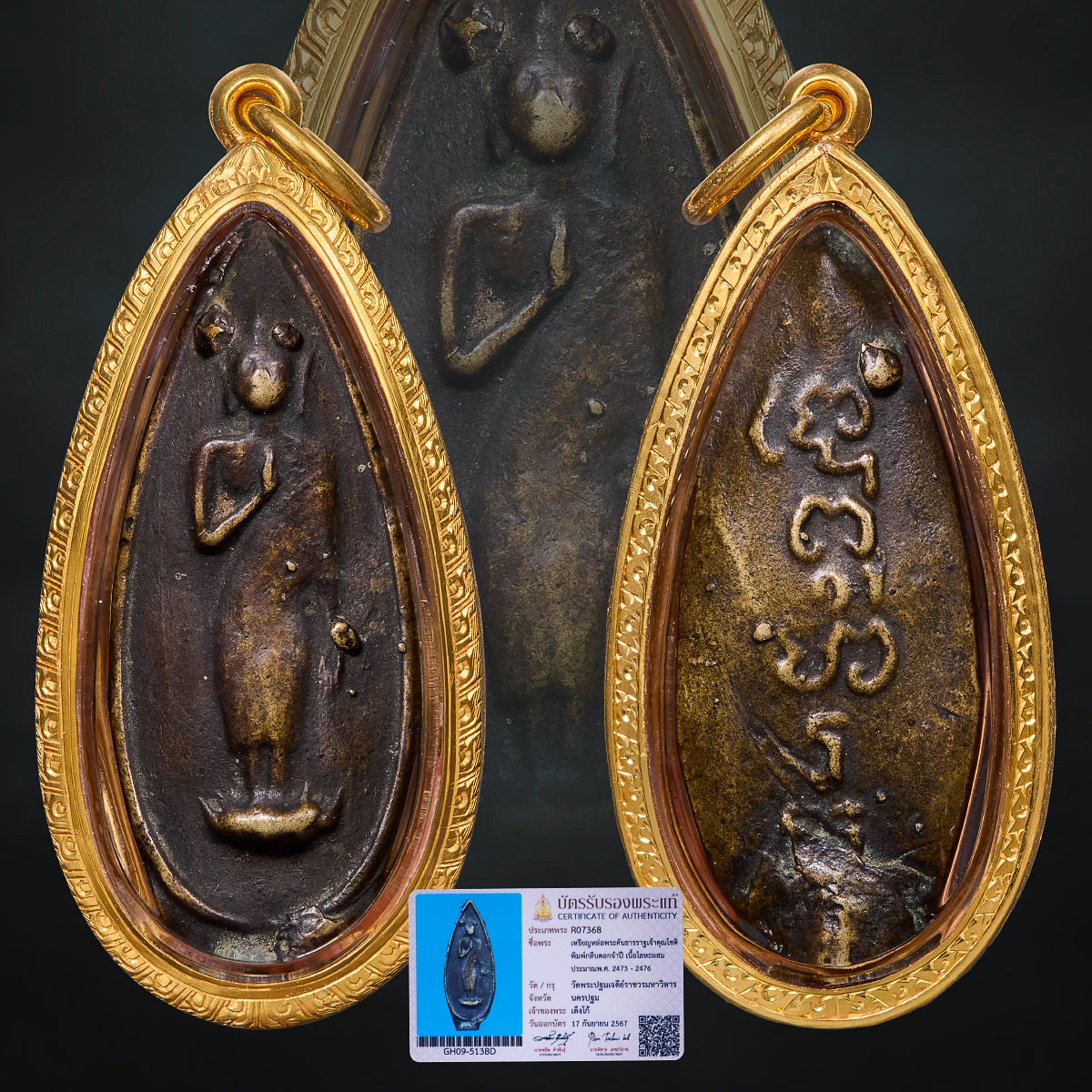
Pim Kleeb Dok Champa
Chao Khun Choti | Wat Phra Pathom Chedi | Nakhon Pathom
B.E 2473-2476
~ 2 Inches
Mainstream Artifact
Samakom Certification Card (GH09-513BD)
Encased in 90% gold casing
━━━━━━━━━━━━━━━━━━━━━━━━━━━━━━━━
Each artifact is individually handmade from natural sacred materials, with variations in colour, texture, form and hand-applied Yant inscriptions making every piece unique. Exact piece to be given
━━━━━━━━━━━━━━━━━━━━━━━━━━━━━━━━
Personal Experiences Shared by Luksits
Among collectors of early Nakhon Pathom amulets, Phra Khandhararat is particularly appreciated for its association with prosperity, favourable circumstances and protection.
Devotees traditionally regard the rain-invoking Buddha as a symbol of relief after hardship. Those involved in business and agriculture often connect this symbolism with overcoming difficult periods, restoring financial stability and attracting new opportunities.
Collectors also value this edition for its historical consecration ceremony, which is traditionally associated with several highly respected monks of central Thailand.
Rather than being sought solely for wealth attraction, Phra Khandhararat is appreciated for its broader meaning of sustained livelihood, household well-being and prosperity through merit.
━━━━━━━━━━━━━━━━━━━━━━━━━━━━━━━━
Summary
The Phra Khandhararat Pim Kleeb Dok Champa, B.E. 2476, is a historic cast-metal amulet commissioned during the abbacy of Chao Khun Choti at Wat Phra Pathom Chedi, Nakhon Pathom.
Its creation is associated with the severe drought affecting the province during the late B.E. 2460s and early B.E. 2470s.
The image of Phra Khandhararat represents the Buddha invoking rain, symbolising the restoration of abundance and relief from hardship.
The edition is respected for its historical significance, traditional Lor Boran craftsmanship and major consecration ceremony.
Its principal traditional blessings concern prosperity, Metta Maha Niyom, Maha Lap, Klaew Khlat and Kong Krapan.
━━━━━━━━━━━━━━━━━━━━━━━━━━━━━━━━
Historical Background
Chao Khun Choti, later known by the ecclesiastical title Phra Thammavarodom, served as abbot of Wat Phra Pathom Chedi from B.E. 2465 to B.E. 2497.
During his abbacy, the temple remained an important centre of Buddhist worship, education and religious ceremonies in Nakhon Pathom.
Around B.E. 2472 (1929), the province reportedly experienced serious drought, causing hardship among farmers and local communities.
In response, Chao Khun Choti initiated the creation of Phra Khandhararat, a Buddha image traditionally associated with invoking rainfall.
According to historical accounts, approximately 150 standing Buddha images were prepared for distribution to temples, allowing communities to conduct traditional rain-invoking ceremonies during periods of drought.
A larger principal image was also created for temple worship.
The smaller cast amulets followed the same devotional theme, allowing individuals to carry the symbolism of abundance, protection and relief from hardship.
The B.E. 2476 edition subsequently became one of the recognised early cast-medallion series associated with Wat Phra Pathom Chedi.
━━━━━━━━━━━━━━━━━━━━━━━━━━━━━━━━
Origins of the Materials
The Pim Kleeb Dok Champa was produced using Loha Pasom, a traditional mixed-metal alloy associated with early Thai casting practices.
Accounts of the edition indicate that consecrated casting materials were shared with the larger standing Phra Khandhararat images.
The alloy was melted and poured into individually prepared moulds using the Lor Boran method.
The resulting amulets display characteristic variations in metal flow, casting texture and surface oxidation.
Collector references commonly identify several principal mould variations, including the Sema-shaped mould, Champaka Petal mould and elongated Spear-Leaf mould.
The Champaka Petal design is particularly recognisable for its narrow, flowing silhouette and relatively prominent standing Buddha image.
━━━━━━━━━━━━━━━━━━━━━━━━━━━━━━━━
Ritual
The principal consecration ceremony is traditionally recorded as taking place from 13–15 April B.E. 2476, within the cloister surrounding Phra Pathom Chedi.
The ceremony reportedly brought together a distinguished assembly of monks from Nakhon Pathom and neighbouring provinces.
Among the masters named in historical collector accounts were:
-
LP Boon, Wat Klang Bang Kaew, traditionally identified as presiding over the lighting of the ceremonial victory candle.
-
LP Parn, Wat Bang Nom Kho, renowned for his protective and Buddhist consecration traditions.
-
LP Nong, Wat Khlong Madan, a respected Suphanburi master.
-
LP Chaem, Wat Takong, associated with the Nakhon Pathom Wicha lineage.
-
LP Jong, Wat Na Tang Nok, remembered for his protective blessings.
-
LP Hoi, Wat Hom Kret, another respected master of the province.
Other senior monks are also mentioned in accounts of the ceremony.
The gathering is remembered as an important multi-master consecration, combining Buddhist chanting, meditative blessings and traditional protective Wicha.
━━━━━━━━━━━━━━━━━━━━━━━━━━━━━━━━
Blessings and Effects
-
Maha Lap and Prosperity: Traditionally associated with abundance, financial stability, successful livelihoods and favourable business opportunities.
-
Metta Maha Niyom and Baramee: Encouraging goodwill, respect, harmonious relationships and support from others.
-
Klaew Khlat and Kong Krapan: Believed to provide spiritual protection against danger, misfortune and harmful circumstances.
-
Relief from Hardship: Reflecting the original rain-invoking purpose, symbolising the removal of obstacles and restoration of stability.
The defining characteristic of Phra Khandhararat is its connection with prosperity through the restoration of favourable conditions, rather than wealth attraction alone.
━━━━━━━━━━━━━━━━━━━━━━━━━━━━━━━━
Modern Application
The historical meaning of Phra Khandhararat extends naturally into contemporary life.
Where rainfall once determined the survival of agricultural communities, modern livelihoods depend upon stable income, favourable opportunities and the ability to overcome unexpected difficulties.
For business owners, the amulet represents the wish for steady trade, financial security and continued growth.
Professionals may appreciate its associations with Metta, Baramee and the successful resolution of obstacles, particularly when facing negotiations, career transitions or demanding responsibilities.
It is also suitable for household devotion, where the rain-invoking Buddha symbolises peace, sufficiency and the well-being of family members.
━━━━━━━━━━━━━━━━━━━━━━━━━━━━━━━━
Physical Details
This example is a Phra Khandhararat Pim Kleeb Dok Champa, Loha Pasom, featuring an elongated, petal-shaped cast-metal form. The obverse depicts the standing Buddha in the traditional rain-invoking posture, with one hand raised towards the chest and the other lowered. The reverse bears raised sacred characters traditionally associated with the Buddhist formula A Ra Hang Phut Tho. The metal surface exhibits deep brown patination, darker oxidised areas and golden undertones along the raised details, together with natural casting irregularities. The lower reverse shows a notably uneven surface. The amulet is enclosed in an ornate gold-coloured casing with a transparent protective covering, preserving the aged metal surface. An accompanying Thai authentication certificate identifies the piece with the Wat Phra Pathom Chedi tradition and the approximate B.E. 2473–2476 period.
━━━━━━━━━━━━━━━━━━━━━━━━━━━━━━━━
Recommended Pairing
Phra Somdej is a suitable companion for those seeking a balanced combination of Buddhist merit, spiritual stability and protective blessings.
For collectors who favour the Nakhon Pathom lineage, LP Ngern of Wat Don Yai Hom offers a complementary tradition associated with Metta, Baramee and protection.
Alternatively, Tao Wessuwan may be paired with Phra Khandhararat by devotees who wish to emphasise protection of their livelihood, household and accumulated wealth.
Phra Khandhararat may also be worn independently as a complete devotional Buddha image.
━━━━━━━━━━━━━━━━━━━━━━━━━━━━━━━━
Personal Notes
The Phra Khandhararat of Chao Khun Choti occupies an interesting position among early Nakhon Pathom amulets because its creation was closely associated with a specific hardship faced by the local community.
Unlike editions produced primarily to commemorate a monk or temple anniversary, its history centres upon drought, agricultural survival and the collective wish for relief.
This gives the amulet a meaning extending beyond conventional fortune and prosperity blessings.
The Pim Kleeb Dok Champa is especially appealing for its distinctive shape and early cast-metal craftsmanship. Its standing Buddha image, aged surface and raised reverse inscriptions preserve the visual character of traditional Thai religious metalwork.
The reported participation of prominent masters, including LP Boon of Wat Klang Bang Kaew and LP Pan of Wat Bang Nom Kho, further contributes to the edition's historical reputation.
For serious collectors, the appeal lies in the combination of early craftsmanship, religious history, established collector recognition and the symbolism of abundance after hardship.
Nearly a century after its creation, Phra Khandhararat remains a meaningful representation of the Buddhist aspiration for a peaceful, secure and prosperous life.
━━━━━━━━━━━━━━━━━━━━━━━━━━━━━━━━
-
SG: Free | Worldwide except USA: $20 Registered | USA: $25 Registered / $100 Courier (SGD)