
OOBThaiAmulets
Wat Phra Kaeo Don Tao Suchadaram
Wat Phra Kaeo Don Tao Suchadaram
Couldn't load pickup availability
MS04
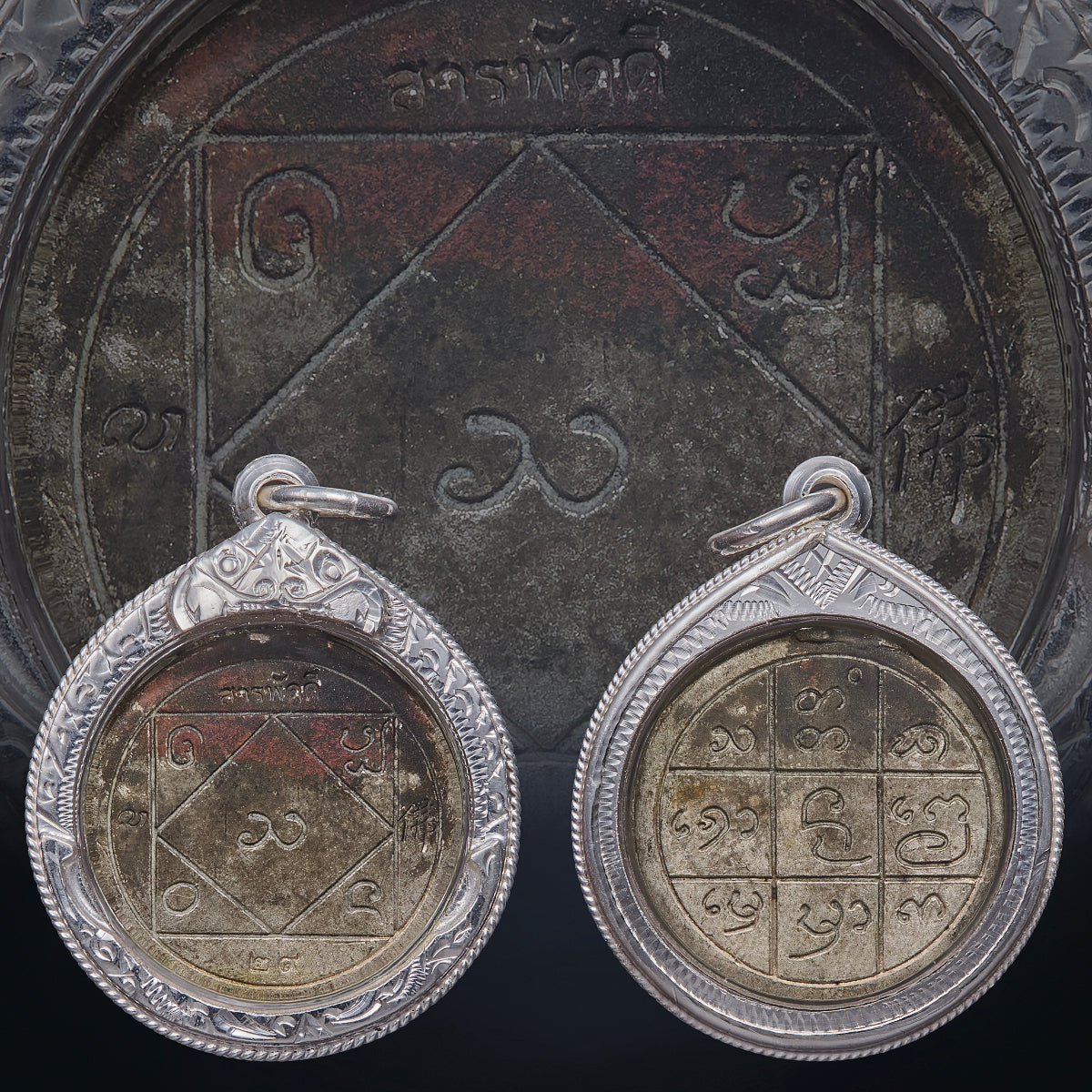
Kasaton Luang Lanna – Saraphat Dee
Wat Phra Kaeo Don Tao Suchadaram · Lampang
B.E. 2569 (2026)
Material: Nur Samrit Ngern Thong Phra That
Personal Note by Brett
Having handled and collected sacred objects for many years, what struck me most about this batch was not simply the fact that it underwent four separate consecrations across Lamphun, Lampang, and Chiang Mai, but the extraordinary materials that went into its creation.
The abbots involved in the ceremonies themselves remarked that they had rarely, if ever, seen such a concentration of sacred relics and holy metals assembled for a single batch. Among these were old sacred metals associated with temples and stupas, including material from the upper sections of temple stupas — traditionally regarded as some of the most auspicious and spiritually significant metals that can be incorporated into an amulet.
For collectors, this makes the batch genuinely unusual. It is not merely a matter of having many ingredients; it is the combination of the materials, the lineage behind them, and the unusual four-stage consecration process that gives the pieces their character.
When the preorder was announced, the entire allocation was reportedly sold out within approximately one hour. Thankfully, I had arranged for my assistant to stand by when ordering opened, which allowed me to secure a small number of pieces.
What makes me especially interested in keeping this batch is that this particular approach to Wiccha — bringing together such an extensive collection of sacred materials and carrying the pieces through several distinct consecration ceremonies — is rarely undertaken today. Considering the difficulty of assembling these materials again, I believe it is unlikely that we will see another batch of this nature produced in the near future.
For me, this is one of those pieces where the story, materials, ritual process and circumstances of its creation all come together. Whether one approaches it from the spiritual or collecting perspective, it represents a very unusual moment in contemporary Thai amulet making.
— Brett
Sacred Craftsmanship
Each medallion was individually cast and finished from the prepared sacred alloy. Natural variations in colour, patina, texture and casting are characteristic of the traditional process, making every piece individually distinct.
The photographs are representative only. A piece will be selected at random, and the amulet supplied may differ from the exact piece shown in the images.
Personal Experiences Shared by Luksits
Among followers of the Lanna tradition, sacred objects connected with Phra That are traditionally valued for Baramee — accumulated merit, spiritual authority and auspicious standing.
The Saraphat Dee was created around this broader principle. Rather than concentrating upon a single blessing or one consecration ceremony, sacred material associated with 19 Phra That was brought together before the medallions passed through repeated chanting and consecration ceremonies across Lamphun, Lampang and Chiang Mai.
For the wearer, the traditional purpose is therefore broad: strengthening Baramee, encouraging favourable opportunities, receiving goodwill and support from others, and maintaining protection while travelling, working or entering uncertain situations.
Summary
The Kasaton Luang Lanna – Saraphat Dee is a Lanna sacred yantra medallion created in B.E. 2569 (2026) in connection with the traditional water-pouring ceremony for Phra Mahathat Chao Don Tao.
The name Saraphat Dee — สารพัดดี carries the meaning of “Good in Every Way” or “All-Round Auspiciousness.”
At the heart of the edition are two important traditions brought together within one sacred object: sacred material associated with 19 Phra That and an extensive programme of repeated monastic chanting and consecration.
The Nur Samrit Ngern Thong Phra That is the rarest material of the series, with only 39 pieces created.
Historical Background
The spiritual centre of the edition is Wat Phra Kaeo Don Tao Suchadaram in Lampang, an important temple within the religious heritage of northern Thailand.
The temple is associated with Phra Mahathat Chao Don Tao, around which an established water-pouring tradition is observed.
The Saraphat Dee edition was created as a commemorative sacred object for the B.E. 2569 ceremony, connecting the medallion directly with the continuing religious traditions surrounding the Phra That.
Its design follows traditional Lanna sacred-diagram principles. Sacred characters are arranged within strong geometric yantra configurations on both sides, giving the medallion the appearance of a compact Lanna ritual diagram rather than a conventional portrait coin.
Origins of the Materials
The defining material concept of the Saraphat Dee edition is the gathering of sacred metals associated with 19 Phra That:
-
Phra Mahathat Chao Don Tao
-
Phra That Doi Suthep Ratchaworawihan
-
Phra That Si Chom Thong
-
Phra That Sadet
-
Phra That Pha Daeng Luang
-
Phra That Kam Mueang Si
-
Phra That Wat Si Luang Chae Son
-
Phra That Wat Chom Kitti
-
Phra That Wat Pa Sak Tai
-
Phra That Wat Phra That Sop Sae
-
Phra That Wat Phra That Nong Chan
-
Phra That Wat Phra That Si Don Kham
-
Phra That Wat Si Luang Chae Hom
-
Phra That Doi Noi Kao
-
Phra That Chae Haeng
-
Phra That Chedi Luang
-
Phra That Chedi Doi Wao
-
Phra That Chedi, Wat San Ton Thong
-
Phra That Chedi Suchadaram
The central concept of the project is expressed simply as:
“The sacred power of the 19 Phra That brought together as one.”
For this special Nur Samrit Ngern Thong Phra That variation, these Phra That-associated materials form part of a sacred silver-gold alloy, distinguishing it from the other two materials in the series.
Ritual
The consecration programme is one of the most significant aspects of the Saraphat Dee edition. Rather than receiving only a single blessing, the medallions passed through four principal ritual stages.
The first consecration was conducted at Wat Ban Ruean, Lamphun, where monks entered meditative chanting while Sai Sin connected the ceremonial space and sacred objects.
The second consecration was held at the Chao Mae Suchada Shrine in Lampang, adding another formal stage of chanting and blessing.
The third consecration took place at Wat Makap Tong, Chiang Mai, where another monastic assembly participated in the Pithi Pluk Sek.
The fourth and culminating stage was held at Wat Phra Kaeo Don Tao Suchadaram, Lampang.
Here the medallions entered the important Suep Chata Luang, a major Lanna ceremony traditionally associated with strengthening and sustaining auspicious destiny, stability, longevity and favourable conditions.
Most importantly, this stage incorporated nine rounds of Suat Boek chanting.
The repeated chanting is central to the identity of the Saraphat Dee. The medallions travelled through successive sacred environments and monastic assemblies before reaching their final rites at Don Tao.
In this way, the edition brings together two complementary foundations:
19 Phra That form its sacred material lineage.
Repeated consecration, Suep Chata Luang and nine rounds of Suat Boek form its ritual lineage.
Blessings and Effects
Traditional intentions associated with the Saraphat Dee include Baramee, strengthening personal merit and authority; Chok Lap, supporting fortune and favourable opportunities; Metta Maha Niyom, encouraging goodwill and acceptance from others; and Klaew Klad, traditionally associated with avoiding danger and misfortune.
The medallion is also associated with protection, personal safety, stability through difficult periods and support for progress in work and livelihood.
These broad qualities reflect the meaning of its name — Saraphat Dee, “Good in Every Way.”
Modern Application
The Nur Samrit Ngern Thong Phra That is particularly suitable for someone seeking a principal Lanna sacred piece with broad traditional qualities.
Its Baramee and Metta aspects are relevant to business owners, leaders and those whose work depends upon reputation, negotiation and relationships. Its protective and Klaew Klad traditions also make it meaningful for travel and periods of major change.
Above all, its significance lies in carrying the symbolic connection of 19 Phra That together with an unusually extensive sequence of Lanna chanting and consecration.
Physical Details
The Kasaton Luang Lanna – Saraphat Dee is a circular Lanna yantra medallion created in B.E. 2569 (2026). This rare variation is cast in Nur Samrit Ngern Thong Phra That, or Sacred Silver-Gold Relic Alloy, and was limited to only 39 medallions. Both faces carry traditional sacred characters arranged within geometric yantra forms, while the material belongs to the 19 Phra That sacred-metal tradition and underwent the complete four-stage consecration programme culminating in Suep Chata Luang and nine rounds of Suat Boek chanting.
Recommended Pairing
This piece may be worn independently as a principal Lanna sacred medallion.
For pairing, a Buddha image, Phra Somdej or Phra Kring complements its broad auspicious character while allowing the Saraphat Dee to retain its central role for Baramee, fortune, Metta and protection.
-
Free Shipping for Singapore| $15 Worldwide | $60 USA For Items Below $350