
OOBThaiAmulets
Por Sala Tan
Por Sala Tan
Temple-sourced certified artifacts since 2005. Questions before you buy? WhatsApp us at +65 9155 7000.
Couldn't load pickup availability
Phra Khun Paen Roon Raek (Tamlar) — Por Sala Tan
- Item: Phra Khun Paen
- Master: Por Sala Tan
- Batch: Roon Raek (Tamlar), first official Khun Paen release
- Year: B.E. 2550 (2007)
- Quantity Produced: 49 pieces
- Principal Material: Five Prai Nur Hom
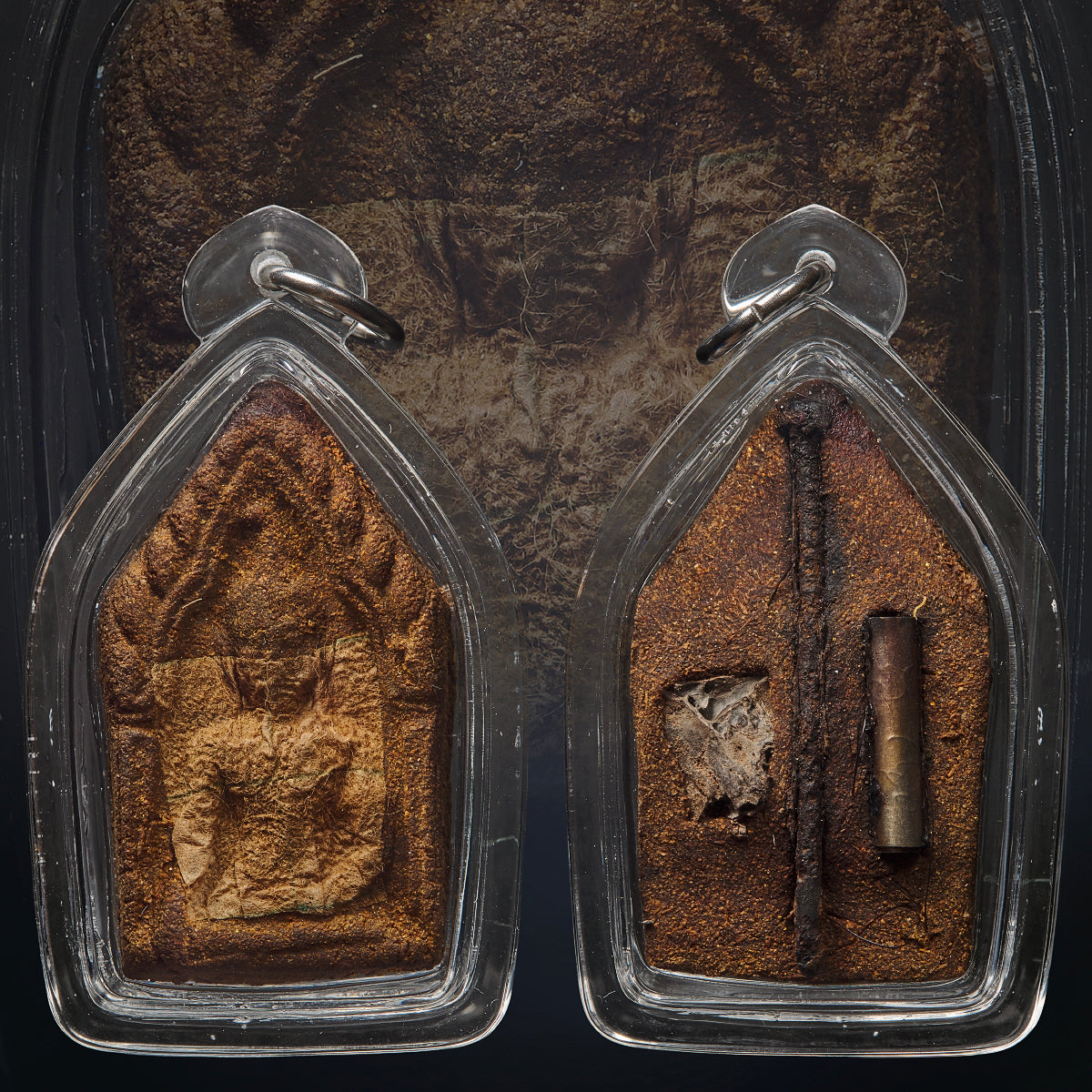
- Additional Components: Hair relics, coffin nail, takrut and Paneang fragment
- Distinctive Feature: Old Five-Prai Tamlar paper incorporated into the front
- Casing: Clear protective casing
Personal Notes
I personally collected pieces from this batch directly from Por Sala Tan in 2014. It was his first official Khun Paen release, bringing together materials he had retained through many years of practice in a limited edition of just 49 pieces.
Many examples remained with the original luksits and collectors who obtained them during that period. Their close connection with the master, together with the old materials used, gives this batch a particular place among his creations.
For me, its significance lies in that combination: the Five Prai, their sacred materials, the old Tamlar and Por Sala Tan’s method of bringing them together. It preserves an important part of his earlier wicha in one of his first structured releases.
Summary
The Phra Khun Paen Roon Raek (Tamlar), B.E. 2550, brings together five separate Prai Nur Hom within a single Khun Paen form. Produced in a quantity of 49 pieces, the batch incorporates hair relics, a coffin nail connected with earlier Pii Tai Hong ritual work, a takrut and a Paneang fragment associated with one of the Five Prai.
Its defining feature is the old Tamlar paper incorporated into the front. Taken from the ritual text associated with the Five Prai, this element gives the batch its familiar designation and forms an integral part of its spiritual purpose.
Within Por Sala Tan’s tradition, the finished piece is associated with Maha Saneh, Metta Maha Niyom, attraction, persuasion and opportunity. Its composition expresses the intention of bringing the Five Prai into harmony so their qualities can support the keeper.
Historical Background
Por Sala Tan was a white-robed lay master whose work was closely associated with Prai wicha and sacred materials retained through years of practice. His followers valued the individual preparation of his artifacts and their connection with the materials and methods of his lineage.
Before this release, his sacred objects were generally made individually or in very small quantities for particular people and circumstances. The Roon Raek marked an important stage in his work by gathering several older components into a defined Khun Paen batch.
The quantity of 49 pieces reflected the limited materials available for the project. The Five Prai Nur Hom, hair relics, older ritual components, Paneang and Tamlar each contributed a distinct connection to his practice. Together, they give the batch its historical identity.
Origins of the Materials
The foundation is the Five Prai Nur Hom, associated within Por Sala Tan’s tradition with five separate female Prai. These materials were valued for their connection with Saneh, attraction and the devotional understanding that the Prai could assist the living while participating in merit-making.
Hair relics were incorporated alongside materials connected with earlier Pii Tai Hong ritual work. The coffin nail forms part of that older ritual history, while the takrut adds another prepared element to the composition.
A small Paneang fragment associated with one of the original Five Prai was also included. Within Barang traditions that employ such relic materials, even a small fragment is regarded as carrying considerable ritual significance.
The aged paper on the front comes from the Five-Prai Tamlar, the traditional ritual text or record of wicha. Its presence connects the physical materials with the knowledge used to prepare and direct them.
Ritual
The consecration centred on bringing the Five Prai together within one Khun Paen structure. Each was understood to possess its own provenance and character, and Por Sala Tan’s work focused on establishing a coordinated relationship between them.
The Tamlar played an important role in this process. Within the ritual understanding of the batch, it helped settle, organise and direct the five spiritual currents towards a shared purpose.
Through invocation, meditation and the relevant Prai wicha, the materials were prepared for the intended qualities of Saneh, Metta Maha Niyom, attraction, persuasion, opportunity and assistance. The takrut and older ritual components formed part of the complete preparation.
Blessings and Effects
The principal association of this Khun Paen is Maha Saneh: personal attraction, presence and the ability to draw favourable attention. Alongside it is Metta Maha Niyom, traditionally connected with goodwill, acceptance, popularity and receptiveness.
Luksits have shared experiences of warmer interactions, conversations developing naturally and contacts becoming easier to approach. In relationships, the piece is associated with affection, reconciliation and stronger interpersonal connection.
For work and business, owners have described customers becoming more receptive, negotiations progressing smoothly and new connections developing into opportunities. Within this tradition, the qualities of Saneh extend into the human relationships that support livelihood and progress.
These are devotional associations and experiences shared by followers of Por Sala Tan’s work.
Modern Application
The Roon Raek has particular relevance for people whose work depends on relationships and communication. Business owners may value its traditional connection with customer goodwill and repeat business, while salespeople and negotiators may appreciate its associations with receptiveness and persuasive expression.
For those in social or public-facing professions, its meaning centres on personal presence, recognition and the ability to develop favourable connections. In personal life, its traditional focus on Saneh and Metta relates to warmth, affection and interpersonal harmony.
For collectors, it also preserves a distinctive combination of Por Sala Tan’s earlier materials and Five-Prai wicha within a limited first-batch Khun Paen.
Physical Details
The amulet has a traditional peaked Khun Paen outline and a textured brown-toned body. The front retains an aged strip of Tamlar paper across part of the central image.
On the reverse, a long dark nail, a rolled takrut and a pale irregular fragment are visible within the surface. The clear casing allows the front design, paper and embedded components to be appreciated from both sides.
Recommended Pairing
The Roon Raek can be worn as a standalone Saneh and Metta piece, with its traditional focus on attraction, goodwill and favourable human connections.
For business-oriented use, it may be paired with a wealth or Choke Lap artifact, bringing together the themes of receptiveness and financial opportunity.
Those who also value authority and leadership may choose a tiger-form or Maha Amnaj piece as a companion. Within that pairing, the Khun Paen represents goodwill and approachability, while the authority piece represents confidence and a respected presence.
-
SG: Free | Worldwide except USA: $20 Registered | USA: $25 Registered / $100 Courier (SGD)