
OOBThaiAmulets
Si Hu Haa Taa - Kruba Sanong, Wat Phra That Doi Kao Kwai
Si Hu Haa Taa - Kruba Sanong, Wat Phra That Doi Kao Kwai
Temple-sourced certified artifacts since 2005. Questions before you buy? WhatsApp us at +65 9155 7000.
Couldn't load pickup availability
BOX: MCBC03
Si Hu Haa Taa: Kruba Sanong, Wat Phra That Doi Kao Kwai
- Master / Lineage: Kruba Sanong, Wat Phra That Doi Kao Kwai
- Temple: Wat Phra That Doi Kao Kwai, Rob Wiang, Mueang Chiang Rai, Chiang Rai
- Year: B.E. 2560
- Materials: Nawaloha with ash powder from the blessing ceremony
- Size: 2cm
- Casing: Clear oval acrylic casing with a silver-coloured jump ring
Personal Notes
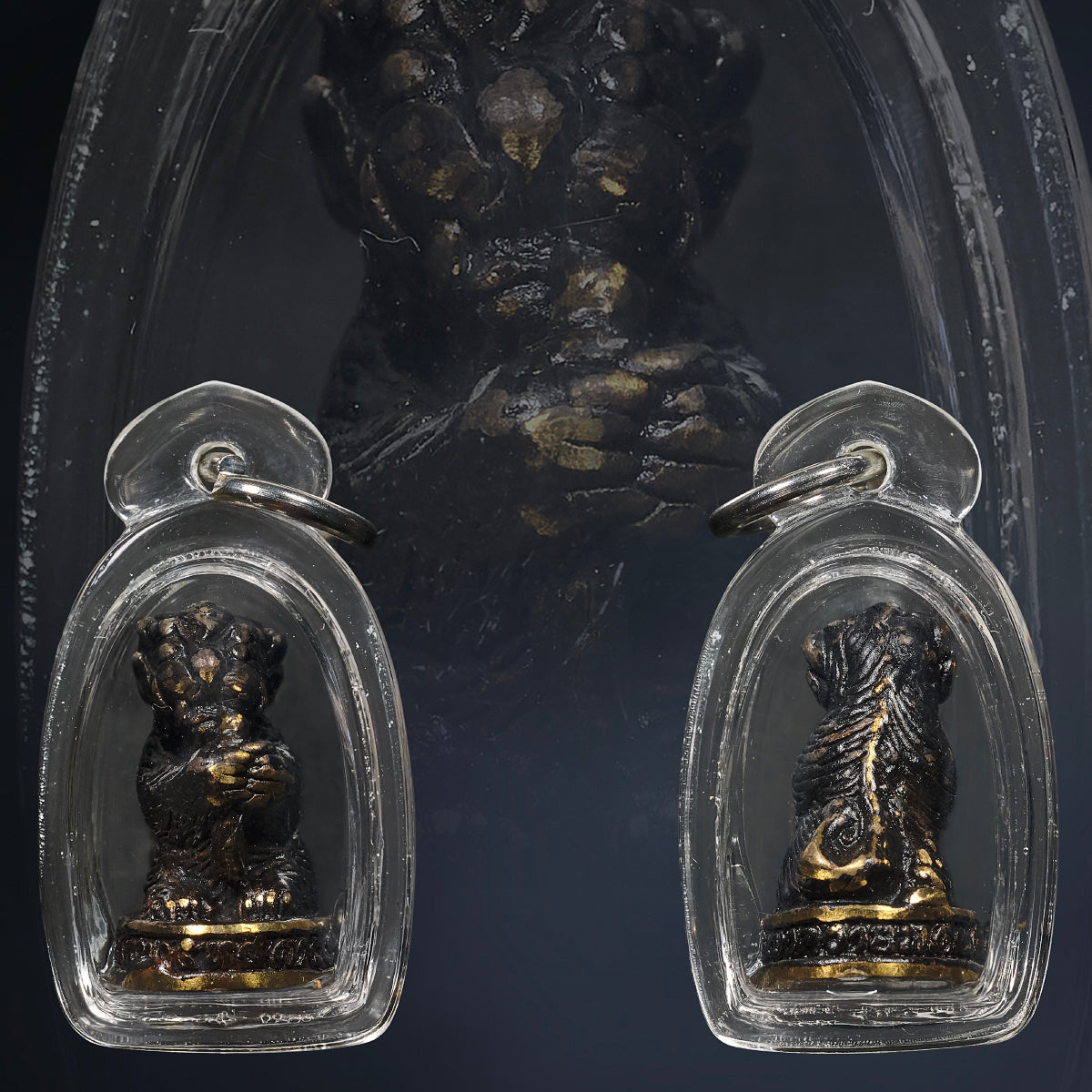
This compact Si Hu Haa Taa comes from Wat Phra That Doi Kao Kwai, the Chiang Rai temple that is the original home of the tradition. It is a small Nawaloha figure with gold highlighting, shown front and back in a clear oval casing with a silver-coloured jump ring, made to be worn as a pendant.
Summary
This B.E. 2560 Si Hu Haa Taa from Wat Phra That Doi Kao Kwai, Chiang Rai is a compact sacred figure in Nawaloha, with ash powder from the blessing ceremony, blessed in the tradition of Kruba Sanong. The front shows a sitting, bear-like form with the traditional clustered features of four ears and five eyes, the paws held together at the chest, and gold highlighting on the face and body. The reverse shows a ridged back and a curled tail. It is presented in a clear oval acrylic casing with a silver-coloured jump ring.
In Lanna belief, Si Hu Haa Taa is the transformed form of Phra Indra, a sacred being of fortune, livelihood and unexpected plenty. Devotees keep it as a compact companion for wealth, opportunity and relief from hardship, and as a reminder of generosity and clear moral life.
Historical Background
Kruba Sanong, also known as Kruba Sanong Sumano, is remembered as abbot of Wat Phra That Doi Kao Kwai in Rob Wiang, Mueang Chiang Rai. Temple histories record that he came to the wat from Wat Chiang Yuen in B.E. 2519 (1976) and was appointed abbot in B.E. 2528 (1985). His years at the temple are associated with a wide work of restoration, and with the modern sacred objects of the Si Hu Haa Taa tradition.
The temple itself is an ancient hilltop sanctuary of Chiang Rai, restored across many periods, including the time of Phaya Mangrai and, in the modern era, the work of Kruba Khamla Sangwaro. It is widely regarded as the original home of Si Hu Haa Taa.
According to Lanna tradition, Si Hu Haa Taa is a gentle sacred being with four ears and five eyes. The folk story tells of Phra Indra taking this form to help a poor farmer in a time of drought. The being ate burning charcoal, gold appeared, and the farmer's fortune changed. The four ears are also read as the four Brahmavihara, and the five eyes as the Five Precepts. In B.E. 2561 (2018) Chiang Rai took this temple's Si Hu Haa Taa as the mascot of the National Games, and the legend became known throughout the country.
Origins of the Materials
This Si Hu Haa Taa is made of Nawaloha, the traditional sacred nine-metal alloy, combined with ash powder from the blessing ceremony. Nawaloha is valued in Thai sacred craft for bringing many auspicious metals together in one object. The ash from the ceremony joins that alloy to the blessing of the temple, so that the material itself carries the rite in which the piece was consecrated.
The figure has a dark tone, with gold highlighting on the face, chest, spine and base. It is a compact metal image made to be worn close to the body, carrying the form of Phra Indra's transformation in a material chosen for daily wear.
Ritual
This B.E. 2560 Si Hu Haa Taa was blessed in the tradition of Kruba Sanong at Wat Phra That Doi Kao Kwai, the original home of the legend. The intention of that blessing is to bring together fortune, livelihood, unexpected help and the protective, generous character of the story, so that a small figure can be worn with confidence in daily life.
Blessings and Effects
Si Hu Haa Taa is traditionally associated with wealth, livelihood, abundance and help that arrives from unexpected directions, as the transformed form of Phra Indra. The same tradition also joins that fortune with kindness and moral life, through the symbolism of the four ears and five eyes.
- Chok Lap and livelihood: for timely opportunity, favourable income and the kind of luck that appears when it is most needed.
- Plenty and support: associated with having enough, with resources that continue, and with help in periods of difficulty.
- Presence and favour: the blessing of Phra Indra, supporting dignity and the sense of being well-received in work and daily dealings.
Modern Application
A compact Si Hu Haa Taa in a clear casing is easy to wear every day as a pendant, close to the body, through work, travel and ordinary life. It suits anyone who wants a single, discreet piece for livelihood, opportunity and a steady sense of support.
Before a demanding period in business, a new job, a negotiation, or a stretch when income and opportunity matter most, the piece is kept close as a reminder of the blessing of Wat Phra That Doi Kao Kwai and of fortune that can arrive from many directions.
Recommended Pairing
This Si Hu Haa Taa is complete enough to be worn on its own. Pairing helps when you have one very specific goal:
- Business, sales and unexpected income: pair with a dedicated Chok Lap or Lap Loi piece.
- People and opportunity: pair with a strong Metta Maha Niyom piece.
- Protection on the road and in daily life: pair with a Takrut or another protective piece.
-
SG: Free | Worldwide except USA: $20 Registered | USA: $25 Registered / $100 Courier (SGD)