
OOBThaiAmulets
Por Sala Tan
Por Sala Tan
Couldn't load pickup availability
PST07
Mae Per – Gaduk Chang Kraden
Por Sala Tan
1.5 Inches
Mainstream Artifact
Sacred Craftsmanship
Each artifact was individually carved and assembled from natural relic and prepared ritual materials. Variations in colour, texture, carving, sacred insert, inscriptions and surface ageing make every surviving piece individually distinctive.
Personal Experiences Shared by Luksits
Among luksits, Mae Per pieces were generally approached when being noticed was not enough.
A person might already meet many customers, speak with numerous clients or interact regularly with others, yet still find that people did not remember them, listen closely or develop sufficient trust to continue the relationship.
This is where the combination of Seneh and Baramee becomes important.
Some users described becoming more noticeable in social and working environments. Conversations seemed easier to begin, people appeared more willing to continue talking, and introductions sometimes developed into longer relationships rather than ending after a brief encounter.
For those involved in business and sales, the desired effect was similarly practical: customers remembering them, returning, listening to their recommendations and becoming more comfortable dealing with them.
In personal relationships, luksits traditionally approached Mae Per for attraction, affection and strengthening the emotional connection between people.
The experiences shared around these pieces therefore emphasise something more enduring than simple physical attraction.
Seneh draws attention. Baramee gives that attention weight.
Summary
This Mae Per represents Por Sala Tan's combination of Maha Seneh with Baramee.
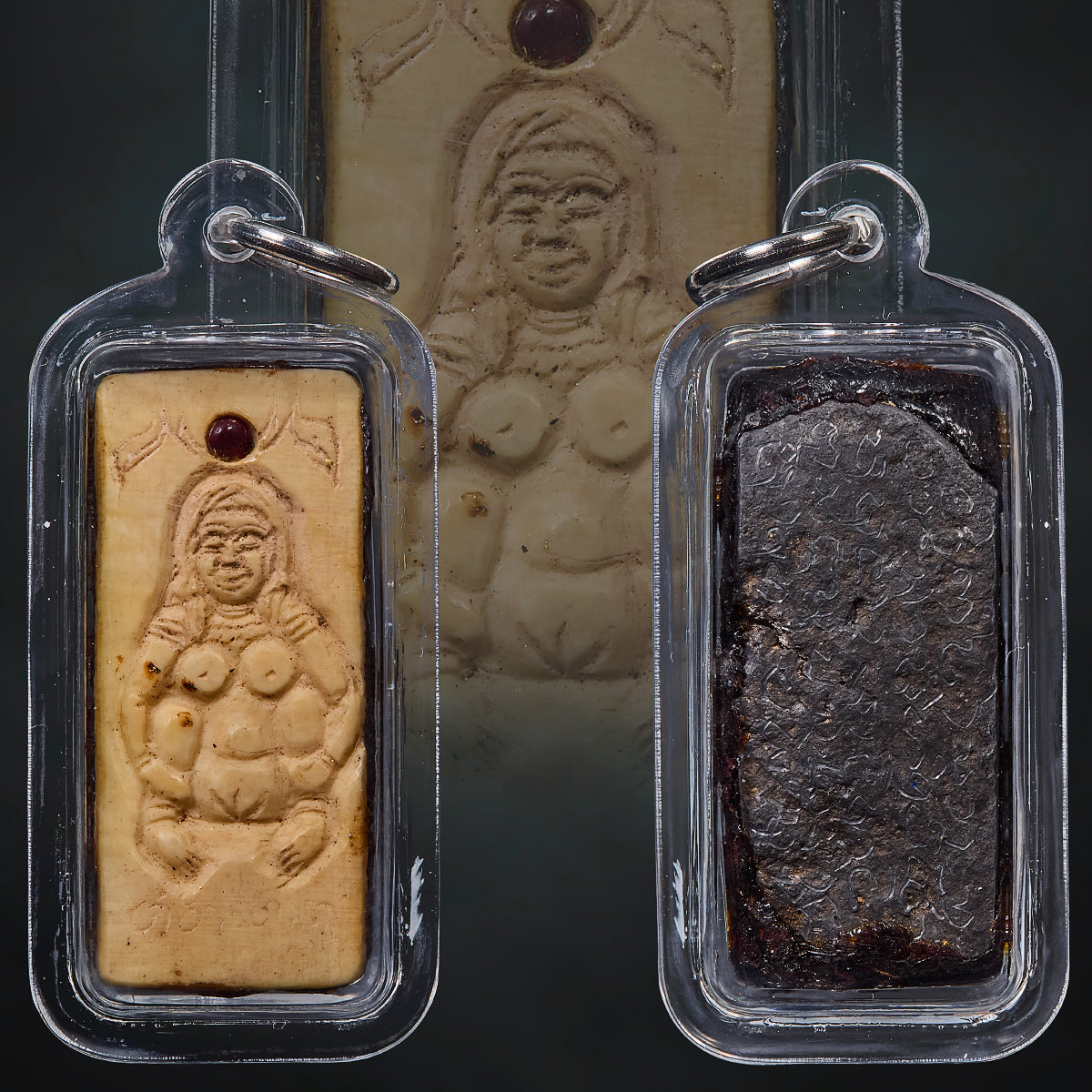
The front is carved from Gaduk Chang Kraden, while the reverse is reinforced with lead derived from old takruts and covered with sacred inscriptions.
Mahout-associated soil and Naman Chang were incorporated into the preparation, strengthening the relationship between the artifact and the traditional qualities attributed to the chang.
The resulting piece is approached for Seneh, Metta Maha Niyom, attraction, popularity, persuasive presence, Baramee, authority and stronger personal relationships.
It is particularly suited to people whose livelihood depends upon human interaction — business owners, salespeople, negotiators, performers and those whose success depends upon being remembered and well received.
Historical Background
Mae Per belongs to the more specialised side of Thai attraction and Seneh traditions.
Within Por Sala Tan's practice, however, Seneh should not always be understood simply as romantic attraction.
Its practical application is much broader.
A merchant needs customers to feel comfortable entering the shop.
A salesperson needs another person to remain interested long enough to listen.
A negotiator needs people to be receptive rather than immediately defensive.
A leader needs authority, but authority without goodwill can create distance.
This is why Metta, Seneh and Baramee can complement one another.
Mae Per represents the attractive current — the quality that encourages attention, interest and emotional receptiveness.
The chang contributes a very different symbolism.
Across Southeast Asian traditions, the chang has long represented strength, status, endurance and authority. Historically, elephants were connected with rulers, warfare, transport and major ceremonial occasions. Their immense physical presence naturally became associated with Baramee.
By carving Mae Per from Gaduk Chang Kraden, Por Sala Tan brought these two symbolic currents together.
Attraction was given authority.
Authority was softened by attraction.
Origins of the Materials
The principal material is Gaduk Chang Kraden.
According to the lineage account accompanying this artifact, the relic came from a chang that had passed away during the peak of its mature strength.
Por Sala Tan regarded this material as particularly appropriate for a Mae Per because it introduced qualities beyond Seneh alone.
The chang represented presence, strength, endurance and Baramee.
The reverse contains lead melted from old takruts. Instead of using ordinary newly prepared metal, material already associated with sacred inscriptions and earlier ritual use was repurposed into the backing of the artifact.
Sacred inscriptions were then worked across this surface.
Naman Chang was incorporated as another direct material connection with the chang.
Soil associated with mahouts was also included. Within the traditional reasoning of the piece, the mahout is significant because the relationship between chang and keeper is built through familiarity, trust, authority and repeated interaction.
This relationship complements the central intention of Mae Per remarkably well.
The piece is therefore not built from one sacred material alone, but from several substances chosen around the themes of attraction, relationship, authority and influence.
Ritual
Por Sala Tan prepared the Mae Per through extended chanting intended to harmonise materials carrying different ritual characteristics.
The Gaduk Chang Kraden formed the principal body.
The takrut-derived lead provided the backing and a surface upon which the sacred inscriptions could be established.
Naman Chang and mahout-associated material connected the construction with the living relationship between the chang and those who worked closely with it.
The Seneh Wicha was then directed through the image of Mae Per.
This harmonisation was important.
Raw attraction without stability can be temporary.
Authority without Metta can become intimidating.
Seneh without Baramee may attract attention without necessarily creating respect.
Por Sala Tan's construction sought to bring these qualities into balance:
Seneh to attract.
Metta to soften.
Baramee to command respect.
Chang energy to give strength and endurance to the whole.
Blessings and Effects
The principal traditional quality is Maha Seneh — attraction, personal magnetism and the ability to become more noticeable to others.
Closely connected is Metta Maha Niyom, traditionally associated with goodwill, kindness, popularity and receiving favourable treatment from people encountered in everyday life.
For business, this translates into the traditional intention of encouraging customers to approach, listen, remember the seller and feel comfortable returning.
For those working in negotiation, management or leadership, the Baramee aspect becomes equally important. The purpose is not merely to be liked, but to have one's words carry greater presence while maintaining good relations with others.
In personal relationships, Mae Per is traditionally associated with affection, attraction, reconciliation and strengthening emotional attention.
The artifact is therefore traditionally approached for:
- Maha Seneh and attraction
- Metta Maha Niyom
- Popularity and social acceptance
- Customer attraction
- Better business relationships
- Persuasive communication
- Being remembered by others
- Affection and relationship support
- Baramee and authority
- Respect from colleagues and subordinates
- Confidence and personal presence
- Maintaining longer-term connections
Modern Application
Mae Per is particularly relevant to occupations where success depends upon how people respond to you.
For a salesperson, attracting attention is only the beginning. The customer must remain interested, listen, develop trust and eventually feel comfortable making a decision.
For a business owner, bringing people through the door is valuable, but repeat customers are even more important.
For a manager, being popular without authority may accomplish little, while authority without Metta can make staff reluctant to communicate openly.
This Mae Per represents a balance between these qualities.
It may therefore be worn by those involved in sales, retail, customer service, negotiation, entertainment, management or relationship-driven businesses.
In personal life, the same principle applies.
The traditional intention is not simply to make someone notice the keeper, but to support warmth, affection, remembrance and continued connection.
Physical Details
A rectangular Mae Per artifact individually carved from pale Gaduk Chang Kraden, with the female figure shown prominently upon the front and a small reddish sacred insert positioned above the head. The natural colour and aged texture of the relic remain visible throughout the carving. The reverse is heavily reinforced with dark lead derived from old takruts and carries numerous hand-worked sacred inscriptions across its surface. Naman Chang and mahout-associated ritual material were incorporated during preparation. The artifact is presently preserved within a clear protective casing.
Recommended Pairing
This Mae Per already combines Seneh, Metta and Baramee, making it a relatively complete piece for occupations dependent upon personal interaction.
For stronger business emphasis, it pairs naturally with Maha Pokasap. Mae Per supports the human relationship — attracting and retaining favourable attention — while Maha Pokasap concentrates upon financial accumulation.
For those working heavily in sales, Choke Lap can add the element of opportunity while Mae Per supports the personal interaction required to convert that opportunity into a result.
For leadership, pairing with a Lersi or Suer Baramee piece can strengthen authority while allowing Mae Per to maintain the softer Metta and Seneh aspect.
The balance is important.
It is easier to conduct business when people respect you. It is easier still when they respect you and genuinely enjoy dealing with you.
Personal Notes
There is a simple principle behind this Mae Per that remains very relevant to modern life.
Opportunity often comes through people.
A customer decides whom to buy from.
A manager decides whom to promote.
An investor decides whom to trust.
A business partner decides whom to work with.
Even when two people offer something very similar, the human relationship can determine which opportunity develops further.
This is why the combination used by Por Sala Tan is interesting.
Mae Per provides the language of Seneh and attraction, while Gaduk Chang Kraden introduces the very different language of strength and Baramee.
One draws people closer.
The other gives the keeper presence once they arrive.
For me, that is the character of this piece.
Seneh may cause someone to notice you. Metta may make them comfortable with you. But when these are supported by Baramee, that attention can develop into respect, trust and a relationship that lasts.
-
Free Shipping for Singapore| $15 Worldwide | $60 USA For Items Below $350