
OOBThaiAmulets
Por Sala Tan
Por Sala Tan
Couldn't load pickup availability
PST04
Keow Mii
Por Sala Tan
~ 3" height
Sacred Craftsmanship
Each artifact was individually handmade by Por Sala Tan from carefully prepared sacred materials. Natural differences in the Keow Mii, handwritten yant, sacred Sai Sin, Burmese wax, takruts and attached relics create variations in texture, colour and form, making every completed piece truly unique.
Personal Experiences Shared by Luksits
Artifacts prepared from Keow Mii are seldom encountered openly. According to Por Sala Tan’s luksits, pieces of this nature possess a particularly strong character of protection, Maha Amnaj and fast thinking under pressure.
Luksits who have kept such pieces describe a heightened sense of confidence and alertness, particularly when entering unfamiliar environments, dealing with difficult personalities or facing sudden situations where decisions must be made quickly. The protective essence of the bear is regarded as helping the keeper remain steady rather than becoming overwhelmed by pressure.
The Maha Amnaj quality is another characteristic frequently associated with these artifacts. Keepers describe feeling firmer in their speech and decisions, with greater confidence when dealing with competition, confrontation or people attempting to exert pressure over them. Within the old animal-relic tradition, this reflects the bear’s natural symbolism of strength, endurance and the ability to stand its ground.
Luksits also regard the addition of the Ngan as particularly important. While the Keow Mii provides the stronger foundation of protection and authority, the Ngan introduces a pronounced Maha Saneh and Metta Maha Niyomquality. This gives the piece a more balanced character — strong and commanding when necessary, yet carrying attraction and favourable interpersonal energy when dealing with others.
Those involved in business, sales and negotiation have therefore valued this combination. The keeper is traditionally believed to receive the confidence and quick judgement associated with Keow Mii while the Ngan supports personal magnetism, smoother communication and favourable responses from customers or people around them.
Some luksits also associate bear-related artifacts with protection against hidden rivalry, backstabbing and unfavourable intentions, describing a stronger instinct to recognise when a person or situation does not feel right.
This particular piece was eventually collected from a close luksit of Por Sala Tan, who had personally kept it amongst his sacred objects. Like many of Por Sala Tan’s uncommon animal-relic works, such pieces were usually retained by their original keepers and seldom appeared openly amongst collectors.
Summary
This rare Keow Mii artifact by Por Sala Tan was personally obtained during one of his journeys gathering sacred materials for his wicha.
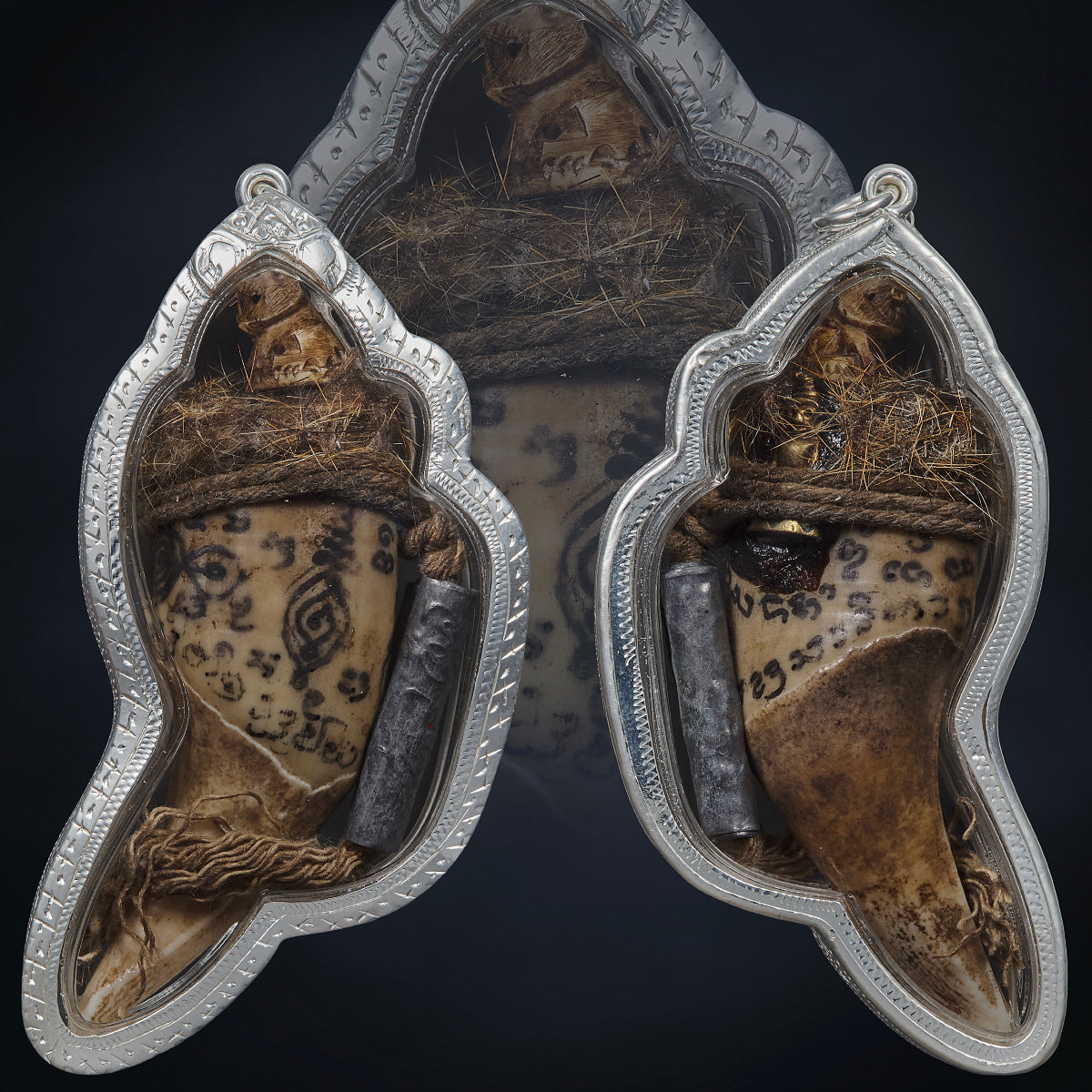
It was extensively hand-yanted by Por Sala Tan, bound with old sacred Sai Sin and accompanied by takruts, Burmese ritual wax and a Ngan component.
At the upper section sits a small tiger Roop Lor carved from Gaduk Mii, secured using Burmese wax together with sacred cave soil connected with the original discovery of the bear relics.
The completed artifact brings together two powerful forest symbols. It represents endurance, formidable protection and the ability to remain steady under pressure, while the tiger represents courage, Maha Amnaj and commanding presence. The addition of Ngan introduces the complementary qualities of Maha Saneh and Metta Maha Niyom.
Origin of the Keow Mii
According to the account surrounding these materials, Por Sala Tan obtained the the relics while travelling through remote areas and gathering unusual substances for his wicha.
During one expedition, he entered a secluded cave where he became aware of the presence of bear spirits believed to remain within the area.
Por Sala Tan entered deep meditation and communicated with these presences. According to the lineage account, they eventually guided him towards old bear where it remains were discovered within the cave.
The remains were collected only after the appropriate prayers and ritual acknowledgement had been performed.
Keow Mii – The Bear Tooth
Within old forest and animal-relic traditions, Keow Mii is valued for the qualities represented by the bear: strength, endurance, territorial protection and the ability to withstand severe circumstances.
It carries an additional symbolism as the natural defensive weapon of the animal. It represents the ability to stand one’s ground, resist opposition and protect oneself when threatened.
For this reason, Keow Mii artifacts have traditionally appealed to those facing strong competition, demanding work or circumstances requiring courage and quick judgement.
In Por Sala Tan’s preparation, the natural relic became the foundation upon which additional wicha was built.
Hand-Yanted by Por Sala Tan
The surface of the Keow Mii was personally inscribed by Por Sala Tan with sacred yant and characters, associated with bear wicha.
These inscriptions direct the traditional qualities of the natural relic towards protection, authority and the strengthening of the keeper’s personal presence.
Old Sai Sin was wrapped around the tooth, physically binding the different components while representing continuity with ritual blessing and the master’s consecration.
Takruts were then positioned alongside the relic to further reinforce and balance its intended qualities.
Gaduk Mii Tiger Roop Lor
One of the most distinctive features of this artifact is the small tiger Roop Lor positioned above the Keow Mii.
The tiger itself was carved from Gaduk Mii. This creates an unusual combination in which the physical material of the bear has been shaped into the image of another commanding animal of the forest.
The bear provides the foundation of strength, endurance and protection, while the tiger contributes Maha Amnaj, courage, decisive action and commanding presence.
The Roop Lor was attached using Burmese ritual wax and sacred soil from the cave associated with the original bear relics, preserving a physical connection between the completed artifact and the place from which its principal materials originated.
Ngan, Burmese Wax & Takruts
A Ngan component was incorporated to complement the stronger protective nature of the bear and tiger.
Within this preparation, Ngan is associated particularly with Maha Saneh, Metta Maha Niyom, personal magnetism and favourable attention.
This creates an important balance within the artifact. The Keow Mii and tiger strengthen courage, authority and protection, while the Ngan supports attraction and interpersonal influence.
The Burmese wax functions as both a ritual and binding material, while the accompanying takruts further reinforce the different strands of wicha contained within the piece.
Ritual & Consecration
Por Sala Tan prepared the Keow Mii through a combination of handwritten yant, sacred bindings, takruts and complementary relic materials.
The Keow Mii formed the principal foundation. The tiger strengthened its protective and commanding character, while the Ngan introduced Maha Saneh and Metta qualities.
Sacred Sai Sin bound the preparation together, while the cave soil maintained its connection with the place where the original bear remains were encountered.
The completed artifact therefore combines several strands of Por Sala Tan’s forest wicha into one individually prepared piece.
Traditional Blessings
The principal qualities traditionally associated with this Keow Mii are strong protection, Maha Amnaj, courage, endurance and fast thinking under pressure.
The tiger component further strengthens authority and decisive action, while the Ngan contributes Maha Saneh and Metta Maha Niyom, supporting attraction, goodwill and persuasive presence.
Together, the artifact is traditionally valued for protection, overcoming obstacles and rivalry, business competition, negotiation, personal influence and the strengthening of baramee.
Modern Application
The character of this artifact makes it particularly relevant to people working in competitive and high-pressure environments.
Business owners, salespeople and negotiators may appreciate its balance of Maha Amnaj and Maha Saneh — representing the ability to remain decisive under pressure while maintaining favourable relationships with customers and associates.
For managers and those carrying responsibility, the bear and tiger symbolism represents steadiness, leadership and quick judgement when unexpected problems arise.
Travellers and those frequently entering unfamiliar environments may similarly value its traditional emphasis upon protection, alertness and awareness of their surroundings.
Physical Details
The principal material is an old Keow Mii, personally covered with sacred handwritten inscriptions by Por Sala Tan.
It is bound with aged Sai Sin, with takruts positioned alongside it. Burmese wax, Ngan and additional sacred components are incorporated into the construction.
At the upper section is a small tiger Roop Lor carved from Gaduk Mii, attached with Burmese wax and sacred cave soil associated with the original bear relics.
The natural form of the tooth, handwritten inscriptions, aged bindings and individually arranged ritual materials preserve the unmistakably handmade character of the piece.
Collector’s Note
Artifacts of this nature are seldom seen openly in the market. Por Sala Tan did not have an unlimited supply of old Keow Mii and Gaduk Mii, and suitable materials could only be prepared when they became available.
Many were individually handmade and personally passed to devotees and close luksits according to their circumstances. Once received, these pieces were commonly retained amongst the keeper’s personal sacred objects.
This example is especially distinctive for its combination of Keow Mii, Gaduk Mii tiger Roop Lor, Ngan, cave soil, Burmese wax, Sai Sin and takruts, together with extensive handwritten yant personally applied by Por Sala Tan.
For collectors of Por Sala Tan’s forest and animal-relic wicha, it represents an uncommon work bringing together the protection and endurance of the bear, the authority of the tiger, and the Maha Saneh of Ngan within a single artifact.
-
Free Shipping for Singapore| $15 Worldwide | $60 USA For Items Below $350