
OOBThaiAmulets
Por Sala Tan
Por Sala Tan
Couldn't load pickup availability
PST04
Lersi Roop Lor
Por Sala Tan
2.5 Inches
Mainstream Artifact
Sacred Craftsmanship
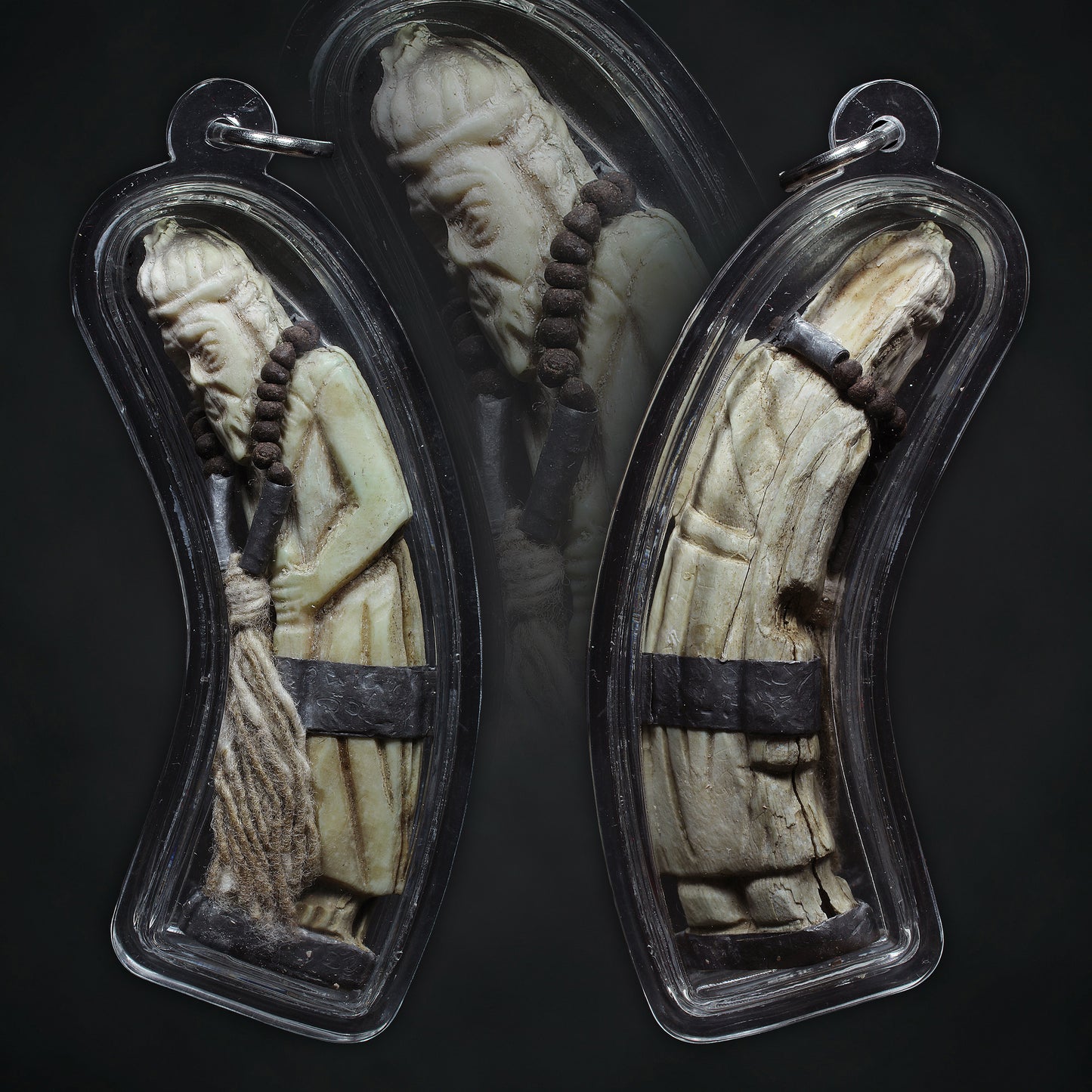
This Lersi Roop Lor is an old ceremonial artifact originating from Myanmar, carved from Keow Moo Tong Deang, a material traditionally valued among forest practitioners for its associations with strength, spiritual authority and protection.
As an individually carved artifact made from old natural material, variations in colour, texture, surface markings and age-related wear are part of its character. The existing prayer beads, ceremonial bindings and Takrut arrangements further distinguish this particular piece.
Exact piece as per photo will be given.
Personal Experiences Shared by Luksits
Among followers of Por Sala Tan, Lersi artifacts are particularly appreciated for their traditional associations with spiritual guidance, intuition, protection and assistance during difficult decisions.
Some devotees describe experiencing a greater sense of composure when carrying a Lersi artifact, particularly during periods involving important personal or professional decisions.
Rather than describing sudden changes in fortune, these experiences often concern subtle improvements in judgement and awareness.
For example, a devotee facing an uncertain business arrangement might feel increasingly uncomfortable about proceeding, despite the opportunity initially appearing favourable.
After reconsidering the circumstances, the individual may discover details that were previously overlooked. Such experiences are sometimes interpreted by followers as guidance associated with Lersi Wicha.
Other accounts concern unexpected assistance.
A person encountering difficulties at work may receive advice from an experienced colleague or meet someone capable of helping resolve a longstanding problem.
Among devotees, such encounters are traditionally associated with the guiding qualities attributed to Lersi artifacts.
Meditation practitioners also value Lersi imagery for its connection with concentration and discipline.
Some describe feeling calmer during chanting or meditation when keeping a Lersi effigy nearby, regarding it as a reminder of the patience and restraint associated with forest ascetic practice.
For individuals involved in business or leadership, the traditional appeal lies in remaining composed under pressure, recognising opportunities and making decisions without unnecessary haste.
Summary
This Lersi Roop Lor is an old Burmese ceremonial effigy carved from Keow Moo Tong Deang and subsequently used by Por Sala Tan and his inner circle during traditional ritual work.
Its importance lies in its history as a working spiritual instrument rather than an ordinary devotional carving.
The Lersi was held during ceremonies to support concentration, invocation and the consecration of sacred objects.
The carving retains its old prayer beads, ceremonial cord and inscribed lead bindings, reflecting its connection with traditional forest Wicha.
Keow Moo Tong Deang is associated within this tradition with strength, endurance and protective qualities, while the Lersi form represents wisdom, discipline and spiritual authority.
Together, these elements establish an artifact traditionally associated with guidance, protection, intuition, Baramee and spiritual development.
For collectors of Por Sala Tan's work, its direct association with his ceremonial activities is particularly meaningful.
Historical Background
Lersi in Burmese and Northern Thai Traditions
Lersi, commonly understood as forest hermits or ascetic practitioners, occupy an important position within the spiritual traditions of Thailand, Myanmar and neighbouring regions.
Their origins are connected with older Indian ascetic traditions, subsequently adapted into local Buddhist, animist and esoteric practices.
Within Northern Thai and Burmese forest traditions, Lersi are associated with meditation, herbal knowledge, sacred inscriptions and the transmission of specialised Wicha.
Some practitioners maintain that particular Lersi lineages possess knowledge concerning protection, healing, spiritual communication and the preparation of sacred objects.
The image of an elderly hermit therefore represents more than physical age.
It symbolises wisdom accumulated through discipline, isolation and prolonged spiritual practice.
A Working Ceremonial Effigy
This particular Lersi differs from ordinary commemorative carvings.
According to its accompanying history, the effigy originated from Myanmar and was subsequently carried and used by Por Sala Tan and members of his inner circle.
During important ceremonies, the artifact was held in the practitioner's hands while conducting chanting, invocation and consecration.
Within the traditional understanding of Lersi Wicha, such an object serves as a physical focus through which the practitioner maintains concentration and acknowledges the spiritual lineage associated with the ceremony.
Repeated participation in ritual work is regarded by followers as contributing to the artifact's accumulated Baramee.
Its historical significance is consequently connected with both its Burmese origins and its subsequent ceremonial use by Por Sala Tan.
Origins of the Materials
Keow Moo Tong Deang
The principal carving material is Keow Moo Tong Deang, an old natural material associated within regional occult traditions with strength, endurance and concentrated protective qualities.
According to the object's provenance, the material was carved into the form of an elderly Lersi before becoming part of Por Sala Tan's ceremonial collection.
Its aged surface displays natural grain, colour variation and irregularities consistent with an old organic carving.
Old Prayer Beads
A string of dark prayer beads rests around the Lersi's shoulders.
These beads reinforce the ascetic identity of the figure and its connection with chanting, meditation and ceremonial practice.
Ceremonial Cord
An old cord is attached to the front of the artifact.
Its presence reflects the traditional use of sacred threads and bindings during ritual activities.
Inscribed Lead Strips
Several lead strips bearing sacred inscriptions are secured around the carving.
These elements are associated with protective Wicha and the preservation of the artifact's intended spiritual qualities.
Their placement forms part of the completed ceremonial arrangement.
Ritual
Unlike sacred objects consecrated during a single ceremony, this Lersi was reportedly used repeatedly during Por Sala Tan's ritual activities.
The artifact was held directly in the hands of the practitioner while conducting chanting, invocations and consecrations.
Within traditional Lersi Wicha, such a practice is intended to establish concentration and maintain a connection with the spiritual lineage represented by the effigy.
The ceremonial process emphasises three principal qualities.
Concentration and Spiritual Alignment
The Lersi serves as a physical focus, helping the practitioner maintain attention throughout the ceremony.
Invocation and Lineage Connection
The effigy represents the accumulated knowledge and authority associated with forest ascetic traditions.
Its presence symbolically connects the ceremony with the teachings and practices of earlier Lersi masters.
Consecration and Transmission
During the preparation of other sacred objects, the Lersi was used as part of the ritual environment in which chanting and blessings were conducted.
According to the tradition surrounding this piece, its repeated ceremonial use contributed to the Baramee associated with the artifact.
The prayer beads, ceremonial cord and inscribed lead strips remain attached as part of its historical ritual arrangement.
Blessings and Effects
1. Spiritual Guidance and Intuition
Traditionally associated with clearer judgement, recognising potential difficulties and developing greater awareness of circumstances.
2. Baramee – Spiritual Authority
The Lersi represents accumulated wisdom, discipline and personal standing, qualities traditionally sought by practitioners and devotees.
3. Klaew Klaad – Avoidance of Danger
Associated with recognising unfavourable situations and avoiding unnecessary risks or misfortune.
4. Maha Amnat – Authority and Respect
Believed to support confidence, composure and the ability to gain respect through measured conduct.
5. Meditation and Concentration
The ascetic symbolism of Lersi is particularly relevant to individuals practising chanting, meditation and spiritual discipline.
6. Protection Against Negative Influences
Keow Moo Tong Deang and the accompanying sacred bindings are traditionally associated with protective qualities.
7. Wisdom and Decision-Making
Sought by individuals who value patience, foresight and the ability to make considered decisions during challenging circumstances.
Modern Application
This Lersi Roop Lor is particularly suitable for individuals seeking a traditional artifact associated with guidance, composure and spiritual stability.
Business Owners and Entrepreneurs: Appreciated for the symbolism of foresight, sound judgement and maintaining direction during uncertain circumstances.
Managers and Professionals: Associated with calm authority, thoughtful communication and decision-making under pressure.
Meditation Practitioners: The Lersi form provides a meaningful focus for concentration, chanting and personal spiritual practice.
Individuals Facing Important Transitions: Traditionally valued for guidance when navigating changes in career, business or personal circumstances.
Collectors of Traditional Barang: Its Burmese origins, unusual carving material and direct association with Por Sala Tan's ceremonial work distinguish it from ordinary Lersi amulets.
The artifact may be worn or kept respectfully within a personal collection or prayer space.
Physical Details
An old Burmese Lersi effigy carved from Keow Moo Tong Deang, depicting a standing, bearded forest hermit wearing traditional robes and a head covering. The aged carving retains dark prayer beads, an old ceremonial cord and several inscribed lead strips secured around the body and lower section. Natural surface wear, grain and age-related markings are visible throughout. The artifact is preserved within a clear protective casing.
Recommended Pairing
Phra Somdej – Complements the Lersi's traditional qualities of wisdom and concentration through Buddhist associations with merit, mindfulness and spiritual stability.
Phra Sivali – Associated with favourable opportunities, abundance and the smooth progression of personal undertakings.
Other Lersi Artifacts – Particularly meaningful for devotees maintaining a collection centred upon forest Wicha, ascetic traditions and spiritual guidance.
Personal Notes
What makes this Lersi particularly interesting is its history of direct ceremonial use by Por Sala Tan and his inner circle.
Many Lersi artifacts were created for devotees to wear or keep upon an altar.
This particular piece served a different purpose.
It was reportedly carried and held during ceremonies, functioning as a spiritual instrument within the practitioner's ritual activities.
The carving itself is also distinctive.
Its elderly appearance, forward-leaning posture and restrained expression reflect the traditional image of a forest ascetic.
The use of Keow Moo Tong Deang further connects the artifact with older natural materials valued within Burmese and Northern Thai occult practices.
Equally important are the surviving ceremonial components.
The old prayer beads, cord and inscribed lead strips form part of the artifact's history and should be regarded as integral elements rather than decorative additions.
Its significance is therefore not limited to the material from which it was carved.
For collectors, the principal interest lies in the relationship between the old Burmese Lersi carving, Keow Moo Tong Deang, its ceremonial bindings and its repeated use during Por Sala Tan's ritual work.
Together, these elements distinguish the piece as a working artifact associated with the transmission and practice of traditional Lersi Wicha.
-
Free Shipping for Singapore| $15 Worldwide | $60 USA For Items Below $350