
OOBThaiAmulets
Por Sala Tan
Por Sala Tan
Couldn't load pickup availability
PST02
Yin Po
Por Sala Tan
2 Inches
Barang Artifact
Sacred Craftsmanship
Yin Po belongs to a small and unusual group of Saneh artifacts prepared by Por Sala Tan from powerful Prai materials, yet intended to remain comparatively gentle and straightforward in use.
Each artifact of this nature was individually handmade from prepared sacred and relic materials. Natural variations in carving, surface, colour, Takrut placement and ritual substances are part of the original construction, making each surviving example individually distinct.
Personal Experiences Shared by Luksits
Among followers familiar with Por Sala Tan's stronger materials, Yin Po developed a reputation for an unusual combination: strong material, but gentle usage.
This distinction is important.
Gentle does not mean that followers regarded the piece as weak or less effective. Rather, they described its Saneh as easier to live with — an influence associated with people becoming more receptive, conversations opening more naturally and the bearer attracting attention without the restless or demanding character sometimes attributed to heavier Prai artifacts.
Those working in social environments were particularly drawn to this type of wicha. Its qualities were considered relevant to people who regularly meet clients, attend events, entertain, host, negotiate or depend upon personal chemistry in their work.
The piece also became desirable for romantic Saneh, where the intention was to increase personal presence and attraction rather than create an overwhelmingly aggressive influence.
Artifacts made from material of this quality were seldom released widely to the public.
According to accounts within Por Sala Tan's circle, the relatively small number that entered private hands often remained there. Devotees and followers who had confidence in their efficacy were reluctant to release them, making examples increasingly difficult to encounter outside established collections.
Summary
Yin Po is a specialised Por Sala Tan artifact centred almost entirely upon Saneh, attraction, social likability and interpersonal influence.
Its importance lies in the unusual character attributed to its Prai source.
Although connected with a young woman who died suddenly, Por Sala Tan regarded the spirit as comparatively free from the heavier resentment and karmic complications he associated with more difficult Prai cases. He therefore selected the material for a form of Saneh intended to be powerful in composition yet comparatively gentle in everyday use.
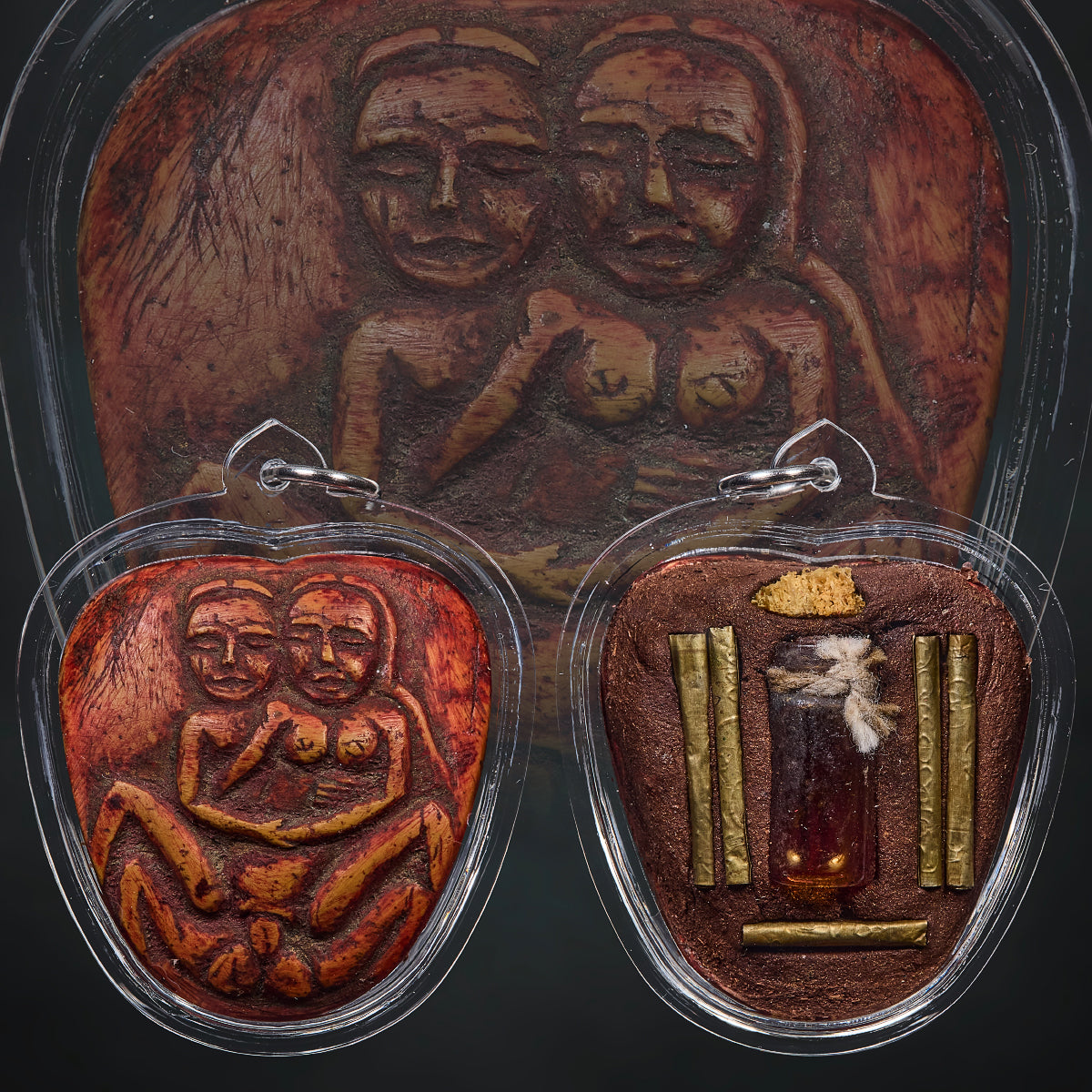
Five drops of Prai Naman, Wahn Kai Deang, Paneang and multiple Saneh Maha Niyom Takruts were incorporated into the reverse to reinforce this purpose.
It is this combination — strong Prai material without an unnecessarily harsh character — that made Yin Po unusual among his Saneh works.
Historical Background
Within Thai occult traditions, Pii Tai Hong generally refers to a person whose death occurred suddenly, violently or before the natural completion of life.
Such deaths occupy an important place in traditional spirit beliefs because an abrupt ending is sometimes understood to leave particularly strong emotional or spiritual residues.
For practitioners working with Prai traditions, however, the manner of death alone does not determine how a spirit should be approached.
Temperament, circumstances, attachment and what the practitioner understands about the individual spirit are also important.
Por Sala Tan was particularly careful about this distinction.
He did not regard every Prai source as interchangeable material. Some were considered suitable for protection, some for warnings or fortune, while others possessed qualities more naturally suited to Metta or Saneh.
The young woman associated with Yin Po was placed within the latter category.
Her perceived character was not centred upon aggression. Instead, Por Sala Tan identified a receptive Yin orientation, which became the conceptual foundation for the name Yin Po and the wicha subsequently built around the relic.
Origins of the Materials
The principal relic material originated from the young Pii Tai Hong woman associated with the artifact.
Por Sala Tan selected it specifically because of what he regarded as its naturally attractive and receptive character.
The rear assembly greatly expands upon that foundation.
A small sealed vessel contains Prai Naman, of which five drops were incorporated into the ritual preparation. In Por Sala Tan's practice, such oil provided a material connection to the Prai aspect of the work while also serving as a carrier for Saneh substances.
Wahn Kai Deang, a red herbal material associated with attraction preparations, was included to strengthen allure and emotional responsiveness.
A Paneang fragment was added as another traditional Saneh component, reinforcing the drawing and binding character of the piece.
Around these materials are several individually prepared Takruts, principally directed towards Saneh Maha Niyom.
The result is a layered construction in which the relic provides the spiritual foundation while the additional materials define and reinforce its purpose.
Ritual
Por Sala Tan's preparation of Yin Po centred upon establishing a clear relationship between the Prai source and the intended Saneh function.
The spirit was not approached as something to be driven through anger or suffering. Instead, the work was based upon the receptive character Por Sala Tan believed was already present.
The carved male-and-female imagery established the symbolic direction of attraction.
The five drops of Prai Naman were then incorporated together with Wahn Kai Deang and Paneang, while the surrounding Takruts were prepared for Saneh Maha Niyom, charm, favourable attention and persuasive speech.
Through chanting and consecration, these separate components were brought together as one working system.
The objective was not simply to make a stronger Prai artifact by continually adding aggressive materials.
Por Sala Tan instead sought compatibility between the original relic, the spirit's character and the wicha being requested of it.
That balance explains why the finished Yin Po could be regarded as strong while still being described by followers as gentle.
Blessings and Effects
Yin Po is principally a Saneh artifact.
Its traditional qualities centre upon making the bearer more noticeable, approachable and emotionally attractive to those around them.
It is particularly associated with Saneh Maha Niyom — attraction combined with popularity and favourable human response.
The Takruts and Saneh materials are traditionally approached for smoother conversation and persuasive speech, helping others become more willing to listen and engage.
In romantic situations, the emphasis is upon personal magnetism, chemistry and increased attention.
In professional settings, the same qualities may be directed towards client relationships, hospitality, entertainment, sales, networking and other situations where personal presence can influence how an interaction develops.
Its reputed gentleness should not be confused with lack of strength. Within Por Sala Tan's tradition, the significance of Yin Po is precisely that strong material does not necessarily require harsh expression.
Modern Application
Yin Po is particularly suited to environments where success depends upon being seen, remembered and well received.
Those working in sales, entertainment, nightlife, hospitality, events or other client-facing professions may approach its Saneh Maha Niyom qualities for greater personal warmth and social presence.
It can likewise be carried for romantic purposes where attraction is the primary intention.
For collectors who are interested in Por Sala Tan's Prai work but prefer an artifact with a less demanding traditional character, Yin Po occupies an interesting position.
It remains unmistakably a Prai-based Saneh piece, yet its construction was intended around cooperation and compatible energy rather than instability.
Respectful conduct remains appropriate. The absence of what Por Sala Tan regarded as heavy karmic entanglement should not be interpreted as permission to use Saneh irresponsibly or disregard another person's autonomy.
Physical Details
The front depicts an intimately positioned male and female couple, hand-carved into the original relic material and finished with warm reddish-brown ritual colouring. The reverse contains a prepared sacred base holding a small sealed bottle associated with the Prai Naman and additional ritual substances. Multiple brass Takruts are arranged around the central vessel, including paired vertical groups and a horizontal lower Takrut. Natural differences in carving, relic texture, staining, ritual material and ageing are consistent with the handmade character of the piece. It is presently protected within a fitted clear casing.
Recommended Pairing
For regular use, Yin Po pairs naturally with a Buddha image or Phra Somdej, providing a foundation of Baramee and merit alongside the specialised Prai-based Saneh work.
For occupations involving customers and commercial relationships, Phra Sivali can complement Yin Po through traditional associations with livelihood, abundance and favourable opportunities.
It may also be paired with Yin Tong when the intended emphasis is strongly romantic, allowing the paired symbolism of Yin Tong to complement Yin Po's attraction qualities.
For those following Por Sala Tan's wicha more broadly, a Lersi artifact provides a particularly balanced combination: Yin Po for Saneh and interpersonal magnetism, and Lersi for wisdom, restraint, guidance and discernment.
-
Free Shipping for Singapore| $15 Worldwide | $60 USA For Items Below $350