
OOBThaiAmulets
Por Sala Tan
Por Sala Tan
Couldn't load pickup availability
PST02
Takrut Maha Chakapat
Por Sala Tan
1.5 Inches
Mainstream Artifact
Sacred Craftsmanship
The Takrut Maha Chakapat is one of the more unusual authority-based works associated with Por Sala Tan, its lineage tracing back to a highly respected Burmese monk whose ritual practice was remembered for its connections with influential officials, wealthy families and patrons.
Each artifact was individually assembled from old Nga Chang, prepared sacred substances and hand-rolled Takrut. Natural variations in the rings, wax, surface, Takrut and construction make every surviving example individually distinctive.
Personal Experiences Shared by Luksits
The history of the Takrut Maha Chakapat after its completion is almost as unusual as its construction.
According to the account preserved within Por Sala Tan's circle, when the batch was finally completed, a Hong Kong dealer acquired the entire group.
Only around ten pieces were initially released by him to selected clients, while the remainder stayed within his private stock rather than circulating widely among general collectors.
The pieces consequently became difficult to encounter.
Many years later, after the dealer retired, part of the remaining group resurfaced. These pieces eventually returned to Ajarn Lek, where they underwent an additional blessing before being wrapped and released again.
Among those who subsequently carried related pieces, the most commonly described experiences concerned work and business rather than simple attraction.
Owners spoke of becoming more confident when dealing with senior people, receiving greater cooperation from others, negotiating more effectively and encountering useful business opportunities. Some also associated the Takrut with advancement in their careers and greater stability in financial matters.
Summary
The Takrut Maha Chakapat represents a direct continuation of a Burmese ritual lineage transmitted to Por Sala Tan through physical materials and written instructions.
Its defining material is the old Nga Chang from the Burmese master's dismantled ritual sceptre, accompanied by bamboo scriptures explaining the method through which the material was to be prepared.
Por Sala Tan followed this transmitted method, incorporating sacred wax and a central hand-rolled Takrut before undertaking approximately one year of consecration.
Traditionally, its character is strongly orientated towards Maha Amnaj, Maha Lap, Metta Maha Niyom, Klaew Klaad, authority, negotiation, wealth and protection against rivals.
Rather than being primarily a saneh object, this is a piece concerned with commanding presence, position and the ability to move successfully through competitive environments.
Historical Background
Ritual sceptres have long served as symbols of authority in different religious and esoteric traditions across mainland Southeast Asia.
Their importance does not necessarily lie in the physical object alone. A sceptre repeatedly handled during chanting, blessings and ritual work may gradually become inseparable from the reputation and practice of the master who used it.
The Burmese monk associated with this piece was remembered as a practitioner whose influence extended beyond ordinary village life.
According to the lineage account, politicians, wealthy families and people of standing sought his assistance and blessings. His reputation for authority-related wicha eventually became known among practitioners beyond Burma itself.
Before his death, however, he did not wish the complete sceptre to become an object of uncontrolled possession.
It was therefore dismantled.
Selected components were distributed among trusted disciples rather than leaving the entire instrument with a single successor. Por Sala Tan received some of its Nga Chang rings, together with the accompanying bamboo-scripture instructions.
The Takrut Maha Chakapat should therefore be understood not as a copy of the old master's sceptre, but as Por Sala Tan's continuation of a transmitted practice using original materials from it.
Origins of the Materials
The most historically significant component is the Nga Chang outer ring.
According to the lineage history, these rings originated directly from the Burmese master's ritual sceptre. Their importance came from prolonged association with an object repeatedly used within his ceremonial practice.
Por Sala Tan therefore treated the material as an inherited ritual substance rather than simply as Nga Chang selected for carving.
The dark inner preparation consists of a sacred wax compound, incorporating ritual substances and herbs according to the transmitted practice. It forms the surrounding body in which the central Takrut is seated.
At the centre is the rolled Takrut.
Its construction followed instructions preserved in the bamboo scriptures entrusted to Por Sala Tan. Yantra associated with authority, prosperity and protection were incorporated into the preparation before the scroll was tightly rolled and installed.
The three components consequently perform different roles: Nga Chang carries the lineage of the original sceptre; sacred wax forms the ritual foundation; and the Takrut directs the intended wicha.
Ritual
Por Sala Tan approached the preparation carefully because the materials were inherited together with specific instructions.
The bamboo scriptures provided the ritual framework, while the original Nga Chang established the physical connection with the Burmese master's practice.
The Takruts were prepared and rolled before being positioned within the sacred wax and Nga Chang structure.
Consecration was not completed in a single ceremony.
According to the history accompanying the batch, Por Sala Tan continued chanting and ritual preparation for approximately one full year. Particular stages were timed according to auspicious astrological periods specified within the transmitted practice.
This extended period is an important part of the Takrut's history. The objective was not simply to reproduce the physical construction described by the Burmese master, but to complete the ritual process through repeated consecration.
When part of the old stock eventually resurfaced decades later, Ajarn Lek performed an additional blessing before those examples were wrapped and released again.
Blessings and Effects
The central quality of the Takrut Maha Chakapat is Maha Amnaj — authority, command and the ability to carry weight in the presence of others.
Within traditional belief, this does not simply mean domination. It concerns having sufficient Baramee and presence that one's words are taken seriously and one's position is recognised.
Maha Lap represents the financial dimension, traditionally associated with opportunities, patronage, profitable circumstances and the movement of wealth.
Metta Maha Niyom complements authority by encouraging favourable treatment. Authority without Metta can create distance; within this combination, the intention is for others not only to recognise the owner but also to be willing to cooperate.
Klaew Klaad provides the protective dimension, particularly against dangerous circumstances, rivals and harmful intentions.
The Takrut is also associated with success in negotiation and persuasion, making it especially relevant when an owner must obtain agreement, secure support or deal with powerful individuals.
Its traditional qualities can therefore be summarised as authority, commanding presence, wealth opportunity, favourable patronage, negotiation, protection from rivals and social influence.
Modern Application
The character of this Takrut makes it particularly relevant to business owners, executives, entrepreneurs, investors, managers and those occupying leadership positions.
Someone regularly involved in negotiation may carry it for confidence, presence and favourable agreement.
Business owners may approach its Maha Lap and Metta aspects for opportunities, useful connections and support from clients or patrons.
Those working in competitive environments may place greater emphasis upon Maha Amnaj and Klaew Klaad, seeking the ability to stand firmly against rivals, hidden opposition or manipulation.
The piece is therefore very different in emphasis from Por Sala Tan's dedicated saneh artifacts. Its attraction lies less in romantic magnetism and more in status, credibility and the ability to command respect while retaining the goodwill of others.
Physical Details
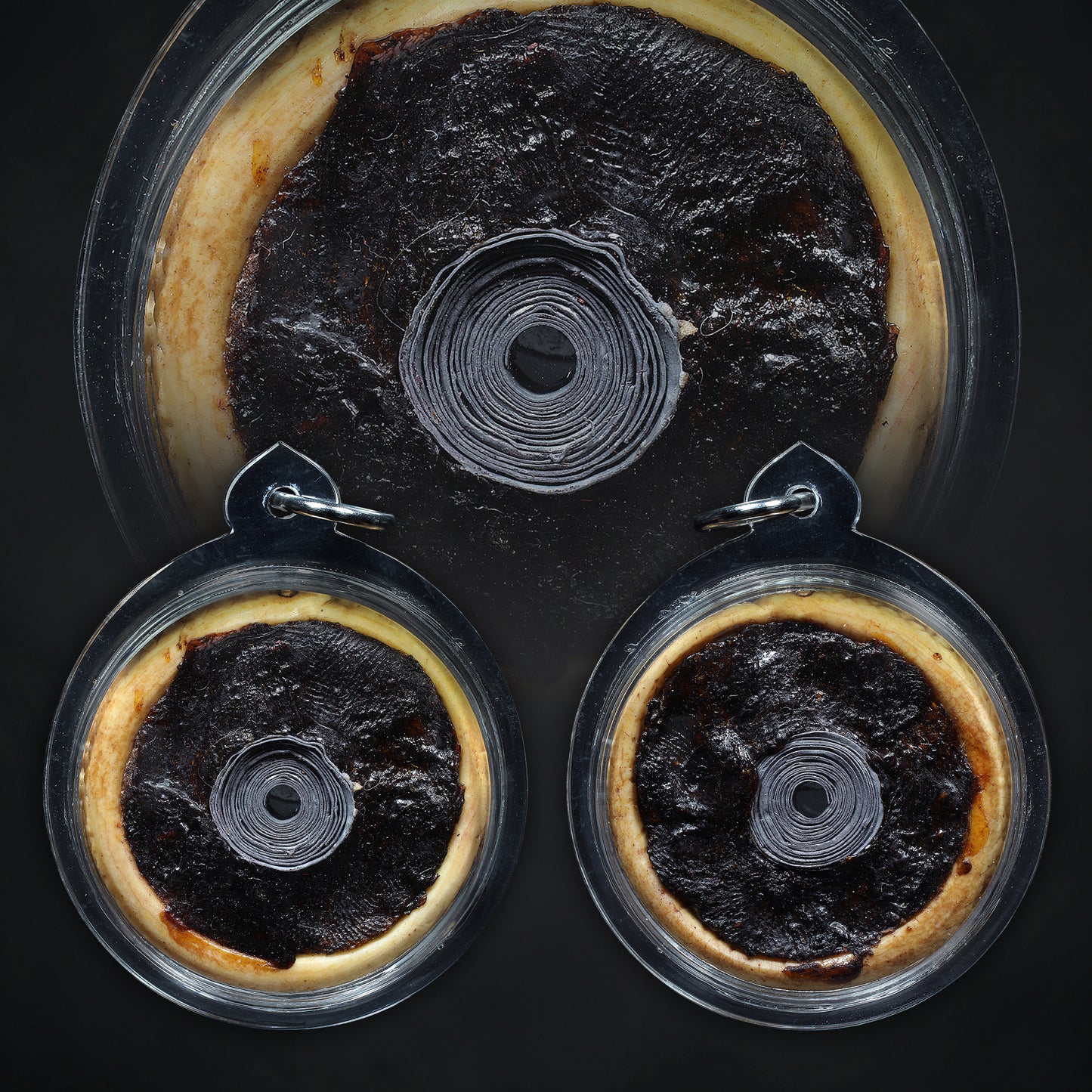
The Takrut Maha Chakapat has a compact circular construction and is presently protected within a clear casing.
A pale Nga Chang ring forms the outer boundary. Within it sits a dense, dark sacred wax preparation showing the naturally irregular texture expected from an individually prepared ritual substance.
At the centre is the tightly rolled Takrut, its concentric layers clearly visible from the front. The central opening and rolled construction remain exposed rather than being cosmetically concealed.
The ageing, uneven wax surface and differences between individual rings are natural characteristics of the materials and handmade preparation rather than imperfections.
Recommended Pairing
Because Takrut Maha Chakapat is already strongly orientated towards authority and worldly advancement, it pairs particularly well with a Buddhist image representing Baramee and ethical restraint.
A respected Phra Somdej is an excellent companion, balancing Maha Amnaj with composure, merit and Buddhist authority.
For those primarily concerned with commerce and financial stability, Phra Sivali complements the Maha Lap aspect by adding the traditional symbolism of sustenance, abundance and ease in livelihood.
A Lersi is another particularly appropriate pairing for leaders and practitioners, adding wisdom, judgement and guidance to the commanding character of Maha Chakapat.
The Takrut itself, however, remains a complete lineage object: old Nga Chang from a Burmese master's ritual sceptre, sacred wax, transmitted bamboo-scripture instructions and a central Takrut prepared and consecrated by Por Sala Tan over approximately one year.
-
Free Shipping for Singapore| $15 Worldwide | $60 USA For Items Below $350