
OOBThaiAmulets
Por Sala Tan
Por Sala Tan
Couldn't load pickup availability
PST02
Phra Pidta
Por Sala Tan
3 Inches
Mainstream Artifact
Sacred Craftsmanship
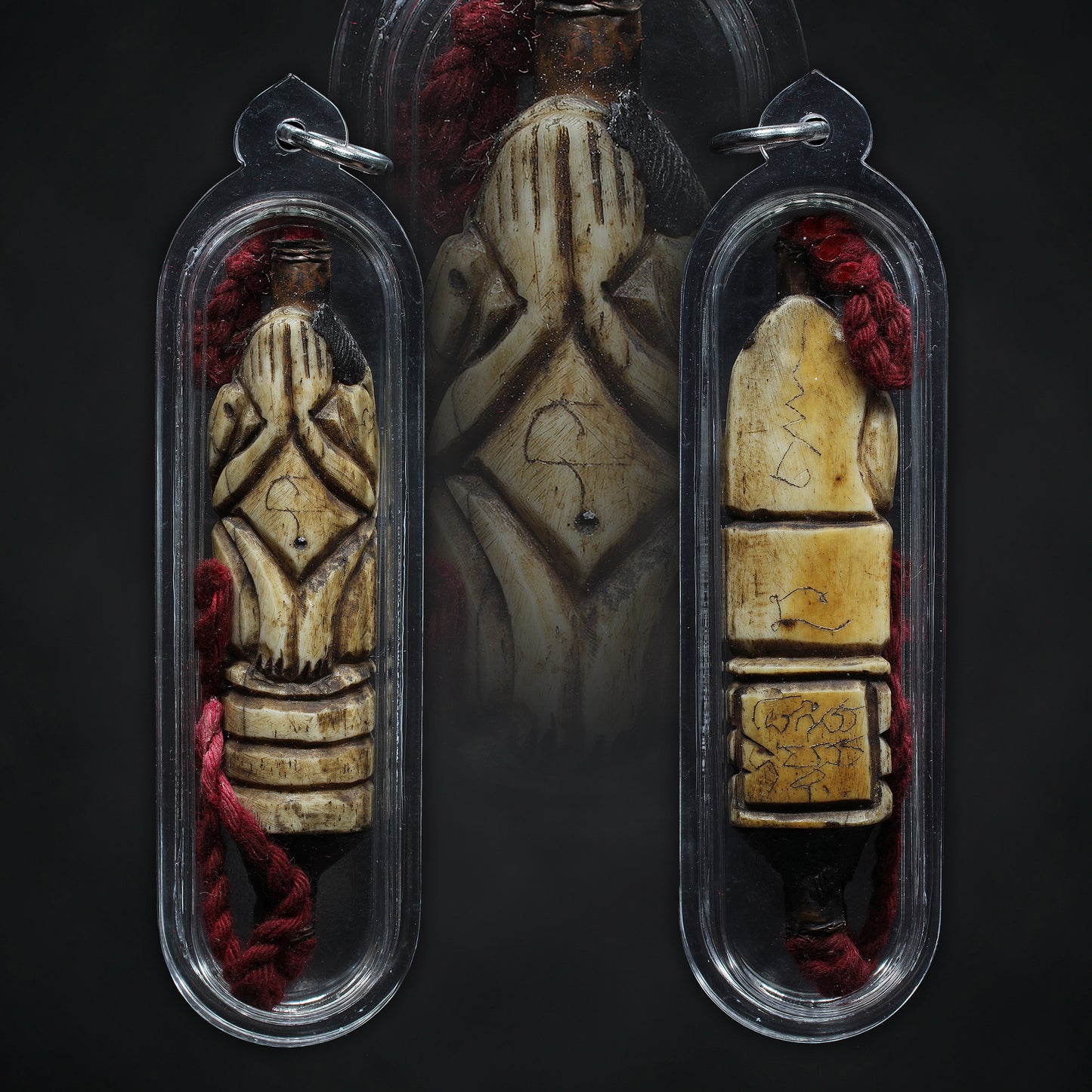
This Phra Pidta was individually carved from Graduk Kwai, a material connected in northern Thai and Lanna folk traditions with the strength, endurance and steadfast nature of the buffalo.
Each piece was individually carved and ritually prepared by hand. Natural differences in the Graduk, colour, ageing, carving, Yant inscriptions and binding are therefore part of the object's character, making every example individually distinct.
Personal Experiences Shared by Luksits
Among Por Sala Tan's luksits, this Phra Pidta is regarded principally as a protective piece for complicated human environments.
It is particularly favoured by people who work among strong competition, office politics or situations where intentions are not always expressed openly.
Some luksits describe carrying Phra Pidta when they feel surrounded by gossip, jealousy or people attempting to interfere with their work. Rather than describing the piece as something used to retaliate, they regard its purpose as helping the bearer remain outside unnecessary conflict.
This reflects the symbolism of Phra Pidta itself: do not see what need not be seen, do not become involved with what does not concern you, and do not allow harmful influences easy access to the mind.
Others associate the Graduk Kwai with endurance. During prolonged periods of pressure, they carry the piece as a reminder to remain persistent and continue moving forward rather than reacting impulsively to opposition.
Summary
The Phra Pidta Graduk Kwai combines two complementary protective traditions.
The first comes from the symbolism of Phra Pidta, whose closed face represents withdrawal from harmful influences, restraint of the senses and protection from unwanted forces.
The second comes from Graduk Kwai, traditionally associated with endurance, physical strength, loyalty and the ability to withstand difficult conditions.
Por Sala Tan strengthened this combination with Takrut, hand-inscribed Yant and red Sai Sin, creating a compact protective object centred upon shielding, resilience and maintaining one's position during periods of opposition.
Its principal traditional qualities are protection, Klaew Klaad, defence against betrayal and hostile intentions, stability and Baramee.
Historical Background
Phra Pidta is one of the most recognisable forms within Thai sacred-object culture.
The figure is traditionally shown covering the face with both hands. Although popular explanations often describe this simply as "closing the eyes", its symbolism extends further into the Buddhist principle of restraining the senses and withdrawing attention from external disturbances.
The underlying lesson is that not every sight, word or provocation requires a response.
Over time, this imagery became strongly associated within Thai amulet culture with protection. By symbolically closing the channels through which disturbances enter, Phra Pidta came to represent concealment from danger, protection against hostile forces and separation from unwanted influences.
Por Sala Tan adapted this familiar sacred form through the materials and methods of northern folk wicha.
Instead of casting the image conventionally in metal or pressing it from sacred powder, he carved the figure directly from Graduk Kwai, creating a meeting between Buddhist protective symbolism and the older animist understanding of natural materials.
Origins of the Materials
The principal material is Graduk Kwai.
The buffalo has occupied an important place in traditional rural life throughout Thailand and mainland Southeast Asia. It represents physical strength, patience and the ability to continue working under demanding conditions.
Within folk spiritual traditions, these characteristics could also become symbolic qualities of the material itself.
For Por Sala Tan, Graduk Kwai provided a suitable foundation for an amulet concerned with endurance and defensive strength.
The material was carved into the Phra Pidta form before sacred inscriptions and additional ritual elements were introduced.
Takrut were incorporated to reinforce the intended wicha, while the red Sai Sin surrounding the carving became part of the completed ritual structure.
The finished piece therefore combines natural material, sacred imagery, handwritten Yant, Takrut and consecrated cord rather than depending upon any single component.
Ritual
After the Graduk Kwai had been carved into the required Phra Pidta form, Por Sala Tan prepared the piece through successive stages of inscription and consecration.
Protective Yant were written directly onto the carving. These inscriptions established the intended direction of the amulet and connected the physical image with the wicha being invoked.
Takrut were then incorporated as additional ritual anchors.
The piece was subsequently bound with red Sai Sin and subjected to chanting and consecration. Within traditional practice, the binding serves not merely as decoration but represents the completion and containment of the prepared sacred object.
The resulting amulet was directed primarily towards protection and repelling hostile influence rather than attraction or Prai-based work.
Its character is therefore considerably different from Por Sala Tan's Seneh pieces: where those objects are intended to draw something towards the bearer, this Phra Pidta is principally intended to keep unwanted influences away.
Blessings and Effects
The principal traditional quality of this Phra Pidta is protection.
It is particularly associated with guarding the bearer against betrayal, jealousy, malicious gossip and hidden hostility, making it relevant to environments where competition or interpersonal conflict is unavoidable.
The Phra Pidta symbolism further connects the piece with protection against curses, harmful spiritual influences and unwanted energies.
Klaew Klaad is another important association — avoidance of danger and passing safely through potentially troublesome circumstances.
The Graduk Kwai adds the qualities of endurance, determination and stability. Rather than removing every obstacle, its symbolism concerns remaining strong enough to withstand pressure and continue forward.
The piece is also traditionally associated with protecting one's foundations in work, business and livelihood. In this context, wealth is understood less as sudden windfall fortune and more as preserving stability and preventing outside interference from damaging what has already been established.
Baramee and authority form a further aspect of the Phra Pidta image, supporting dignity, respect and a composed presence when dealing with others.
Modern Application
This Phra Pidta is particularly suited to people working in environments involving competition, negotiation, office politics or frequent interaction with difficult personalities.
It may be carried when attending important meetings, conducting business, travelling or entering circumstances where the bearer prefers additional traditional protection.
Its symbolism also has a practical contemporary relevance.
Phra Pidta reminds the wearer that protection does not always require confrontation. Sometimes the more effective response is to avoid unnecessary arguments, refuse to participate in gossip and prevent other people's hostility from controlling one's own actions.
The Graduk Kwai reinforces the complementary lesson of endurance: remain steady, protect one's position and continue working despite external pressure.
Physical Details
This is a slender hand-carved Phra Pidta made from Graduk Kwai. The front depicts the seated figure covering the face with both hands, with hand-inscribed sacred markings visible upon the body. Further Yant inscriptions appear on the reverse. Takrut and old red Sai Sin form part of the ritual construction, with the cord running alongside and around the carving. Natural variations in the Graduk's colour, grain, ageing, surface marks and hand carving are inherent to the piece. It is presently preserved within a clear protective casing.
Recommended Pairing
Because this Phra Pidta is principally defensive, it pairs naturally with sacred objects intended to support Metta, prosperity or Baramee.
A Phra Somdej or another Buddha image can provide a broader Buddhist foundation centred upon merit, mindfulness and Baramee.
For business use, a Phra Sivali may complement the defensive qualities of Phra Pidta with traditional associations of livelihood, abundance and favourable opportunities.
For those carrying Por Sala Tan's Barang pieces, the Phra Pidta can also serve as the protective side of a pairing: another piece may be used for Seneh or opportunity, while the Phra Pidta Graduk Kwai remains focused upon shielding, stability and keeping harmful influences at a distance.
-
Free Shipping for Singapore| $15 Worldwide | $60 USA For Items Below $350