
OOBThaiAmulets
Por Sala Tan
Por Sala Tan
Couldn't load pickup availability
PST08
Ceremonial Palakit
Por Sala Tan
6.5 Inches
Mainstream Artifact
Sacred Craftsmanship
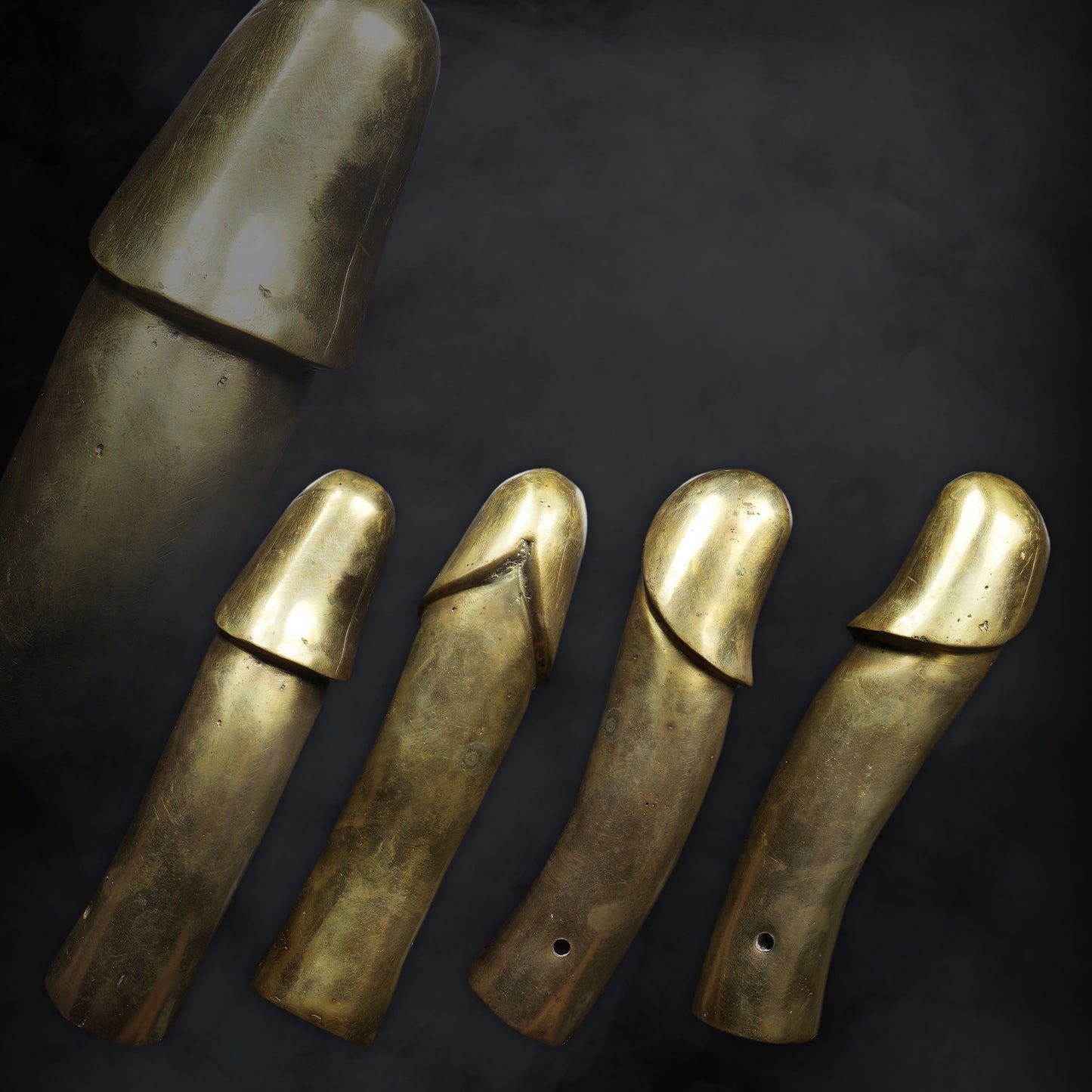
This large Ceremonial Palakit, measuring approximately 6.5 inches, belongs to a very different category from the smaller Palakit traditionally carried as personal amulets. It was created by Por Sala Tan as a working ceremonial implement, intended for repeated use within advanced Barang rites rather than simply for individual wear.
Each Palakit was individually cast from prepared sacred alloys and Parad. Natural differences in casting, surface texture, patina and form are therefore characteristic of the traditional workmanship and make every example unique.
Personal Experiences Shared by Luksits
The Palakit was often described as an anchor.
Collectors who maintained several Barang pieces would place the Palakit among them and felt that the surrounding artifacts became more settled and responsive. Rather than continually moving individual pieces around, the Palakit could become the stable centre of the arrangement.
Business owners developed another practical use for it.
Some placed the Palakit near the cashier or payment area, treating it as a wealth-fetching artifact intended to encourage continuous financial movement through the business.
Others positioned it prominently within a retail space, with the Palakit facing outward towards the entrance of the shop. In this arrangement, its role combined attraction of incoming opportunity with the stronger Baramee traditionally associated with the artifact.
Those who kept it in offices described the atmosphere around meetings and negotiations as feeling more composed and authoritative. The effect was generally described not as aggressive domination, but as a greater sense of stability and respect.
Summary
This is a substantial 6.5-inch Ceremonial Palakit personally used within the ritual tradition of Por Sala Tan.
Its importance comes from both its construction and its ceremonial history.
The Palakit was cast from sacred Indian alloys combined with approximately 10–20% Parad, specifically prepared to receive and retain yin signatures during ritual work.
It was subsequently used through multiple Mae Prai liberation ceremonies, where it formed part of the process of drawing residual energy from the Yoni before the spirit was transitioned onwards.
Now retired from its original ceremonial role, the artifact is traditionally maintained for:
Wealth fetching and financial movement.
Business stability and career progression.
Baramee and professional authority.
Strengthening surrounding Barang.
Stabilising a larger ritual collection.
Environmental and feng shui balancing.
It is particularly suited to a home, office, retail shop or dedicated Barang altar, where its larger physical presence allows it to function as a central artifact rather than an individual wearable charm.
Historical Background
The Palakit belongs to an old family of fertility and auspicious symbols found within Thai sacred and folk practice.
Although its physical form is unmistakably phallic, its traditional meaning extends beyond sexuality. The generative form naturally became associated with fertility, abundance, attraction, prosperity and the continuing production of resources.
Within commercial environments, these qualities could be interpreted through customers, trade and financial circulation.
Within Por Sala Tan’s practice, however, the Palakit could take on a much more specialised ceremonial role.
This particular example was not created simply as a prosperity charm.
Its substantial size, Parad content and repeated ritual application allowed it to function as a working instrument within Mae Prai liberation ceremonies.
The Yoni and Palakit formed complementary ritual principles. One represented the receptive feminine aspect, while the other represented an active generative force. Within the ceremony, these principles were used as part of a controlled process concerned with residual spiritual attachment and transition.
Repeated exposure to such rites gave the artifact a history very different from a newly consecrated Palakit.
Its significance lies as much in what it was used for as in the materials from which it was originally made.
Origins of the Materials
The principal metal was prepared from a mixture of sacred alloys originating from India.
Por Sala Tan combined these materials with approximately 10–20% Parad, producing the characteristic heavy ritual body.
Parad occupied an important place within his more specialised alchemical work.
For this Palakit, its purpose was particularly associated with yin absorption and retention. The Parad-bearing alloy provided a material foundation capable, within the lineage belief, of receiving the spiritual signatures encountered repeatedly during ceremonial work.
The Indian sacred alloys contributed another ritual layer, connecting the Palakit with an older material tradition rather than ordinary modern brass.
The resulting metal was therefore selected for function rather than appearance.
Its aged surfaces, casting irregularities and changes in patina are part of the physical history of an object created to be handled and repeatedly used in ceremony.
Ritual
The defining ritual history of this Palakit comes from its participation in multiple liberation ceremonies involving Mae Prai.
During these rites, the Palakit was placed over the Yoni of the Mae Prai as part of the process through which residual energy was drawn away before the spirit was transitioned onwards.
The Parad content was particularly important within this application.
According to Por Sala Tan’s wicha, the material was capable of receiving and retaining the yin signatures encountered during the rite. Repetition therefore mattered: the Palakit was not used once and forgotten, but accumulated a ceremonial history through continued service.
Once its original purpose had been fulfilled, the artifact was retired from liberation work.
Its accumulated ritual character was subsequently redirected towards more practical functions — particularly wealth, Baramee, business stability and the empowerment of surrounding Barang.
For this reason, the Palakit should be understood as a retired working ceremonial implement, rather than merely an amulet produced to imitate one.
Blessings and Effects
The most practical modern association of the Palakit is wealth fetching.
Its generative symbolism, combined with its accumulated ritual background, makes it traditionally suitable for encouraging financial circulation, commercial activity and opportunities for income.
Baramee and Maha Amnaj form another important aspect.
Placed within an office or business environment, the Palakit is traditionally believed to establish a firmer atmosphere — supporting confidence, authority and the ability to conduct negotiations from a stronger position.
Its third important function concerns Barang empowerment.
Rather than operating only for its owner, the Palakit may be positioned among other Por Sala Tan artifacts as a central supporting piece. Within the lineage belief, surrounding Barang can draw upon its established ritual field, helping the collection function as a more coherent whole.
The Parad component further contributes an association with absorption and stabilisation, reflecting the artifact’s original ceremonial purpose.
The result is a piece whose modern character combines wealth, authority, environmental stability and ritual amplification.
Modern Application
For a retail business, one traditional placement is close to the cashier, where the Palakit may be maintained as a wealth-fetching artifact associated with continuous movement of money and customers.
Another arrangement is to place it prominently within the retail space facing outward towards the shop entrance. Here its purpose combines attraction, commercial opportunity and a strong outward Baramee.
Within an office, it may be placed upon a dedicated shelf, cabinet or working altar to support authority, career movement, negotiations and professional stability.
Collectors maintaining multiple Por Sala Tan Barang pieces may position the Palakit near the centre of the collection, allowing it to function as an anchor and supporting artifact for the surrounding pieces.
Within the feng shui interpretation followed by some practitioners, the Palakit may also be used where a space is considered deficient in a strong yang component, particularly where structural balance is sought in the Northeast sector.
It does not require a large Barang collection to be meaningful. Kept independently, its traditional role remains centred upon wealth movement, authority, stability and the generative force represented by the Palakit itself.
Physical Details
A large Por Sala Tan Ceremonial Palakit measuring approximately 6.5 inches, traditionally cast from sacred Indian ritual alloys mixed with approximately 10–20% Parad. The substantial metal body retains the characteristic hand-cast surface, natural patina and minor irregularities associated with traditional ritual manufacture. Its scale distinguishes it from personal Palakit amulets and reflects its original function as a ceremonial implement intended for repeated ritual use rather than individual wear.
Recommended Pairing
The most important pairing for this artifact is not necessarily another individual amulet, but a larger Barang arrangement.
Placed centrally among Por Sala Tan’s Barang, the Palakit can traditionally serve as an anchor and empowering source, particularly for Prai, attraction, wealth and business-oriented pieces.
For commercial purposes, pairing it with Metta Maha Niyom or Saneh artifacts creates a complementary arrangement: the Metta pieces encourage customers, goodwill and receptiveness, while the Palakit represents financial movement, stability and the generative side of prosperity.
A Suer or Baramee artifact may be added where stronger authority, competitive protection and leadership are required.
For collectors maintaining a substantial Por Sala Tan collection, however, this Ceremonial Palakit has a broader role.
It is not simply another object to place among the others.
It can become the core centrepiece around which the Barang collection is organised — an artifact whose importance comes from its Parad-rich sacred alloy, its repeated participation in Mae Prai liberation ceremonies, and the accumulated ritual history of an object that Por Sala Tan originally created to work rather than merely to display.
-
Free Shipping for Singapore| $15 Worldwide | $60 USA For Items Below $350