
OOBThaiAmulets
Por Sala Tan
Por Sala Tan
Couldn't load pickup availability
PST02
Chu Chok
Por Sala Tan
around B.E 2525
2 Inches
Mainstream Artifact
Sacred Craftsmanship
Each carving was individually handmade from natural Nga Chang. Differences in colour, grain, ageing, carving, dimensions and surface character are therefore expected, making every surviving example individually distinct.
Personal Experiences Shared by Luksits
Among collectors and luksits who carry Chu Chok, the most frequently discussed experiences concern asking, negotiation and receiving assistance.
Some speak of entering a difficult discussion expecting rejection, only to find that the other party becomes more willing to listen. Others associate Chu Chok with customers becoming easier to communicate with, negotiations progressing after initially reaching a dead end, or someone unexpectedly offering assistance at an important moment.
Businesspeople particularly value this quality.
Rather than describing Chu Chok simply as a money amulet, experienced owners often describe him as helping with the human process that comes before money — approaching someone, making a request, presenting an offer, negotiating terms and receiving a favourable response.
This is why Chu Chok has remained popular among salespeople, traders, commission workers and those whose livelihood depends upon dealing directly with others.
The traditional accounts should be understood as devotees’ experiences rather than guarantees. Chu Chok’s symbolism is closely connected with persistence: one still has to ask, speak, negotiate and pursue the opportunity.
Summary
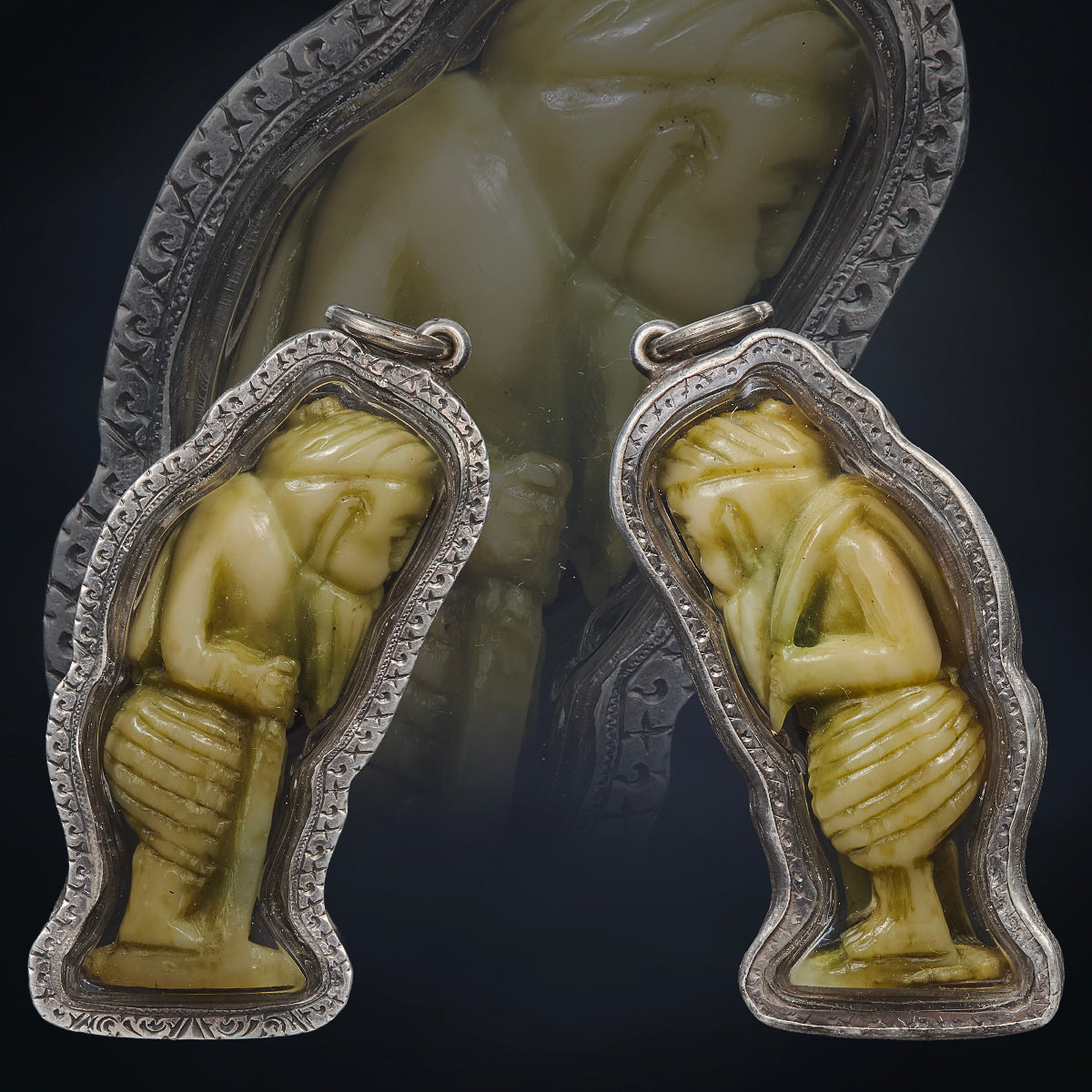
This Chu Chok by Por Sala Tan is an exceptionally limited early family piece, traditionally dated to around B.E. 2525, with fewer than ten examples said to have been produced.
Carved from Nga Chang and preserved in an old custom silver casing, its principal traditional qualities centre upon Metta Maha Niyom, Chok Lap, Maha Lap, successful requests, negotiation, business opportunity and receiving assistance from others.
Chu Chok’s strength is particularly appropriate for people whose work requires them to ask and receive.
For business owners, this may mean attracting customers and encouraging favourable dealings. For salespeople, it concerns persuasion and closing transactions. For others, it may concern requesting assistance, negotiating contracts, collecting payment or approaching someone in a position to provide an opportunity.
The deeper lesson of Chu Chok, however, remains equally important: knowing how to ask is powerful, but knowing when enough is enough is wisdom.
Historical Background
Chu Chok originates from the Vessantara Jātaka, one of the best-known Buddhist birth stories concerning the perfection of generosity.
He is portrayed as an elderly Brahmin beggar who eventually journeys to the forest dwelling of Prince Vessantara.
His request is extraordinary: he asks Vessantara for his two children, Kanha and Chali, to become servants. Vessantara grants the request as part of his extreme practice of generosity.
Within the Buddhist narrative, Chu Chok is not presented as an ideal moral figure. He is associated with greed, selfishness and excess, and his eventual fate serves as part of the story’s warning about uncontrolled desire.
Thai popular and amulet traditions, however, developed another interpretation around one remarkable aspect of his character:
Chu Chok knew how to ask — and he repeatedly received.
Despite having little status or material power, he travelled, persisted, negotiated and succeeded in obtaining things that appeared extremely difficult to acquire.
It is this particular characteristic that eventually transformed his image into a folk symbol of Kan Kho — the ability to make a request and obtain a favourable response.
Origins of the Materials
The principal material of this example is Nga Chang.
Within traditional sacred craftsmanship, Nga Chang was valued not simply as a carving material but as a substance associated with the elephant’s symbolic qualities of strength, Baramee, stability and commanding presence.
For a Chu Chok image, the material creates an interesting balance.
Chu Chok provides the qualities of requesting, persuasion, opportunity and receiving, while Nga Chang contributes the stronger foundation of Baramee and stability.
This example is especially significant because it was reportedly preserved as a personal family piece belonging to Por Sala Tan’s household, rather than being made as part of a broad commercial issue.
Ritual
The central wicha of Chu Chok concerns asking and receiving.
The image is traditionally consecrated around the ability to approach others, communicate one’s needs and encourage goodwill towards a request.
This naturally overlaps with Metta Maha Niyom — kindness, popularity and favourable treatment from other people.
It also connects with Chok Lap and Maha Lap, particularly where financial opportunity depends upon another person agreeing, buying, approving, paying or providing assistance.
For Por Sala Tan’s Chu Chok, the Nga Chang body provides the physical foundation upon which these qualities were established.
As a family-kept piece, it would subsequently have remained close to the household and ritual environment rather than immediately passing through collectors.
Blessings and Effects
The defining quality of Chu Chok is traditionally described as Kho: to ask.
From this simple principle develops a surprisingly broad range of applications.
In commerce, it concerns customer attraction, sales, negotiations, collecting payments and securing agreements.
In professional life, it may relate to asking for opportunities, assistance, introductions, approval or favourable consideration from senior people.
Its Metta Maha Niyom aspect concerns receiving kindness and having others become more receptive to conversation.
Its Chok Lap and Maha Lap qualities concern opportunities through which resources, money or assistance may arrive.
Chu Chok is therefore not merely a symbol of passive wealth attraction. His character is far more active:
approach, ask, negotiate, persist and receive.
Modern Application
Chu Chok remains particularly relevant to business owners, salespeople, property agents, commission workers, entrepreneurs and anyone whose livelihood depends heavily upon negotiation and interpersonal relationships.
It may traditionally be carried when meeting customers, presenting proposals, negotiating prices or contracts, requesting payment or approaching someone for assistance.
For a salesperson, Chu Chok represents the courage to make the approach and ask for the order.
For an entrepreneur, it can represent finding investors, customers, suppliers or people willing to provide assistance.
For someone employed within an organisation, the same symbolism may be applied when discussing opportunities, responsibilities or remuneration.
The practical philosophy behind the piece remains remarkably straightforward: an opportunity that is never requested can easily remain an opportunity never received.
Physical Details
An early hand-carved Chu Chok in Nga Chang, traditionally dated to approximately B.E. 2525 and originating from a very small production of reportedly fewer than ten pieces. The carving depicts the elderly Brahmin in a characteristic bent posture and is housed within an old, individually fitted hand-worked silver casing, estimated to be approximately 30–40 years old. Natural variation, ageing and surface patina are consistent with the individually carved character of the piece.
Recommended Pairing
Chu Chok works naturally alongside Nang Kwak, Metta Maha Niyom, wealth or Baramee pieces.
Nang Kwak traditionally draws people towards the business, while Chu Chok concerns what happens once communication begins — asking, negotiating and obtaining the desired agreement.
A strong Baramee piece provides another complementary pairing for individuals who negotiate with senior figures or operate in competitive business environments. Baramee establishes presence and authority, while Chu Chok supports receptiveness and successful requests.
Nevertheless, this Nga Chang example already combines the softer quality of Metta and receiving with the stronger character traditionally associated with Nga Chang, allowing it to be carried independently.
Personal Notes
What makes this Chu Chok particularly interesting is its reported position within Por Sala Tan’s own family collection.
It was not simply one example taken from a large commercial batch. According to its provenance, fewer than ten were made around B.E. 2525, and this example remained preserved within the family before eventually being released.
There is also a useful lesson within the figure itself.
Chu Chok is sometimes described simply as the “King of Beggars”, but this can obscure the more interesting reason his image became important in Thai amulet culture. He represents someone with very little conventional power who nevertheless possessed an extraordinary ability to approach, request and obtain.
At the same time, the Vessantara story does not celebrate limitless acquisition. Chu Chok’s eventual downfall makes excess part of the lesson.
For that reason, perhaps the most balanced interpretation of his wicha is not simply:
“Ask and you shall receive.”
It is:
Have the courage to ask, the persistence to pursue what you need, the Metta to gain another person’s goodwill — and the wisdom to recognise when you have received enough.
-
Free Shipping for Singapore| $15 Worldwide | $60 USA For Items Below $350