
OOBThaiAmulets
Por Sala Tan
Por Sala Tan
Couldn't load pickup availability
PST04
Phra Khun Paen Roon Raek (Tamlar)
Por Sala Tan
B.E. 2550 (2007)
Barang Artifact
2 Inches
Sacred Craftsmanship
Every Khun Paen was individually prepared and assembled by hand from these limited sacred materials. Natural differences in the Nur Hom, embedded relics, Tamlar paper and finishing therefore make every one of the 49 pieces individually unique.
Personal Experiences Shared by Luksits
Back in 2014, these pieces were personally collected directly from Por Sala Tan himself. At the time, very few people knew about the significance of what had been created. This was his first official batch of Phra Khun Paen, produced as a deliberately limited release of only 49 pieces.
Before this period, Por Sala Tan's artifacts were generally created individually or in extremely small quantities rather than as structured batches. The Roon Raek (Tamlar) therefore marked an important transition in his work, bringing together some of the old and increasingly limited materials he had accumulated through many years of practice.
Many of these 49 pieces subsequently remained with the original luksits and collectors who obtained them during that period. As a result, examples have seldom circulated widely and are often kept closely by those who have used them for many years.
Among these owners, experiences are frequently associated with Maha Saneh, Metta Maha Niyom and increased personal attraction. Some describe people becoming noticeably more receptive towards them, conversations developing more naturally and previously distant contacts becoming easier to approach.
In business and work, luksits have similarly reported customers becoming more receptive, negotiations progressing more smoothly and new connections developing into unexpected opportunities.
For the early collectors, however, the importance of this Khun Paen extends beyond individual experiences. Having received these pieces directly from Por Sala Tan during that period, they regard the Roon Raek as a surviving record of his earlier wicha — 49 pieces combining the Five Prai, their sacred materials and the old Tamlar within his first official Khun Paen batch.
Summary
The Phra Khun Paen Roon Raek (Tamlar), B.E. 2550, was Por Sala Tan's first structured Khun Paen release and was produced in a highly restricted quantity of 49 pieces.
Its foundation centres upon five separate Prai Nur Hom, representing five Prai spirits whose materials had been retained by Por Sala Tan for his wicha.
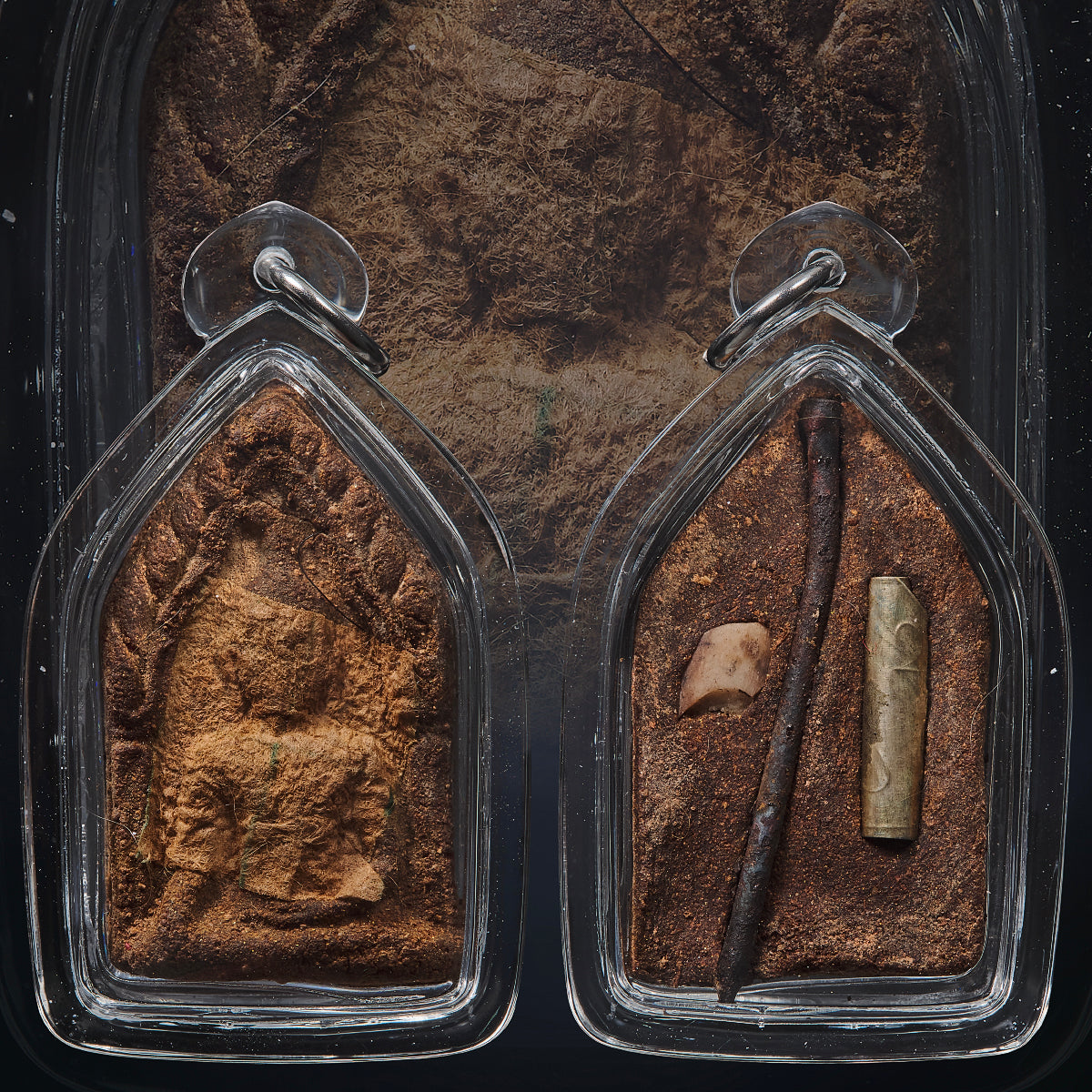
Additional components include hair relics, a coffin nail connected with earlier Pii Tai Hong ritual work, a takrut and a Paneang fragment belonging to one of the five Prai.
The front carries perhaps its most recognisable feature: an old strip of sacred paper originating from the Tamlar of the Five Prai, incorporated directly into the amulet.
The resulting Khun Paen was intended principally for Maha Saneh, Metta Maha Niyom, attraction, opportunity, persuasion and overcoming difficult circumstances.
Historical Background
Before this batch, Por Sala Tan's sacred objects were generally not produced as conventional numbered releases.
Many were made individually for particular people or circumstances. Others existed only in micro quantities determined by whatever old materials happened to be available.
The Roon Raek represented a departure from that approach.
Por Sala Tan was already conscious that many of the unusual materials he had accumulated throughout decades of practice were finite. Once consumed, certain materials — particularly old relics with established ritual histories — could not simply be replaced.
Rather than allowing these materials to remain unused, he selected some of them for a formal Khun Paen project.
Only 49 pieces were prepared.
For this reason, the importance of the Roon Raek lies not merely in rarity. It records a transitional moment when Por Sala Tan gathered several older components of his Prai wicha into a single, deliberately structured series.
Origins of the Materials
At the centre of the composition are the five Prai Nur Hom.
Within Por Sala Tan's tradition, these materials were associated with five separate female Prai whose spiritual current was particularly connected with Saneh, attraction and merit-making through assisting the living.
Hair relics were added, further connecting the physical composition with the Five Prai tradition.
Materials from earlier Pii Tai Hong consecrations were also incorporated, including a coffin nail visible on the reverse.
The most exceptional inclusion is a small Paneang chip associated with one of the five original Prai.
Within Barang traditions that employ such relic materials, Paneang is regarded as exceptionally concentrated. Even a very small fragment may therefore carry considerable ritual importance to practitioners.
A takrut completes the principal visible components on the reverse.
The Five-Prai Tamlar
The old paper covering part of the front is integral to the identity of this batch.
It originates from the Tamlar — the traditional ritual text or wicha record — associated with the Five Prai.
Por Sala Tan incorporated this element deliberately.
Within the ritual logic of the piece, bringing together five separate Prai currents required more than simply combining their physical materials. The Tamlar element served to settle, organise and direct those currents towards a common purpose.
Rather than suppressing the Five Prai, its function was to establish clarity and harmony so their qualities could be directed towards the keeper.
This feature ultimately gave the edition its familiar designation:
Khun Paen Roon Raek (Tamlar).
Ritual
The consecration centred upon establishing the five Prai together within a single Khun Paen structure.
Each possessed its own provenance and character. Por Sala Tan therefore worked not only towards awakening the individual materials, but towards bringing them into a coordinated relationship.
The Tamlar was particularly important during this process.
Through invocation, meditation and the relevant Prai wicha, the five currents were directed towards the intended qualities of Saneh, Metta Maha Niyom, attraction, persuasion, opportunity and assistance.
The additional takrut and older ritual materials broadened the composition beyond attraction alone, giving the finished artifact a more complete working character.
Blessings and Effects
The principal quality of this Khun Paen is Maha Saneh — strong personal attraction and the ability to draw attention towards the keeper.
Closely connected is Metta Maha Niyom, traditionally associated with goodwill, acceptance, popularity and people becoming more receptive.
For relationships, the piece is associated with attraction, affection, reconciliation and strengthening interpersonal connection.
Within work and business, the same current is applied differently: customers listening, negotiations becoming easier, superiors becoming receptive, contacts remembering the owner and opportunities becoming easier to develop.
The Roon Raek is also associated with persuasion and overcoming resistance. In this context, Saneh is not understood merely as romantic charm, but as the ability to create favourable human connections.
Modern Application
Despite the old materials and Prai-based construction, its traditional purposes translate readily into contemporary life.
Business owners may use it where customer relationships and repeat business are important. Salespeople and negotiators may value its association with receptiveness and persuasive communication.
Those working in highly social professions may keep it for personal presence, networking and recognition.
For relationships, its traditional focus remains Saneh and interpersonal harmony.
The underlying principle is consistent across these applications:
Where progress depends upon another person becoming receptive to you, the Five Prai wicha becomes relevant.
Physical Details
Approximately 2 inches, formed from the prepared Five Prai material into a traditional Khun Paen shape. The front retains the distinctive aged Tamlar paper, while the reverse exposes the embedded coffin nail, Paneang fragment and takrut. The natural fibres, powders and irregular surface remain visible beneath the clear protective casing.
Recommended Pairing
The Roon Raek is already a concentrated Saneh and Metta piece and can comfortably function alone.
For commercial use, it pairs naturally with wealth or Choke Lap artifacts, combining human receptiveness with financial opportunity.
Those requiring greater authority may pair it with tiger-form or Maha Amnaj pieces. The Khun Paen encourages people to become receptive, while the authority piece strengthens the keeper's ability to lead once the opportunity has opened.
Personal Notes
This batch carries particular significance because of its place within Por Sala Tan's history.
These pieces were personally collected directly from Por Sala Tan during the earlier period when examples remained close to his circle. At the time, few collectors outside that circle understood how limited the release would eventually become.
Only 49 were made.
More importantly, the number could not simply be increased.
The Nur Hom belonged to five specific Prai. The hair relics were finite. The older Pii Tai Hong materials had their own histories. The Paneang could only be divided so far. And the Tamlar represented an older body of wicha rather than something created merely for production.
Once those materials were exhausted, precisely the same combination could not simply be manufactured again.
That is why the Roon Raek occupies an unusual position among Por Sala Tan's Khun Paen.
It is not simply his first batch.
It preserves the Five Prai, their materials, the old Tamlar and Por Sala Tan's method of bringing them togetherwithin one of the earliest structured releases of his work.
-
Free Shipping for Singapore| $15 Worldwide | $60 USA For Items Below $350