
OOBThaiAmulets
Por Sala Tan
Por Sala Tan
Couldn't load pickup availability
PST04
Palakit Nang Prai Maha Saneh -
Palakit with a Female Spirit of Great Attraction
Por Sala Tan
Barang artifact
4.5" height
Sacred Craftsmanship
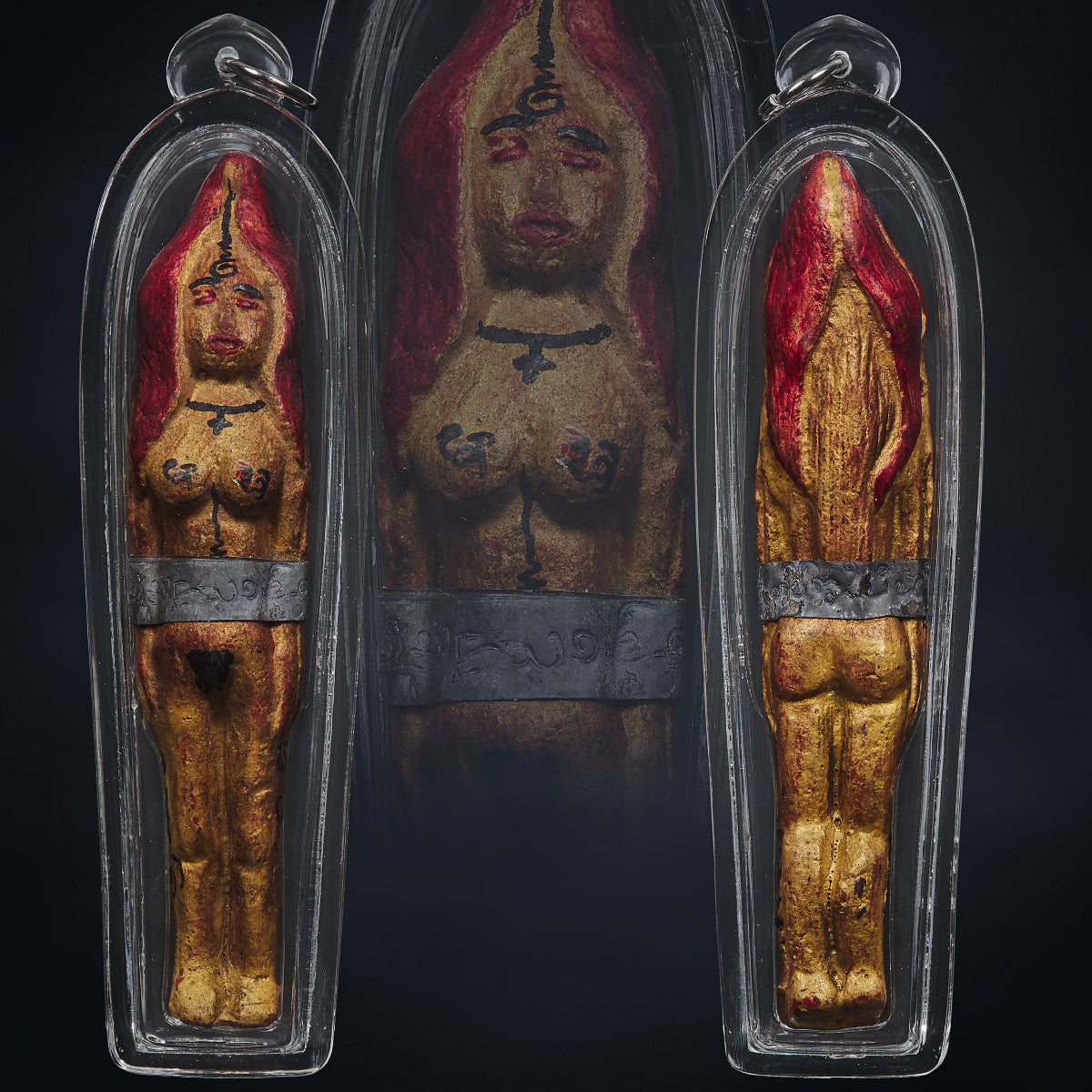
Each Palakit Nang Prai Maha Saneh was individually prepared by Por Sala Tan from naturally formed sacred wood selected for its unusual phallic form. The female figure was then individually carved into the head of the Palakit, inscribed with sacred yants and ritually prepared according to his wiccha.
Natural red tree sap mixed with selected Saneh herbs was applied around the head and female figure, giving the piece its distinctive deep red appearance. Gold finishing and handwritten sacred markings complete the preparation.
As each artifact is individually handmade from naturally formed material, differences in the wood, carving, ritual preparation, colour and proportions make every surviving piece unique.
Personal Experiences Shared by Luksits
Among Por Sala Tan’s luksits, this particular Palakit is remembered primarily for Maha Saneh and Metta Maha Niyom, with a noticeably stronger emphasis upon personal attraction.
Devotees who carried the piece have described becoming more noticeable in social situations. Some felt that people paid greater attention when they spoke, while others found strangers and acquaintances more willing to remain in conversation.
A recurring description is not simply physical attraction, but an increased sense of personal presence. The keeper feels noticed rather than overlooked, and conversations that might previously have ended quickly seem to develop more naturally.
For those working in sales, business or occupations requiring frequent interaction with others, this quality is traditionally valued for encouraging approachability and favourable attention.
Summary
Palakit Nang Prai Maha Saneh is an unusual attraction-oriented Khrung Lang individually prepared by Por Sala Tan, combining the traditional symbolism of the Palakit with a carved female figure representing the Nang Prai.
The foundation of the piece is particularly important. According to its provenance, Por Sala Tan selected naturally occurring wood whose original growth already resembled the phallic form of a Palakit.
A naked female figure was subsequently carved into its upper portion. Sacred yants were inscribed upon the piece before the head and female figure were treated with natural red tree sap mixed with Saneh herbs.
Within Por Sala Tan’s tradition, the piece is particularly associated with:
- Maha Saneh — attraction and personal magnetism.
- Metta Maha Niyom — goodwill and favourable treatment.
- Opposite attraction — encouraging romantic attention.
- Social presence — being noticed and listened to.
- Commerce — supporting relationships with customers and clients.
Its distinctive character comes from the combination of naturally formed material, the Palakit symbolism, the female image and the spiritual association with a Nang Prai.
Historical Background
The Palakit, or Palad Khik, belongs to an old Thai tradition of phallic Khrung Lang associated with vitality, prosperity, protection and attraction.
Its symbolism developed through a mixture of older fertility traditions, animist belief and sacred wiccha. Over generations, individual masters created their own interpretations, carving Palakit from auspicious woods and adding yants, takruts, sacred substances or figurative imagery according to their lineage.
Female figures also appear within certain Palakit traditions. Their presence commonly shifts the emphasis towards Metta and Maha Saneh, representing attraction, receptiveness and the drawing together of people.
Por Sala Tan’s Palakit Nang Prai follows this latter tradition but carries an additional spiritual element. According to the account surrounding these pieces, the female image represents a spirit encountered in connection with the place from which the unusual wood originated.
The Nang Prai
Nang Prai is a broad term within Thai folk belief referring to a female spirit. It does not describe one universal deity or single type of spirit, and its meaning depends greatly upon the lineage and circumstances surrounding an individual sacred object.
In the tradition of this piece, Por Sala Tan reportedly encountered the presence of a female spirit lingering near the tree from which the material was obtained.
Through his ritual practice, the spirit was invited to become associated with the Palakit and to receive merit through its future keeper. The female form carved into the upper section therefore carries significance beyond decoration: it represents the feminine presence connected with the material and its preparation.
Within Por Sala Tan’s wiccha, this association was directed particularly towards Maha Saneh, attraction and Metta Maha Niyom.
Origins of the Material
The foundation of this Palakit is a naturally formed piece of wood whose growth already resembled the characteristic phallic shape.
Such naturally unusual formations occupy an interesting place within Thai animist collecting traditions. When wood, stone, root or another natural substance develops into an auspicious or recognisable form without being deliberately shaped, collectors may regard the material itself as possessing unusual khun or inherent character.
Por Sala Tan retained the natural Palakit form and worked upon it individually rather than completely reshaping the material.
The female figure was carved into the upper section, allowing the original natural form and the intended Nang Prai imagery to become a single artifact.
Sacred Material & Ritual
After the principal carving was completed, Por Sala Tan inscribed sacred yants directly upon the artifact.
The head and female figure were then treated with natural red sap obtained from the tree, blended with Saneh herbs according to his preparation. The red coating therefore forms part of the ritual character of the piece rather than serving only as decoration.
The preparation brought together several complementary elements:
- Natural-form sacred wood for the Palakit foundation.
- Female carving representing Nang Prai.
- Sacred yants for ritual direction.
- Natural red tree sap.
- Selected Saneh herbs.
- Gold finishing applied to the figure.
According to the lineage account, Por Sala Tan then performed the spiritual invitation associated with the female presence encountered near the source of the material.
The completed piece was consequently prepared with a concentrated emphasis upon attraction and favourable human response.
Traditional Blessings
Maha Saneh
Maha Saneh is the principal character of this artifact.
Within traditional belief, it concerns personal magnetism—the quality through which someone becomes more noticeable, interesting or attractive to those around them.
Collectors commonly associate this with:
- Opposite attraction.
- Romantic interest.
- Increased personal presence.
- Being noticed more readily.
- Greater receptiveness from others.
Metta Maha Niyom
Metta provides the softer counterpart to Saneh.
Where Saneh concerns attraction, Metta Maha Niyom concerns being received favourably. People may become easier to approach, conversations may flow more comfortably, and others may become more willing to listen or assist.
This makes the piece relevant beyond romantic circumstances.
Commerce & Communication
For those working with customers, the traditional emphasis becomes practical.
Salespeople, merchants and business owners depend heavily upon first impressions and communication. Being listened to, remembered and treated favourably can be as important as the product being offered.
The Palakit Nang Prai is therefore also collected by those whose livelihood depends upon regular interaction with people.
Modern Application
The character of this piece is particularly suited to people whose circumstances depend heavily upon personal interaction and visibility.
A salesperson may carry it with the intention of becoming more approachable to customers. Someone working in hospitality or service may seek greater Metta from the people they encounter, while a naturally quiet person may value its traditional association with presence and confidence.
For relationships, its emphasis remains Maha Saneh and opposite attraction.
The traditional idea can be understood simply: first attract attention, then allow Metta, communication and personal character to develop the relationship naturally.
Physical Details
This Palakit is formed from naturally shaped wood and individually worked by Por Sala Tan.
The front presents a naked female figure emerging from the upper portion of the Palakit. Her body is finished predominantly in gold, while the hair and surrounding upper section carry the characteristic deep red preparation.
Sacred markings and yants can be seen across the figure and body. A metal band bearing further inscriptions surrounds the centre of the Palakit.
The reverse continues the female form and retains the red and gold treatment, allowing the figure and underlying natural shape of the wood to remain clearly visible from both sides.
The piece is presently preserved within a clear protective casing, helping protect the carved surface, sacred inscriptions and older ritual coatings from unnecessary handling.
Recommended Pairings
For stronger Metta and communication, pair with Salika, particularly for sales, negotiation and occupations where speech is important.
For business and customer attraction, Nang Kwak provides a complementary commercial character: the Palakit Nang Prai supports personal attraction and favourable attention, while Nang Kwak traditionally calls customers and trade.
For relationships, Yin Tong complements the piece particularly well. Palakit Nang Prai emphasises Maha Saneh and attraction, while Yin Tong represents mutual affection, harmony and connection between people.
For those seeking a more balanced professional combination, a Maha Amnaj or Baramee amulet can add authority and confidence alongside the softer Metta and Saneh character of the Palakit.
Who Is This For?
Palakit Nang Prai Maha Saneh is particularly suited to collectors drawn towards the stronger Saneh traditions of Por Sala Tan.
It may appeal especially to those working in sales, business, entertainment, hospitality or other environments where being noticed, listened to and remembered plays an important role.
Its attraction also lies in its construction. The Palakit began with an unusual naturally formed piece of wood, was individually carved with its female figure, covered with sacred inscriptions and prepared with natural red sap and Saneh herbs.
Within Por Sala Tan’s tradition, all of these elements ultimately serve one central purpose:
to strengthen Saneh, encourage favourable attention and help the keeper establish a memorable presence amongst others.
-
Free Shipping for Singapore| $15 Worldwide | $60 USA For Items Below $350