
OOBThaiAmulets
Por Sala Tan
Por Sala Tan
Couldn't load pickup availability
PST04
Yin Tong
Por Sala Tan
Sacred Craftsmanship
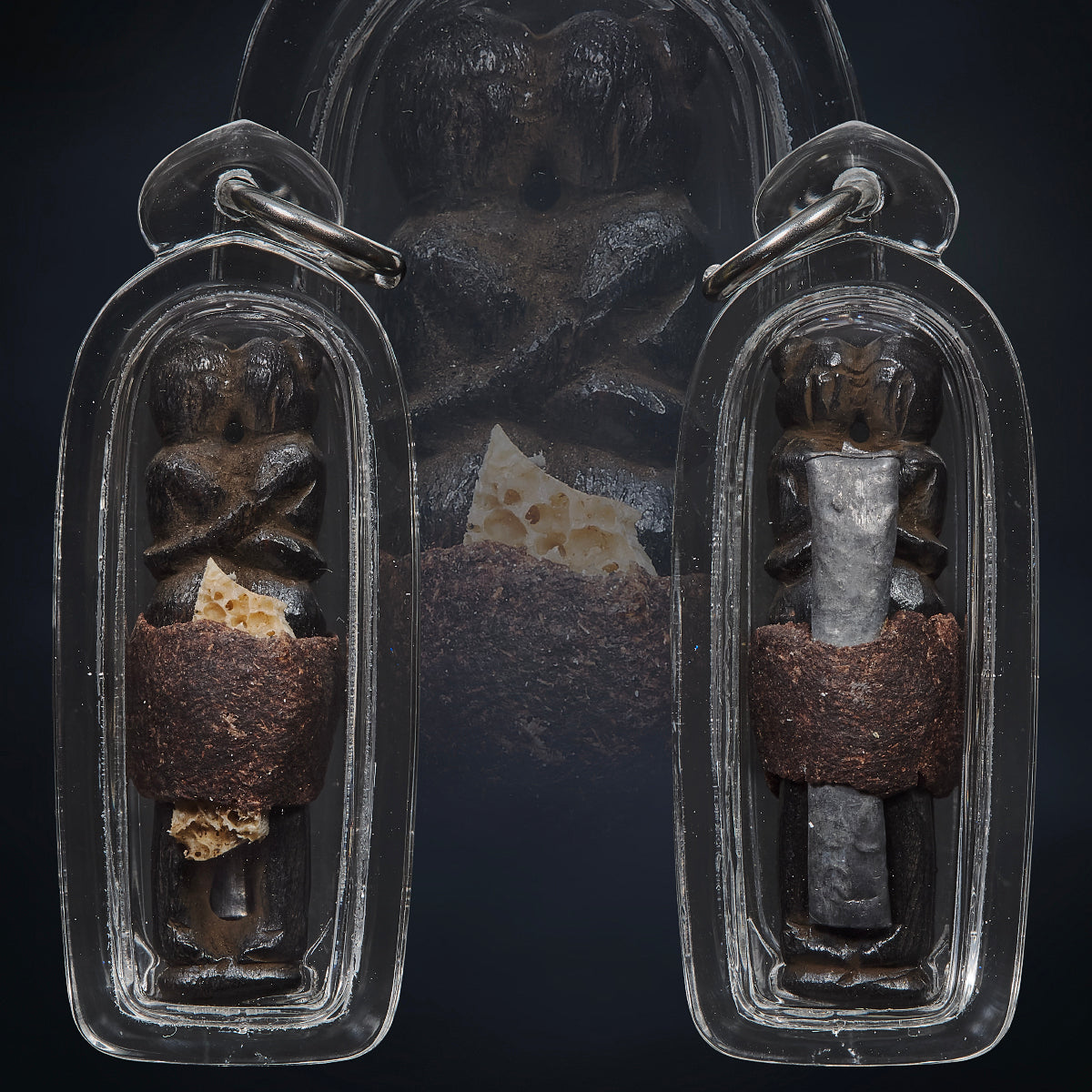
Each Yin Tong was individually hand-carved by Por Sala Tan from carefully selected Mai Rak, then prepared with sacred Metta and Saneh herbs, Paneang and a Metta takrut. Natural differences in the wood, hand carving and arrangement of sacred materials create variations in texture, colour and form, making every completed artifact unique.
Personal Experiences Shared by Luksits
Yin Tong is regarded amongst Por Sala Tan’s luksits as one of his classic works for Metta Maha Niyom and Saneh, particularly opposite attraction and favourable interpersonal relationships. These pieces have been collected by people from many walks of life, especially those whose livelihood depends upon communication, customers and personal connection.
One account concerns a collector working in automobile sales. Although familiar with the vehicles he represented, he often found it difficult to speak naturally with prospective customers. Conversations could become awkward, and he struggled to develop the rapport needed to close sales.
After obtaining one of Por Sala Tan’s Yin Tong, he noticed that customers seemed increasingly comfortable speaking with him. Conversations became longer and more natural, with clients more willing to discuss their requirements rather than ending the interaction quickly.
Over time, he also felt that colleagues and superiors began noticing him more. His confidence improved alongside these interactions, and he found it easier to approach customers and maintain conversations.
For him, the experience reflected the traditional character of Yin Tong particularly well: attraction expressed through approachability, communication and the ability to create favourable connections with others.
Summary
Yin Tong is one of the classic sacred forms prepared by Por Sala Tan, particularly recognised amongst his luksits for Metta Maha Niyom, Maha Saneh and opposite attraction.
This example was individually hand-carved from Mai Rak, an auspicious wood whose Thai name carries a direct association with rak — love, affection and attachment.
Por Sala Tan further prepared the carving with sacred Metta and Saneh herbs. A fragment of Paneang and a Metta takrut were incorporated to strengthen its attraction-oriented character.
The resulting artifact is centred upon human connection: encouraging affection, approachability, favourable attention and smoother relationships between people.
Historical Background
Yin Tong belongs to an old strand of Thai folk and occult tradition concerned with attraction, companionship and harmony between the masculine and feminine principles.
The paired figures are traditionally understood as representing mutual attraction and the natural drawing together of people. For this reason, Yin Tong became particularly associated with Maha Saneh, relationships and Metta Maha Niyom.
Its use extends beyond romantic attraction. Merchants, salespeople and those regularly dealing with the public may also keep Yin Tong for greater approachability and favourable social interaction.
Within Por Sala Tan’s work, Yin Tong became one of his recognisable forms of Saneh-oriented Khrung Lang, with individual pieces prepared from selected sacred materials rather than produced as completely uniform objects.
Mai Rak — Sacred Wood of Affection
The principal material is Mai Rak, a wood traditionally valued within Thai sacred craftsmanship for its auspicious name and association with affection.
In Thai, rak means love or affection. This linguistic symbolism has made Mai Rak a natural material for sacred objects concerned with Metta, relationships and attraction.
Within traditional belief, it is commonly associated with:
- Metta Maha Niyom — goodwill and favourable treatment.
- Maha Saneh — attraction and personal magnetism.
- Human relationships — encouraging warmth and connection.
- Commerce — supporting relationships between seller and customer.
Mai Rak has consequently been used by different practitioners for carved figures and other sacred objects where affection and favourable human response form part of the intended purpose.
Sacred Material & Ritual
After carving the Yin Tong, Por Sala Tan incorporated several complementary materials intended to strengthen its Metta and Saneh character.
Sacred Metta and Saneh herbs were bound around the carving, forming the principal ritual preparation visible around the centre of the piece.
A fragment of Paneang was added as an important Saneh component, while a Metta takrut further reinforced the intention towards goodwill, attraction and favourable response.
The combination follows a clear principle. Mai Rak establishes the symbolism of affection; Yin Tong represents mutual attraction; the herbs and Paneang strengthen Saneh; and the takrut directs the preparation towards Metta Maha Niyom.
Traditional Blessings
Por Sala Tan’s Yin Tong is principally associated with Metta Maha Niyom and Maha Saneh.
Collectors traditionally seek it for:
- Opposite attraction and romantic interest.
- Greater personal charm and approachability.
- Smoother conversations and social relationships.
- Favourable treatment from customers and associates.
- Supporting sales, negotiation and customer-facing work.
- Encouraging harmony between partners.
Its character is therefore particularly suited to situations where success depends upon people feeling comfortable, receptive and naturally drawn towards the keeper.
As with traditional sacred objects generally, these qualities belong to longstanding spiritual belief and personal experience rather than guaranteed outcomes.
Modern Application
Although Yin Tong is strongly associated with Saneh and opposite attraction, its traditional application extends naturally into modern social and professional life.
Salespeople may value it where establishing rapport is essential. Business owners may keep it for favourable customer relationships, while those working in service industries may appreciate its association with approachability and Metta.
For personal relationships, its symbolism centres upon mutual affection, warmth and harmony.
The automobile salesperson’s account demonstrates this broader character well. The important change was not simply attraction; it was that people became easier to approach and conversations began to flow more naturally.
Physical Details
This Yin Tong is individually carved from Mai Rak in the traditional paired-figure form.
Sacred Metta and Saneh herbal material is bound around the central portion of the carving. A visible fragment of Paneang is incorporated into the preparation, together with a Metta takrut.
The carving retains the natural dark tone and irregular character of the wood, while the individually prepared sacred components give the piece the unmistakable appearance of a handmade Khrung Lang artifact.
Its present protective casing allows the carving and attached ritual materials to remain together while protecting the older organic components from unnecessary handling.
Recommended Pairings
For commerce and customer attraction, Yin Tong pairs naturally with Nang Kwak, combining interpersonal Metta with the traditional calling of customers.
For speech and negotiation, pair with Salika, strengthening the emphasis upon communication and persuasive speech.
For stronger personal presence, a Baramee or Maha Amnaj piece provides a useful balance, adding confidence and authority to Yin Tong’s softer attraction-oriented character.
For those concentrating primarily upon relationships and Saneh, Yin Tong may be kept independently, as the combination of Mai Rak, Paneang, sacred herbs and Metta takrut already gives the piece a focused purpose.
Who Is This For?
Por Sala Tan’s Yin Tong is especially suited to people whose daily lives depend upon human connection — salespeople, business owners, negotiators, service professionals and those wishing to improve their social or personal relationships.
Its traditional character is less about forcing attention and more about creating the circumstances in which people become receptive: conversations last longer, strangers become easier to approach, customers feel comfortable and personal relationships develop with greater warmth.
The principle behind this classic Por Sala Tan artifact can therefore be expressed simply:
Mai Rak encourages affection.
Yin Tong represents mutual attraction.
Paneang strengthens Saneh.
Metta opens the way for people to respond favourably.
-
Free Shipping for Singapore| $15 Worldwide | $60 USA For Items Below $350