
OOBThaiAmulets
Por Sala Tan
Por Sala Tan
Couldn't load pickup availability
PST04
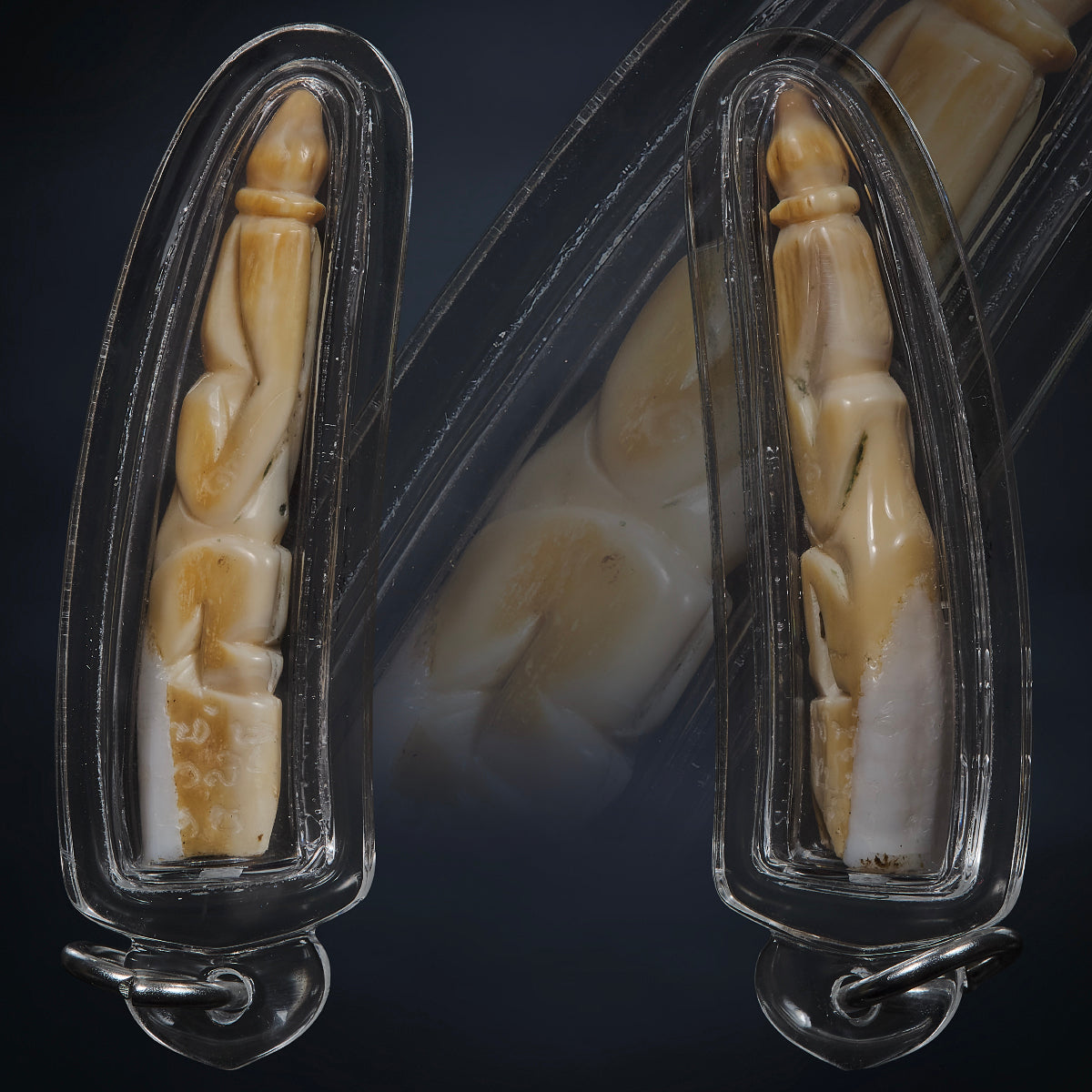
Palakit Pidta Khum Sap - Phra Pidta Palakit Guarding Wealth
Por Sala Tan
2" height
Sacred Craftsmanship
Each Palakit Pidta was individually hand-carved by Por Sala Tan from carefully selected Nga Chang, following both the natural form of the available material and the intended purpose of its future keeper.
Differences in the Nga Chang, proportions, carving and finishing naturally resulted in variations between pieces. Each completed artifact therefore carries its own individual character, with no two examples being completely identical.
Personal Experiences Shared by Luksits
According to Por Sala Tan’s luksits, only a small number of these Palakit Pidta were prepared. Pieces were often created according to the circumstances and requirements of particular devotees rather than as a large standardised batch.
One account concerns a woman who had inherited land from her parents. After the inheritance, relatives began pressuring her to sell the property quickly. She was uncertain whether to accept their advice and was concerned that delaying the sale might create further disagreements within the family.
After receiving a Palakit Pidta Khum Sap, she decided not to act immediately. Instead, she took time to obtain independent legal advice and a separate valuation of the property.
The valuation revealed that the land was worth considerably more than she had originally been told. Rather than selling under pressure, she retained the property and eventually leased part of it, creating a stable source of long-term income for her family.
For the luksits who related the account, the experience reflected the character of Khum Sap particularly well: attracting opportunity is important, but recognising, protecting and retaining what one already possesses can be equally valuable.
Summary
Palakit Pidta Khum Sap is an uncommon hand-carved work by Por Sala Tan combining two established strands of Thai sacred symbolism: the Palakit and Phra Pidta.
The Palakit is traditionally associated with vitality, prosperity, Metta Maha Niyom, favourable commerce and protection, while Phra Pidta represents restraint of the senses, inward composure and the symbolic closing away of harmful influences.
Together, the form carries a particularly balanced meaning:
attract opportunity, protect what has already been gained, and remain composed enough to recognise the difference between genuine opportunity and unnecessary risk.
This example was carved from leftover Nga Chang material originating from larger carving projects connected with Por Sala Tan’s Krung Lang creations. Rather than allowing suitable fragments to go unused, Por Sala Tan examined the natural form of the remaining material and determined what sacred image was appropriate for each piece.
Only a limited number were produced.
Historical Background
Palakit belongs to an old Thai talismanic tradition in which the phallic form represents generative force, protection, prosperity and continuity. Historical studies record examples produced from materials including wood, metal, stone and ivory, often accompanied by sacred inscriptions and ritual blessing.
Over time, different masters adapted the basic form according to their individual wiccha, introducing sacred animals, figures, yant and other imagery.
Phra Pidta contributes a different but complementary philosophy.
The familiar image of the figure covering the eyes represents withdrawal from external distraction and restraint of the senses. Within Thai amulet tradition, this symbolism subsequently became strongly connected with protection, fortune and the sealing away of harmful influences.
Por Sala Tan’s Palakit Pidta brings these traditions together within a single compact artifact.
Sacred Material & Ritual
The principal material is Nga Chang, originating from remaining material associated with larger sacred carving projects undertaken for Por Sala Tan’s Krung Lang works.
Because the fragments differed naturally in size, shape and proportion, they were unsuitable for uniform production. Por Sala Tan instead worked with the individual character of each piece.
According to the luksit from whom this example was collected, Por Sala Tan would consider both the available material and the needs of the intended keeper before deciding upon the appropriate form.
For this piece, the Palakit was combined with Phra Pidta, creating an artifact centred upon prosperity, restraint and Khum Sap — the safeguarding of wealth and possessions.
Its individually carved nature explains why surviving examples may differ considerably from one another.
Traditional Blessings
The character of Palakit Pidta Khum Sap centres upon bringing opportunity while protecting what has already been accumulated.
Collectors traditionally associate the form with:
- Khum Sap — safeguarding wealth, property and possessions.
- Metta Maha Niyom — goodwill and favourable dealings.
- Commerce — supporting customers, negotiations and livelihood.
- Maha Lap — fortunate opportunities and financial openings.
- Protection — guarding against harmful influences and unfavourable circumstances.
- Restraint — remaining composed before making important decisions.
The Palakit represents outward movement and opportunity, while Phra Pidta introduces the complementary principle of knowing when to close oneself away from distraction, pressure or temptation.
This combination is particularly meaningful where earning wealth and preserving wealth must work together.
Modern Application
Palakit Pidta Khum Sap is particularly relevant to people responsible for money, property or commercial decisions.
It may similarly appeal to:
- Business owners and entrepreneurs.
- Property owners and investors.
- Salespeople and commission workers.
- Those managing family assets or inheritance.
- People frequently involved in negotiation.
The traditional lesson behind the piece remains practical: opportunity has little value if poor judgement causes what has already been accumulated to disappear.
Physical Details
This example is individually hand-carved from Nga Chang remaining from larger sacred carving projects associated with Por Sala Tan.
The Palakit form carries the distinctive Phra Pidta image, creating the visual identity from which the name Palakit Pidta Khum Sap is derived.
The handmade preparation means that proportions, surface texture, carving depth and natural characteristics of the material vary from one example to another.
These differences are part of the character of Por Sala Tan’s smaller individual works rather than imperfections requiring uniformity.
Recommended Pairings
For business and customer attraction, pair with Nang Kwak, complementing the Palakit’s commercial character with the traditional calling of customers.
For speech and negotiation, pair with Salika or Metta Maha Niyom, supporting communication and favourable interpersonal response.
For authority and career advancement, pair with Maha Amnaj or Baramee, adding stronger emphasis upon leadership and recognition.
For removing obstacles, pair with Takrut Kasatorn, allowing Kasatorn to represent clearing obstruction while Palakit Pidta concentrates upon opportunity and safeguarding prosperity.
Who Is This For?
Palakit Pidta Khum Sap is particularly suited to someone who has already worked to build something worth protecting.
Its traditional character is therefore broader than simply attracting money. It concerns opportunity, judgement, restraint and preservation.
The experience of the woman who retained her inherited land illustrates this philosophy particularly well. Her favourable outcome did not come from suddenly receiving something new. It came from slowing down, recognising the true value of something she already possessed, and refusing to surrender it through pressure or haste.
That is perhaps the simplest way to understand Palakit Pidta Khum Sap:
Palakit opens the path to opportunity.
Phra Pidta guards against distraction.
Khum Sap protects what has already been gained.
-
Free Shipping for Singapore| $15 Worldwide | $60 USA For Items Below $350