
OOBThaiAmulets
Por Sala Tan
Por Sala Tan
Couldn't load pickup availability
PST03
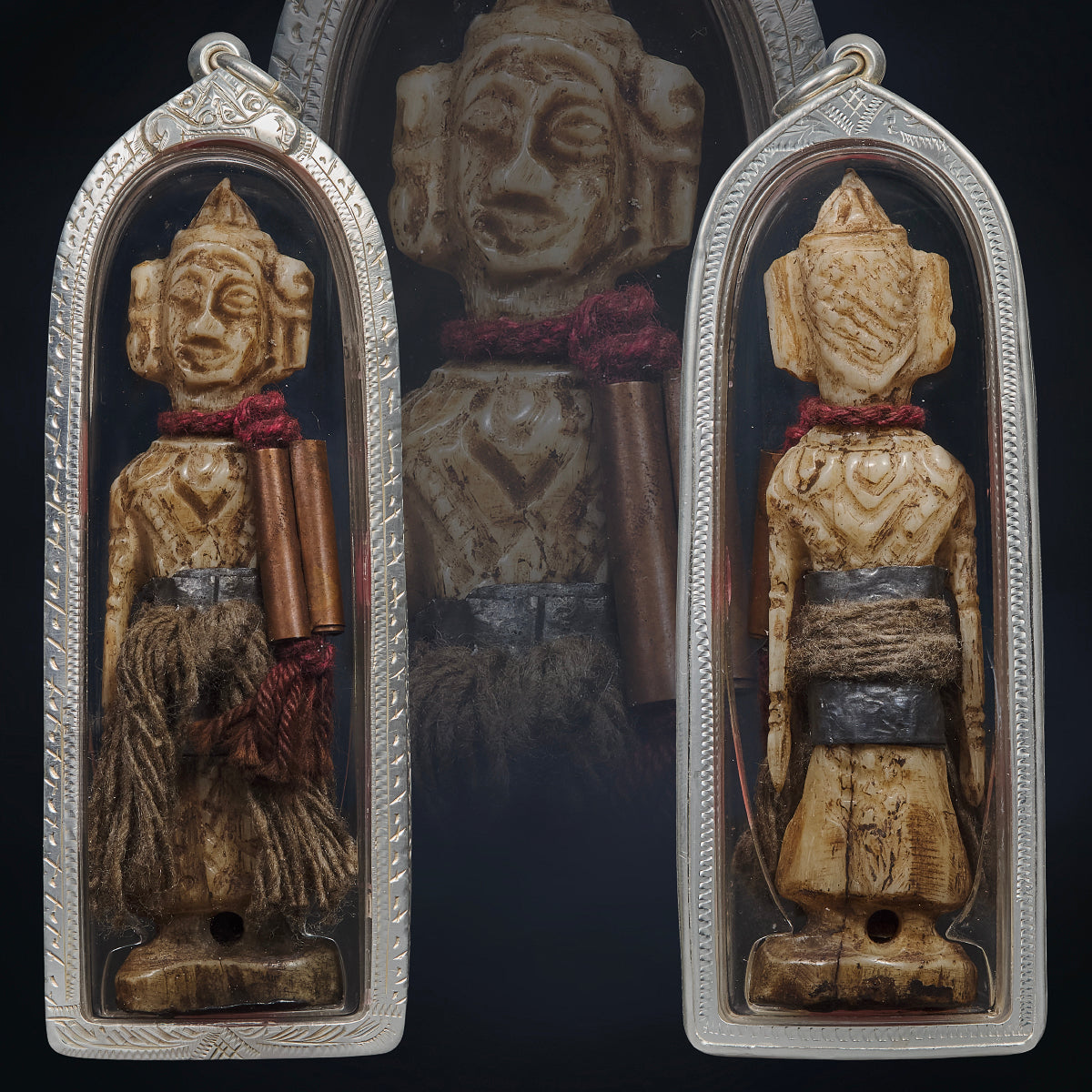
Roop Lor of an Old Burmese Shaman
Por Sala Tan
Barang Artifact
3.5" height
Personal Experiences Shared by Luksits
Among Por Sala Tan’s luksits, this Roop Lor is remembered particularly for Metta Maha Niyom, Maha Saneh and favourable assistance from other people, closely reflecting the Wicha for which the old Burmese shaman was respected during his lifetime.
The luksit who previously kept this particular piece reported an unusual recurring experience. When he carried the Roop Lor with him, strangers would sometimes approach him on their own and begin conversations, even when there had been no previous introduction or obvious reason for them to speak.
He also recalled occasions when assistance appeared unexpectedly. When he encountered difficulties or needed help, people would sometimes offer assistance without being asked, including individuals he barely knew. Over time, he came to associate these experiences with the strong Metta Maha Niyom character of the piece.
For him, its effect was expressed through human relationships: people appearing more approachable, conversations beginning naturally and help arriving at useful moments. These are personal experiences reported by its previous keeper and form part of the oral history accompanying this particular Roop Lor.
Summary
This unusual Roop Lor of an old Burmese shaman is an Ong Krut piece closely connected with Por Sala Tan and one of his longtime practitioner friends.
The elderly Burmese shaman was a close friend of Por Sala Tan, and the two were known to meet and share Wicha with one another on numerous occasions. The shaman was particularly respected for Metta Maha Niyom, Maha Saneh and opposite-sex attraction Wicha.
Before his friend passed away, Por Sala Tan requested that an image of him be created so that his representation could continue to be present during future chanting and consecration ceremonies.
The Roop Lor was individually carved from Graduk Chang Kraden that had belonged to the Burmese shaman himself. His own old Sai Sin and Takrut were subsequently incorporated into the figure.
Following the shaman’s passing, the traditional account preserved within Por Sala Tan’s lineage records that his spirit was invited to the Roop Lor.
It subsequently became an Ong Krut, being kept present through various chanting and consecration ceremonies associated with Por Sala Tan.
This particular surviving example was later obtained from one of Por Sala Tan’s own luksits after considerable persuasion, adding another important stage to its provenance.
The Old Burmese Shaman
The figure represents an elderly Burmese shaman who shared a close personal and spiritual relationship with Por Sala Tan.
Their relationship involved more than friendship.
According to accounts preserved among Por Sala Tan’s followers, the two practitioners exchanged Wicha and spiritual knowledge on many occasions, allowing methods from their respective traditions to be discussed and shared.
The Burmese practitioner became particularly well known for Metta Maha Niyom and Maha Saneh.
His Wicha was associated with creating favourable feelings between people, increasing personal charm and encouraging others to respond warmly towards the practitioner.
He was also especially recognised for opposite-sex attraction, an aspect of Saneh concerned with personal magnetism and favourable attention.
These qualities later became closely associated with the Roop Lor made in his image.
Why the Roop Lor Was Created
Before the elderly Burmese shaman passed away, Por Sala Tan requested that an image of his friend be made.
The purpose was personal as well as ceremonial.
Por Sala Tan wanted his friend's image to remain present during the chanting and consecration ceremonies that formed an important part of their shared practice.
The resulting figure took the form of a Roop Lor — a three-dimensional sacred portrait representing the practitioner himself.
The image therefore preserves the appearance and memory of someone personally known to Por Sala Tan.
After his passing, it continued to serve a ritual purpose within Por Sala Tan’s practice, eventually becoming recognised as an Ong Krut piece.
Graduk Chang Kraden
The Roop Lor was individually carved from old Graduk Chang Kraden.
Importantly, the material had belonged to the Burmese shaman himself during his lifetime.
This gives the material a particularly direct provenance.
Por Sala Tan subsequently used the old Graduk Chang Kraden as the foundation for the portrait, carving it into the standing form of his friend.
The natural cream and aged brown tones of the material remain visible across the figure, together with variations in grain and surface texture.
The facial features, clothing and posture were individually worked into the material, creating a recognisable ritual portrait while retaining much of the natural character of the original Graduk Chang Kraden.
Old Sai Sin & Takrut
The physical connection with the Burmese practitioner extends beyond the material used for the carving.
Attached to the Roop Lor are old Sai Sin and Takrut that also belonged to the shaman himself.
These personal ritual components were deliberately preserved and incorporated into the finished image.
The old Sai Sin can be seen bound around the figure, while the Takrut remains attached alongside the body.
Within the traditional understanding of such objects, preserving ritual materials personally used or kept by the practitioner strengthens the connection between the sacred portrait and the person it represents.
Together, the Graduk Chang Kraden, old Sai Sin and Takrut establish an unusually personal material link with the old Burmese shaman.
Invitation After His Passing
Following the Burmese shaman’s death, the account passed down within Por Sala Tan’s lineage states that his spirit was ceremonially invited to the Roop Lor.
This formed a continuation of Por Sala Tan’s original intention for the image.
His friend's representation could remain present during future sacred work, while the Roop Lor preserved the Wicha and memory associated with the practitioner.
The invitation was therefore closely connected with an existing relationship between two practitioners who had already spent considerable time exchanging knowledge and participating in spiritual practice together.
Within the lineage, the Roop Lor subsequently became associated especially with the Burmese shaman’s recognised qualities of Metta Maha Niyom and Maha Saneh.
Ong Krut & Consecration History
This Roop Lor is regarded as an Ong Krut piece.
It was kept or placed within various chanting and consecration ceremonies, remaining present while Por Sala Tan conducted sacred work.
This gives the object an important ritual history beyond its original creation.
It was not simply made as a commemorative portrait. It continued to accompany ceremonial practice and became familiar to those within Por Sala Tan’s circle.
Its repeated presence during consecrations also fulfilled the reason Por Sala Tan originally requested the portrait — his old friend's image remained present during the ceremonies even after his passing.
For collectors, this continuing ritual use is one of the defining characteristics of the piece.
Provenance of This Particular Piece
The later history of this exact Roop Lor adds another important dimension.
According to the provenance accompanying it, the piece eventually came into the possession of one of Por Sala Tan’s own luksits, who kept and carried it personally.
It was from this luksit that the surviving Roop Lor was eventually collected.
The owner was initially reluctant to part with it. Only after considerable persuasion was the piece finally released, reflecting the personal importance he attached to it and the experiences he associated with carrying it.
Its provenance therefore follows a meaningful chain: from the old Burmese practitioner and his personal sacred materials, to Por Sala Tan and his ceremonial practice, and subsequently to one of Por Sala Tan’s own luksits.
This direct connection is particularly significant for understanding the character of the surviving artifact.
Traditional Blessings
The traditional blessings attributed to this Roop Lor follow the Wicha for which the Burmese shaman was remembered.
Foremost is Metta Maha Niyom — encouraging goodwill, kindness, acceptance and favourable treatment from other people.
The experiences of its former luksit, particularly strangers approaching him to speak and people unexpectedly offering assistance, closely correspond with this traditional interpretation.
The Roop Lor is also associated with Maha Saneh, strengthening personal charm, attraction and the ability to leave a favourable impression.
The shaman’s recognised speciality in opposite-sex attraction gives the piece an additional Saneh aspect for those seeking greater personal magnetism.
In everyday life, these qualities may be applied towards relationships, social interaction, customer communication, negotiations and situations where cooperation from others can create new opportunities.
Modern Application
The Roop Lor is particularly relevant for people whose lives or occupations depend heavily upon human relationships and communication.
Business owners, salespeople, agents and those regularly meeting unfamiliar people may value its traditional association with Metta Maha Niyom.
Those who find it difficult to establish rapport may approach the piece for greater personal warmth and favourable reception.
Its Maha Saneh lineage also makes it relevant for personal relationships and attraction, particularly where the wearer wishes to become more noticeable and approachable.
Beyond these blessings, the Roop Lor may simply be kept as a representation of an experienced practitioner closely connected with Por Sala Tan and the exchange of Wicha within his circle.
Physical Details
This Roop Lor depicts an elderly Burmese shaman who was a close friend and fellow practitioner of Por Sala Tan. It is an Ong Krut piece individually carved from old Graduk Chang Kraden that had belonged to the Burmese shaman himself, creating a direct material connection with the person represented.
The figure retains the shaman’s old Sai Sin and Takrut, which were incorporated into the completed image. Following his passing, lineage accounts record that his spirit was invited to the Roop Lor. The figure was subsequently kept present through various chanting and consecration ceremonies associated with Por Sala Tan, establishing its history as an Ong Krut.
The surviving piece is now protected within a silver-coloured waterproof casing, while the natural aged surface of the Graduk Chang Kraden and its original ritual components remain visible.
The portrait was individually carved and its personal ritual materials arranged by hand, leaving natural variations in the carving, surface and placement of the components that form part of the character of this particular artifact.
Recommended Pairing
Roop Lor Ong Krut + Mae Per
A complementary pairing for Metta Maha Niyom, favourable communication and assistance from others. The Ong Krut carries the Burmese shaman’s Metta and Saneh lineage, while Mae Per contributes wisdom and skilful communication.
Roop Lor Ong Krut + Phra Ngan
A focused pairing for Maha Saneh, personal magnetism and opposite-sex attraction. This combination concentrates strongly on personal presence and favourable attention.
Roop Lor Ong Krut + Nang Kwak
A practical combination for business owners, salespeople and customer-facing professions. The Ong Krut supports favourable human interaction and goodwill, while Nang Kwak is traditionally associated with attracting customers and commercial opportunities.
Personal Notes
This particular Roop Lor Ong Krut is significant because its history preserves a close connection between Por Sala Tan, his Burmese practitioner friend and one of Por Sala Tan’s own luksits.
The Graduk Chang Kraden used for the carving belonged to the Burmese shaman himself. His personal old Sai Sin and Takrut were incorporated into the image, while the traditional account records that his spirit was invited to the Roop Lor following his passing.
Its subsequent role as an Ong Krut present during various chanting and consecration ceremonies directly fulfilled Por Sala Tan’s wish that the representation of his old friend could continue to accompany sacred work.
The piece later passed into the hands of one of Por Sala Tan’s luksits, who reported repeated experiences of strangers approaching him naturally and unexpected people offering assistance when he needed it. He valued the Roop Lor sufficiently that considerable persuasion was required before he agreed to release it.
For collectors, this gives the surviving piece a particularly meaningful provenance. It preserves not only the traditional Metta Maha Niyom, Maha Saneh and opposite-sex attraction Wicha of the Burmese shaman, but also a tangible history linking friendship, shared Wicha, repeated consecration ceremonies and personal experiences within Por Sala Tan’s own lineage.
-
Free Shipping for Singapore| $15 Worldwide | $60 USA For Items Below $350