
OOBThaiAmulets
Por Sala Tan
Por Sala Tan
Couldn't load pickup availability
PST03
Yintong (Yin Tong)
Por Sala Tan
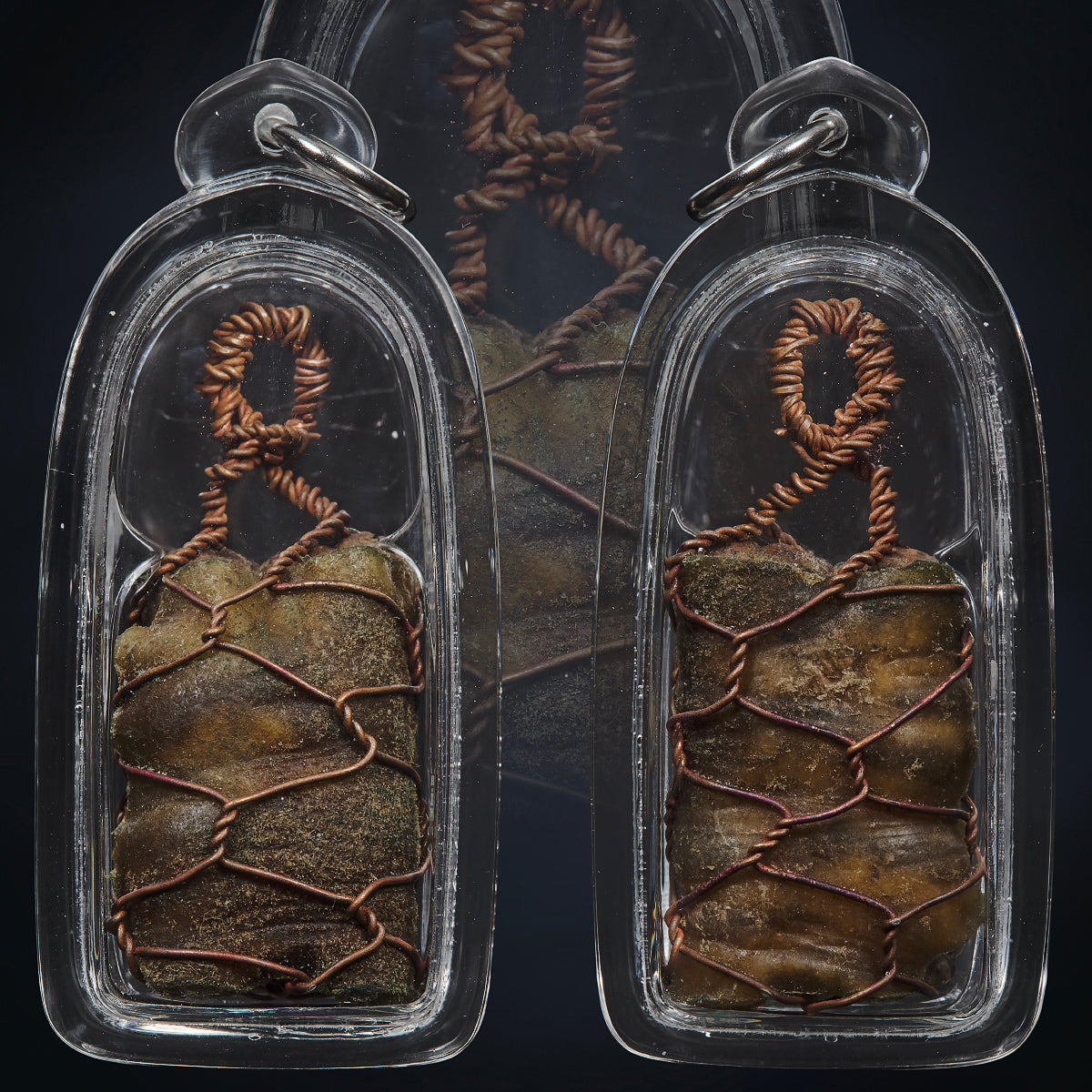
Each Yintong is individually prepared using sacred materials that have been carefully gathered and worked by hand according to Por Sala Tan's ritual tradition. Because every piece is individually hand-moulded rather than mass-produced, natural variations in colour, texture and form are to be expected, making every amulet unique.
Personal Experiences Shared by Luksits
Collectors who wear Yintong frequently speak of relationships becoming more harmonious and conversations flowing more naturally. Some describe reconnecting with former clients, repairing strained relationships or finding that negotiations progress with greater ease. Others simply appreciate the confidence that comes from carrying an amulet traditionally associated with kindness, goodwill and positive human connections.
Business owners and sales professionals also value Yintong for its reputation in encouraging favourable first impressions. Many hope that meetings become more productive, customers feel more comfortable, and opportunities arise through genuine trust rather than force. As with all traditional sacred objects, these are personal experiences and cultural beliefs rather than guaranteed outcomes.
Summary
Yintong, also known as Yin Tong or In Koo, is one of the classic forms of Thai Maha Saneh amulets, traditionally associated with attraction, harmonious relationships and positive interpersonal energy. Rather than representing romance alone, it is widely carried to encourage goodwill, strengthen communication and cultivate relationships that support both personal happiness and everyday success.
This example by Por Sala Tan is particularly distinctive because it has been hand-moulded from old sacred candle wax collected from 108 ritual candles. Before each ceremony, Por Sala Tan personally inscribed Maha Saneh yantras onto all 108 candles. The candles were then lit while he entered meditation and recited sacred mantras. After the ceremonies concluded, the blessed wax was carefully collected and preserved before being transformed into individual Yintong amulets.
Within Thai ritual tradition, the accumulated blessings contained within consecration candle wax are regarded as especially auspicious, making these pieces highly appreciated among collectors of Maha Saneh sacred objects.
Historical Background
The image of Yintong has appeared throughout Thailand and the former Lanna Kingdom for generations. Depicting two figures embracing, it symbolises harmony, affection and enduring relationships. As a result, it became closely associated with Maha Saneh, the branch of Thai sacred tradition concerned with attraction, popularity and favourable human relationships.
Over time, Yintong became valued well beyond matters of romance. Merchants, negotiators and business owners have long carried such amulets, believing that trust, goodwill and sincere relationships often become the foundation upon which prosperity is built.
Its symbolism remains timeless. Lasting success often begins when people naturally feel comfortable, respected and willing to cooperate.
Origins of the Materials
The defining material of this Yintong is old consecration candle wax gathered from numerous blessing ceremonies conducted personally by Por Sala Tan.
Prior to each ceremony, Por Sala Tan hand-wrote Maha Saneh yantras onto 108 ritual candles before arranging them for consecration. Throughout the blessing, the candles remained lit while he meditated and continuously recited sacred mantras according to his inherited wiccha.
Within Thai Buddhist tradition, ceremony candles are believed to absorb the accumulated blessings, concentration and spiritual intention generated throughout the ritual. Rather than allowing this sacred wax to go unused, Por Sala Tan carefully collected it after each ceremony and preserved it for future sacred creations.
The aged wax was then individually hand-moulded into Yintong amulets, allowing the accumulated blessings of many ceremonies to continue within a new sacred form.
Ritual
The creation of each Yintong follows a traditional process that combines both ritual preparation and craftsmanship.
The preparation includes:
- Writing Maha Saneh yantras onto 108 ritual candles.
- Lighting the candles during meditation and mantra recitation.
- Collecting the blessed wax after the consecration ceremony.
- Individually hand-moulding each Yintong.
- Completing the final blessing according to Por Sala Tan's lineage.
Within the tradition, the shaping of each amulet is itself regarded as part of the ritual. The sacred wax is not simply recycled but respectfully transformed into a new vessel intended to carry the blessings accumulated during previous ceremonies.
Traditional Blessings
Yintong belongs to the Maha Saneh category of Thai sacred objects and is traditionally associated with fostering harmonious relationships through kindness, sincerity and positive human interaction.
Collectors commonly seek Yintong for:
- Relationship harmony.
- Personal charm and approachability.
- Improved communication.
- Business goodwill.
- Customer attraction.
- Confidence in social situations.
Many collectors appreciate that Yintong combines Metta Maha Niyom with Maha Saneh. Within Thai tradition, favourable opportunities often begin when people naturally feel comfortable, respected and willing to support one another.
As with all traditional sacred objects, these represent longstanding cultural beliefs rather than guaranteed outcomes.
Modern Application
Yintong is well suited to people whose daily lives depend upon communication and strong personal relationships.
It is commonly carried by:
- Business owners.
- Sales professionals.
- Entrepreneurs.
- Customer-facing staff.
- Those seeking harmonious personal relationships.
Many collectors choose to wear Yintong close to the heart, reflecting its traditional association with sincerity, compassion and positive intention in human relationships.
Physical Details
This Yintong has been individually hand-moulded from aged sacred candle wax collected from Por Sala Tan's previous consecration ceremonies.
Its naturally aged wax displays subtle variations in colour, texture and surface character, reflecting the accumulated materials gathered from multiple rituals. Every example differs slightly in appearance because each is shaped entirely by hand rather than cast from a mould.
These natural variations are regarded by collectors as part of the individuality and traditional craftsmanship of every piece.
Recommended Pairings
For strengthening relationships and affection, pair with Khun Paen.
For communication and persuasive speech, pair with Salika.
For business attraction and customer goodwill, pair with Nang Kwak.
For authority balanced with kindness and respect, pair with a Baramee or Maha Amnaj amulet.
Together, these combinations encourage positive relationships while supporting confidence, opportunity and lasting goodwill.
Personal Notes
This Yintong beautifully reflects the way Thai ritual traditions preserve and continue sacred materials across generations. Rather than allowing the wax from completed consecration ceremonies to be discarded, Por Sala Tan transforms it into a new sacred object after first preparing 108 ritual candles with handwritten Maha Saneh yantras and blessing them through meditation and mantra recitation.
The result is an amulet whose significance lies not only in its symbolic form, but also in the accumulated ritual history contained within its material. For many collectors, this continuity of blessings gives each piece a special character that extends beyond its physical appearance.
Its traditional purpose may be summarised simply: to encourage harmonious relationships, sincere goodwill and opportunities that naturally arise through trust, kindness and meaningful human connection.
-
Free Shipping for Singapore| $15 Worldwide | $60 USA For Items Below $350