
OOBThaiAmulets
Por Sala Tan
Por Sala Tan
Couldn't load pickup availability
PST03
Ngu Kin Hang — Buang Nakabat
Por Sala Tan
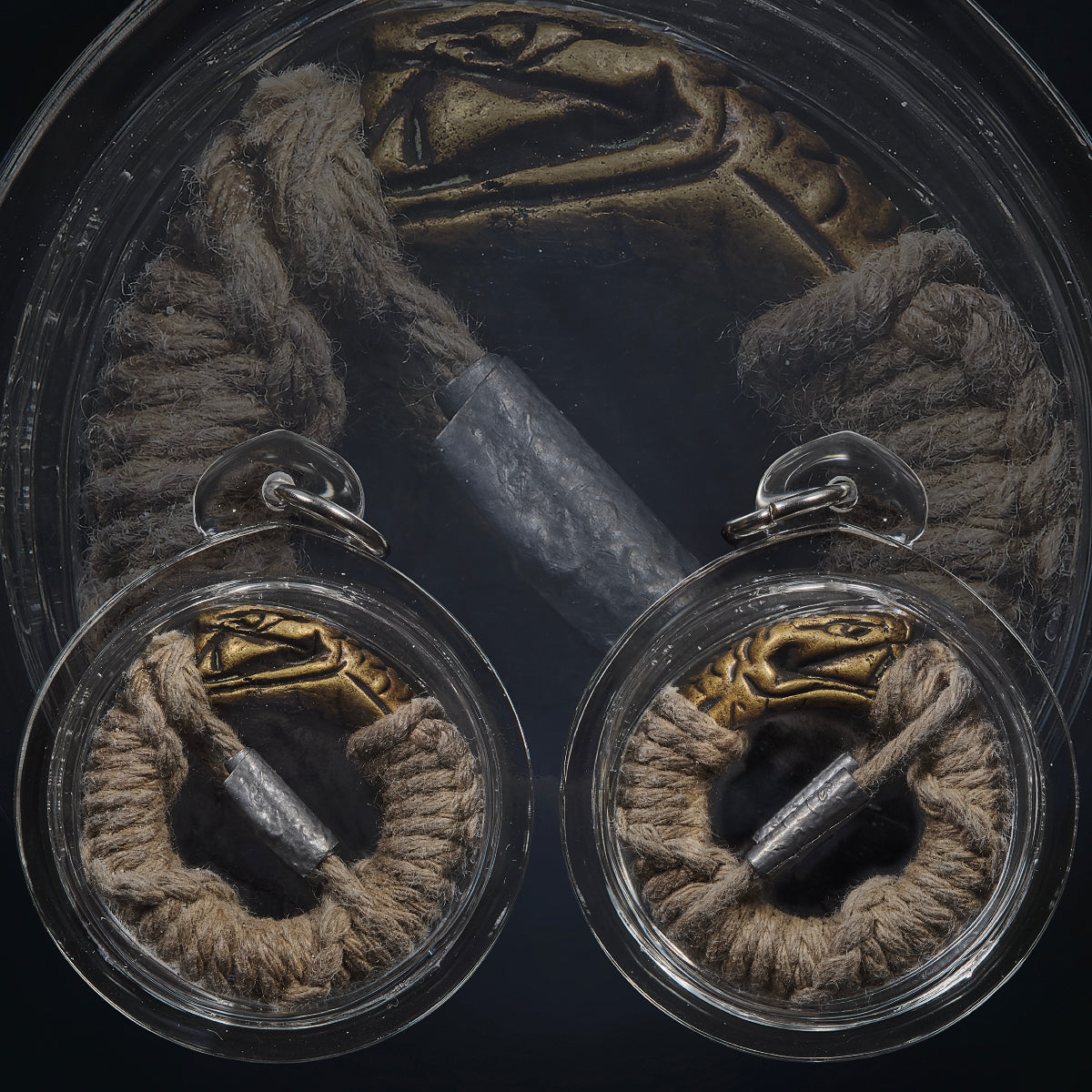
The sacred components of each piece are individually prepared and assembled by hand. The old brass, wealth-fetching takruts and ritual rope naturally vary from one example to another, giving every Buang Nakabat its own individual character.
Personal Experiences Shared by Luksits
Among followers of Por Sala Tan and collectors of traditional Lanna-style wealth charms, Ngu Kin Hang, also known as Buang Nakabat, is carried principally for Maha Pokasap, Chok Lap, Maha Lap, Metta Maha Niyom and the preservation of accumulated wealth.
Business owners commonly keep this type of charm near their money, particularly inside cash drawers, safes, wallets or places where business income is stored. Some describe periods of more consistent sales, returning customers and fewer unexpected expenses after carrying or keeping the charm.
Salespeople and commission-based workers have shared accounts of customers appearing at favourable moments, delayed payments finally being received and additional orders arriving after earlier transactions.
Others associate the endless circular form with continuous cash flow. Lottery players, traders and those whose income depends upon opportunities sometimes carry it for Chok Lap and Maha Lap, with anecdotal accounts ranging from small unexpected gains to fortunate business opportunities.
Office workers also report using Buang Nakabat for Metta Maha Niyom. Personal accounts include smoother dealings with supervisors, reduced workplace conflict, assistance from influential people and being considered for better responsibilities or advancement.
Its Naga symbolism also gives the charm a protective dimension. Some devotees traditionally carry it against harmful spiritual influences, nightmares and hostile intentions.
These are personal and anecdotal accounts shared among devotees and collectors and should be understood as traditional experiences rather than guaranteed results.
Summary
This unusual Ngu Kin Hang, or Buang Nakabat, was individually prepared by Por Sala Tan as a wealth-retaining and fortune-attracting sacred object.
Its most recognisable feature is the serpent or Naga arranged into a continuous circular form, appearing to consume its own tail.
Within the tradition surrounding this design, the circle represents an unbroken cycle of resources and fortune. The serpent continually has something to consume because its food returns to itself. Symbolically, wealth enters, circulates and remains available.
Por Sala Tan's construction adds several important ritual components to this symbolism.
The serpent itself is produced using old brass that was melted and recast. Within the arrangement are wealth-fetching takruts, while the entire circular body is carefully bound with ceremonial sacred rope.
The rope carries a specific purpose: to bind, secure and retain wealth.
The result is a particularly direct form of Maha Pokasap wiccha — attracting resources, holding what has already been obtained and encouraging wealth to remain in circulation around its keeper.
Historical Background
Serpent and Naga symbolism occupies a deep position within the sacred traditions of Thailand and the wider Southeast Asian region.
The Naga is associated with water, fertility, treasure, abundance and the guardianship of sacred places. Within Buddhist tradition, the Naga is also remembered through the story of Mucalinda, the serpent king who protected the Buddha during meditation.
Northern Thai and Lanna occult traditions developed their own forms of serpent symbolism.
Among them are circular serpent charms associated with the idea of Ngu Kin Hang — the snake eating its tail.
The important feature is the absence of a beginning or an end.
Everything returns into the circle.
For wealth wiccha, this becomes a powerful visual metaphor: resources enter the keeper's life, circulate through necessary expenditure and return again through income, customers, opportunities and fortunate circumstances.
Meaning of Ngu Kin Hang
Ngu Kin Hang can be understood literally as the snake eating its tail.
Its meaning within this particular sacred-object tradition is closely connected with continuity.
The serpent feeds upon itself, yet its source of nourishment never disappears. The circular body therefore represents an inexhaustible cycle.
Applied to livelihood, it expresses the wish that:
money comes in, money remains available, and money continues to return.
This explains why the form became particularly attractive to merchants and people whose livelihoods depend upon continuous financial movement.
A shop needs customers to continue arriving.
A salesperson needs new transactions after completing the previous sale.
An entrepreneur needs capital to circulate and return as further income.
The endless serpent provides a symbolic representation of that continuing cycle.
Buang Nakabat and Maha Pokasap
The wealth aspect of this charm can be understood through the concept of Maha Pokasap — the gathering, holding and preservation of material resources.
For many devotees, attracting money represents only one part of prosperity.
Keeping it is equally important.
Buang Nakabat therefore carries the symbolism of a wealth lock. Fortune enters the circle and is ritually encouraged to remain connected with its keeper.
This is why traditional users may keep such charms directly beside their money.
The intention is stable circulation: income continues entering while unnecessary financial leakage is reduced.
Old Brass
Por Sala Tan created the main serpent form using old brass that was melted and recast.
Older metal has long held importance within Thai and regional sacred-object making. Existing metal may carry age, history and associations from its previous use before being incorporated into a newly consecrated object.
The brass gives the exposed serpent head visible on this example its aged golden-brown appearance.
Each casting naturally develops small differences in surface, tone and definition.
Once formed, the brass component becomes the structural centre around which the other ritual materials are assembled.
Wealth-Fetching Takruts
A particularly important component is the inclusion of wealth-fetching takruts.
Takruts are traditionally prepared from metal sheets inscribed with sacred characters, yantras or specific formulas before being rolled into tubular form and consecrated.
For this piece, the takruts were incorporated specifically for wealth-fetching and fortune-related wiccha.
They reinforce the central intention of Buang Nakabat:
bringing resources towards the keeper and maintaining their connection once they arrive.
The metal takrut can be clearly seen incorporated within the bound arrangement.
Ceremonial Sacred Rope — Binding Wealth
One of the most distinctive aspects of Por Sala Tan's Buang Nakabat is the extensive use of ceremonial sacred rope.
The rope is wrapped repeatedly around the circular serpent body.
This wrapping carries deliberate ritual symbolism.
A knot secures something.
A binding prevents something from escaping.
Within this wealth wiccha, the sacred rope therefore represents the binding and securing of wealth.
The repeated coils reinforce the intention that accumulated fortune remains attached to the keeper.
This gives the physical construction of the amulet direct symbolic meaning: the wealth-fetching takruts draw fortune, while the sacred bindings secure what has been gathered.
Traditional Blessings
Buang Nakabat is principally associated with Maha Pokasap, particularly the accumulation and preservation of resources.
It is also traditionally carried for Chok Lap and Maha Lap, covering favourable opportunities and unexpected fortune.
The Naga component contributes associations with abundance, guardianship and prosperity.
Metta Maha Niyom may support relationships with customers, colleagues, employers and people capable of providing opportunities.
Protective qualities are also attributed to Naga charms within traditional belief, particularly against hostile spiritual influences and negative energies.
Together, these qualities create a charm concerned with wealth, opportunity, retention, favourable relationships and protection.
Business Application
Buang Nakabat is especially suitable for business environments.
Retailers may keep it within the cash register or cash drawer.
Business owners may place it inside a safe or where daily earnings are stored.
Online sellers and commission workers may keep it beside their working area.
It may also be carried inside a wallet or purse.
The intention remains consistent in each setting: draw opportunities towards the keeper, maintain financial circulation and secure accumulated wealth.
For businesses experiencing irregular income, the endless serpent also carries the symbolic wish for continuity — that after one customer leaves, another arrives.
Wearing and Carrying
Because Buang Nakabat is a serpent/Naga-based sacred charm rather than a Buddha image, it can traditionally be carried in several practical ways according to the customs of the lineage.
It may be worn as a pendant.
It may also be carried inside a wallet, purse, bag or pocket.
Business owners may keep it close to their money, particularly inside a cash register or safe.
The compact circular form makes it particularly convenient as an everyday wealth charm.
Physical Details
This example was made by Por Sala Tan using several individually prepared components.
At its centre is a circular Ngu Kin Hang or Buang Nakabat form created from melted old brass.
The exposed section reveals the sculpted serpent/Naga head, while much of the circular body is densely wrapped in aged ceremonial rope.
A wealth-fetching takrut is incorporated into the arrangement and remains visibly integrated with the sacred bindings.
The repeated rope coils form an important part of the object itself. They were applied with the ritual intention of binding and securing wealth.
The entire arrangement is protected within a fitted clear casing with suspension ring.
Because these components were assembled individually, variations in the old brass, rope wrapping, takrut placement, knots and natural ageing are expected between pieces.
Recommended Pairing
For business and customer attraction, Buang Nakabat pairs particularly well with Nang Kwak, combining wealth retention with the traditional calling of customers and commerce.
For stronger Metta Maha Niyom and negotiation, it can be paired with Khun Paen.
For authority, leadership and professional advancement, Hanuman provides a complementary emphasis on confidence and decisive action.
For general Baramee and auspiciousness, Somdej or Phra Kring creates a balanced combination around the specialised wealth qualities of Buang Nakabat.
Who Is This For?
This Por Sala Tan Buang Nakabat is particularly suited to business owners, merchants, salespeople, commission workers, entrepreneurs and collectors seeking traditional Maha Pokasap wiccha.
It may also appeal to those who find that money comes easily but disappears equally quickly through expenses and unexpected obligations. The symbolic emphasis of this particular form centres strongly upon retention and continuing circulation.
Its construction expresses this purpose clearly.
The old brass serpent forms the endless cycle.
The wealth-fetching takruts call resources towards the keeper.
The ceremonial rope binds and secures that wealth.
Together they form Por Sala Tan's interpretation of Ngu Kin Hang — Buang Nakabat, an old serpent symbol centred upon the enduring wish that fortune continues to enter, resources remain available, and the cycle of prosperity never runs dry.
-
Free Shipping for Singapore| $15 Worldwide | $60 USA For Items Below $350