
OOBThaiAmulets
Por Sala Tan
Por Sala Tan
Temple-sourced certified artifacts since 2005. Questions before you buy? WhatsApp us at +65 9155 7000.
Couldn't load pickup availability
Box: PST11
Phra Ruang Song Kror Mummy
Por Sala Tan
Phra Ruang Song Kror Mummy
3.5 Inches
Mainstream Artifact
━━━━━━━━━━━━━━━━━━━━━━━━━━━━━━━━
Each artifact is individually handmade from natural sacred materials, with variations in colour, texture, form and hand-applied Yant inscriptions making every piece unique. Exact piece to be given
━━━━━━━━━━━━━━━━━━━━━━━━━━━━━━━━
Personal Experiences Shared by Luksits
According to AC Lek, a collection of old Phra Ruang amulets was presented to Por Sala Tan by luksits residing outside Chiang Mai.
Upon examining the pieces, Por Sala Tan reportedly recognised their strong spiritual character and the significance of their long history.
Rather than altering their original identity, he chose to enhance them with his own Metta Maha Niyom Si Peng and Maha Pokasap takrut, combining the traditional blessings of ancient Phra Ruang with his personal Wicha.
AC Lek personally received this particular piece from Por Sala Tan, preserving a direct connection to the master.
Among collectors, ancient Phra Ruang amulets are traditionally appreciated for protection, Baramee and personal authority. Such pieces are often retained for their historical significance rather than treated as ordinary contemporary amulets.
━━━━━━━━━━━━━━━━━━━━━━━━━━━━━━━━
Summary
This Phra Ruang Song Kror Mummy, Pim Yai, is an old standing Buddha amulet attributed to the Si Satchanalai votive tradition of Sukhothai Province, described as being made from metal alloy, an ancient silver-coloured base-metal alloy.
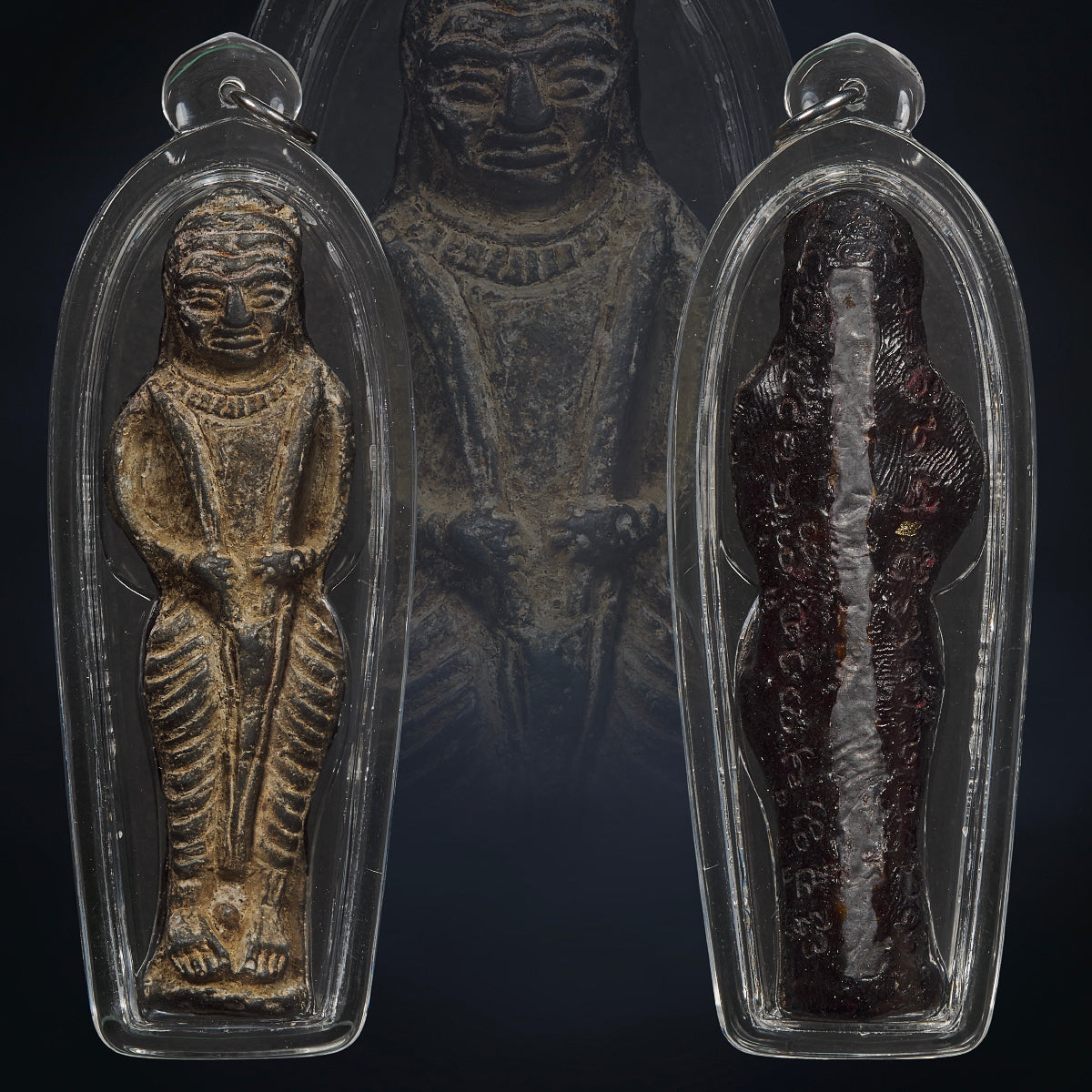
The name Song Kror refers to the figure's armour-like appearance, while Mummy is a collector's nickname describing its elongated form and closely patterned robes.
According to AC Lek, the amulet was among a group donated to Por Sala Tan, who subsequently enhanced selected pieces using Metta Maha Niyom Si Peng and Maha Pokasap takruts.
The resulting artifact brings together two distinct traditions: the protective and authoritative symbolism of ancient Phra Ruang, and Por Sala Tan's Wicha for goodwill, prosperity and strengthening Baramee.
Its significance is further distinguished by its direct passage from Por Sala Tan to AC Lek.
━━━━━━━━━━━━━━━━━━━━━━━━━━━━━━━━
Historical Background
Phra Ruang Song Kror Mummy belongs to a recognised category of old standing Buddha amulets associated by collectors with Si Satchanalai, Sukhothai Province.
Traditional accounts connect these amulets with Wat Phra Si Rattana Mahathat at ancient Chaliang, an important historical religious centre influenced by Khmer-Lopburi and Sukhothai artistic traditions.
The figure's upright posture, distinctive head covering and armour-like body decoration gave rise to the name Phra Ruang Song Kror, meaning Armoured Phra Ruang.
The additional name Mummy refers solely to its appearance, not to any connection with Egyptian mummification.
Phra Ruang itself is closely associated with the historical and legendary heritage of Sukhothai. Within Thai amulet traditions, the name has become particularly connected with Baramee, protection, courage and authority.
Collector accounts describe discoveries of this amulet family during the twentieth century, including reports dating to around B.E. 2485 (1942). However, the precise production period, original maker and individual excavation history cannot be established from these accounts alone.
The traditional attribution to Si Satchanalai should therefore be distinguished from independently documented provenance for this particular piece.
━━━━━━━━━━━━━━━━━━━━━━━━━━━━━━━━
Origins of the Materials
The principal material is described as an old alloy traditionally associated with ancient Thai votive amulets.
It generally refers to a family of base-metal alloys, that is popular during that period of making.
According to AC Lek, the amulet came from a collection of old Phra Ruang pieces donated by devotees living outside Chiang Mai.
Por Sala Tan subsequently added two important sacred components:
-
Metta Maha Niyom Si Peng: His prepared sacred wax, traditionally associated with goodwill, popularity, attraction and favourable relationships.
-
Maha Pokasap Takrut: A consecrated scroll intended to strengthen wealth preservation, prosperity and financial stability.
These additions were intended to complement the existing spiritual significance attributed to the ancient amulet rather than replace its original identity.
━━━━━━━━━━━━━━━━━━━━━━━━━━━━━━━━
Ritual
According to the account passed down by AC Lek, Por Sala Tan regarded the donated Phra Ruang amulets as possessing considerable spiritual significance accumulated through their long history.
He therefore chose to retain the original amulets and supplement them with his own ritual materials.
A preparation of Metta Maha Niyom Si Peng was applied, followed by the incorporation of a Maha Pokasap takrut.
The purpose was to enhance the traditional protective qualities of Phra Ruang with additional blessings for Metta, prosperity and the cultivation of Baramee.
The finished artifact consequently represents an old amulet subsequently prepared and blessed by Por Sala Tan, rather than a newly cast Phra Ruang produced by him.
━━━━━━━━━━━━━━━━━━━━━━━━━━━━━━━━
Blessings and Effects
-
Baramee and Maha Amnaj: Traditionally associated with strengthening personal authority, confidence, dignity and the respect of others.
-
Klaew Klaad and Kongkraphan: Believed to provide spiritual protection against danger, adversity and harmful influences.
-
Metta Maha Niyom: Por Sala Tan's Si Peng is intended to encourage goodwill, favourable relationships and assistance from others.
-
Maha Pokasap and Prosperity: The added takrut is traditionally associated with safeguarding wealth, financial stability and favourable livelihood opportunities.
━━━━━━━━━━━━━━━━━━━━━━━━━━━━━━━━
Modern Application
This Phra Ruang is particularly suitable, within traditional amulet practice, for individuals seeking a combination of personal authority, protection and harmonious relationships.
Its association with Baramee makes it meaningful to business owners, managers, professionals and individuals who regularly carry responsibility or make important decisions.
The additional Metta Maha Niyom Si Peng complements these qualities by emphasising goodwill and positive interactions, while the Maha Pokasap takrut introduces a prosperity-related element.
For collectors, however, its greatest appeal may lie in the opportunity to preserve an old Phra Ruang amulet with a subsequent blessing attributed directly to Por Sala Tan.
━━━━━━━━━━━━━━━━━━━━━━━━━━━━━━━━
Physical Details
The artifact depicts a slender standing Buddha in the distinctive Phra Ruang Song Kror Mummy form, with an elongated body, pronounced facial features, layered head covering and patterned robes extending towards the feet. The surface displays aged grey, brown and silver-coloured patination consistent in appearance with an old metal amulet. The reverse has a dark coating, with a prominent vertical strip of added material extending down the centre, associated with Por Sala Tan's subsequent preparation. The piece is enclosed within a transparent protective casing with a suspension loop. Its exact age, alloy composition and archaeological provenance cannot be confirmed from photographs alone.
The photographs are representative only. A piece will be selected at random, and the item supplied may differ slightly from the exact piece shown in the images.
━━━━━━━━━━━━━━━━━━━━━━━━━━━━━━━━
Recommended Pairing
Phra Somdej: For complementary Buddhist Baramee, Metta and general auspiciousness.
Phra Sivali: To accompany the Maha Pokasap element with traditional blessings for livelihood and prosperity.
Phra Kring: For additional emphasis on Buddhist protection, spiritual stability and wellbeing.
━━━━━━━━━━━━━━━━━━━━━━━━━━━━━━━━
Personal Notes
What makes this particular Phra Ruang Song Kror Mummy interesting is the combination of its antique identity and subsequent ritual preparation by Por Sala Tan.
According to AC Lek, Por Sala Tan did not create the original Phra Ruang amulet. Instead, he received it from devotees, recognised its spiritual significance and enhanced it with his own Metta Maha Niyom Si Peng and Maha Pokasap takrut.
This distinction is important because the artifact retains its original historical character while acquiring a separate connection to Por Sala Tan's Wicha.
The reported alloy composition and Si Satchanalai attribution also contribute to its collector interest, although these details require independent examination for definitive authentication.
Most importantly, AC Lek personally obtained this piece from Por Sala Tan, providing a direct account of its later custodial history.
It is therefore an artifact best appreciated for three interconnected qualities: the heritage of ancient Phra Ruang, the supplementary blessings of Por Sala Tan and its personal provenance through AC Lek.
━━━━━━━━━━━━━━━━━━━━━━━━━━━━━━━━
-
SG: Free | Worldwide except USA: $20 Registered | USA: $25 Registered / $100 Courier (SGD)