
OOBThaiAmulets
Por Sala Tan
Por Sala Tan
Temple-sourced certified artifacts since 2005. Questions before you buy? WhatsApp us at +65 9155 7000.
Couldn't load pickup availability
Box: PST10
Hanuman
Por Sala Tan
4 Inches
Barang Artifact
━━━━━━━━━━━━━━━━━━━━━━━━━━━━━━━━
Each artifact is individually handmade from natural sacred materials, with variations in colour, texture, form and hand-applied Yant inscriptions making every piece unique. Exact piece to be given
━━━━━━━━━━━━━━━━━━━━━━━━━━━━━━━━
Personal Experiences Shared by Luksits
I first encountered this unusual Hanuman artifact hanging at the waist of a villager during one of my visits. Its distinctive appearance caught my attention, particularly the combination of a carved Hanuman, a Maleng Phu and a takrut bound together as one protective talisman.
After asking to examine it more closely, the villager explained that Por Sala Tan had personally prepared the artifact for him and his family.
His family frequently ventured deep into the forest to search for rare herbs, sacred materials and natural relics requested by traditional occult masters. These journeys often involved difficult terrain, remote caves and areas inhabited by wild animals.
According to the villager, he once discovered an old wooden box containing several relics inside a cave. Rather than keeping the contents, he presented the entire box to Por Sala Tan.
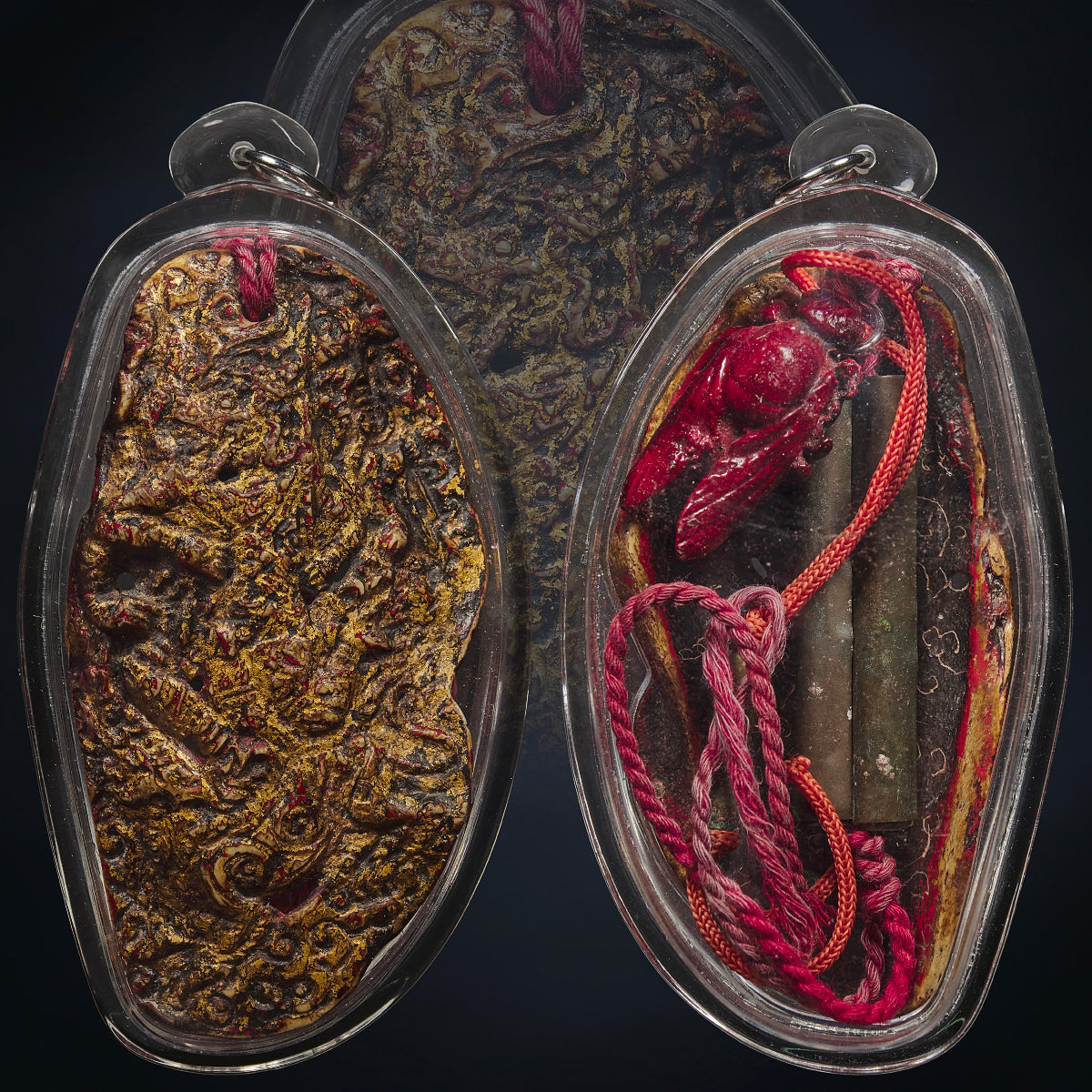
Por Sala Tan subsequently carved Hanuman from one of the relics and fashioned a Maleng Phu from the wood of the original box. Together with a takrut prepared by the master, all three components were bound into a single artifact.
The villager carried it whenever he entered the jungle. He recalled several occasions when he narrowly avoided falling into ravines or managed to react quickly to unexpected dangers.
He personally attributed these fortunate escapes to the protective blessings of Hanuman, while regarding the Maleng Phu as an important companion for safe travel.
For him, this was not simply a collectible talisman, but a personal artifact closely connected to his years of travelling through the forest.
━━━━━━━━━━━━━━━━━━━━━━━━━━━━━━━━
Summary
An unusual three-part protective artifact created by Por Sala Tan, combining a hand-carved Hanuman, a wooden Maleng Phu and a sacred takrut.
The principal Hanuman image was carved from a relic discovered inside a cave, while the Maleng Phu was fashioned from the wooden box in which the relics had originally been found.
The three components were subsequently bound together, forming a talisman intended for a villager whose livelihood required frequent journeys through remote forest environments.
Its principal traditional associations are protection, safe travel, courage, agility and overcoming danger, complemented by the Maleng Phu's qualities of Metta, good fortune and prosperity.
━━━━━━━━━━━━━━━━━━━━━━━━━━━━━━━━
Historical Background
Hanuman is one of the most recognised protective figures in Thai sacred traditions. Originating from the Ramakien, the Thai adaptation of the Ramayana, Hanuman is celebrated for his courage, intelligence, loyalty and extraordinary agility.
Within Thai talismanic practice, Hanuman is associated with Kong Grapan, Klaew Klaad and Maha Amnaj — protection against harm, escaping danger and commanding personal authority.
His ability to move swiftly through difficult environments makes him particularly meaningful to travellers and individuals whose work involves physical risks.
Maleng Phu, meanwhile, belongs to the wider Lanna and Tai Yai tradition of auspicious animal talismans.
The large carpenter bee is admired for its strength, persistence and ability to penetrate hard wood. In traditional symbolism, these qualities represent determination, overcoming obstacles and attracting favourable opportunities.
A popular Burmese and Tai Yai legend associates Maleng Phu with King Bayinnaung, whose royal palanquin was said to have sheltered a bee that accompanied him during his military campaigns.
In this folklore, the bee became a symbol of Baramee, authority and continuing success. The account is a traditional legend rather than an established historical event.
Together, Hanuman and Maleng Phu represent a combination of physical protection, resourcefulness, favourable movement and personal prosperity.
━━━━━━━━━━━━━━━━━━━━━━━━━━━━━━━━
Origins of the Materials
The origins of this artifact are particularly interesting because its principal components came from the same discovery.
Cave Relic
The Hanuman image was carved from one of several relics reportedly discovered inside an old wooden box in a remote cave.
The villager presented the entire collection to Por Sala Tan, allowing the master to select suitable material for his carving.
Within traditional Lanna Wicha, certain old relics are valued for their age, unusual origins and perceived spiritual significance.
Wood from the Original Box
Rather than discarding the wooden container, Por Sala Tan used part of it to carve a Maleng Phu.
This preserved the connection between the original cave discovery and the completed talisman.
Unlike more conventional Maleng Phu made from old cart-wheel wood, this particular carving derives its significance from the wooden box that had protected the relics.
Takrut
Por Sala Tan added one of his own sacred takruts, traditionally prepared with Yant inscriptions and protective kata.
The takrut complements the Hanuman's protective symbolism and the Maleng Phu's associations with safe travel, Metta and prosperity.
━━━━━━━━━━━━━━━━━━━━━━━━━━━━━━━━
Ritual
After receiving the relics, Por Sala Tan selected a suitable piece and carved it into the image of Hanuman, drawing upon the traditional protective qualities associated with the figure.
He then carved a Maleng Phu from the wood of the original cave box.
A sacred takrut was prepared and incorporated into the composition.
The three components were bound together with sacred cord, creating a single talisman rather than three separate objects.
The completed artifact was intended specifically for the villager and his family, whose journeys into the forest exposed them to unpredictable terrain and potential danger.
Its ritual purpose centred upon personal protection, safe passage, agility and the ability to overcome unexpected obstacles.
━━━━━━━━━━━━━━━━━━━━━━━━━━━━━━━━
Blessings and Effects
-
Protection and Safe Travel: Traditionally associated with avoiding accidents, escaping danger and protection against harmful influences.
-
Courage and Agility: Hanuman symbolises confidence, quick judgement, physical resilience and the ability to respond to difficult situations.
-
Metta and Baramee: Maleng Phu is believed to encourage goodwill, personal influence and assistance from others.
-
Wealth and Opportunities: Associated with favourable business circumstances, successful undertakings and steady progress.
━━━━━━━━━━━━━━━━━━━━━━━━━━━━━━━━
Modern Application
Although originally prepared for someone who frequently travelled through the jungle, this artifact remains symbolically relevant to modern occupations and lifestyles.
It is particularly suited to those who regularly undertake long-distance journeys, outdoor activities or work in unfamiliar environments.
Hanuman's traditional qualities of courage and alertness are meaningful to individuals who must make quick decisions, while Maleng Phu's associations with Metta and favourable movement complement professions involving travel, customers and negotiations.
The artifact may also appeal to business owners and sales professionals seeking a traditional combination of protection, confidence and commercial goodwill.
Its three-part composition makes it distinctive among conventional Hanuman talismans.
━━━━━━━━━━━━━━━━━━━━━━━━━━━━━━━━
Physical Details
This artifact has an irregular oval form, with the front displaying a deeply textured Hanuman image carved into an old relic. The surface has darkened considerably, with visible red and gold finishes highlighting portions of the carved figure and surrounding details. The reverse carries a small Maleng Phu carving finished in a vivid red coating, positioned beside a rolled metal takrut. Red and pink sacred cords secure the components together, with the arrangement retaining a distinctly handmade appearance. The entire piece is enclosed within a fitted transparent protective casing with a metal suspension ring. Its uneven contours, aged surface and layered construction reflect the individual nature of Por Sala Tan's work.
━━━━━━━━━━━━━━━━━━━━━━━━━━━━━━━━
Recommended Pairing
Phra Somdej: Complements Hanuman's protective qualities with traditional Buddhist blessings of peace, stability and spiritual well-being.
Suer Wicha Artifacts: Suitable for those seeking to emphasise courage, authority and personal protection, particularly in demanding working environments.
Salika or Metta Talismans: Complements the Maleng Phu's traditional qualities of popularity, persuasion and harmonious relationships.
━━━━━━━━━━━━━━━━━━━━━━━━━━━━━━━━
Personal Notes
What makes this Hanuman particularly interesting is the history connecting its materials, maker and original owner.
The villager did not acquire an ordinary Hanuman amulet. He had personally discovered the relics during his journeys into the forest and subsequently entrusted the entire collection to Por Sala Tan.
Por Sala Tan then used both the relic and its original wooden container to create two different sacred images, before combining them with his own takrut.
The result is a distinctive artifact in which Hanuman represents courage and protection, Maleng Phu represents favourable movement and prosperity, and the takrut reinforces the protective intention.
I was particularly interested in the villager's account of carrying this piece during his forest expeditions. His recollections of narrowly avoiding ravines and other dangers were personal experiences that he associated with the artifact, rather than independently verified supernatural events.
Its significance therefore extends beyond its unusual construction. It represents the relationship between Por Sala Tan and the villagers who helped him obtain rare natural materials, as well as the practical protective purposes for which many traditional Lanna talismans were originally prepared.
Among Por Sala Tan's creations, this is a particularly personal example of Hanuman Wicha combined with the traditional Maleng Phu of Lanna and Tai Yai belief.
━━━━━━━━━━━━━━━━━━━━━━━━━━━━━━━━
-
SG: Free | Worldwide except USA: $20 Registered | USA: $25 Registered / $100 Courier (SGD)