
OOBThaiAmulets
Por Sala Tan
Por Sala Tan
Temple-sourced certified artifacts since 2005. Questions before you buy? WhatsApp us at +65 9155 7000.
Couldn't load pickup availability
Box: PST10
Meed Haek Phra Pikanet
Por Sala Tan
4.5 Inches
Mainstream Artifact
━━━━━━━━━━━━━━━━━━━━━━━━━━━━━━━━
Each artifact is individually handmade from natural sacred materials, with variations in colour, texture, form and hand-applied Yant inscriptions making every piece unique. Exact piece to be given
━━━━━━━━━━━━━━━━━━━━━━━━━━━━━━━━
Personal Experiences Shared by Luksits
This particular Meed Haek Phra Pikanet was originally made by Por Sala Tan for one of his devoted luksits, who used it as a working ritual implement to assist people seeking spiritual help.
Unlike ordinary protective amulets, this piece was intended for practical ceremonial use. Its owner employed it in clearing spiritual obstacles, conducting ritual opening ceremonies, preparing sacred cleansing water and performing traditional healing rites for individuals believed to be affected by Khun Sai or other harmful influences.
Within this tradition, the Meed Haek was regarded as an instrument for removing unwanted spiritual influences and restoring a sense of protection and balance.
Its history as a personally commissioned working artifact gives it a particular significance beyond that of a conventional wearable talisman.
Having such artifact at home or ownself will cleanse and remove negative energy and obstacles, preventing unwanted forces and danger.
━━━━━━━━━━━━━━━━━━━━━━━━━━━━━━━━
Summary
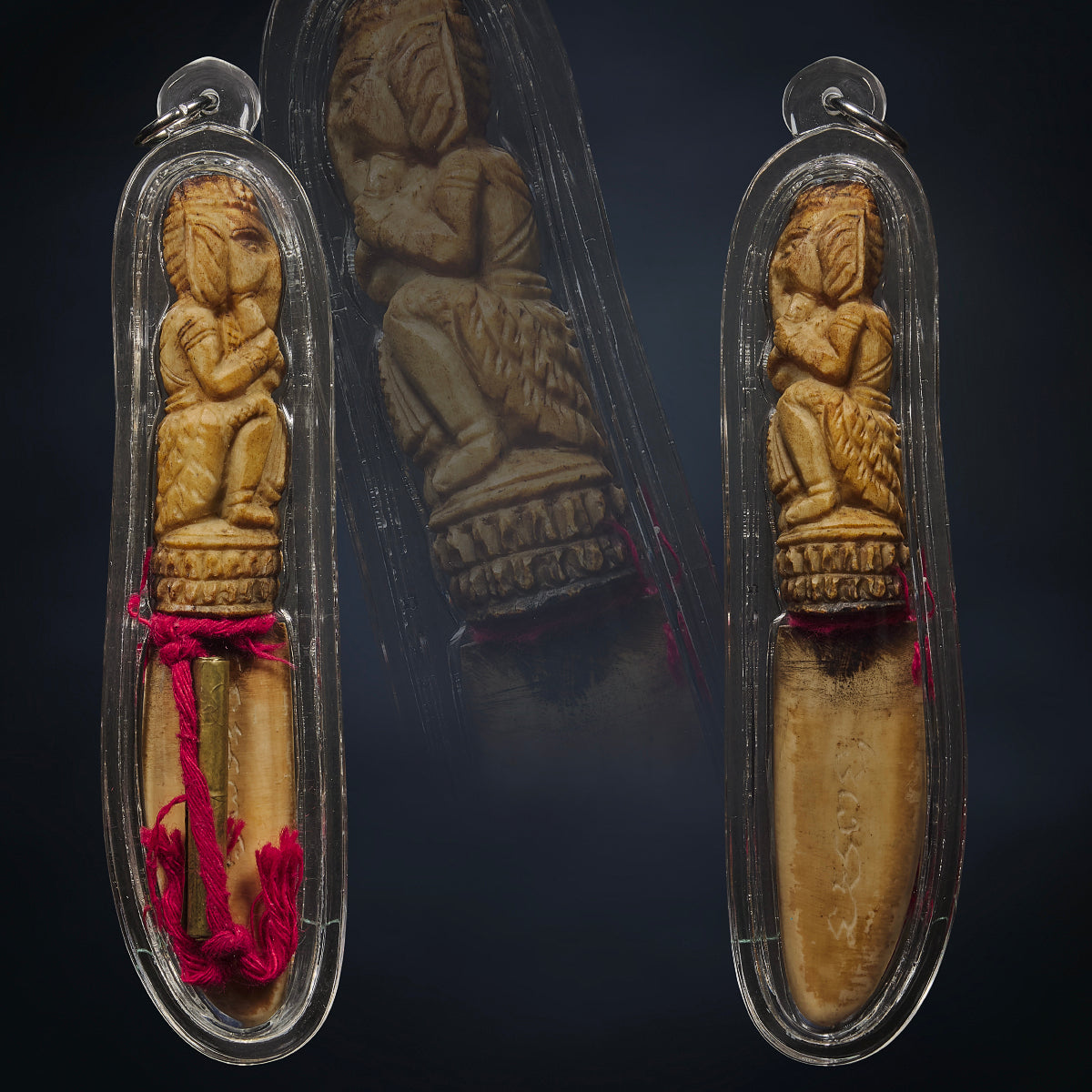
The Meed Haek Phra Pikanet is a traditional Lanna ritual knife personally crafted by Por Sala Tan from a single piece of Graduk Chang.
The upper section is intricately carved into the image of Phra Pikanet, the elephant-headed deity associated with wisdom, prosperity and the removal of obstacles. The lower section retains the form of a short, blunt ritual blade.
Combining the protective Wicha of the Meed Haek with the obstacle-removing symbolism of Phra Pikanet, this artifact was prepared for spiritual cleansing, protection, ritual healing and opening favourable paths.
Its intended purpose is not physical cutting but the symbolic breaking and removal of harmful influences.
━━━━━━━━━━━━━━━━━━━━━━━━━━━━━━━━
Historical Background
The Meed Haek belongs to the traditional spiritual practices of Northern Thailand, particularly the Lanna region, where Buddhist observance, local spirit beliefs, protective Wicha and folk healing developed alongside one another.
The word Meed means knife, while Haek conveys the idea of breaking through, opening or separating. Within ritual practice, this refers to breaking the hold of unwanted spiritual influences.
Traditionally, a Meed Haek could be used by a Pu Kru, Ajarn or experienced ritual practitioner during ceremonies intended to address disturbances attributed to spirits, harmful magic or unexplained afflictions.
Unlike the broader category of Meed Mor, which encompasses various forms of Thai ritual knives, the Meed Haek is particularly associated with the symbolic act of clearing or breaking an obstruction.
The inclusion of Phra Pikanet further strengthens this symbolism. Revered in Thai Brahmanical and devotional traditions, Phra Pikanet is widely associated with wisdom, success and the removal of obstacles.
━━━━━━━━━━━━━━━━━━━━━━━━━━━━━━━━
Origins of the Materials
The entire artifact was carved from one continuous piece of Graduk Chang, with the upper portion shaped into Phra Pikanet and the lower portion fashioned into a blunt ritual blade.
In traditional Thai sacred-object making, it has been valued for its association with strength, endurance, authority and the symbolic dignity of the elephant.
A takrut is attached to the artifact with red sacred thread, complementing its intended protective and ritual functions.
The combination of natural bone, sacred carving and takrut reflects Por Sala Tan's approach to creating working ritual implements using traditional materials and Wicha.
━━━━━━━━━━━━━━━━━━━━━━━━━━━━━━━━
Ritual
This Meed Haek was specifically prepared by Por Sala Tan for a luksit who intended to use it in helping others.
Within traditional Lanna practice, a ritual practitioner may hold the Meed Haek while reciting the appropriate kata, gently sweeping or drawing its blunt edge across or near an affected area.
The movement symbolises the breaking and clearing of an unwanted spiritual influence.
Such rites have historically been associated with conditions attributed to Khun Sai (harmful magic), spirit disturbances and other unseen influences.
The Meed Haek may also be incorporated into ceremonies involving:
-
Ritual opening: Symbolically clearing obstacles before important undertakings.
-
Spiritual cleansing: Sweeping away influences believed to cause disturbance or misfortune.
-
Sacred water preparation: Blessing water for traditional purification ceremonies.
-
Protective rites: Establishing a symbolic boundary against unwanted spiritual forces.
The effectiveness attributed to the implement traditionally depends upon the practitioner's Wicha, the accompanying kata and the ritual context rather than the sharpness of its blade.
━━━━━━━━━━━━━━━━━━━━━━━━━━━━━━━━
Blessings and Effects
-
Protection and Spiritual Cleansing: Traditionally believed to repel harmful influences, Khun Sai and unwanted spiritual disturbances.
-
Obstacle Removal and Opening Paths: Associated with breaking through difficulties, clearing blockages and encouraging favourable opportunities.
-
Wisdom and Success: Phra Pikanet represents sound judgement, clarity and progress in important undertakings.
-
Ritual Healing and Purification: Used in traditional blessing and cleansing ceremonies intended to restore spiritual balance.
━━━━━━━━━━━━━━━━━━━━━━━━━━━━━━━━
Modern Application
The Meed Haek Phra Pikanet may be carried as a protective talisman or kept at home, particularly near a personal altar or other respectful location.
For practitioners familiar with traditional Lanna Wicha, it may also serve as a ceremonial implement during blessings, spiritual cleansing and ritual opening ceremonies.
For ordinary devotees, its significance lies in the combined symbolism of protection, wisdom and overcoming obstacles, offering a focus for prayer, confidence and positive intentions.
Its blunt construction and sacred purpose distinguish it from an ordinary knife. Traditional cleansing rites should be understood as devotional practices rather than substitutes for professional medical care.
━━━━━━━━━━━━━━━━━━━━━━━━━━━━━━━━
Physical Details
This slender, elongated Meed Haek is carved from a single piece of naturally coloured Graduk Chang. The upper portion depicts Phra Pikanet seated upon a decorated pedestal, with detailed carving around the head, trunk, arms and garments. Below the figure, the bone extends into a smooth, tapered and blunt blade-like form, retaining natural grain and colour variations. Red sacred thread is tied around the junction between the carved figure and the blade, securing an inscribed metal takrut. Additional hand-applied sacred markings are visible along the reverse. The entire artifact is enclosed within a fitted transparent protective casing with a metal suspension ring.
━━━━━━━━━━━━━━━━━━━━━━━━━━━━━━━━
Recommended Pairing
Phra Somdej or Phra Kring: Traditionally associated with Buddhist blessings, protection and spiritual steadiness, complementing the Meed Haek's cleansing purpose.
Lersi Amulet: Suitable for devotees of traditional Wicha, particularly those seeking wisdom, guidance and support in spiritual practice.
Tao Wessuwan: A complementary guardian figure traditionally associated with protection against harmful spiritual influences.
━━━━━━━━━━━━━━━━━━━━━━━━━━━━━━━━
Personal Notes
This is not an ordinary Meed Haek produced solely for general protection.
It was personally made by Por Sala Tan for a devoted luksit who used it as a working ritual implement to help others, particularly in ceremonies concerning spiritual cleansing, obstacle removal and traditional healing.
The decision to carve Phra Pikanet directly above the blunt blade brings together two closely related concepts: the wisdom to recognise an obstacle and the spiritual determination to overcome it.
Its construction from a single piece of Graduk Chang, together with the attached takrut and its history of ceremonial use, makes it a distinctive example of Por Sala Tan's traditional Lanna Wicha.
━━━━━━━━━━━━━━━━━━━━━━━━━━━━━━━━
-
SG: Free | Worldwide except USA: $20 Registered | USA: $25 Registered / $100 Courier (SGD)