

OOBThaiAmulets
Phra Maha Warin Wat San Ton Mue
Phra Maha Warin Wat San Ton Mue
Temple-sourced certified artifacts since 2005. Questions before you buy? WhatsApp us at +65 9155 7000.
Couldn't load pickup availability
Box: MSCI0980
Umadevi B.E. 2565 (2022)
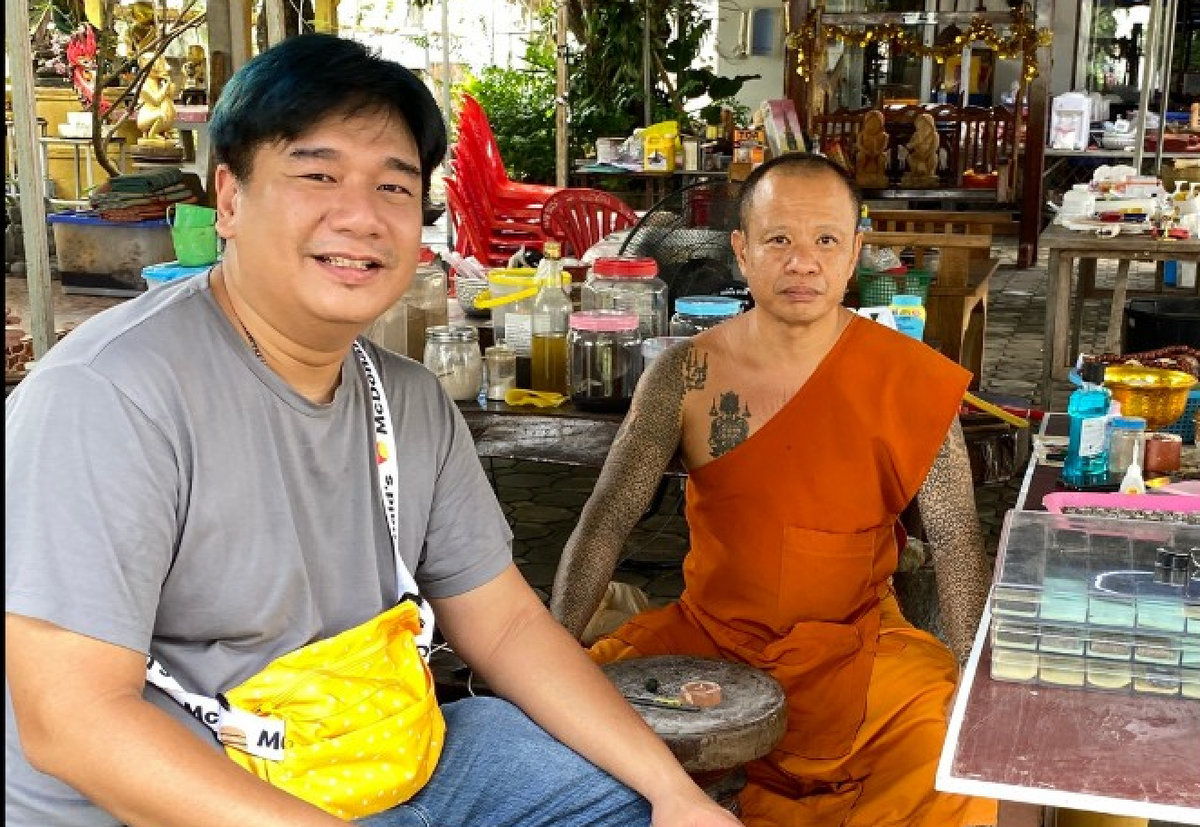
- Master/Lineage: Phra Maha Warin Narintho. Abbot of Wat San Ton Mue and Chief Monk of San Ton Mue Subdistrict, Mae Ai, Chiang Mai. Trained in the Lanna tradition under the lay master Phor Nan Praphan Wongsafu, a senior disciple of Kruba In Kaew of Wat San Lit Mai, and under his preceptors at Wat Thaton.
- Temple: Wat San Ton Mue, Mae Ai, Chiang Mai
- Year: B.E. 2565 (2022)
- Materials: Pong Gaduk (bone ash) body with a Ngoen Pak Phi (coin from the mouth of a corpse) on the back
- Size: 1.5"
- Casing: Clear waterproof casing
- Batch piece a piece in similar condition will be sent to you
Personal Notes
A luksit of Phra Maha Warin was short on love. She needed to find a partner, as she was getting older. She came to him, and he passed her a piece.
Within three days she met the man who is now her husband. He takes good care of her. Her small sundries business also flourished, and became the most popular shop in the village.
Summary
This is an Umadevi, or Phra Mae Uma Devi, of B.E. 2565 (2022), by Phra Maha Warin Narintho of Wat San Ton Mue in Chiang Mai. The body is Pong Gaduk, the bone-ash powder of his wicha, with a Ngoen Pak Phi, a coin from the mouth of a corpse, also called a Rian Pak Pee.
Uma is sought for love and for a partner. The Ngoen Pak Phi is an old material of luck, metta and trade. They are brought together in the work of a Lanna abbot known for this rare wicha, and for the care he gives his community.
Historical Background
Phra Maha Warin Narintho was born on Wednesday, 10 January B.E. 2517 (1974), in Chiang Mai Province. His father was Sriton Nipha, now deceased. His mother is Khankham Nipha.
He ordained as a novice on 31 May B.E. 2531 (1988) at Wat Thaton Royal Monastery, with Phra Kru Wimonkittisarn, later honoured as Phra Thep Mangkhalacharn and then abbot of Wat Thaton, as preceptor. He took full monkhood at the same temple on 1 June B.E. 2539 (1996). Phra Kru Wimonkittisarn Pariyamethi was preceptor. Phra Kru Srisittiyan was ritual instructor. Phra Boonlert Theeranno, later Phra Wimon Yannamuni of Wat Thaton, was witness instructor.
Beside his monastic teachers he trained under Phor Nan Praphan Wongsafu, a respected lay master of northern wicha. Phor Nan Praphan was mentor to Kruba Nua Chai, and a senior disciple of Kruba In Kaew of Wat San Lit Mai. His name was known across Chiang Rai and Chiang Mai.
Phra Maha Warin completed Nak Tham Ek, the highest grade of novice Dhamma study, at Wat Thaton in B.E. 2533 (1990), and Pali Grade 6 there in B.E. 2538 (1995). He has taught Dhamma, Pali and Buddhist studies at Wat Thaton for many years, and has lectured at moral and ethical youth camps since B.E. 2546 (2003). He is now abbot of Wat San Ton Mue, and Chief Monk of San Ton Mue Subdistrict, in Mae Ai, Chiang Mai.
He is regarded as one of the foremost makers of Phra Pong Gaduk, the bone-ash powder amulets of a rare wicha, once made famous through the work of Wat Po and now kept by only a handful of masters. Locals around the temple speak of better trade, stronger sales and unexpected windfall after wearing his pieces, and some of a sharper intuition. His reputation has reached Bangkok and overseas, especially among Chinese collectors. On one visit, a group of Chinese disciples took more than a hundred pieces to share with family and friends, for metta mahaniyom and for wealth.
Much of what the temple raises from his amulets goes to charitable work. Wat San Ton Mue sponsors the education of more than a hundred children in the local community, and keeps a school within the temple grounds.
Read his biography here: Phra Maha Warin Narintho of Wat San Ton Mue.
Origins of the Material
Phra Mae Uma Devi, also called Uma or Parvati, is the consort of Shiva and the mother of Ganesha and Kartikeya. In her Uma form she is the goddess of love, of power, and of grace. With Lakshmi and Saraswati she is one of the Tridevi, the three great goddesses. Devotees turn to her for a partner, for a steady household, and for strength in what they set out to do.
Ngoen Pak Phi is a coin placed in the mouth of the dead. In old Thai funeral custom it was passage money for the next world, often wrapped and tied with a string so that it could be taken back from the ashes and kept. Families held such coins as a remembrance. In occult work they became a material of luck, of metta, and of trade, used only with permission asked of the dead.
This Uma is formed in Pong Gaduk, the bone-ash powder of his wicha, together with a Ngoen Pak Phi.
Blessings
- Love and a partner: Uma is approached for companionship, and a luksit who received a piece from this master met her husband within three days.
- A household well cared for: in that same account, her husband has taken good care of her.
- Trade and a flourishing shop: her small sundries business became the most popular shop in the village. Locals also speak of better sales and unexpected windfall from his work.
- Metta Maha Niyom: goodwill and a presence that draws people in, a quality often named in his pieces.
- Intuition: some devotees say his amulets sharpened their sense of what to do next.
How to Wear
Wear her on a chain around the neck, close to the heart, with respect.
She suits anyone who hopes for a partner, who wants a kinder household, or who keeps a shop or a small trade.
Before you go out, hold her for a moment. Make a clear wish for honest love, or for honest customers, and then go about the day.
Take her off before going to the toilet, and keep her above the waist when you are not wearing her.

-
SG: Free | Worldwide except USA: $20 Registered | USA: $25 Registered / $100 Courier (SGD)