
OOBThaiAmulets
Phra Ajarn Uu - Phra Khun Paen
Phra Ajarn Uu - Phra Khun Paen
Couldn't load pickup availability
MS6
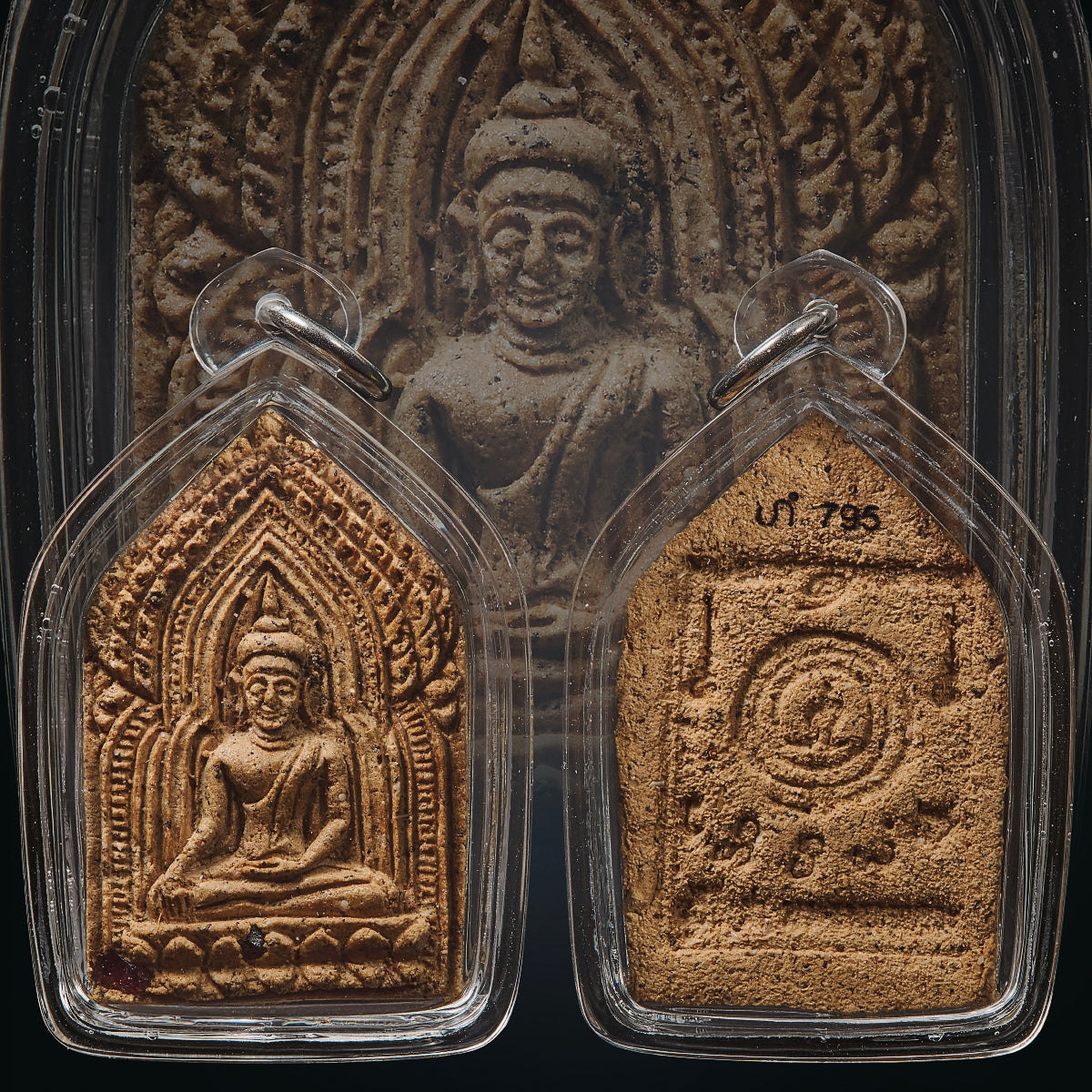
First-Batch Phra Khun Paen “Wahn Sao Long”
Phra Ajarn Uu — Phra That Doi Jom Wae
Summary
A rare, herb-rich first-batch Phra Khun Paen created by Phra Ajarn U Wi Ching Ta of Phra That Doi Jom Wae Hermitage.
Known as the Wahn Sao Long edition, this hand-pressed amulet was prepared from an extensive collection of Lanna sacred herbs, ancient yantric material, consecrated charm oils and mineral substances.
Its principal traditional qualities are metta maha niyom—loving-kindness and popularity—together with personal charisma, harmonious relationships, commercial goodwill and support for one’s fortune.
Historical Background
Phra Ajarn U Wi Ching Ta belongs to the spiritual lineage of Phra That Doi Jom Wae. He is a direct nephew of the late Luang Pu Kruba Or, a revered meditation master said to have passed away peacefully in meditation at the age of 101.
The amulet was created as Phra Ajarn U Wi Ching Ta’s first formal Phra Khun Paen issue. Its preparation was undertaken with the assistance and blessing of the senior Doi Jom Wae master Luang Pu Kruba Wimala Wimaro.
Rather than simply pressing the images and blessing them afterward, the sacred preparation began while the herbs were still being processed. Each stage—from the selection and grinding of the ingredients to the inscription of yantras and final consecration—formed part of the ritual creation.
Origins of the Materials
The body is composed principally of sacred herbs, or wahn, traditionally selected for metta, attraction, protection and personal fortune.
Important ingredients include:
-
Wahn Sao Long — the principal “maiden enchanted” herb associated with attraction and fascination
-
Phaya Wahn Nang Kham — traditionally connected with grace, speech and personal charisma
-
Red and white Saneh Chan — fragrant charm herbs used for metta and popularity
-
Kamphaeng Chet Chan — the “seven-layer wall” herb associated with protection
-
Wahn Ya Sak Tai Yai
-
Mai Kritsana — powdered agarwood, valued for its fragrance and ritual purity
-
Wahn Phaya Mue Lek — the “iron-hand” herb associated with strength and firm accomplishment
-
Lek Nam Phi — sacred iron ore traditionally valued as a protective substance
-
Ancient Lanna palm-leaf manuscripts bearing yantra inscriptions, ritually burned and incorporated into the darker base material
The mixture was further enriched with Naman Wan Kai Deang , personally prepared by Phra Ajarn U Wi Ching Ta in 2015.
Consecrated charm oils and beeswax balms from respected masters were also incorporated, including:
-
The celebrated charm balm of Luang Pho Thab of Wat Krabok Khun Phueng
-
First-batch Phayong Kham charm balm from Kruba of Wat Mai Hung
-
Additional sacred substances retained within the lineage but not publicly listed
The result is not merely a pressed herbal tablet, but a gathering of Northern Thai botanical knowledge, sacred manuscripts and inherited ritual substances within a single image.
Ritual Blessings
The consecration commenced at the level of the raw materials.
On Sunday, 21 June 2020, during a solar eclipse, Phra Ajarn U Wi Ching Ta individually inscribed powerful yantras and ritual formulae over every category of herb used in the amulet.
Within traditional belief, an eclipse is regarded as an unusually potent moment for certain forms of inscription and spiritual empowerment. The yantras were therefore applied before the ingredients were combined and pressed, allowing the sacred preparation to permeate the entire body of the amulet.
The final consecration took place on 26 July 2020, conducted by the two senior masters of Doi Jom Wae:
-
Luang Pu Kruba Wimala Wimaro
-
Phra Ajarn U Wi Ching Ta
The ceremony completed a process that had begun with the preparation of the herbal powders rather than with the finished images alone.
Effects
The first-batch Wahn Sao Long Khun Paen is traditionally associated with:
-
Metta — inspiring kindness, sympathy and goodwill
-
Maha niyom — popularity and acceptance among groups of people
-
Personal charisma and a memorable presence
-
Persuasive but harmonious communication
-
Better relationships with customers, colleagues and superiors
-
Support in trade, sales and professions requiring personal contact
-
Attraction of helpful people, patrons and new opportunities
-
Greater warmth and understanding in personal relationships
-
Protection against ill will, hostility and harmful intentions
Its traditional blessing may be summarized as:
Mercy in trade, compelling charm and popularity—loved, remembered and supported by those one meets.
These are devotional beliefs rather than guaranteed material results. The amulet is best understood as spiritual encouragement for ethical conduct, confidence and compassionate communication.
Personal Experiences Reported by Wearers
Accounts shared within devotional and collector circles commonly focus on subtle improvements in the wearer’s dealings with other people.
Some wearers describe previously difficult customers becoming more willing to listen, negotiations proceeding with less tension and strangers responding with unexpected friendliness. Those involved in sales and service work often speak of receiving more enquiries, repeat customers or recommendations after beginning to carry the amulet.
Others report that supervisors and colleagues appeared more receptive to their ideas, while disagreements were resolved with less confrontation. In personal relationships, wearers have described renewed contact from old friends, warmer communication between partners and an increased sense of being welcomed in social settings.
A number of devotees also associate the amulet with unexpected financial openings: a delayed payment arriving, a dormant business opportunity returning or assistance appearing at an important moment. Such experiences are personal and anecdotal; they cannot be independently verified or promised to every wearer.
The traditional principle of metta is not to control another person’s will. Its proper application is to cultivate kindness, trustworthy speech and mutual goodwill so that healthy relationships may arise naturally.
Modern Application
This Khun Paen is particularly suited to people whose success depends upon communication, reputation and public confidence, including:
-
Business owners and traders
-
Sales and property professionals
-
Managers and team leaders
-
Entertainers, presenters and public-facing personalities
-
Hospitality and service professionals
-
Individuals seeking greater harmony in family or social relationships
It may be worn when meeting customers, attending interviews, negotiating agreements, presenting proposals or entering an unfamiliar social environment.
The wearer should combine devotional practice with honest speech, fair dealing, generosity and respect for others. In the traditional understanding, metta is strengthened by personal virtue and weakened when used with dishonest or coercive intentions.
Mantra for Worship
Begin by reciting Namo Tassa three times. Then chant the special mantra given for this amulet:
Ung Mi Ma Sangkha Mae Jae Pa Woi Ta Nam Pi Yam Ma Ma Swa Hum Hum
The supplied wording is a phonetic English transliteration. Pronunciation may vary because the original formula passes through Thai and Lanna oral tradition.
The mantra may be recited before leaving home, meeting customers, negotiating important matters or entering situations in which harmony and goodwill are desired.
Physical Details
The amulet is hand-pressed from a light brown, visibly fibrous herbal compound. Natural variations in colour, grain and compression distinguish each individually made example.
The front depicts the Buddha seated in the earth-touching posture upon a lotus base, enclosed within a tall, flame-like Lanna aureole. Fine yantric characters and ornamental lines fill the surrounding arch.
The reverse carries a deeply impressed circular sacred emblem above additional yantra inscriptions. The photographed example bears the individual number 795 at the upper reverse. Darker traces near the lower edge reflect the concentrated herbal, manuscript and ritual-oil mixture.
Each example was individually numbered and coded. Minor differences in texture, edge definition and surface tone are expected from the hand-pressing process and the high proportion of natural herbal material.
-
Free Shipping for Singapore| $15 Worldwide | $60 USA For Items Below $350