
OOBThaiAmulets
Phra Ajarn Anucha Anuchato - Palad Khik Hua Chamod
Phra Ajarn Anucha Anuchato - Palad Khik Hua Chamod
Couldn't load pickup availability
MS6
Palad Khik Hua Chamod
Phra Ajarn Anucha Anuchato — Wat Pho Rat Burana, Ratchaburi
Summary
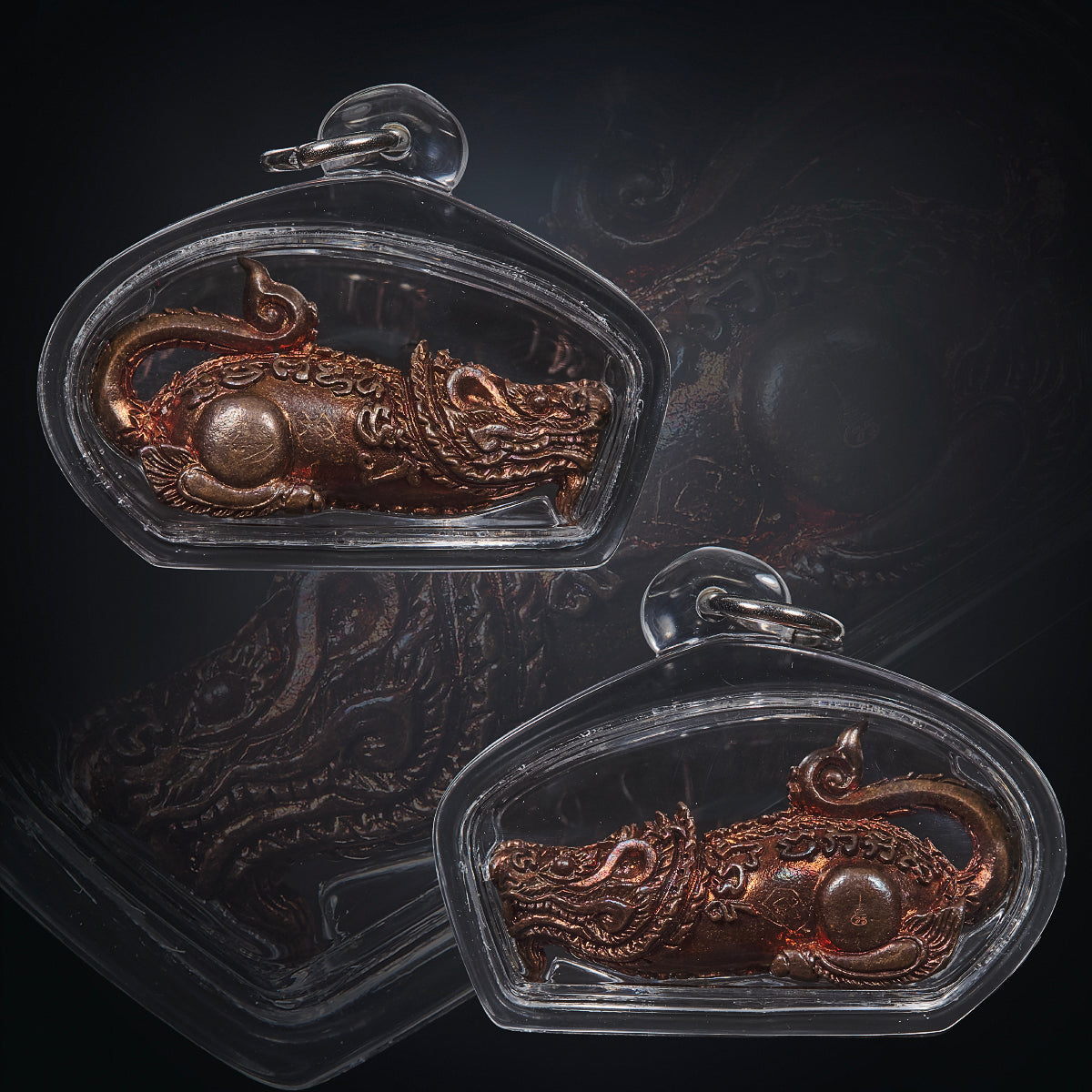
This unusual talisman is a Palad Khik Hua Chamod—Thai: ปลัดขิกหัวชะมด—created in the ritual tradition of Phra Ajarn Anucha Anuchato.
Unlike an ordinary Palad Khik, its generative form is combined with the head and physical characteristics of a chamod, or civet. The detailed animal body, curled tail and sacred Khmer-style inscriptions give it a distinctive zoomorphic appearance.
The form joins two complementary currents:
-
Palad Khik represents vitality, protection, fertility, metta and the creative power required to overcome scarcity.
-
Chamod represents alertness, survival instinct, attraction and the ability to locate opportunities that remain hidden from others.
It is traditionally sought for personal confidence, persuasive speech, customer attraction, commercial growth, protection and the timely arrival of helpful people or favourable circumstances.
Historical Background
Palad Khik is one of Thailand’s oldest and most recognisable protective talismans.
Its history combines the symbolism of the Hindu Shiva lingam with older Tai animist beliefs concerning fertility, creative power, life-force and protection from harmful spirits.
Phallic charms were known during the Ayutthaya period under names including Palad Khik, Khun Phet and Ongkachat. Villagers, farmers, hunters and warriors carried them to protect the lower body, preserve vitality and repel hostile spiritual forces.
Thai academic research connects the continuing popularity of Palad Khik with older spirit traditions among Tai-speaking communities. Academic study of Palad Khik traditions
Over time, monks and lay ritual masters transformed the folk talisman into a consecrated sacred object. Individual lineages developed specialised formulas for:
-
Protection and invulnerability
-
Metta and favourable treatment
-
Personal charisma and attraction
-
Prosperity in trade
-
Safety from animals and sudden danger
-
Resistance to black magic and harmful spirits
The Hua Chamod Tradition
Hua Chamod means “civet-headed.” It refers to a zoomorphic Palad Khik whose traditional generative form is merged with the appearance of a civet.
The chamod is a quiet, alert and elusive nocturnal animal. In talismanic interpretation, these characteristics represent vigilance, adaptability and the instinct to locate what is concealed.
When combined with Palad Khik symbolism, the Hua Chamod form is traditionally associated with:
-
Recognising hidden opportunities
-
Approaching people without provoking resistance
-
Attracting attention and goodwill
-
Surviving competitive environments
-
Avoiding danger before it becomes serious
-
Finding resources during difficult periods
Its symbolic strength is subtle rather than confrontational. The chamod does not rule through force; it survives through awareness, timing and instinct.
Phra Ajarn Anucha Anuchato
Phra Ajarn Anucha was born on 23 August 1964 in Kamphaeng Saen district, Nakhon Pathom. He was the eldest of four children.
At eleven, he moved to Ratchaburi and became a temple attendant at Wat Nong Muang. There he served Luang Pho Sanga, who began teaching him traditional ritual knowledge while he was still young.
He first ordained in 1984 and attained the Nak Tham Tri level of Dhamma study before leaving the monkhood to care for his mother.
He was ordained again at Wat Pho Rat Burana on 10 August 2009, subsequently completing Nak Tham To and Nak Tham Ek.
His Palad Khik knowledge draws upon several respected transmissions:
-
Luang Pho Sanga of Wat Nong Muang
-
Luang Pu Non of Wat Khao Phran Thup, connected with the traditions of Luang Pho Thongsuk and Luang Pho Yid
-
Luang Pho Boonkham of Wat Chaiyapheri, connected with the lineage of Luang Pho Ei of Wat Sattahip
-
Luang Pho Od of Wat Bang Muang, connected with the Luang Pho Luea tradition
-
Ancient manuals and yantra texts studied throughout his religious life
These transmissions gave Phra Ajarn Anucha a broad foundation in Palad Khik construction, sacred inscription and lineage-specific consecration.
Origins of the Materials
The photographed Palad Khik Hua Chamod appears to be cast from a copper-rich sacred alloy.
Its surface has a warm reddish-brown colour, with darker deposits within the recessed scales, facial details and inscriptions. Copper and copper-bearing alloys are traditionally valued for their durability and ability to preserve finely engraved yantras.
The spiritual identity of the piece rests upon four principal elements:
-
The protective and generative symbolism of Palad Khik
-
The instinctive, opportunity-seeking nature attributed to the chamod
-
The Khmer-style sacred inscriptions covering the body
-
Phra Ajarn Anucha’s inherited Palad Khik ritual lineages
Ritual
The Hua Chamod body was first cast and prepared before receiving its individual sacred inscriptions.
Khmer-style characters and yantric formulae were applied across the animal body and its prominent rounded generative element. In traditional practice, the master enters meditative concentration while writing or engraving each character.
The inscriptions are not merely decorative. They are treated as the physical bodies of the mantras placed within the talisman.
Phra Ajarn Anucha’s Palad Khik knowledge includes formal teacher transmissions from several important lineages. Before employing their yantras, the practitioner traditionally recollects the lineage masters and seeks permission to continue their knowledge.
The finished Hua Chamod is empowered through:
-
Recitation of lineage mantras
-
Meditative concentration
-
Invocation of the Triple Gem
-
Recollection of the teachers
-
Direction of the blessing toward protection, metta and livelihood
The talisman is ritually dedicated to guarding the owner’s vitality and rightful interests while supporting confidence, social acceptance and commercial opportunity.
Blessings and Effects
Protection
The Palad Khik Hua Chamod is traditionally sought for:
-
Protection from accidents and sudden danger
-
Guarding the body’s vulnerable and vital areas
-
Deterrence of hostile spirits
-
Resistance to harmful occult influences
-
Safety from aggressive animals
-
Avoidance of threatening situations
-
Greater alertness in unfamiliar surroundings
Metta and Relationships
Its metta current is associated with:
-
Goodwill and favourable treatment
-
Greater confidence and approachability
-
Persuasive but harmonious communication
-
Improved relationships with customers and colleagues
-
Attraction of patrons, mentors and helpful supporters
-
Warmer personal conversations
-
Reduced tension during disputes and negotiations
Metta should be understood as mutual goodwill rather than control over another person’s will. The proper intention is to encourage trust, sympathy and receptiveness through ethical conduct.
Commerce and Advancement
The Hua Chamod form is traditionally associated with the instinct to find opportunity and resources. Devotees therefore seek it for:
-
Attraction of customers
-
Increased enquiries and repeat business
-
Smoother negotiations
-
Recovery of delayed payments
-
Additional work during quiet periods
-
Support during promotion or salary discussions
-
Recognition from employers and senior colleagues
-
Helpful introductions and new commercial contacts
-
Personal resilience during financial difficulty
Modern Application
This Palad Khik Hua Chamod is particularly suitable for:
-
Business owners and merchants
-
Sales and commission-based professionals
-
Managers and team leaders
-
People seeking promotion or greater recognition
-
Frequent travellers and night-shift workers
-
Security, transport and outdoor professionals
-
Individuals working in competitive environments
-
Those seeking greater confidence and social rapport
It may be carried in a pocket, waist pouch or protective casing. Because Palad Khik is not a Buddha image, Thai custom generally permits it to be worn below the waist.
When kept at a business, it may be placed respectfully near the entrance, cash counter or private office.
Before a meeting or negotiation, the wearer may establish the following intention:
May I speak with confidence and goodwill.
May hidden opportunities become visible.
May my livelihood be protected and allowed to grow.
Physical Details
A fully modelled, double-sided Palad Khik Hua Chamod cast in a reddish copper-toned alloy.
The figure has an elongated civet-like head, pointed muzzle, alert ears, low animal body and tightly curled flame-shaped tail. Its back and sides are decorated with detailed hair or scale-like patterns.
A prominent rounded generative element is incorporated into the body. One face carries a sacred yantra, while the other bears a small identifying stamp or code.
Additional Khmer-style characters appear across both sides of the figure. The deeply modelled face, legs, tail and inscriptions give the amulet a strong three-dimensional character.
Recommended Pairing
Phra Sivali
The strongest pairing for livelihood and continuing prosperity.
The Hua Chamod symbolically seeks out opportunity, while Phra Sivali represents continuing provisions and freedom from scarcity.
The Hua Chamod locates opportunity; Phra Sivali sustains its rewards.
Nang Kwak
Recommended for shops, online sellers and customer-facing businesses.
Nang Kwak welcomes customers and revenue, while the Hua Chamod supports metta, persuasive communication and the instinct to recognise commercial openings.
Thao Wessuwan
Recommended for business owners, managers and those facing concealed rivalry.
Thao Wessuwan protects property and commands harmful forces to retreat. The Hua Chamod contributes adaptability, metta and opportunity-seeking instinct.
Personal Experiences
After wearing this amulet, many who collected pieces from Phra Ajarn Anucha described greater confidence, smoother negotiations, returning customers and timely protection from situations that might otherwise have become serious.
Followers also associate his Palad Khik with financial openings such as delayed payments arriving, additional orders appearing during quiet periods and helpful people entering their lives at precisely the right time.
Wearers frequently describe feeling more composed when travelling, negotiating or entering places where conflict might arise. Some say aggressive individuals became less confrontational or that a threatening situation ended before developing further.
Business owners report customers becoming more receptive, previous clients returning and negotiations proceeding with less resistance. In personal relationships, devotees describe warmer conversations and less strained social interactions.
Accounts involving protection from dogs, animals and sudden physical danger hold particular meaning in Phra Ajarn Anucha’s biography. His childhood fear of aggressive dogs reportedly contributed to his desire to study protective ritual knowledge.
Personal Notes
The chamod’s principal symbolic qualities are awareness, adaptability and the instinct to locate hidden opportunity. When combined with Palad Khik, it represents the vitality to survive hardship, the confidence to approach people and the timing to recognise beneficial circumstances.
-
Free Shipping for Singapore| $15 Worldwide | $60 USA For Items Below $350