
OOBThaiAmulets
Mae Pumpuang Wat Thap Kradan
Mae Pumpuang Wat Thap Kradan
Temple-sourced certified artifacts since 2005. Questions before you buy? WhatsApp us at +65 9155 7000.
Couldn't load pickup availability
BOX: MCBC03
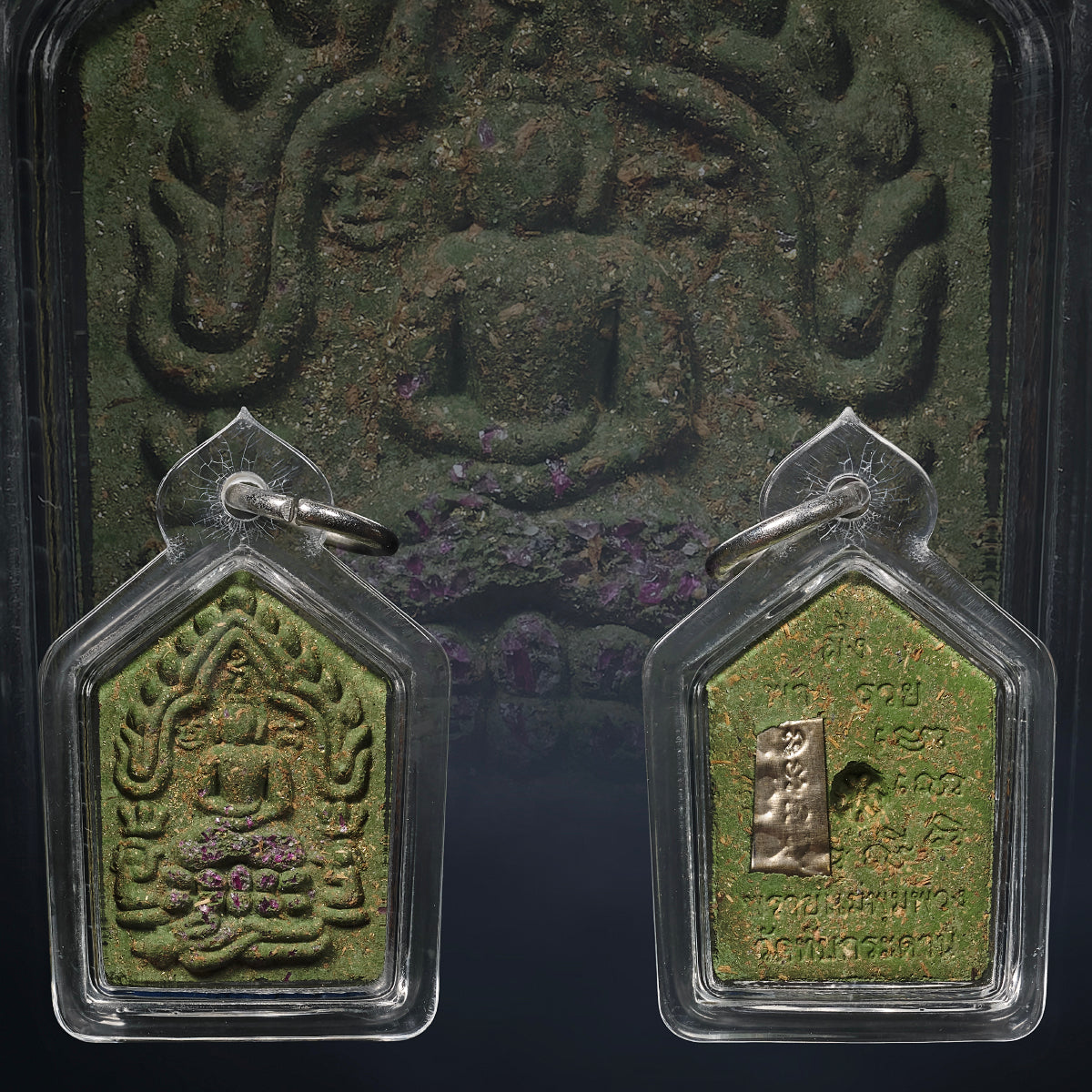
Khun Paen Phrai Mae Pumpuang First Batch B.E. 2558 (2015)
- Master / Lineage: Wat Thap Kradan, consecrated by 17 masters including Luang Pu Nu In Kitisaro and Luang Phor Uaiphon of Wat Don Yai Hom
- Temple: Wat Thap Kradan, Song Phi Nong, Suphanburi
- Year: B.E. 2558 (2015), first batch
- Materials: Sacred powder with the relics of Pumpuang Duangjan, green colour, one embedded silver takrut
- Size: Small mold
- Casing: Clear plastic casing
Personal Notes
Mae Pumpuang was the voice of luk thung. Her relics are inside this Khun Paen.
That is why it is a favourite with singers and performers. Traders love it too.
A piece for anyone who works with an audience or with customers.
Summary
This is the first batch Khun Paen Phrai Mae Pumpuang of Wat Thap Kradan, Suphanburi. B.E. 2558 (2015).
Its main sacred material is the relics of Pumpuang Duangjan, the Queen of Luk Thung. Her ashes rested at Wat Thap Kradan for 23 years before this batch was made.
The back reads Phueng Pha Ruay. Phueng, her nickname, brings wealth. It also names the first batch and the temple.
A Khun Paen for charm. Carried with the memory of the most loved voice in Thai country music.
Historical Background
The singer. Pumpuang Duangjan was born Ramphueng Chithan on 4 August B.E. 2504 (1961). She grew up poor in Song Phi Nong, Suphanburi, cutting sugar cane with her family. She had barely two years of school.
She sang at village contests from a young age. By her twenties she was the biggest star in luk thung. Fans called her Phueng, and later the Queen of Luk Thung.
She died of lupus on 13 June B.E. 2535 (1992). She was only 30. Her royal cremation took place at Wat Thap Kradan, near the village where she grew up.
Wat Thap Kradan. After her cremation, her ashes were kept at the temple. Fans and singers came to pay respect and ask for luck. They still do, every June.
The first batch. In B.E. 2558 (2015) her younger sister, Salakjit Duangjan, dreamed that Pumpuang asked for her relics to be used for the good of Buddhism. The family met the abbot, Phra Athikan Prasong Khunakaro. They agreed to make a Khun Paen with her relics as the main material.
The mass consecration was held on 31 May B.E. 2558 (2015), with 17 masters and a royal Brahmin. The molds were destroyed once pressing was done. Funds went to the temple's sermon hall.
Origins of the Material
Her relics. The heart of this batch is Pumpuang's own relics, blended into sacred powder with other blessed materials.
The colours. The standard pieces came in five colours. Green is called Morakot Sap Siri, the emerald of wealth.
The takrut. Each standard piece carries an embedded takrut in copper, silver or gold. This piece carries a silver takrut.
Because it is hand pressed powder, every piece differs. Colour and texture vary from one to the next.
Blessings
- Maha Seneh: charm and attraction
- Metta Mahaniyom: popularity and goodwill
- Smooth selling and trade
- Chok Larp: good fortune
- Support for singers, performers and anyone who works with an audience
How to Wear
Wear it as a pendant, close to the body.
Before a performance, a sale or an important meeting, hold it for a moment and set your intention.
Many devotees also dedicate merit to Mae Pumpuang. A simple offering of red roses is the tradition at Wat Thap Kradan.
When not wearing it, keep it in a clean and respectful place.
-
SG: Free | Worldwide except USA: $20 Registered | USA: $25 Registered / $100 Courier (SGD)