
OOBThaiAmulets
LP Up Wat Tong Sai
LP Up Wat Tong Sai
Couldn't load pickup availability
MS03
Phayant Mae Nang Phim
Luang Por Up · Wat Tong Sai · B.E. 2547
Personal Experiences Shared by Luksits
Collectors of Luang Por Up's Phayant Mae Nang Phim traditionally seek experiences associated with Maha Saneh, harmonious relationships and favourable opportunities. Many Luksits describe becoming more approachable, enjoying smoother negotiations, attracting supportive people and receiving unexpected assistance in both business and personal life. Some also believe the Phayant encourages compassion, understanding and stronger emotional connections between couples and family members.
These accounts reflect personal experiences shared within the tradition and should be understood as individual beliefs rather than guaranteed outcomes.
Summary
The Phayant Mae Nang Phim is one of the best-known cloth yantras created by Luang Por Up of Wat Tong Sai, blessed in B.E. 2547 (2004). It is widely regarded as one of his strongest Maha Saneh Phayant and remains highly sought after by collectors of his lineage.
Among devotees, it is sometimes referred to as the "Yin-Yang Phayant", reflecting the harmonious balance between masculine and feminine energies, compassion and attraction embodied within its sacred design.
Original B.E. 2547 examples have become increasingly difficult to obtain, with numerous remakes appearing over the years. This example comes from a close Luksit of Luang Por Up, preserving both its authenticity and its direct connection to the master's lineage.
Historical Background
Mae Nang Phim occupies a distinctive place within Thai spiritual tradition. She is traditionally depicted as a crowned woman seated with hands in prayer, while the legs of a child emerge from her womb, symbolising a difficult breech birth.
According to longstanding tradition, Mae Nang Phim was a woman who sacrificed her own life while giving birth so that her child could survive. Her selflessness and compassion deeply moved the heavenly beings, who elevated her into a benevolent spiritual guardian possessing the ability to assist those who sincerely sought her blessings.
The legend further relates that Mae Nang Phim later appeared to Luang Por Up during deep meditation (Samadhi), revealing the sacred Yant and asking that it be prepared as a Phayant to help others. From that time onward, Luang Por Up became closely associated with the creation of this distinctive Maha Saneh cloth amulet.
Biography of the Master
Luang Por Up of Wat Tong Sai was widely respected for his knowledge of sacred Yants, Takruts and traditional Thai ritual arts. Throughout his years as a monk, he produced many sacred objects that combined Buddhist practice with inherited Thai esoteric traditions.
His Phayant remain particularly admired for their careful ritual preparation and distinctive hand-drawn Yants, many of which continue to be collected long after his passing.
Among these creations, the Phayant Mae Nang Phim has become one of his most recognised and widely imitated works.
Origins of the Materials
The Phayant is prepared on traditional cloth before being individually hand-inscribed using sacred ink according to Luang Por Up's lineage.
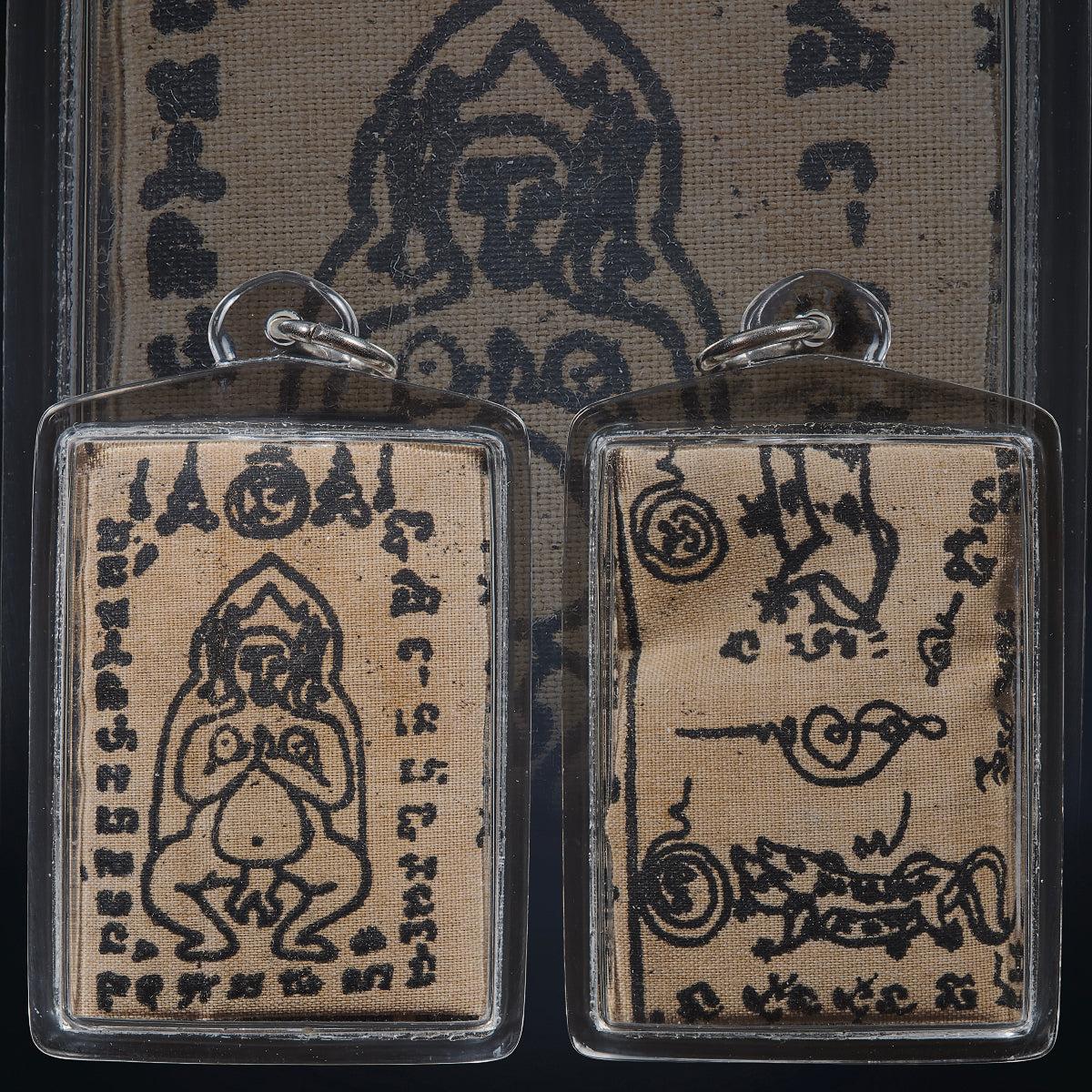
The central image portrays Mae Nang Phim in prayer, while the reverse contains additional sacred Yants, Khom script and ritual diagrams that complete the consecrated design.
As each original Phayant was individually written by hand, slight differences naturally exist between examples. These small variations are regarded by collectors as part of the individuality and authenticity of each original piece.
Ritual
Each Phayant underwent consecration through Buddhist chanting, meditation and lineage-specific mantra recitation before being released to devotees.
Within Thai tradition, the ritual is understood as inviting the compassionate qualities represented by Mae Nang Phim into the sacred cloth while harmonising the Yants and blessings into a single spiritual vessel.
The resulting Phayant is traditionally associated with attraction, compassion, harmonious relationships and favourable encounters.
Traditional Blessings
Mae Nang Phim is primarily associated with Maha Saneh, although her compassionate nature also extends to Metta and harmonious relationships.
Collectors traditionally seek this Phayant for:
- Strengthening personal charm and attraction.
- Encouraging harmonious relationships between couples.
- Improving communication and mutual understanding.
- Attracting goodwill, kindness and favourable treatment.
- Supporting business that relies upon trust and personal relationships.
Within Thai tradition, attraction is understood as extending beyond romance to include sincerity, compassion and the ability to naturally draw positive people and opportunities.
As with all traditional Thai sacred objects, these represent longstanding cultural beliefs rather than guaranteed outcomes.
Modern Application
Many collectors respectfully carry the Phayant within a wallet, document case or protective casing, while others place it in the home, bedroom or business.
It is particularly appreciated by business owners, sales professionals and those whose success depends upon communication, trust and lasting personal relationships. Couples also value the Phayant for its traditional association with understanding, compassion and emotional harmony.
Physical Details
This original B.E. 2547 Phayant is hand-inscribed on traditional cloth using sacred ink.
The front features the image of Mae Nang Phim, crowned and seated in prayer, surrounded by sacred inscriptions. The reverse contains additional Yants and Khom script completing the ritual composition.
Because every original example was individually prepared by hand, minor variations in line work, ink flow and layout naturally occur, making each authentic piece unique.
Recommended Pairing
The Phayant Mae Nang Phim pairs especially well with Salika for persuasive communication, Khun Paen for Metta Maha Niyom and harmonious relationships, or Phra Somdej for Baramee and general blessings.
Collectors seeking stronger business attraction often pair it with Nang Kwak, creating a combination traditionally associated with goodwill, customer attraction and prosperous trade.
Before reaching devotees, each Phayant is individually hand-inscribed and ritually consecrated. As every cloth is prepared by hand, natural variations in the brushwork, ink and sacred inscriptions make each original example unique.
Personal Notes
Original B.E. 2547 Phayant Mae Nang Phim from Luang Por Up have become increasingly scarce, particularly as many later reproductions have entered the market. Pieces obtained through close Luksits remain especially appreciated for their authenticity and direct connection to the master's original blessing.
Beyond its rarity, the Phayant represents a tradition founded upon compassion, sacrifice and harmonious human relationships. Its traditional purpose may be summarised simply: to encourage sincere affection, lasting goodwill and opportunities that arise through kindness and mutual respect.
-
Free Shipping for Singapore| $15 Worldwide | $60 USA For Items Below $350