
OOBThaiAmulets
LP Sook - Wat Khlong Khom
LP Sook - Wat Khlong Khom
Couldn't load pickup availability
MS03
Phra Somdej Pim Rasami
LP Sook, Wat Pak Khlong Makham Thao
Wat Khlong Khom • B.E. 2460 (1917)
Personal Experiences Shared by Luksits
Among devotees and collectors familiar with the Wat Khlong Khom batch, these amulets have long been valued particularly for protection, Klaew Khlaad and steadiness during difficult circumstances.
Luksits favour pieces of this nature for travelling, demanding work and periods where greater awareness and composure are required. Some describe feeling steadier when confronted with unexpected situations and more confident when travelling through unfamiliar surroundings.
Others appreciate the balanced character of the Phra Somdej. Its Metta Maha Niyom qualities are traditionally associated with smoother dealings and favourable treatment, while Maha Amnaj supports confidence and personal presence.
For long-term collectors, the historical connection is equally important. These amulets were created in connection with a temple-building merit project, remained within the Wat Khlong Khom kru for decades, and preserve the traditional lineage between LP Um and his teacher LP Sook.
Summary
Phra Somdej Pim Rasami of Wat Khlong Khom is an old sacred-powder kru amulet traditionally created in B.E. 2460 (1917) during the period of LP Um, with the participation of his respected teacher LP Sook of Wat Pak Khlong Makham Thao.
Its sacred body was prepared from a complex traditional mixture incorporating Pong Puttakun holy powders, floral pollens, Wan 108 sacred magical herbs and other consecrated components.
The batch traditionally underwent an extended consecration lasting throughout one Buddhist Lent before remaining examples were deposited within sacred kru at Wat Khlong Khom, where they remained for decades.
The distinctive Pim Rasami, recognised by the radiating lines surrounding the seated Buddha, combines an old Buddhist form with the naturally matured character of a temple-cache amulet.
Traditionally respected for Kong Kraphan Chatri, Klaew Khlaad, Metta Maha Niyom, Maha Amnaj and baramee, it remains a significant old Wat Khlong Khom amulet carrying the respected lineage of LP Sook and LP Um.
Historical Background
Phra Somdej Pim Rasami is an old sacred-powder amulet from Wat Khlong Khom, Suphan Buri, traditionally created in B.E. 2460 (1917) during the time of LP Um, then abbot of the temple.
LP Um was a disciple of the highly revered LP Sook of Wat Pak Khlong Makham Thao, Chai Nat. He regularly travelled to visit his teacher and maintained a close connection with LP Sook's lineage of meditation, sacred wicha and ritual practice.
During this period, Wat Khlong Khom was raising funds for the construction of its ubosot, or ordination hall. LP Um arranged for sacred amulets to be created as part of this merit-making project, with LP Sook invited to participate in their blessing and consecration.
Completed amulets were distributed to devotees who contributed towards the temple project. Those that remained were later deposited within sacred kru, where they remained for decades before eventually being rediscovered.
Among the recognised forms from this old batch is Phra Somdej Pim Rasami, distinguished by the radiating lines surrounding the upper portion of the seated Buddha.
LP Sook of Wat Pak Khlong Makham Thao
LP Sook of Wat Pak Khlong Makham Thao, Chai Nat, is remembered as one of the highly respected monk-masters of the old Thai wicha tradition.
He became renowned for meditation and his knowledge of sacred yant, takrut, ritual powders, consecration methods and protective wicha.
His lineage developed a particularly strong reputation for Kong Kraphan Chatri and Klaew Khlaad — protection, resilience and avoidance of danger. His sacred works were also traditionally associated with Metta Maha Niyom, Maha Amnaj and baramee.
As his reputation spread, both monks and lay practitioners travelled to seek his teachings and blessings. Through his disciples, different branches of his sacred knowledge continued into later generations.
Among the best-known historical figures traditionally connected with LP Sook was Prince Abhakara Kiartivongse, Prince of Chumphon, widely remembered in Thailand as Krom Luang Chumphon Khet Udomsak.
LP Sook was also invited to assist disciples and temples with important consecrations and merit-making projects. The B.E. 2460 Wat Khlong Khom batch belongs to this tradition, with LP Um remembered as his disciple and LP Sook participating in its consecration.
This connection remains one of the principal reasons the old Wat Khlong Khom kru pieces continue to be respected amongst collectors.
Sacred Materials & Preparation
The sacred body of this batch was prepared from a traditional mixture of carefully selected sacred components, combining ritual powders, botanical ingredients and old magical materials.
Among the principal ingredients were Pong Puttakun, sacred Buddhist powders traditionally prepared through the writing, erasing and collection of sacred characters and formulas. Such powders were regarded as an important spiritual foundation in old-style powder amulet making.
The mixture also incorporated floral pollens, traditionally connected with gentleness, goodwill and Metta Maha Niyom.
Another important component was Wan 108, a collective preparation of sacred magical herbs traditionally used within Thai wicha. Depending upon the individual herbs and the master's formula, Wan materials were associated with protection, auspiciousness, metta and the strengthening of ritual preparations.
These sacred ingredients were combined with other consecrated powders and materials preserved within the lineage before being prepared into the powder mass used for pressing the amulets.
The complexity of the mixture contributes to the naturally granular and varied appearance seen amongst surviving examples.
Ritual & Consecration
The Wat Khlong Khom amulets were traditionally subjected to an extended period of consecration.
According to local accounts, LP Sook and LP Um consecrated the amulets throughout one Buddhist Lent, approximately three months, before the concluding major ceremony.
LP Sook is remembered as an important presiding master of the consecration.
Local oral tradition further associates several respected monks with the larger ceremony, including LP Boey of Wat Manao, LP Im of Wat Hua Khao and LP Parn of Wat Bang Nom Kho.
These additional names remain part of the temple and collector oral history surrounding the batch where surviving contemporary documentation is limited.
The Wat Khlong Khom Kru
Following completion of the ubosot, a considerable number of amulets reportedly remained. LP Um arranged for these pieces to be preserved within two sacred kru at Wat Khlong Khom.
One group was placed inside a chedi in front of the ubosot, while another was deposited beneath the pedestal of the principal Buddha image. Local tradition also records that a silver inscribed plate concerning the origin of the batch was placed together with the amulets.
The principal kru is said to have been discovered around B.E. 2522–2524 (1979–1981) after rainwater leaking through the temple roof gradually damaged the pedestal of the principal Buddha image.
When the structure was moved, the old amulets were discovered beneath it. Pieces from more protected areas remained comparatively clean, while those exposed to moisture, soil and sand developed heavier staining and mineral deposits. Some were reportedly found adhering together.
A separate cache within the chedi was later opened after the structure was damaged during an attempted theft, after which the temple arranged for the remaining amulets to be properly removed.
These different conditions within the kru explain the considerable variation in colour, surface and preservation encountered amongst surviving examples today.
Pim Rasami
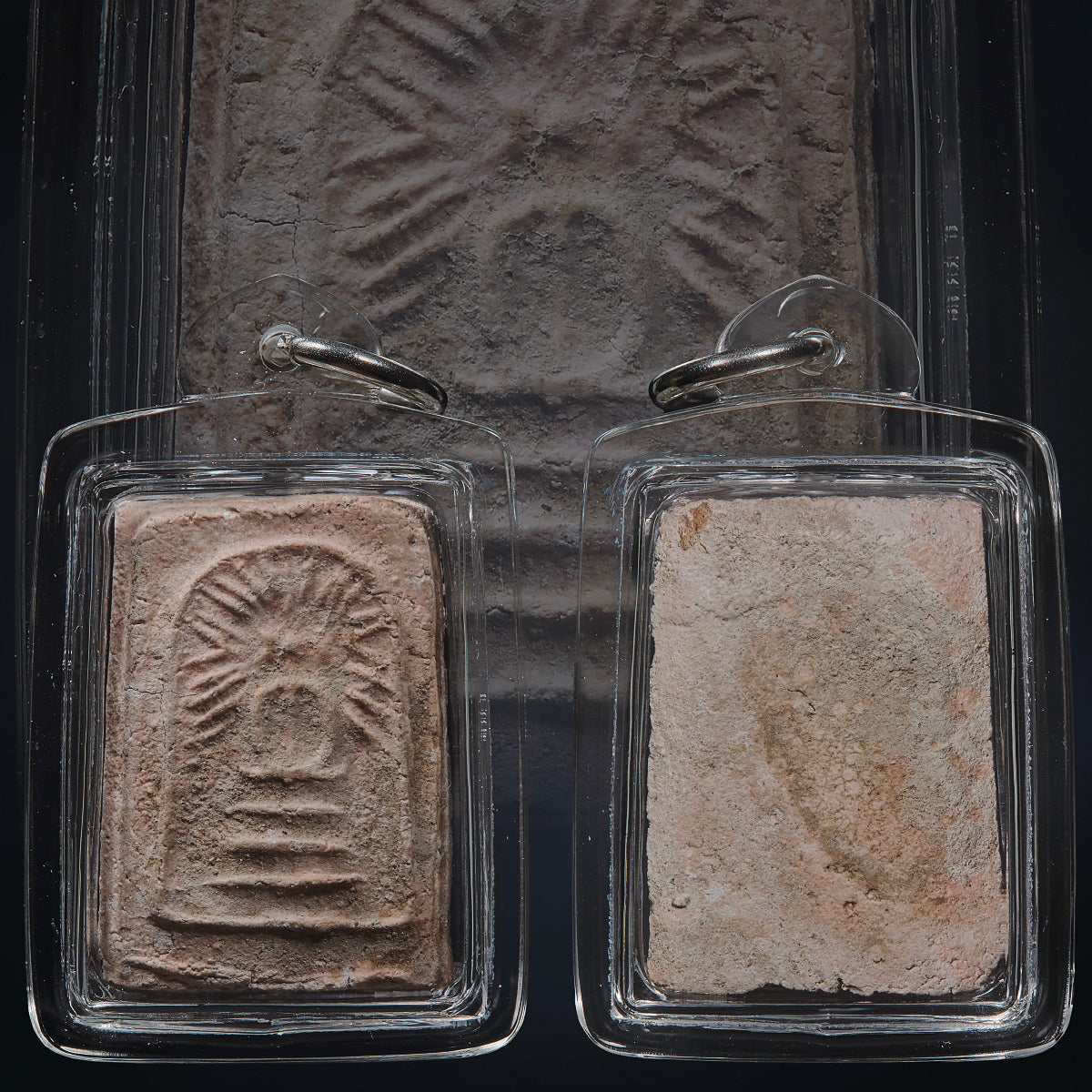
The Pim Rasami is distinguished by the radiating lines extending above and around the seated Buddha.
Rasami refers to radiance or sacred aura, with the spreading rays symbolising the brilliance surrounding the Buddha.
The composition is simple and recognisable: a seated Buddha upon a tiered base, framed by an arch and crowned by the characteristic radiating pattern.
Because the amulets remained within the kru for decades, surviving examples display different degrees of mould definition, surface texture and colour. Moisture, mineral deposits and prolonged ageing can soften both the Buddha image and the surrounding Rasami lines.
These characteristics contribute to the individual appearance of each surviving piece.
Traditional Blessings
The Wat Khlong Khom batch is traditionally respected for Kong Kraphan Chatri and Klaew Khlaad, representing protection, resilience and avoidance of danger.
Metta Maha Niyom is associated with goodwill, favourable treatment and smoother interactions with others.
Maha Amnaj and baramee support confidence, authority, personal presence and the ability to remain composed when facing difficult circumstances.
Together, these qualities give the amulet a balanced reputation for protection, safe passage, metta and steady personal authority.
Modern Application
For modern devotees, Phra Somdej Pim Rasami remains suitable as a balanced amulet for daily wear, work, business and travel.
Its protective and Klaew Khlaad qualities are traditionally valued by those who travel frequently or work in demanding environments.
Metta Maha Niyom complements occupations involving customers, colleagues and negotiations, while Maha Amnaj and baramee suit those carrying responsibility or regularly making decisions under pressure.
At its centre remains the Buddha image, representing mindfulness, composure and right conduct.
Physical Details
This example is an old Phra Somdej Pim Rasami, formed from a traditional sacred mixture incorporating Pong Puttakun holy powders, floral pollens, Wan 108 sacred magical herbs and other consecrated components.
The obverse depicts the seated Buddha upon a tiered base beneath the characteristic spreading Rasami. The reverse remains plain.
The surface displays an aged, earthy powder character with natural granular texture, small openings and softened mould definition.
Such variations are consistent with individually pressed sacred-powder amulets that subsequently spent decades within a temple kru.
Collector's Note
Wat Khlong Khom kru amulets are valued for their combination of B.E. 2460 age, complex sacred-material composition, temple-cache provenance and traditional connection with LP Sook and LP Um.
Surviving examples can differ considerably. Their appearance reflects variations within the original sacred mixture, individual pressing and the conditions experienced during decades of storage within the kru.
Cleaner examples may have occupied more protected areas, while others display stronger mineral deposits, staining, softened surfaces or weathering.
Authentication should therefore consider the mould, sacred-powder characteristics, natural ageing, kru condition and provenance together, rather than relying solely upon colour or surface appearance.
The distinctive Pim Rasami remains an important and recognisable form within this historical Wat Khlong Khom batch.
Sacred Craftsmanship
Each amulet was individually prepared and pressed from carefully selected sacred materials, including Pong Puttakun, floral pollens, Wan 108 and other consecrated components. Natural differences in the hand-prepared mixture, individual pressing and decades of ageing within the kru create variations in texture, colour and mould definition, making every surviving piece unique.
-
Free Shipping for Singapore| $15 Worldwide | $60 USA For Items Below $350