
OOBThaiAmulets
LP Pho Chaeng (Phu Jing) - Wat Pho Maen Khunaram
LP Pho Chaeng (Phu Jing) - Wat Pho Maen Khunaram
Temple-sourced certified artifacts since 2005. Questions before you buy? WhatsApp us at +65 9155 7000.
Couldn't load pickup availability
MS03
Lak Ha Huk
LP Pho Chaeng (Phu Jing) | Wat Pho Maen Khunaram, Bangkok
B.E. 2516–2517 (1973–1974)
1 Inch
Mainstream Artifact
Encased in silver
━━━━━━━━━━━━━━━━━━━━━━━━━━━━━━━━
Sacred Craftsmanship
The Lak Ha Huk, commonly known as the Six-Coloured Buddha Amulet, is a distinctive sacred creation associated with LP Pho Chaeng of Wat Pho Maen Khunaram, one of Thailand's most respected Chinese Mahayana Buddhist masters.
Each artifact was individually handmade from carefully prepared sacred materials. Natural variations in texture, colour, form and ageing make every piece unique.
Exact Piece to be given
━━━━━━━━━━━━━━━━━━━━━━━━━━━━━━━━
Personal Experiences Shared by Luksits
Among devotees of Chinese Mahayana Buddhism, Lak Ha Huk is particularly associated with improving difficult circumstances, protection and restoring personal fortune.
Some long-time devotees describe wearing the amulet during periods when several things seemed to go wrong together. They associated it with gradually regaining stability, particularly when work, family matters and finances had become difficult to manage.
Others who observe the Chinese zodiac tradition keep Lak Ha Huk during their Pi Chong years, believing it provides additional spiritual protection against unfavourable circumstances. Their feedback often centres on feeling more settled and less troubled by unexpected problems.
Business owners and working professionals also appreciate its broad protective qualities. Some describe carrying the amulet throughout the year rather than changing sacred objects whenever their zodiac year enters an unfavourable cycle.
━━━━━━━━━━━━━━━━━━━━━━━━━━━━━━━━
Summary
The Lak Ha Huk B.E. 2516–2517 is a six-coloured Buddhist amulet associated with LP Pho Chaeng of Wat Pho Maen Khunaram, Bangkok.
Its distinctive arrangement of six Buddha images reflects Chinese Mahayana beliefs concerning the universal protection and compassion of the Buddhas.
Within Thai-Chinese devotional traditions, Lak Ha Huk is particularly recognised for Pi Chong protection, improving unfavourable fortune, removing spiritual obstacles and supporting overall wellbeing.
Unlike amulets dedicated to a single blessing, Lak Ha Huk represents a comprehensive approach to spiritual protection, combining six different aspects of Buddhahood within one artifact.
━━━━━━━━━━━━━━━━━━━━━━━━━━━━━━━━
Historical Background
LP Pho Chaeng – Wat Pho Maen Khunaram
LP Pho Chaeng, also known by his Chinese religious name Phu Jing (普淨), was a prominent Chinese Mahayana Buddhist master who played an important role in the development of Chinese Buddhist institutions in Thailand.
Born in Guangdong, China, in B.E. 2444 (1901), he received extensive religious training in Chinese Mahayana Buddhism.
His studies also extended into Tibetan Vajrayana Buddhist practices, contributing to his reputation as a master familiar with several Buddhist traditions.
He eventually became the sixth head of the Chinese Buddhist Sangha in Thailand, holding the ecclesiastical title Phra Maha Khanachan Chin Thammasamathiwat.
LP Pho Chaeng was closely associated with Wat Pho Maen Khunaram, an important centre of Chinese Mahayana Buddhism in Bangkok.
He passed away on 25 September B.E. 2529 (1986).
The Six-Coloured Buddha Tradition
Lak Ha Huk reflects the Mahayana understanding that the compassion and wisdom of the Buddhas extend throughout the universe.
In Thai-Chinese amulet tradition, the six Buddha images are associated with different spiritual qualities, collectively representing protection, auspiciousness, compassion and liberation from suffering.
The six-coloured arrangement also became closely associated with Chinese beliefs concerning cosmic harmony, elemental balance and the correction of unfavourable destiny.
Consequently, Lak Ha Huk became particularly appreciated among devotees seeking protection during difficult periods of life.
━━━━━━━━━━━━━━━━━━━━━━━━━━━━━━━━
Origins of the Materials
The B.E. 2516–2517 Lak Ha Huk incorporates sacred powder and mineral-based materials prepared with coloured oil-bound compounds.
This traditional composition, commonly described as Nuea Phong Nam Man, allows the six Buddha images to retain their distinctive colours and formed details.
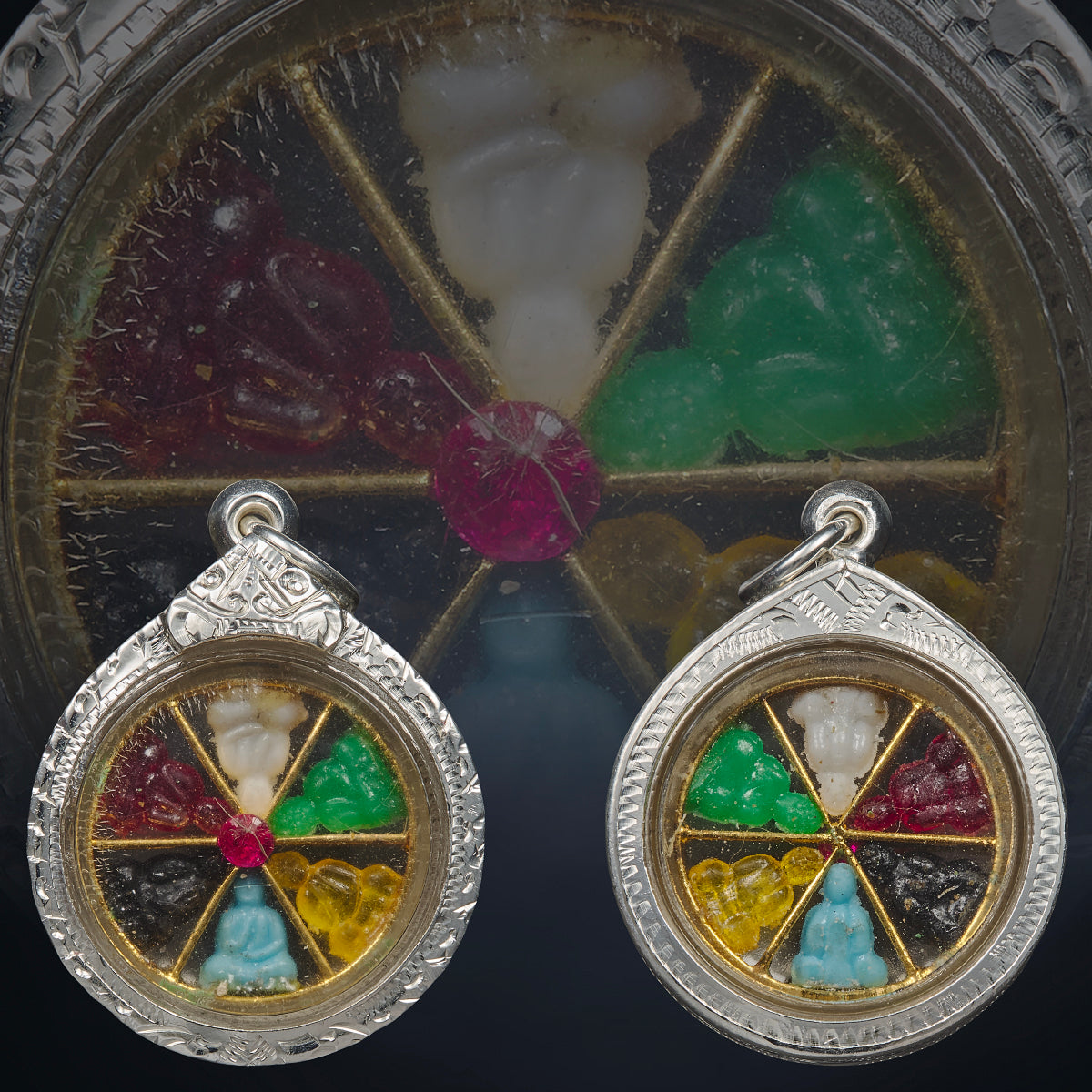
The coloured sections are arranged within a circular structure, separated by fine metallic divisions that maintain the individual identity of each Buddha.
The six colours represent the different spiritual and elemental associations of the Lak Ha Huk tradition.
The preparation of these materials reflects a combination of Chinese Buddhist devotional symbolism and traditional sacred-object craftsmanship.
Over time, the surfaces may develop slight changes in colour, texture and transparency, contributing to the individual appearance of surviving examples.
━━━━━━━━━━━━━━━━━━━━━━━━━━━━━━━━
Ritual
Lak Ha Huk belongs to the Chinese Mahayana Buddhist tradition of invoking the blessings and protective qualities of multiple Buddhas.
Rather than concentrating upon one particular spiritual function, the six Buddha images collectively represent a broader range of auspicious qualities.
The B.E. 2516–2517 issue is traditionally associated with LP Pho Chaeng's Mahayana consecration lineage.
Within this tradition, sacred chanting, Buddhist mantras and devotional practices are used to establish the amulet as an object of remembrance and spiritual protection.
Its principal purpose is to encourage auspicious circumstances, protection from misfortune, purification of negative influences and harmony in everyday life.
The six Buddha images are understood to work together symbolically, representing the completeness of Buddhist blessings.
━━━━━━━━━━━━━━━━━━━━━━━━━━━━━━━━
Blessings and Effects
Each Buddha within Lak Ha Huk is traditionally associated with a particular spiritual quality.
1. Vairocana Buddha (พระไวโรจนพุทธเจ้า)
Metta Maha Niyom
Associated with universal compassion, goodwill and favourable treatment from others.
2. Shakyamuni Buddha (พระศรีศากยมุนีพุทธเจ้า)
Success & Auspiciousness
Associated with overcoming obstacles, achieving worthwhile objectives and maintaining favourable circumstances.
3. Ratnasambhava Buddha (พระรัตนสัมภาวพุทธเจ้า)
Protection Against Negative Influences
Traditionally invoked for protection against misfortune, harmful spiritual influences and inauspicious conditions.
4. Amoghasiddhi Buddha (พระอโมฆสิทธิพุทธเจ้า)
Klaew Klad & Safety
Associated with protection during travel, avoidance of accidents and overcoming danger.
5. Medicine Buddha – Bhaisajyaguru (พระไภษัชยคุรุพุทธเจ้า)
Health & Removal of Misfortune
Traditionally associated with healing, wellbeing and the removal of obstacles affecting one's circumstances.
6. Amitabha Buddha (พระอมิตาภพุทธเจ้า)
Longevity & Spiritual Wellbeing
Associated with long life, peace, spiritual guidance and favourable conditions for Buddhist practice.
Combined Blessings
The six Buddha images are collectively associated with:
-
Pi Chong Protection: Traditional protection during unfavourable Chinese zodiac years.
-
Improving Personal Fortune: Supporting those experiencing prolonged difficulties or setbacks.
-
Removal of Obstacles: Overcoming unfavourable circumstances and negative influences.
-
Klaew Klad: Safety, protection and avoidance of danger.
-
Metta Maha Niyom: Goodwill, harmonious relationships and favourable treatment.
-
Health & Longevity: Traditional blessings for wellbeing and a long life.
-
Auspiciousness: Encouraging stability, peace and favourable opportunities.
━━━━━━━━━━━━━━━━━━━━━━━━━━━━━━━━
Modern Application
Lak Ha Huk remains particularly relevant among devotees who observe traditional Chinese zodiac and Feng Shui practices.
Protection During Pi Chong Years
In Chinese astrology, Pi Chong refers to a year in which an individual's zodiac sign is considered to be in conflict with the governing annual zodiac influence.
Such periods are traditionally associated with increased uncertainty, obstacles or changes in personal circumstances.
Lak Ha Huk is commonly worn as a Buddhist devotional object during these periods, particularly by those seeking additional spiritual reassurance.
Unlike annual zodiac-specific talismans, Lak Ha Huk is traditionally regarded as suitable for continuous wearing throughout different years.
Everyday Protection
The amulet is also appreciated by individuals seeking general spiritual protection rather than blessings directed towards one particular purpose.
Business owners, professionals and frequent travellers may wear it for its traditional associations with favourable circumstances, safety and overall wellbeing.
Its sixfold symbolism makes it especially meaningful to devotees who prefer one amulet representing several complementary Buddhist qualities.
━━━━━━━━━━━━━━━━━━━━━━━━━━━━━━━━
Physical Details
This Lak Ha Huk is a circular, double-sided amulet featuring six coloured Buddha images arranged around a central red ornament. Each image occupies a separate triangular compartment divided by fine metallic partitions. The coloured sacred materials display shades of white, green, red, yellow, blue and black, with the Buddha figures individually formed in relief. The reverse repeats the sixfold arrangement, creating a balanced composition on both sides. The amulet is housed in a custom engraved silver casing with a suspension loop, allowing both faces to remain visible. Its compact circular form makes it suitable for daily wearing.
━━━━━━━━━━━━━━━━━━━━━━━━━━━━━━━━
Recommended Pairing
Phra Somdej: Complements Lak Ha Huk with traditional Thai Buddhist Baramee, Metta and protection.
Tao Wessuwan: Traditionally paired for additional protection against hostile spiritual influences.
Phra Rahu: Particularly relevant to devotees concerned with unfavourable planetary influences and changing personal fortune.
Phra Kring: Complements the Medicine Buddha associations of Lak Ha Huk with traditional blessings for wellbeing and protection.
Lak Ha Huk may also be worn independently, as its six Buddha images already represent a comprehensive range of Buddhist blessings.
━━━━━━━━━━━━━━━━━━━━━━━━━━━━━━━━
Personal Notes
The Lak Ha Huk B.E. 2516–2517 is an interesting example of Chinese Mahayana Buddhist influence within Thailand's sacred-object tradition.
Its significance lies in the unusual arrangement of six Buddha images, each representing a different aspect of Buddhist compassion, protection and auspiciousness.
Unlike conventional Thai amulets, where a single Buddha image or sacred figure occupies the central position, Lak Ha Huk presents six individual representations united within one circular composition.
The colourful appearance also distinguishes it from the more familiar metal and monochrome powder amulets commonly encountered among Thai collectors.
One particularly meaningful aspect is its association with Pi Chong protection.
Among Thai-Chinese devotees, concerns about unfavourable zodiac years remain an established part of traditional religious and cultural practice. Lak Ha Huk provides a Buddhist devotional interpretation of protection and spiritual balance during such periods.
The amulet is not restricted to a particular zodiac sign or year. Its six Buddha images symbolically represent blessings extending across different conditions of life.
For collectors, the B.E. 2516–2517 issue is appreciated for its association with LP Pho Chaeng, its distinctive craftsmanship and its connection to the Chinese Mahayana Buddhist heritage of Wat Pho Maen Khunaram.
It remains a meaningful artifact for those who value traditional Buddhist protection, auspiciousness and the restoration of harmony during difficult circumstances.
━━━━━━━━━━━━━━━━━━━━━━━━━━━━━━━━
-
SG: Free | Worldwide except USA: $20 Registered | USA: $25 Registered / $100 Courier (SGD)