
OOBThaiAmulets
LP Ngern - Wat Don Yai Hom
LP Ngern - Wat Don Yai Hom
Temple-sourced certified artifacts since 2005. Questions before you buy? WhatsApp us at +65 9155 7000.
Couldn't load pickup availability
Box: MS7
Rian Lor Phra Phuttha Chinara
Pim Khao Jom
LP Ngern, Wat Don Yai Hom
B.E. 2480–2485 (1937–1942)
1.5 Inches
Mainstream Artifact
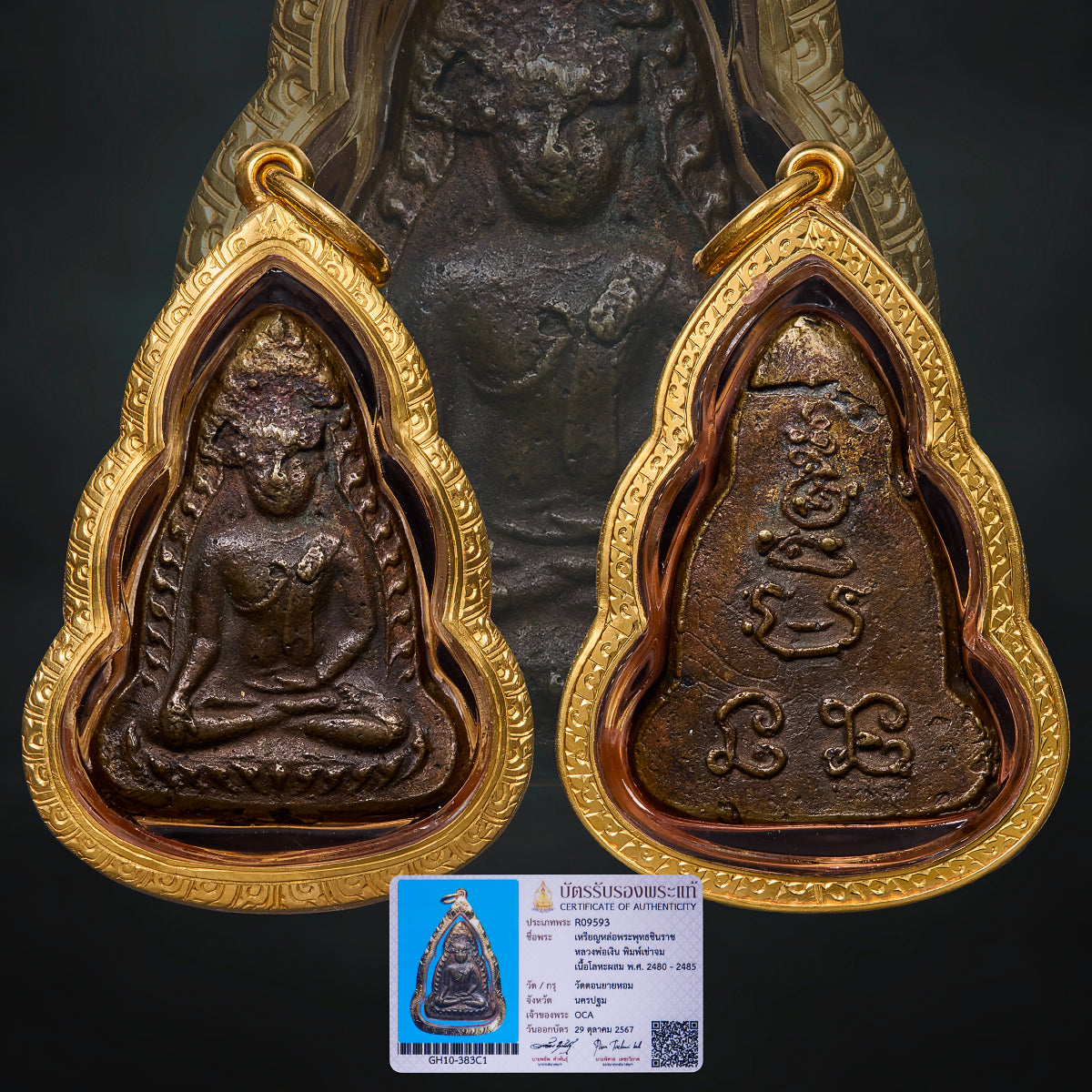
Samakom Certification card (GH10-383C1)
Encased in 90% gold casing
━━━━━━━━━━━━━━━━━━━━━━━━━━━━━━━━
Each artifact is individually handmade from natural sacred materials, with variations in colour, texture, form and hand-applied Yant inscriptions making every piece unique. Exact piece to be given
━━━━━━━━━━━━━━━━━━━━━━━━━━━━━━━━
Personal Experiences Shared by Luksits
Among experienced collectors in Nakhon Pathom, the early Phra Phuttha Chinarat of LP Ngern holds a respected position, particularly among those who favour amulets associated with Baramee and personal authority.
Collectors often describe this edition as particularly suitable for individuals carrying significant responsibilities. Business owners, senior managers and people in leadership positions traditionally seek its blessings for respect, stability, successful negotiations and sound decision-making.
The Pim Khao Jom is also appreciated for its protective reputation. Long-time devotees associate LP Ngern's amulets with confidence when confronting difficult situations, particularly those involving business competition, personal challenges or important decisions.
Rather than being regarded as an amulet for sudden fortune alone, this edition is valued for its association with steady advancement, established authority and lasting Baramee.
━━━━━━━━━━━━━━━━━━━━━━━━━━━━━━━━
Summary
Rian Lor Phra Phuttha Chinarat – Pim Khao Jom is an early cast-metal amulet attributed to LP Ngern of Wat Don Yai Hom, one of Nakhon Pathom's highly revered monks.
The amulet depicts Phra Phuttha Chinarat seated in the traditional Mara-Vijaya posture, surrounded by the distinctive flame-like arch associated with the celebrated Buddha image of Phitsanulok.
The Khao Jom designation refers to the relatively shallow relief around the Buddha's knees, distinguishing this mould from the more prominently raised Khao Loi variation.
Early examples are traditionally dated to approximately B.E. 2480–2485, although accounts indicate that similar moulds were produced during several periods.
The edition is principally associated with Baramee, Maha Amnaj, victory, protection and favourable advancement.
━━━━━━━━━━━━━━━━━━━━━━━━━━━━━━━━
Historical Background
LP Ngern of Wat Don Yai Hom was widely respected for his Buddhist practice, charitable works and contribution to the development of Wat Don Yai Hom in Nakhon Pathom.
During his earlier years, LP Ngern travelled extensively on thudong, undertaking forest meditation and visiting important Buddhist sites.
According to temple and collector traditions, he developed a particular devotion to Phra Phuttha Chinarat after visiting Phitsanulok, where the original Buddha image is enshrined at Wat Phra Si Rattana Mahathat.
This devotion inspired the creation of several Phra Phuttha Chinarat amulet designs.
The early cast editions were reportedly produced to recognise devotees who contributed labour, materials and financial assistance towards the construction and restoration of Wat Don Yai Hom, particularly its ordination hall.
Unlike large commercial productions, these early amulets were traditionally made in relatively small quantities, often using metals donated by local villagers.
Collector accounts suggest several periods of production, beginning around B.E. 2480, with later examples made during the following decades. Consequently, the exact dating of individual pieces requires consideration of their mould and metal characteristics.
━━━━━━━━━━━━━━━━━━━━━━━━━━━━━━━━
Origins of the Materials
The early Rian Lor Chinarat amulets were traditionally produced from mixed metals and alloys donated by villagers and temple supporters.
These metals were melted and cast using traditional methods, commonly described as Lor Boran, or ancient-style casting.
Because the materials varied between casting sessions, individual amulets may display differences in colour, density, surface texture and oxidation.
Some early examples are also reported to contain relatively unrefined mineral-rich metals, resulting in harder but potentially more brittle compositions.
The example illustrated displays a dark brown metal surface with aged patination and areas of naturally uneven casting, characteristic of the traditional appearance valued by collectors.
━━━━━━━━━━━━━━━━━━━━━━━━━━━━━━━━
Ritual
According to collector accounts, the early Phra Phuttha Chinarat amulets were cast within the temple environment and subsequently consecrated by LP Ngern.
The ceremonies centred upon Buddhist chanting, meditation and the dedication of merit, reflecting LP Ngern's personal devotion to Phra Phuttha Chinarat.
The image of Phra Phuttha Chinarat is especially associated with the Buddha's triumph over Mara, symbolising the overcoming of obstacles, fear and adverse influences.
Through consecration, devotees believe these qualities were incorporated into the amulets, alongside LP Ngern's own Baramee.
━━━━━━━━━━━━━━━━━━━━━━━━━━━━━━━━
Blessings and Effects
-
Baramee and Maha Amnaj: Traditionally associated with authority, respect, leadership and maintaining a stable position in business or professional life.
-
Chaiya Mongkhon and Success: Supporting victory over obstacles, favourable negotiations, career advancement and sound decisions.
-
Klaew Khlat and Protection: Believed to provide spiritual protection against danger, misfortune and hostile circumstances.
The principal distinction of this amulet is its emphasis on Baramee and leadership, supported by the protective symbolism of Phra Phuttha Chinarat.
━━━━━━━━━━━━━━━━━━━━━━━━━━━━━━━━
Modern Application
This amulet is particularly relevant to devotees who seek spiritual encouragement in positions involving responsibility, competition and important decisions.
Business owners and senior executives may appreciate its traditional association with commanding respect while maintaining composure and fairness.
For those working in sales, management or negotiations, the amulet symbolises confidence, clarity and the ability to navigate challenging circumstances.
Its protective qualities also make it suitable for everyday wearing, particularly during travel or demanding professional activities.
Beyond its devotional significance, the early Pim Khao Jom remains an important collectible associated with the historical development of Wat Don Yai Hom.
━━━━━━━━━━━━━━━━━━━━━━━━━━━━━━━━
Physical Details
This example features Phra Phuttha Chinarat seated in the Mara-Vijaya posture, framed by a distinctive flame-like arch extending towards the pointed upper section of the amulet. The Buddha's knees are rendered in relatively shallow relief, characteristic of the Pim Khao Jom mould. The cast-metal surface displays dark brown patination, areas of oxidation and naturally uneven textures associated with traditional casting. The reverse carries raised sacred Yant characters arranged vertically, with additional characters towards the lower section. The amulet is enclosed in an ornate gold-coloured casing with engraved decorative borders and a transparent protective covering. An accompanying Thai authentication certificate identifies the piece as an early mixed-metal Phra Phuttha Chinarat attributed to LP Ngern, Wat Don Yai Hom, dated approximately B.E. 2480–2485.
━━━━━━━━━━━━━━━━━━━━━━━━━━━━━━━━
Recommended Pairing
Phra Somdej is a suitable pairing, complementing the authority and protective qualities of Phra Phuttha Chinarat with blessings traditionally associated with spiritual stability, Metta and Buddhist merit.
For individuals seeking additional support in business relationships and interpersonal communication, Phra Khun Paen or Salika may also be considered.
Nevertheless, the Rian Lor Chinarat is traditionally regarded as a complete amulet for Baramee, protection and personal advancement, making it suitable for independent wearing.
━━━━━━━━━━━━━━━━━━━━━━━━━━━━━━━━
Personal Notes
Among the early amulets of LP Ngern, Wat Don Yai Hom, the cast Phra Phuttha Chinarat occupies a distinctive position because of its historical connection with the temple's development and LP Ngern's personal devotion to the revered Buddha image.
The Pim Khao Jom is particularly interesting for its traditional casting characteristics, shallow-relief Buddha image and variations in metal composition.
Collectors recognise that these amulets were produced over several periods, making careful examination of the mould, casting details and surface characteristics important when considering an individual example.
The early B.E. 2480–2485 attribution is especially desirable among collectors, although precise dating remains dependent upon established comparative evidence.
For devotees, the lasting appeal of this amulet lies in its traditional association with stable Baramee, respected leadership, victory over adversity and the protective blessings of LP Ngern.
━━━━━━━━━━━━━━━━━━━━━━━━━━━━━━━━
-
SG: Free | Worldwide except USA: $20 Registered | USA: $25 Registered / $100 Courier (SGD)