
OOBThaiAmulets
LP Kuay · Wat Kositaram
LP Kuay · Wat Kositaram
Couldn't load pickup availability
MS03
Phra Nang Phaya
LP Kuay · Wat Kositaram
B.E. 2515 (1972)
Personal Experiences Shared by Luksits
Among devotees of LP Kuay, pieces blessed by him outside Wat Kositaram are often collected for everyday wear, particularly when the wearer seeks a combination of Metta Maha Niyom, Baramee and protection.
Luksits who favour Nang Phaya-type amulets have shared experiences of becoming noticeably more composed when dealing with other people. In situations where conversations had previously been difficult, they found others more willing to listen and discussions easier to conclude.
Those working in sales and business have described customers becoming more receptive, negotiations proceeding more smoothly and previous contacts returning with new opportunities. Some also experienced introductions to useful contacts or assistance from senior people at unexpected moments.
In the workplace, wearers have associated the amulet with greater confidence when speaking to supervisors and management. Instead of being overlooked, their ideas appeared to receive greater attention, with some later receiving additional responsibilities or opportunities for advancement.
Others wear the piece primarily for protection and stability, reporting occasions where troublesome situations were avoided or problems were resolved before becoming serious.
Within traditional belief, these experiences reflect the combined qualities of Nang Phaya Baramee and the blessing lineage of LP Kuay.
Summary
The Phra Nang Phaya Wat Tha Thong, B.E. 2515 (1972) is a traditional clay amulet associated with Wat Tha Thong, Suphan Buri, and is known among collectors as one of the outside-temple pieces consecrated by LP Kuay of Wat Kositaram, Chainat.
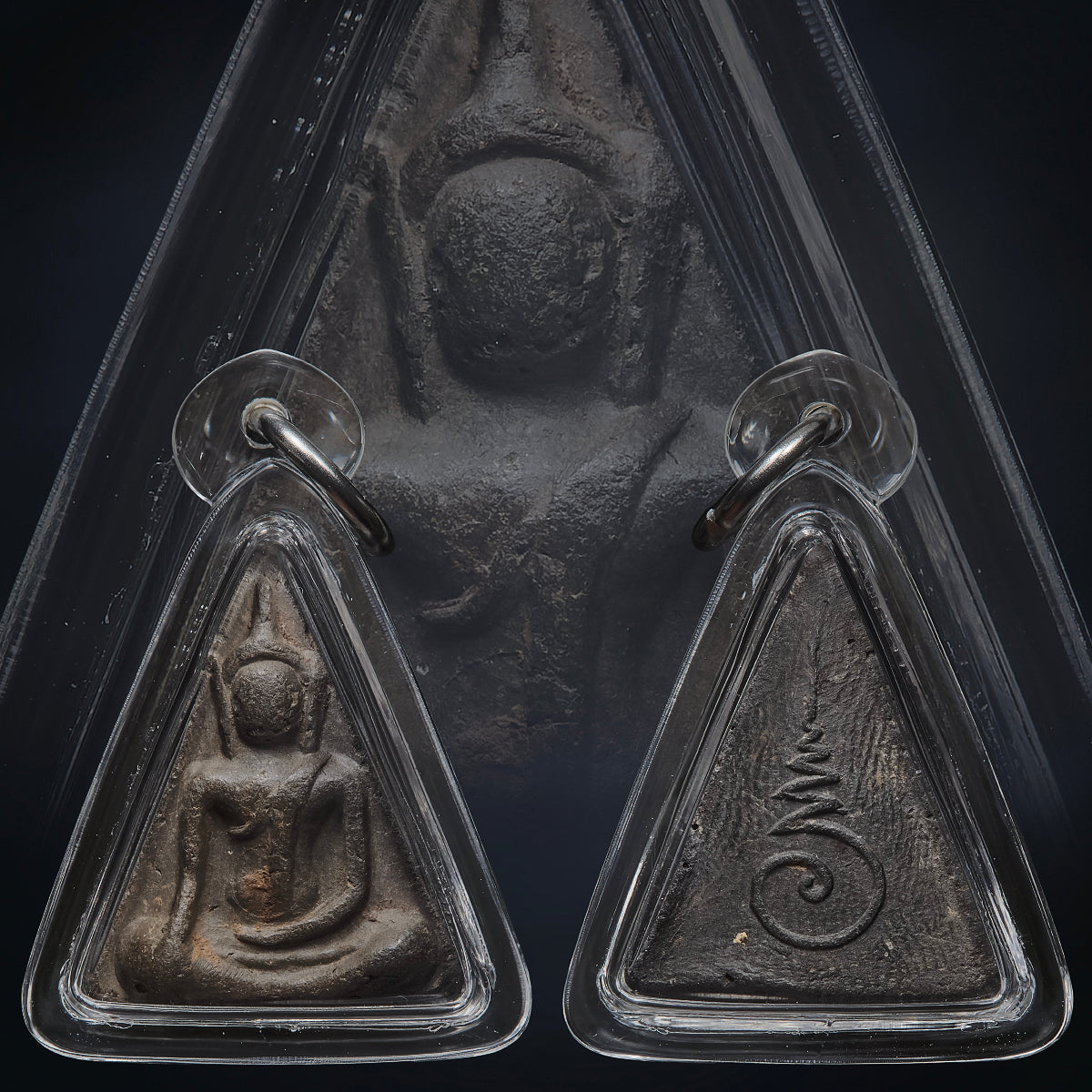
Created in the classical triangular Nang Phaya form, the amulet depicts the Buddha seated in meditation beneath a pointed arch. The reverse carries a simple sacred Unalome-style inscription, giving the piece a restrained appearance characteristic of older provincial amulets.
The amulet is made from Nuea Din – sacred clay, with the surviving surface showing the natural darkening, mineral character and ageing expected from an old clay composition.
For followers of LP Kuay, its attraction lies in being a comparatively understated Phra Nok Wat connected to his wider consecration lineage.
Historical Background
Nang Phaya is one of Thailand's most recognisable triangular Buddha-image traditions.
The name may be translated approximately as “Queen” or “Royal Lady”, and over generations the form became closely associated with dignity, personal presence and Baramee.
The original historic Nang Phaya tradition is associated with Phitsanulok, but the form was subsequently adopted by temples and masters throughout Thailand. Later examples were created using local clay, sacred powders and other consecrated materials while preserving the characteristic triangular silhouette.
The Wat Tha Thong version belongs to this later tradition.
Collector records associate the B.E. 2515 clay edition with LP Kuay, who was regularly invited to participate in consecrations outside Wat Kositaram during his lifetime.
It therefore occupies an interesting position for collectors who study the broader range of sacred objects blessed by LP Kuay beyond those produced directly at his own temple.
The Meaning of Nang Phaya
The Nang Phaya image traditionally represents a combination of dignity, confidence, composure and personal authority.
Its reputation is particularly connected with Baramee—the quality of presence that causes a person to be respected and taken seriously.
At the same time, Nang Phaya carries an important Metta Maha Niyom aspect. The wearer seeks goodwill from others, favourable reception when meeting new people and assistance from seniors or benefactors.
These qualities make Nang Phaya especially relevant to people whose progress depends upon human relationships: business owners, managers, salespeople, professionals and those regularly dealing with clients or senior figures.
Sacred Material & Ritual
This example was created from Nuea Din, an aged clay composition.
Clay has a long history within Thai Buddhist amulet production. It provides a direct connection to the earth and can also serve as the base into which sacred powders, temple materials or other ritual substances are incorporated.
Over decades, old clay naturally develops considerable variation. Colours may range from brown and reddish earth tones to grey and almost black surfaces depending upon the original mixture, firing conditions, storage and later environmental exposure.
The Wat Tha Thong B.E. 2515 pieces are traditionally associated with the blessing of LP Kuay of Wat Kositaram, adding his consecration lineage to the established symbolism of Nang Phaya.
The Sacred Unalome
The reverse carries a simple raised sacred design resembling an Unalome, terminating in a spiral at its base.
The Unalome is frequently encountered within Thai sacred writing and yantra traditions. Its ascending form can be understood as representing the movement from worldly confusion towards increasing clarity and spiritual development.
On an amulet, such sacred markings also serve as part of the ritual identity of the piece, connecting the physical image with the blessing and wicha under which it was prepared.
The simplicity of the reverse contrasts strongly with the Buddha image on the front and gives this Wat Tha Thong mould its distinctive character.
Traditional Blessings
The traditional qualities associated with this piece centre upon Metta Maha Niyom, Baramee, protection and progress in life.
Metta Maha Niyom supports goodwill, acceptance and favourable treatment from those encountered in everyday life.
Baramee strengthens dignity, credibility and personal presence, particularly when dealing with senior figures or people in positions of authority.
Career and Business are supported through smoother communication, trusted relationships and opportunities arising through other people.
Khum Khrong and Klaew Khlaad concern general protection and avoidance of unnecessary danger or troublesome situations.
Nang Phaya is therefore regarded as a particularly balanced form for those seeking to progress through a combination of personal ability, favourable relationships and steady support from others.
Modern Application
This piece is particularly suitable for people working in management, business development, sales, customer relations or professions requiring frequent meetings and negotiation.
It can also be worn by those entering a new workplace or social environment, where establishing trust and gaining acceptance are important.
The combination of Metta and Baramee is especially useful in situations where a person needs both warmth and authority—being approachable without losing credibility.
For devotees of LP Kuay, it additionally serves as a practical everyday piece carrying a connection to his broader consecration history.
Physical Details
This example is formed in the traditional elongated triangular Nang Phaya shape and is currently protected within a clear casing.
The front depicts the Buddha seated in meditation beneath a pointed arch. The modelling is simple and strongly defined, with the figure raised prominently from the surrounding clay field.
The reverse is comparatively plain, carrying a raised sacred Unalome-style yantra with a distinctive spiral termination.
The clay has matured into a deep grey-brown tone with areas of darker patination and natural surface variation produced through age.
Each amulet was individually formed from its prepared clay composition, and differences in mould pressure, clay distribution, firing, shrinkage and subsequent ageing naturally resulted in variations between surviving pieces. These individual characteristics form part of the material identity of older hand-produced amulets.
Recommended Pairings
For stronger Metta Maha Niyom and communication, it pairs naturally with a Salika amulet.
For wealth, customers and commercial activity, it may be paired with Nang Kwak or Phra Sivali.
For stronger protection and Klaew Khlaad, it can be worn alongside another recognised protective piece from LP Kuay's lineage.
Collectors following LP Kuay may also pair it with a direct Wat Kositaram issue, representing both his own temple production and the wider network of ceremonies and temples connected with his lifetime practice.
Personal Notes
The appeal of this Wat Tha Thong Nang Phaya lies in its simplicity.
There are no elaborate inserts or decorative additions. Its character comes from the aged sacred clay, classical Nang Phaya form, sacred reverse inscription and its traditional connection to LP Kuay's consecration lineage.
The dark, naturally matured surface of this example gives the Buddha image considerable depth, while the simple Unalome on the reverse preserves the restrained character expected of an older provincial clay amulet.
For the LP Kuay collector, pieces such as this provide another perspective beyond the famous Wat Kositaram moulds. They document the wider circle of temples and ceremonies in which LP Kuay was invited to participate and the reputation his blessing carried beyond his own temple.
A classic Nang Phaya for Metta, Baramee, protection and steady progression, and an interesting Phra Nok Wat within the broader collecting lineage of LP Kuay.
-
Free Shipping for Singapore| $15 Worldwide | $60 USA For Items Below $350