

OOBThaiAmulets
LP Kuay · Wat Kositaram
LP Kuay · Wat Kositaram
Couldn't load pickup availability
MS03
Phra Somdej Than Namo Buddhaya
LP Kuay · Wat Kositaram
Personal Experiences Shared by Luksits
Among followers of Luang Por Kuay, amulets from important outside-temple ceremonies in which he participated have long been worn alongside his better-known Wat Kositaram pieces.
Luksits have shared experiences of carrying Luang Por Kuay-blessed amulets during periods of uncertainty and later encountering unexpected assistance from people around them. Some describe senior figures becoming more willing to help, stalled matters beginning to move again, or opportunities appearing at moments when they were most needed.
Those working in business and sales have also spoken of smoother negotiations and improved relationships with customers. Difficult conversations became easier to manage, while people who were previously distant appeared more receptive and willing to listen.
Protection is another experience frequently associated with Luang Por Kuay's lineage. Devotees have related occasions where journeys were unexpectedly delayed, routes were changed, or potentially dangerous situations were narrowly avoided. Such incidents are traditionally understood as klaew khlaad—avoidance of danger.
Others simply describe a greater sense of steadiness and confidence when wearing his amulets, particularly when facing important meetings, financial difficulties or periods of instability.
For this particular piece, the combination of Namo Buddhaya, the concealed kring and the major B.E. 2512 consecration makes it especially suitable as an all-round daily amulet for protection, metta, opportunity and support from benefactors.
These accounts remain personal experiences passed among devotees and collectors and should be understood within the tradition of faith surrounding the amulet.
Summary
The Phra Somdej Than Namo Buddhaya, reverse Ch.R., with internal Kring is a rare powder amulet created at Wat Chinorasaram, Bangkok, in B.E. 2512 (1969).
The front presents a simplified seated Buddha above the flowing sacred formula Namo Buddhaya, while the reverse is deliberately restrained, carrying only the circular “Ch.R.” (ชร) temple code. Concealed within the body is a small kring, giving the amulet an additional ritual element beyond the conventional pressed-powder Somdej format.
The series was created under Phra Palad Manop of Wat Chinorasaram and entered a major consecration held from 22–31 August B.E. 2512.
For followers of Luang Por Kuay, its significance lies in his participation in this ceremony. Traditional collector records state that Luang Por Kuay remained seated in consecration throughout the night until morning, with accounts remembering him as one of the final masters to rise from the ceremony.
It is therefore regarded as an important Phra Nok Wat—an amulet created outside Wat Kositaram but directly connected to Luang Por Kuay through his participation in its consecration.
Historical Background
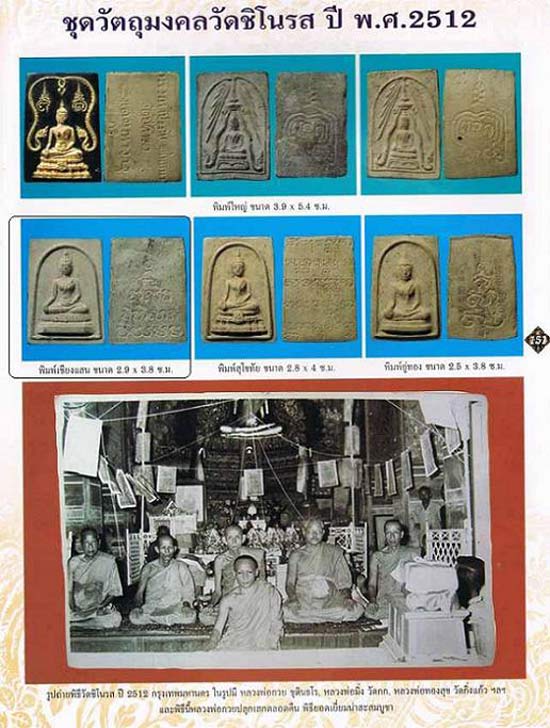
The Wat Chinorasaram B.E. 2512 series was organised by Phra Palad Manop of Wat Chinorasaram, Bangkok, with several sacred designs prepared for the occasion.
The main Phutthaphisek was conducted from 22 to 31 August B.E. 2512, bringing together a notable assembly of respected monk-masters from different regional traditions.
Masters traditionally recorded as participating include Luang Por Prom of Wat Chong Khae, Luang Por Kuay of Wat Kositaram, Luang Pu To of Wat Pradu Chimplee, Luang Por Suk of Wat Pho Sai Thong, Ajarn Nam of Wat Don Sala, Luang Por Ming of Wat Kok, Luang Por Thiang of Wat Muang Chum, Luang Por Ngern of Wat Don Yai Hom and Luang Por Dee of Wat Phra Rup, among others.
The importance of the series therefore rests not only upon its design, but also upon the collective blessing of an unusually respected group of masters active during this period.
Luang Por Kuay & the B.E. 2512 Ceremony
Although this was not a Wat Kositaram production, the series has become particularly interesting to collectors of Luang Por Kuay Suwanno because of his involvement in its consecration.
Traditional accounts state that Luang Por Kuay entered nang prok, the prolonged meditative state used during amulet consecration, and remained seated throughout the night until the following morning.
Among his disciples, it has long been recounted that he was the final, or among the final, masters to rise from the ceremony.
For this reason, collectors do not generally regard the piece as a direct Wat Kositaram issue. Its importance lies instead in being an outside-temple amulet carrying Luang Por Kuay's blessing from a significant ceremony during his lifetime.
Additional Consecration by Luang Por Suk
Another important part of the history concerns Luang Por Suk Dhammachoto of Wat Pho Sai Thong.
Traditional records state that after the main ceremony concluded, Luang Por Suk brought a portion of the sacred objects back with him and performed an additional solo consecration on 1 September B.E. 2512.
Certain pieces from the Wat Chinorasaram series are consequently also collected by disciples of Luang Por Suk.
This additional chapter adds further interest to a series already associated with one of the stronger multi-master ceremonies of the period.
The Namo Buddhaya Formula
The defining feature of the front is the sacred formula:
Na – Mo – Bud – Dha – Ya
Namo Buddhaya is one of the fundamental sacred formulas found throughout Thai Buddhist and traditional wichapractice. Its five syllables are traditionally connected with the Five Buddhas and are frequently incorporated into yantra, takrut, sacred inscriptions and meditative recitation.
Within traditional practice, the formula is associated with Buddhist refuge, protection, auspiciousness, spiritual stability and the invocation of the virtues of the Buddha.
On this amulet, the formula occupies a prominent position directly beneath the Buddha image, turning the entire front into a compact sacred composition.
The Sacred Kring
An unusual feature of this mould is the kring concealed within the body of the amulet.
A small internal insert produces a subtle sound when the amulet is moved. The concept follows the wider Thai tradition surrounding Phra Kring, where sound carries a devotional and symbolic significance.
The ringing sound may be understood as a reminder of awareness, mindfulness and remembrance of the Buddha's teachings.
Its inclusion also makes the construction more elaborate than an ordinary pressed-powder Somdej and forms one of the identifying characteristics of this particular Wat Chinorasaram mould.
Sacred Material & Ritual
The amulet was formed from an aged sacred powder composition characteristic of the period. Surviving examples can display warm cream, tan and brown tones, together with natural changes in surface texture resulting from decades of ageing.
After preparation, the amulets entered the extended 22–31 August B.E. 2512 consecration, receiving chanting, meditative blessing and ritual empowerment from the assembled monk-masters.
For followers of Luang Por Kuay, particular importance is placed upon the traditional account of his prolonged overnight nang prok meditation.
The character of the piece therefore comes from the union of its Namo Buddhaya sacred formula, internal kring and major multi-master consecration.
Traditional Blessings
This amulet is traditionally regarded as a balanced, broad-purpose Buddhist piece.
Khum Khrong is associated with general protection and safeguarding of the wearer.
Klaew Khlaad concerns avoidance of accidents, dangerous situations and unforeseen difficulties.
Metta Maha Niyom supports goodwill, acceptance and favourable interactions with customers, colleagues, employers and people encountered in everyday life.
Baramee concerns personal standing, dignity, credibility and support from those in positions of influence.
The Namo Buddhaya formula strengthens the traditional emphasis on Buddhist refuge and auspicious protection, while the internal kring adds the symbolism of mindfulness and constant remembrance of the Buddha.
Together, these qualities make the piece particularly suitable for everyday wear.
Modern Application
For the modern wearer, this is a practical all-round amulet for those whose daily lives involve travel, business, negotiations, responsibility and frequent interaction with others.
It may be worn with intentions towards safer journeys, greater composure during difficult situations, smoother professional relationships and assistance from benefactors or senior figures.
For collectors of Luang Por Kuay, the piece also documents an important part of his wider consecration history. His influence extended well beyond objects produced directly at Wat Kositaram, and outside-temple ceremonies such as this provide another perspective on the respect he commanded among his contemporaries.
Physical Details
This example is a rectangular sacred-powder amulet enclosed within a 925 silver casing.
The front depicts a simplified seated Buddha beneath an arched border. Directly below is the prominent flowing Namo Buddhaya sacred inscription, giving the mould its distinctive appearance.
The reverse is plain and bears the circular “Ch.R.” code associated with Wat Chinorasaram.
A kring is concealed within the body of the amulet, distinguishing this rare version from conventional pressed-powder Somdej pieces.
The surviving powder has matured to a warm tan-brown colour, with darker ageing naturally settling around the recessed details of the mould.
Each piece was individually prepared and pressed from its sacred powder mixture, with the internal kring incorporated during construction. Differences in powder distribution, mould pressure, surface texture and decades of natural ageing mean that every surviving example carries its own individual character.
Recommended Pairings
For stronger Metta Maha Niyom and business support, this piece pairs naturally with a Salika or Nang Kwak.
For career progression, authority and personal standing, it may be paired with a Baramee or Maha Amnaj amulet.
For a dedicated Luang Por Kuay collection, it is especially meaningful beside a recognised Wat Kositaram issue—one representing his own temple lineage and the other documenting his participation in an important outside consecration.
Personal Notes
The appeal of this amulet lies in its combination of history, unusual construction and consecration lineage.
Its design is immediately recognisable: the restrained seated Buddha, flowing Namo Buddhaya inscription, concealed kring and simple Ch.R. reverse mark give the piece an identity entirely its own.
More importantly, it records a period when many highly respected masters gathered together for major consecrations outside their own temples.
For followers of Luang Por Kuay, the traditional account of him remaining in nang prok throughout the night until morning is particularly meaningful. It reflects the disciplined meditative practice for which he was respected and provides a tangible connection to one of the significant outside ceremonies in which he participated.
A rare mould, internal sacred kring, important B.E. 2512 ceremony and direct consecration connection to Luang Por Kuay make this a quietly significant Phra Nok Wat for the serious collector.

-
Free Shipping for Singapore| $15 Worldwide | $60 USA For Items Below $350