
OOBThaiAmulets
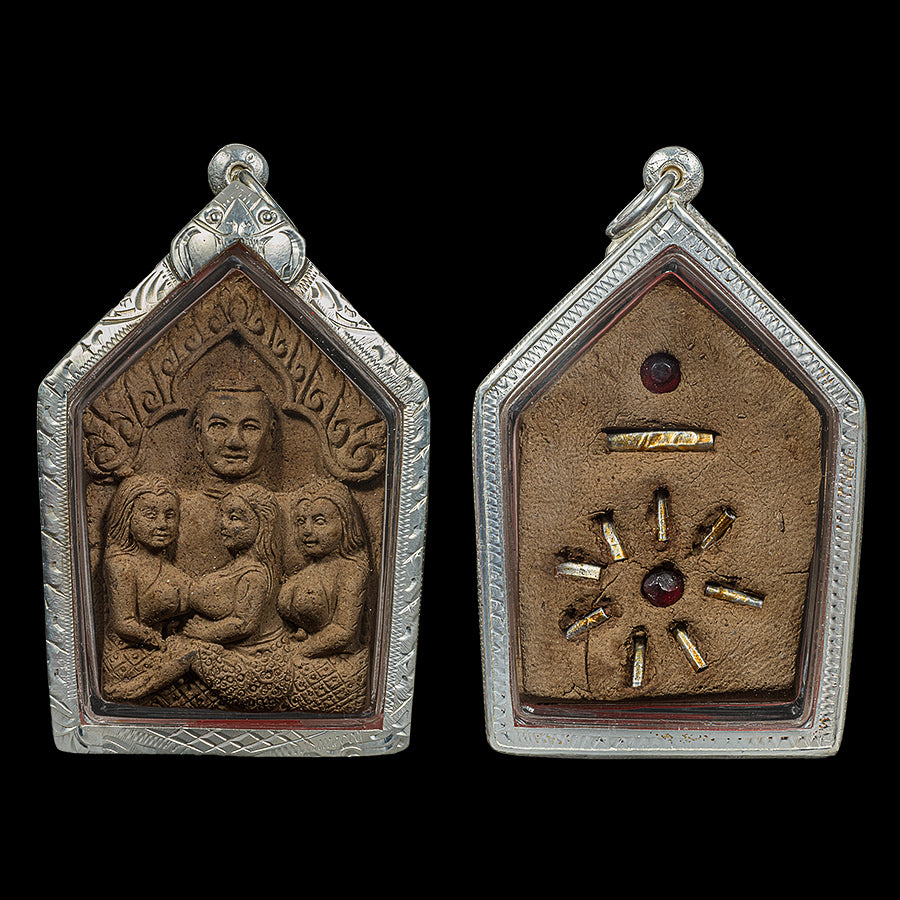
LP Chern Wat Taa Ee Khun Paen Sam Sao Moo Baan Gin Nam Bor Diew Gan
LP Chern Wat Taa Ee Khun Paen Sam Sao Moo Baan Gin Nam Bor Diew Gan
Temple-sourced certified artifacts since 2005. Questions before you buy? WhatsApp us at +65 9155 7000.
Couldn't load pickup availability
BOX: MSCI0980
Khun Paen Sam Sao Moo Baan Gin Nam Bor Diew Gan B.E. 2544 (2001)
- Master / Lineage: Luang Pu Chern (Chuen) Tikanyano, Khao Kulen lineage of Cambodia
- Temple: Wat Taa Ee, Ban Kruat, Buriram
- Year: B.E. 2544 (2001)
- Materials: Nur Pong Maha Saneh with Mai Kai Kuk, Mai Wua Leum Kok, Wan Maha Saneh 108, Pong Sao Sam Moo Baan, Pong Prai Kuman and fragments of Khun Paen Marum Matum, embedded with 9 takrut for Saneh blessings and 2 gems for wealth fetching. The takrut and gems were blessed before they were embedded, and the completed amulet was blessed and consecrated again afterwards
- Size: 1.5"
- Casing: Silver
- Mainstream Item
Batch: First batch (Run Raek), Pim Thammada with 9 takrut
Personal Notes
This batch holds a special place for us. A former business partner of ours wore a piece from the same Sam Sao batch. During that time, ladies he had never met would come up to him at the shop just to strike up a conversation and befriend him. Customers who saw this happen in front of them began asking about the amulet, and that is how this batch became one of the favourites in our shop.
Summary
In B.E. 2544 (2001), Luang Pu Chern of Wat Taa Ee in Buriram created the first batch of his Khun Paen Sam Sao Moo Baan Gin Nam Bor Diew Gan, the "three girls from three villages who drink from the same well". He was a Cambodian-born master of the Khao Kulen tradition, and this charm became one of his most celebrated works for Maha Saneh and Metta Maha Niyom. Thai collectors rank it alongside, and by some accounts above, his famous Khun Paen Sam Arthan, because fewer were made and they are harder to find.
Historical Background
Luang Pu Chern was born Chuen Srisod on a Friday in the eleventh lunar month of the Year of the Horse, B.E. 2461 (1918), at Ban Hin Kong in Svay Sisophon, Cambodia, one of seven children of a farming family. He became a novice at fifteen and was fully ordained at twenty under the monastic name Tikanyano. Within a single rains retreat he could recite the entire Patimokkha, a text that takes many monks years to master.
He then spent long years on tudong through the forests and mountains of Cambodia, studying under masters of the Khao Kulen school, the old heartland of Khmer wicha. His first teacher was Luang Pu Euay, a monk revered by Cambodian nobility. Luang Pu Dee Suwandee of Khao Kulen later accepted him as a disciple and taught him meditation, the wicha of the four elements, and the secrets of making and empowering sacred objects. A forest hermit is also said to have passed him his highest knowledge.
The turmoil of war in Cambodia eventually led him across the border on tudong into Thailand. Around B.E. 2524 (1981), at a blessing ceremony in Buriram, he met his old dhamma companion Luang Pu Nil Anuttaro, abbot of Wat Taa Ee, who invited him to stay. The villagers asked him to end his wandering, and Wat Taa Ee became his home. For years he lived quietly in a small kuti. In mid B.E. 2542 (1999) he began creating sacred objects to fund temple building, and word of their results spread quickly. Villagers still tell how he once blessed two stones and cast them into the temple pond, which then showed two great serpents to those who had ignored his requests to keep the water clean. He passed away in B.E. 2547 (2004), so the pieces from his lifetime are all that remain.
Origins of the Materials
The mass of this Khun Paen draws together a rare collection of Maha Saneh ingredients, each chosen for its old meaning:
- Mai Kai Kuk: wood from the ground where a rooster pecks and calls his hens to him, a classic charm for attraction. Part of Luang Pu's supply came from his dhamma companions in Cambodia.
- Mai Wua Leum Kok: the wood a cow lingers beside day and night, forgetting its way home.
- Din Sor Phong with tamlueng leaf: chosen for its meaning of hooking and holding the heart.
- Pong Sao Sam Moo Baan and Pong Maha Saneh Ya Faed: among the strongest and rarest attraction powders in the Khmer tradition.
- Wan Maha Saneh 108, Wan Krua Thao Long, Wan Ka Long and Dok Rak Sorn: sacred herbs and flowers of enchantment and devotion.
- Pong Nang Jan Plod Rak, Pong Phaya The Krua, Pong Salika and Pong Prai Kuman: powders for affection, charm, sweet speech and spirit assistance.
- Fragments of Khun Paen Marum Matum: broken pieces of his earlier Khun Paen, carrying their blessing into this batch.
The materials were bound with Maha Saneh oil, described in Thai accounts as cooked by three maidens from three villages, matching the spirit of the charm itself, and as the Maha Saneh oil of the seven widows' gardens.
Each piece is also embedded with 9 takrut for Saneh blessings and 2 gems for wealth fetching. All were blessed before they were embedded, and the completed amulet was blessed and consecrated again afterwards.
Ritual
Luang Pu first chanted over the combined materials for seven nights, choosing the hours most favourable for Maha Saneh. The 9 takrut for Saneh blessings and the 2 gems for wealth fetching were themselves blessed before they were embedded. Each Khun Paen was then hand-pressed in the old Khmer way, calling the formula and the name as it was made, and every piece was blessed one by one as soon as it was pressed. When the batch was complete, he blessed and consecrated the finished amulets again on their own, apart from all other sacred objects, with the Sao Sam Moo Baan mantra, the Maha Saneh and Maha Niyom mantras, and the Maha Chakkraphat mantra to raise merit, fortune, rank and praise for the wearer. Finally, the pieces were bathed in Prai Maha Saneh oil. The embedded takrut were inscribed with the Hua Jai Khun Paen and Hua Jai Satri.
Blessings and Effects
- Maha Saneh: strong personal charm and attraction, the purpose this batch is best known for.
- Metta Maha Niyom: goodwill and popularity with everyone you meet.
- Trade and fortune: favoured by those in sales and business.
- Harmony at home: the name describes a gentleman whose three wives share one home in love and understanding and never quarrel, an image of a peaceful, happy household.
It is suitable for both men and women. Thai accounts of this batch ask wearers to use its charm responsibly and to care for those it draws close.
Modern Application
Today this Khun Paen is worn by people whose success depends on how others receive them: sales and business owners, those who meet clients and the public, and anyone hoping for warmer relationships and a more harmonious home. The traditional mantra is recited three times after Namo: "Na jum jum, Mo jum jum, Phut jum jum, Tha jum jum, Ya jum jum, jum jum sawaha, Na metta panja phuttha namami hang metta karuna", followed by a wish for Maha Saneh and Metta Maha Niyom.
Recommended Pairing
Luang Pu Chern's own Thep Salika is a natural companion. Khun Paen draws attention and affection, while Salika gives sweet speech so that every conversation flows easily.
-
SG: Free | Worldwide except USA: $20 Registered | USA: $25 Registered / $100 Courier (SGD)