
OOBThaiAmulets
Ajarn Nen Wisetsingkham - Wat Pa Sak
Ajarn Nen Wisetsingkham - Wat Pa Sak
Temple-sourced certified artifacts since 2005. Questions before you buy? WhatsApp us at +65 9155 7000.
Couldn't load pickup availability
Box: MSCI0980
Si Peng Maha Saneh
Ajarn Nen Wisetsingkham | Wat Pa Sak, San Pa Tong, Chiang Mai
B.E. 2520–2525 (1977–1982)
2 Inches
Barang Artifacts
Bio of AJ Nen, Click here
━━━━━━━━━━━━━━━━━━━━━━━━━━━━━━━━
Each artifact is individually handmade from natural sacred materials, with variations in colour, texture, form and hand-applied Yant inscriptions making every piece unique. Exact piece to be given.
━━━━━━━━━━━━━━━━━━━━━━━━━━━━━━━━
Personal Experiences Shared by Luksits
Among collectors of traditional Northern Thai Maha Saneh artifacts, Ajarn Nen Wisetsingkham's Si Peng is particularly respected for its reputation in Metta Maha Niyom, Maha Saneh and favourable interpersonal relationships.
Devotees familiar with his early preparations describe them as especially desirable for attracting attention, encouraging goodwill and improving communication with others.
Collectors traditionally associate these preparations with situations involving romantic attraction, business negotiations, customer relationships and seeking assistance from influential individuals.
Early Si Peng preparations attributed to Ajarn Nen are especially sought after because of their limited distribution, with certain batches reportedly reserved for his closest disciples.
━━━━━━━━━━━━━━━━━━━━━━━━━━━━━━━━
Summary
This is an early-period Si Peng Maha Saneh attributed to Ajarn Nen Wisetsingkham of Wat Pa Sak, San Pa Tong, Chiang Mai, dating to approximately B.E. 2520–2525.
Ajarn Nen was recognised among followers of Northern Thai occult traditions for his knowledge of Metta Maha Niyom and Maha Saneh Wicha, particularly his sacred wax preparations.
Certain early batches were reportedly prepared through prolonged ritual cooking in cemetery environments, incorporating traditional sacred ingredients and consecration methods.
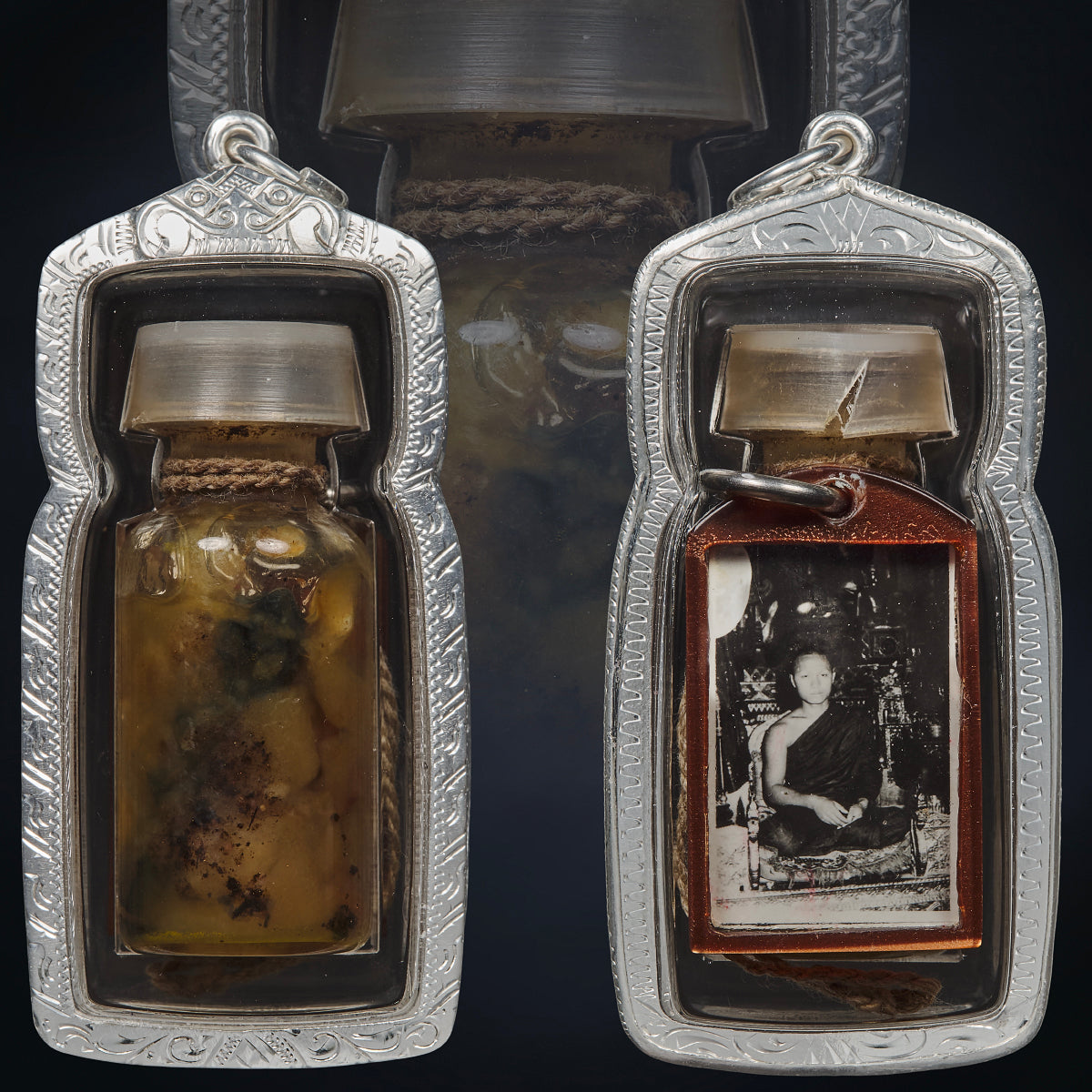
This example is preserved in a small glass bottle containing aged yellowish-brown Si Peng, accompanied by a Roop Tai portrait of Ajarn Nen attached to the reverse.
The combination of early-period sacred wax and the master's portrait makes it an interesting artifact for collectors of traditional Lanna attraction Wicha.
━━━━━━━━━━━━━━━━━━━━━━━━━━━━━━━━
Historical Background
Ajarn Nen Wisetsingkham, associated with Wat Pa Sak in San Pa Tong District, Chiang Mai, was known among followers of Northern Thai sacred practices for his traditional occult knowledge.
His reputation developed particularly around Si Peng, a sacred wax preparation widely used in Lanna Wicha for attraction, personal charm and favourable treatment from others.
During approximately B.E. 2520–2525, Ajarn Nen reportedly prepared several early variations, including cemetery-cooked Si Peng, preparations incorporating Salika takruts and other specialised sacred ingredients.
Some of these early preparations were distributed only among close disciples rather than released widely.
Today, such pieces are encountered relatively infrequently and remain of particular interest to collectors specialising in older Northern Thai Maha Saneh artifacts.
━━━━━━━━━━━━━━━━━━━━━━━━━━━━━━━━
Origins of the Materials
Si Peng is a traditional sacred wax preparation associated with Thai herbal and occult practices.
Its preparation involve beeswax, ritual oils, sacred powders, herbs and other consecrated ingredients.
Ajarn Nen's early Si Peng is particularly associated with preparations cooked in cemetery settings, reflecting the more specialised practices found within certain Northern Thai occult lineages.
Historical collector accounts also describe variations incorporating silver Salika takruts, Nam Man Prai and sacred occult powders.
The aged wax retains a yellowish-brown appearance, with darker deposits visible inside the glass container.
The attached Roop Tai of Ajarn Nen provides a direct visual association with the master and his lineage.
━━━━━━━━━━━━━━━━━━━━━━━━━━━━━━━━
Ritual
According to traditional accounts, Ajarn Nen prepared certain early Si Peng batches through ritual cooking and prolonged chanting, within cemetery environments.
The preparation was directed towards Metta Maha Niyom and Maha Saneh, with the intention of encouraging attraction, goodwill and favourable interactions.
In traditional practice, Si Peng could be used alongside specific mantras and personal prayers, depending on the devotee's purpose.
Instructions attributed to Ajarn Nen describe different applications according to the person one wishes to approach:
-
Right ring finger: Traditionally preferred for general Maha Saneh and attraction.
-
Right index finger: Used when approaching superiors, employers or influential individuals.
-
Left index finger: Associated with interactions involving subordinates or those under one's supervision.
The traditional instruction describes applying the wax in a single motion from left to right while concentrating on the intended request.
━━━━━━━━━━━━━━━━━━━━━━━━━━━━━━━━
Blessings and Effects
The traditional blessings associated with Ajarn Nen's Si Peng include:
-
Metta Maha Niyom: Encouraging goodwill, kindness, popularity and favourable treatment from others.
-
Maha Saneh: Enhancing personal charm, romantic attraction and social appeal.
-
Business and Negotiation: Supporting customer relationships, persuasive communication, sales and professional opportunities.
-
Chok Lap and Baramee: Traditionally associated with good fortune, personal influence and favourable assistance from others.
Its principal emphasis is Metta Maha Niyom and Maha Saneh, particularly in matters involving attraction, communication and personal relationships.
━━━━━━━━━━━━━━━━━━━━━━━━━━━━━━━━
Modern Application
Ajarn Nen's Si Peng is traditionally associated with individuals whose daily activities depend upon communication, personal presentation and favourable relationships.
This includes those working in sales, retail, hospitality, management and other customer-facing professions.
Its Maha Saneh associations also make it relevant to devotees seeking greater confidence in romantic or social situations.
For collectors, however, the importance of an early-period preparation extends beyond its intended blessings.
The limited distribution of certain batches, traditional preparation methods and connection to Ajarn Nen's Northern Thai Wicha make these artifacts particularly interesting historical examples.
Given the age and uncertain composition of this preparation, preservation within its original container is preferable to direct application.
━━━━━━━━━━━━━━━━━━━━━━━━━━━━━━━━
Physical Details
This artifact consists of a small transparent glass bottle containing aged yellowish-brown Si Peng, with visible darker deposits and natural variations in colour. The bottle has a broad translucent stopper, with old binding cord secured around its neck. Attached to the reverse is a small black-and-white Roop Tai portrait depicting Ajarn Nen seated in monastic robes, enclosed within a reddish-brown rectangular frame. Both the bottle and portrait are housed together in an ornate silver-coloured protective casing with engraved decorative borders and a suspension ring.
━━━━━━━━━━━━━━━━━━━━━━━━━━━━━━━━
Recommended Pairing
Ajarn Nen's Si Peng may be paired with a Salika artifact to complement its traditional associations with persuasive speech, popularity and favourable communication.
For business owners and sales professionals, a Nang Kwak provides a traditional pairing focused on customer attraction, commercial goodwill and prosperity.
A Phra Somdej or Phra Kring may also be worn alongside it for a complementary emphasis on Buddhist devotion, Baramee and spiritual stability.
━━━━━━━━━━━━━━━━━━━━━━━━━━━━━━━━
Personal Notes
What distinguishes this example is its attribution to the early B.E. 2520–2525 period, when Ajarn Nen was reportedly preparing specialised Si Peng for a relatively small circle of disciples.
Among traditional Northern Thai Maha Saneh collectors, these older preparations are valued for their connection to the master's original Wicha and the preparation methods associated with that period.
The accompanying Roop Tai of Ajarn Nen is another interesting feature, preserving the master's portrait together with the sacred wax.
Unlike modern Si Peng preparations produced in larger quantities, early examples such as this are appreciated for their aged character, traditional presentation and collector provenance.
For those specialising in Lanna Maha Saneh artifacts, this piece represents an interesting connection to the older sacred wax traditions of Chiang Mai.
━━━━━━━━━━━━━━━━━━━━━━━━━━━━━━━━
-
SG: Free | Worldwide except USA: $20 Registered | USA: $25 Registered / $100 Courier (SGD)