
OOBThaiAmulets
Phra Kritsada Khantiko (Arjan Note) - Wat Pong Sanuk Nuea
Phra Kritsada Khantiko (Arjan Note) - Wat Pong Sanuk Nuea
Couldn't load pickup availability
MS07
Phra Rahu Om Jan – Om Suriya
Phra Kritsada Khantiko (Arjan Note) Wat Pong Sanuk Nuea, Lampang Province
Made 39 pieces
2 Inches
Mainstream Artifact
For bio of AJ Note: Click here
━━━━━━━━━━━━━━━━━━━━━━━━━━━━━━━━
Sacred Craftsmanship
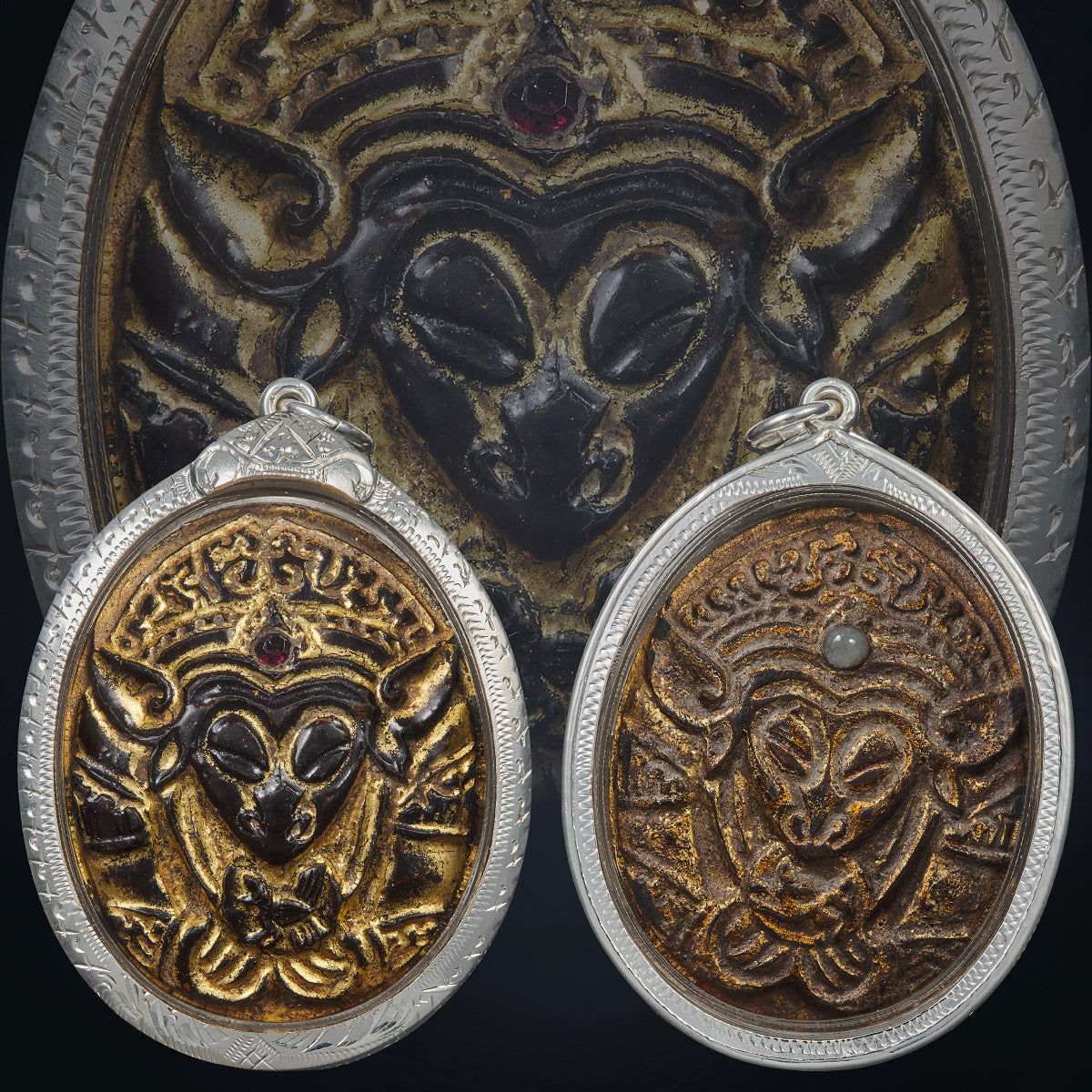
This two-sided Phra Rahu is a distinctive creation of Phra Kritsada Khantiko, widely known as Arjan Note or Ac Nuad, of Wat Pong Sanuk Nuea in Lampang Province. Created according to traditional Northern Thai Lanna Wicha, the amulet brings together two complementary manifestations of Phra Rahu — Rahu Om Suriya, representing the swallowing of the Sun, and Rahu Om Jan, representing the swallowing of the Moon.
Rahu Om Suriya – The Rooster and the Sun
Rahu Om Jan – The Rabbit and the Moon
Each piece was individually prepared from carefully selected sacred materials. Natural variations in surface texture, colour, gemstone appearance and finishing distinguish one example from another.
Exact piece will be given
━━━━━━━━━━━━━━━━━━━━━━━━━━━━━━━━
Personal Experiences Shared by Luksits
Among followers of Arjan Note, his Phra Rahu creations have long been associated with overcoming difficult periods, particularly situations involving unstable employment, financial pressure, troublesome relationships and persistent obstacles.
Some Luksits have described carrying his Rahu amulets during periods when circumstances seemed to move repeatedly against them. Their accounts speak of gradually regaining confidence, resolving longstanding disagreements and discovering opportunities that had previously appeared beyond reach.
Other followers place particular importance on the protective qualities of Rahu. Those working in competitive environments, especially where workplace politics, jealousy and concealed opposition are common, often regard the dual-sided representation as a reminder to remain vigilant against both visible and hidden difficulties.
Within the wider circle of Arjan Note's disciples, personal accounts also describe improvements in livelihood, the ability to move away from destructive habits and renewed stability after prolonged hardship. These experiences are generally attributed by devotees to the master's blessings and the protective Wicha incorporated into his creations.
On a personal note, I had previously visited Wat Pong Sanuk Nuea and knew friends who were close disciples of Arjan Note. Despite these connections, I never had the opportunity to meet him personally. He had also visited Singapore on one occasion, yet our paths did not cross.
Following his passing in B.E. 2569 (2026), this remains a missed opportunity, particularly when reflecting upon the dedication he showed towards preserving traditional Lanna Wicha.
━━━━━━━━━━━━━━━━━━━━━━━━━━━━━━━━
Summary
The two-sided Phra Rahu Om Jan – Om Suriya by Arjan Note represents an uncommon combination of Northern Thai astrological symbolism, traditional ritual craftsmanship and the spiritual teachings of the Lampang lineage.
By bringing together the solar and lunar manifestations of Rahu, the amulet symbolises a complete cycle of protection — from sunrise to sunset and throughout the night.
The rooster represents the active, outward-facing aspects of life, including livelihood, professional advancement and visible challenges. The rabbit represents the quieter lunar aspects, including intuition, hidden dangers, spiritual protection and the preservation of personal harmony.
The inclusion of blessed Ploi gemstones further distinguishes the creation, while its limited production of just 39 pairs reflects the demanding ritual procedures associated with its preparation.
For collectors of Northern Thai sacred objects, this series holds particular interest as an example of Arjan Note's specialised Rahu Wicha and his dedication to preserving traditional Lanna ritual knowledge.
━━━━━━━━━━━━━━━━━━━━━━━━━━━━━━━━
Historical Background
Phra Kritsada Khantiko, affectionately known among followers as Arjan Note or Ac Nuad, was a respected practitioner of traditional Lanna spiritual sciences at Wat Pong Sanuk Nuea in Lampang Province.
Although belonging to a younger generation of Northern Thai monks, he developed a reputation for his serious dedication to sacred inscriptions, protective Wicha, ritual empowerment and traditional methods of preparing sacred objects.
His teachings were connected with the lineage of Kruba Nanta Nanto of Wat Thung Man Tai, which preserved older Northern Thai ritual practices associated with Phra Anochai Thammajinda Muni, the Royal Preceptor of Lakhon and an important historical ecclesiastical figure in Lampang.
This lineage maintained a body of knowledge concerning astrological timing, sacred materials, ritual inscriptions and the relationship between celestial influences and human circumstances.
Arjan Note was particularly recognised for his Lanna-style Sak Yant, often performed using red ink blended with sacred herbal oils and ritual preparations.
Certain aspects of his practice were also associated by disciples with Burmese Weizza traditions, including teachings linked to the lineage of Bo Bo Aung.
His sacred creations extended beyond Phra Rahu to include handmade Si Pueng, Wa Tanoo, Yin Tong and other forms of Krung Lang intended for protection, authority, Metta and personal advancement.
Among his followers, he was sometimes described as Bah Wicha, a colloquial expression referring to a practitioner whose life had become deeply absorbed in the study and practice of sacred knowledge.
The expression reflected his reputation for spending considerable time preparing ritual materials, conducting ceremonies and assisting disciples experiencing personal or spiritual difficulties.
Arjan Note passed away in B.E. 2569 (2026).
Some close disciples believed that years of demanding spiritual work, including rituals intended to address black magic, misfortune and spiritual disturbances, had affected his health. These remain personal beliefs within his community rather than medically established explanations.
He is remembered not only for the sacred objects he created, but also for his willingness to guide disciples through difficult circumstances and preserve traditional Northern Thai Wicha.
━━━━━━━━━━━━━━━━━━━━━━━━━━━━━━━━
Origins of the Materials
The creation of this Phra Rahu series followed ritual principles associated with the traditional Lampang lineage.
One of its distinguishing features is the incorporation of blessed Ploi gemstones into the two Rahu representations.
In Thai sacred-object traditions, Ploi refers to gemstones or gem-like stones that may be incorporated into ritual objects for symbolic and ceremonial purposes.
Within this particular creation, the stones are associated with the celestial character of the respective Rahu images, serving as focal points for the solar and lunar representations.
The rooster and rabbit imagery further reflects the connection between animal symbolism and traditional astrological interpretation.
The rooster, announcing the arrival of dawn, is associated with the Sun, vitality and the active pursuit of livelihood.
The rabbit, familiar through the folklore of the Moon, represents the lunar cycle, intuition and the hidden aspects of existence.
When both are incorporated into a single two-sided amulet, the resulting object expresses the traditional concept of balance between opposing but complementary celestial influences.
The exact composition of the original amulet body is not independently established here. Its aged surface, contrasting dark and gold-toned relief, and embedded gemstones form the principal visible characteristics of the piece.
━━━━━━━━━━━━━━━━━━━━━━━━━━━━━━━━
Ritual
According to accounts preserved among Arjan Note's disciples, the preparation of this series followed strict ritual requirements concerning astrological timing and the empowerment of Phra Rahu.
The ceremonies could not be conducted according to ordinary convenience. Instead, particular periods associated with Rahu and the movement of celestial bodies were observed.
Within traditional Lanna astrology, Rahu is closely connected with eclipses, planetary influences and periods of significant change.
The two-sided construction required consideration of both solar and lunar symbolism.
Rahu Om Suriya, representing Rahu swallowing the Sun, was associated with the solar aspect of the ritual.
Rahu Om Jan, representing Rahu swallowing the Moon, was associated with its lunar counterpart.
The combination was intended to bring both aspects of Rahu into a single sacred object, symbolising uninterrupted protection and the balancing of adverse influences.
The blessed Ploi gemstones were incorporated as part of the completed ritual composition.
According to disciples, the preparation and consecration extended over approximately two years because the necessary astrological periods had to be observed.
Only 39 pairs were ultimately produced.
The unusually small quantity and extended preparation period reflect the importance placed upon ritual timing within this particular lineage.
━━━━━━━━━━━━━━━━━━━━━━━━━━━━━━━━
Blessings and Effects
Within traditional belief, the two-sided Phra Rahu is associated with several complementary forms of protection and personal advancement.
1. Rahu Om Suriya – Daytime Protection and Livelihood
The solar representation is traditionally associated with professional advancement, business stability, authority and overcoming visible obstacles.
Devotees commonly seek its blessings for:
-
Career advancement, business opportunities and steady livelihood.
-
Protection against visible competitors, workplace politics and professional difficulties.
-
Strengthening personal authority, determination and confidence.
-
Overcoming obstacles that interfere with progress and financial stability.
2. Rahu Om Jan – Night-time Protection and Hidden Influences
The lunar representation is traditionally associated with protection against unseen difficulties and circumstances that may not be immediately apparent.
Its attributed blessings include protection from concealed enemies, malicious intentions, spiritual disturbances, nightmares and harmful influences.
Within certain Northern Thai traditions, the lunar aspect is also connected with Metta Maha Niyom, encouraging goodwill, harmonious relationships and favourable interactions.
3. Protection from All Directions
The two-sided construction symbolises protection from both the front and rear.
This interpretation is particularly relevant to traditional concerns involving betrayal, slander, hidden opposition and what Chinese-speaking devotees commonly describe as Xiao Ren — petty or malicious individuals who create difficulties behind another person's back.
4. Reversal of Misfortune and Karmic Obstacles
Rahu is traditionally believed to consume adverse influences, symbolically swallowing difficulties and transforming unfavourable circumstances.
Devotees therefore associate this form with overcoming periods of persistent bad luck, unstable fortune and recurring obstacles.
5. Balance Between Solar and Lunar Influences
The combined representation reflects the belief that human circumstances are influenced by changing celestial cycles.
Rather than concentrating on a single aspect of Rahu, the two-sided amulet symbolises protection throughout the complete cycle of day and night.
━━━━━━━━━━━━━━━━━━━━━━━━━━━━━━━━
Modern Application
The two-sided Phra Rahu is particularly meaningful for individuals whose daily responsibilities expose them to both visible competition and less predictable personal circumstances.
Business owners, sales professionals and individuals working in demanding corporate environments may be drawn to its solar symbolism of livelihood, authority and overcoming professional obstacles.
Those experiencing strained relationships, workplace jealousy or prolonged uncertainty may place greater emphasis on the lunar representation, which traditionally concerns concealed influences and the preservation of personal harmony.
For devotees familiar with Chinese metaphysical traditions, the concept of protection against Xiao Ren also provides a recognisable parallel to the Northern Thai understanding of Rahu as a guardian against hidden opposition.
The amulet may be worn during daily activities or kept respectfully among other sacred objects.
Its two-sided construction is especially significant because neither face is considered merely decorative. Both representations form part of a complete symbolic composition, expressing the relationship between day and night, the visible and unseen, and the changing cycles of fortune.
Following Arjan Note's passing, his limited ritual creations have also acquired additional importance among disciples wishing to preserve tangible examples of his teachings and specialised Wicha.
━━━━━━━━━━━━━━━━━━━━━━━━━━━━━━━━
Physical Details
A two-sided oval Phra Rahu amulet attributed to Phra Kritsada Khantiko (Arjan Note / Ac Nuad) of Wat Pong Sanuk Nuea, Lampang Province. The piece features raised Rahu imagery on both faces, with rooster and rabbit symbolism representing the solar and lunar aspects. Blessed Ploi gemstones are embedded into the respective designs. The surface displays dark and gold-toned relief with naturally aged characteristics, and the amulet is protected within an engraved silver-coloured casing with a suspension loop. Reported production was limited to 39 pairs, with preparation and ritual empowerment extending over approximately two years.
━━━━━━━━━━━━━━━━━━━━━━━━━━━━━━━━
Recommended Pairing
This Phra Rahu may be paired with other sacred creations of Arjan Note, particularly pieces associated with protection, authority, Metta and the removal of obstacles.
A traditional Lanna Wa Tanoo may complement the protective character of Rahu, especially for devotees concerned with hostile environments, concealed opposition or spiritual disturbances.
For those whose principal interests concern business, negotiation and interpersonal relationships, Arjan Note's handmade Si Pueng or Metta-related creations may offer a complementary focus on personal attraction, goodwill and favourable interactions.
Collectors specialising in the Lampang lineage may also consider sacred objects connected with Kruba Nanta Nanto and other masters who preserved traditional Northern Thai astrological and ritual practices.
Together, such pieces provide a broader representation of the protective, astrological and Metta traditions associated with Lanna Wicha.
━━━━━━━━━━━━━━━━━━━━━━━━━━━━━━━━
Personal Notes
Arjan Note remains one of the Northern Thai masters whose work I came to appreciate through both his sacred creations and the accounts shared by those who knew him personally.
Although I visited Wat Pong Sanuk Nuea and had friends who were close to him, I never managed to meet him. Even when he travelled to Singapore, the opportunity did not arise.
His passing in 2026 brought a greater appreciation of the importance of documenting the teachings and creations of masters who devoted their lives to traditional Wicha.
What makes this particular Phra Rahu interesting is not simply its limited production of 39 pairs, but the thought behind its construction.
The two faces were not intended as separate decorative designs. Together, they represent a complete cycle — the Sun and Moon, day and night, visible challenges and hidden influences.
The blessed Ploi gemstones and the extended period of ritual preparation further distinguish this series from more conventional Rahu amulets.
For collectors familiar with Arjan Note's dedication to traditional Lanna practices, this two-sided Phra Rahu serves as a meaningful reminder of his specialised knowledge and the spiritual lineage he sought to preserve.
━━━━━━━━━━━━━━━━━━━━━━━━━━━━━━━━
-
Free Shipping for Singapore| $15 Worldwide | $100 USA All products