
OOBThaiAmulets
LP Anucha - Wat Pho Ratchaburana
LP Anucha - Wat Pho Ratchaburana
Couldn't load pickup availability
ANU01
Bia Gae
LP Anucha • Wat Pho Ratchaburana, Ratchaburi
1 Inch
Mainstream Artifact
Bio of LP Anucha: click here
Sacred Craftsmanship
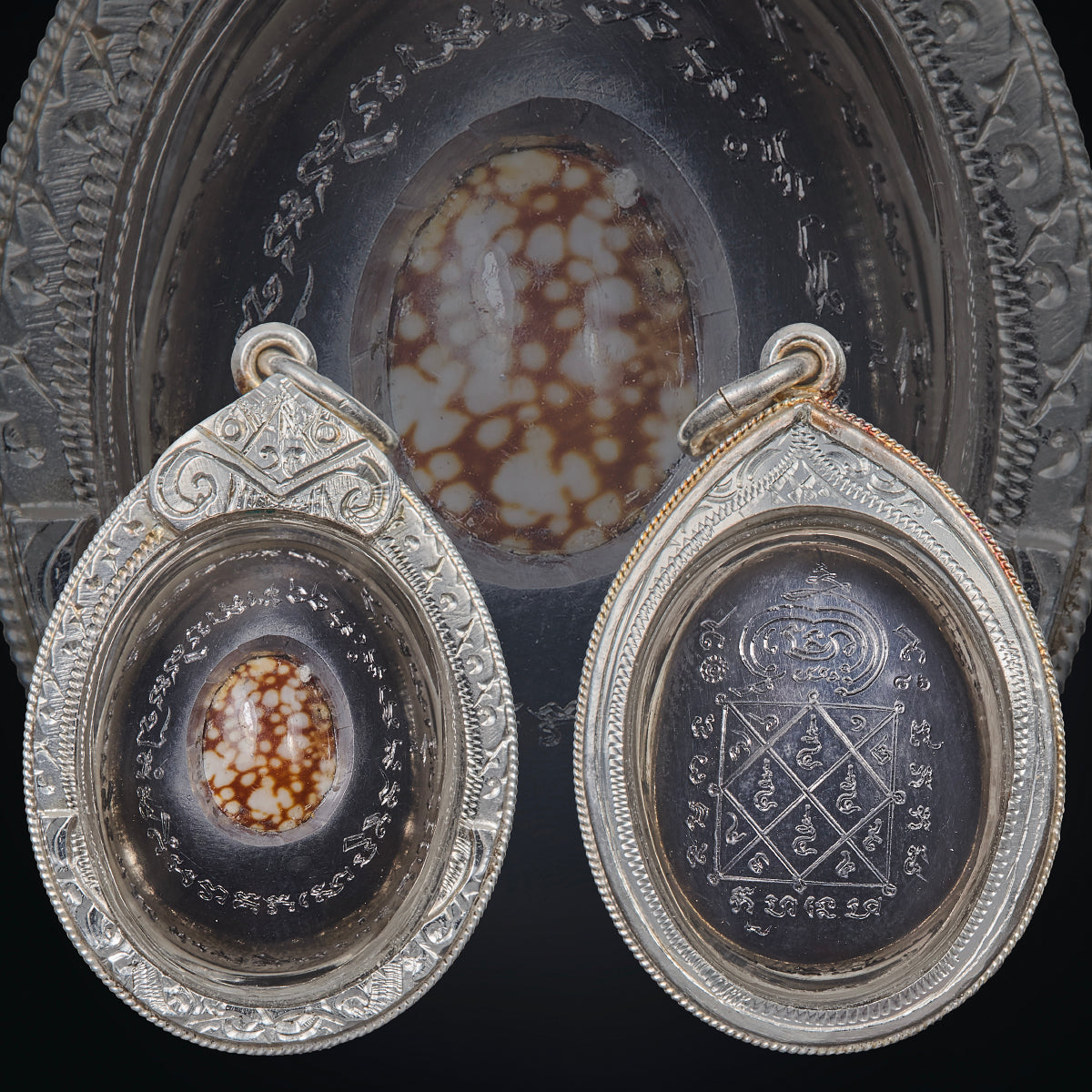
The Bia Gae of LP Anucha, Wat Pho Ratchaburana, Ratchaburi, is a traditional Thai protective Kreung Rang prepared using ancient Bia Gae Wicha, combining sacred materials with the powerful Yant Trinisinghe.
Each Bia Gae is individually prepared from carefully selected sacred materials. Natural variations in shell patterns, lead texture, colour, inscriptions and form make every piece unique.
The photographs are representative only. A piece will be selected at random, and the item supplied may differ slightly from the exact piece shown in the images.
Personal Experiences Shared by Luksits
Traditional accounts surrounding Bia Gae often concern individuals who believe they have experienced persistent misfortune or unexplained difficulties.
One illustrative account concerns a small business owner who had been facing a prolonged period of poor sales and repeated disagreements with customers.
After beginning to carry a Bia Gae, he described gradually feeling more confident when handling difficult situations. Over the following months, several business relationships improved, and previously delayed transactions were completed.
He associated these developments with Serm Duang, the traditional belief in strengthening one's destiny and overcoming unfavourable circumstances.
Another commonly described experience involves a devotee who had been troubled by recurring nightmares and feelings of uneasiness at home.
After keeping a Bia Gae nearby, he reported sleeping more comfortably and feeling less disturbed by his surroundings.
He interpreted the experience through the protective qualities traditionally attributed to Bia Gae, particularly its association with counteracting harmful spiritual influences.
Other devotees associate Bia Gae with improved relationships and fewer unnecessary disagreements, regarding these experiences as expressions of Metta Maha Niyom.
Summary
The Bia Gae of LP Anucha is a traditional protective amulet distinguished by its exposed cowrie shell, lead enclosure and elaborate Yant Trinisinghe.
Unlike the fully covered variation, this example retains a visible section of the original cowrie shell, displaying its natural white and brown markings.
The traditional construction incorporates Parot and underground Chanrong, enclosed within a protective lead covering.
Its principal associations include:
- Protection: Counteracting black magic, malicious spiritual influences and misfortune.
- Serm Duang: Strengthening personal destiny and improving unfavourable circumstances.
- Metta Maha Niyom: Encouraging goodwill, popularity and harmonious relationships.
- Klaew Klaad: Traditional protection against unexpected danger.
Historical Background
The Tradition of Bia Gae
Bia Gae is among the established protective Kreung Rang in Thai sacred-object traditions.
The name combines Bia, referring to the cowrie shell, and Gae, meaning to correct, resolve or counteract.
Its traditional purpose is to counteract harmful influences and restore favourable circumstances.
Bia Gae has historically been associated with protection against black magic, malevolent spirits and unexplained misfortune.
Yant Trinisinghe – The Foundational Yantra
The Yant Trinisinghe is regarded within certain Thai occult traditions as a foundational sacred Yantra, sometimes described as the teacher of all Yants.
Its geometric arrangement combines sacred numerals and symbolic divisions associated with traditional cosmological principles.
Certain interpretations connect its numerical structure with:
- 16 levels of the heavens
- 15 levels of the earth
- 24 levels of the lower realms
The Yantra is also traditionally associated with the Three Jewels of Buddhism: Buddha, Dhamma and Sangha.
Within protective Wicha, Yant Trinisinghe is associated with spiritual protection, favourable destiny and the correction of harmful influences.
Origins of the Materials
Cowrie Shell – The Foundation of Bia Gae
The cowrie shell forms the central component of traditional Bia Gae.
Historically associated with wealth and exchange, cowrie shells also became important materials in Thai protective Wicha.
The exposed section of this example displays natural cream-white and brown markings.
These patterns distinguish one shell from another and contribute to the individuality of each Bia Gae.
Parot – Traditional Mercury
Parot is traditionally associated with the preparation of Bia Gae.
Within Thai occult beliefs, mercury symbolises movement, transformation and the ability to counteract harmful influences.
Its inclusion follows traditional formulas associated with protective Kreung Rang.
Chanrong – Underground Stingless Bee Resin
Chanrong is a resinous substance produced by stingless bees.
Underground Chanrong is particularly valued within certain traditional Bia Gae preparation methods.
It is associated with sealing, preservation and protective qualities.
Nur Takua – Protective Lead Covering
The cowrie shell is enclosed within Nur Takua (lead), leaving an oval section exposed.
The lead covering provides a surface for sacred inscriptions while preserving the shell's natural form.
The combination of exposed shell and engraved lead gives this example its distinctive appearance.
As both mercury and lead are toxic, the amulet should remain sealed and should not be opened, heated or damaged.
Ritual
The preparation of this Bia Gae follows the traditional principles of protective Bia Gae Wicha.
The cowrie shell is prepared with Parot and underground Chanrong before being enclosed within a lead covering.
Unlike the fully enclosed variation, an oval opening is retained to expose part of the original shell.
The lead surface carries sacred inscriptions, including the elaborate Yant Trinisinghe.
Within traditional Thai occult practices, this Yantra is associated with protection, the correction of unfavourable destiny and the restoration of spiritual balance.
The combination of Parot, Chanrong and Yant Trinisinghe is traditionally understood to strengthen the protective purpose of Bia Gae.
Its principal spiritual emphasis concerns counteracting harmful influences, Serm Duang and Metta Maha Niyom.
Blessings and Effects
1. Protection Against Black Magic
Bia Gae is traditionally associated with counteracting black magic, malevolent spirits and harmful supernatural influences.
The Trinisinghe Yantra reinforces this protective symbolism.
2. Serm Duang – Strengthening Destiny
Traditionally believed to help overcome periods of misfortune and restore favourable circumstances.
Particularly meaningful for individuals experiencing repeated obstacles in business or personal life.
3. Metta Maha Niyom – Goodwill and Popularity
Associated with harmonious relationships, favourable treatment and improved social interactions.
Traditionally valued by merchants and individuals whose livelihoods depend upon communication.
4. Klaew Klaad – Avoidance of Danger
Bia Gae is commonly carried for protection against unexpected dangers and unfavourable situations.
This quality is particularly associated with travellers and individuals working in unpredictable environments.
5. Protection Against Spiritual Disturbances
Traditionally believed to counteract negative spiritual influences, ghosts and unsettling supernatural disturbances.
6. Spiritual Balance and Well-Being
Yant Trinisinghe is associated with the restoration of spiritual balance and the correction of unfavourable circumstances.
Modern Application
The Bia Gae remains a popular traditional Kreung Rang among individuals seeking protection and favourable circumstances.
Business Owners and Merchants: Associated with protection against business setbacks, unfavourable circumstances and financial misfortune.
Working Professionals: Traditionally carried for Metta Maha Niyom, harmonious relationships and the reduction of workplace difficulties.
Individuals Experiencing Misfortune: Associated with Serm Duang and the restoration of favourable destiny.
Frequent Travellers: Valued for the protective qualities of Klaew Klaad.
Collectors of Traditional Kreung Rang: Appreciated for its exposed cowrie shell, traditional sacred fillings and elaborate Trinisinghe Yantra.
Physical Details
The Bia Gae of LP Anucha measures approximately 1 inch and features a natural cowrie shell partially enclosed within a dark Nur Takua (lead) covering. An oval opening on the front exposes the shell's distinctive cream-white and brown markings, surrounded by sacred inscriptions. The reverse displays an elaborate Yant Trinisinghe consisting of intersecting geometric lines, sacred numerals and additional characters. The interior is traditionally prepared with Parot and underground Chanrong. The piece is housed within a silver casing.
Recommended Pairing
Phra Pidta – Protection and Inner Stability
Traditionally associated with spiritual protection, restraint and concentration.
Complements the protective qualities of Bia Gae.
Tao Wessuwan – Spiritual Guardianship
Revered for protection against malevolent spiritual influences and the safeguarding of one's surroundings.
Paired with Bia Gae, it symbolically combines wealth attraction with protection against misfortune.
Phra Rahu – Counteracting Unfavourable Destiny
Traditionally associated with changing fortune, overcoming difficult astrological periods and transforming unfavourable circumstances.
Personal Notes
The Bia Gae of LP Anucha is particularly interesting because of its exposed cowrie shell and the elaborate Trinisinghe Yantra engraved upon the lead covering.
Unlike the fully enclosed variation, this example allows collectors to appreciate the natural markings of the original shell.
The cream-white and brown patterns provide a striking contrast against the dark lead surface.
These markings are naturally formed, making each cowrie shell visually distinctive.
Another important feature is the arrangement of the sacred inscriptions.
The front carries protective characters surrounding the exposed shell, while the reverse displays the geometric Trinisinghe Yantra.
This arrangement reflects the traditional importance of sacred numerals and geometric patterns within Thai protective Wicha.
The combination of Parot, underground Chanrong and Nur Takua connects the piece with established Bia Gae preparation traditions.
However, the most distinctive aspect remains the presence of Yant Trinisinghe.
Traditionally regarded as a foundational Yantra, Trinisinghe is associated with protection, favourable destiny and the correction of harmful influences.
These qualities complement the principal purpose of Bia Gae: to counteract misfortune and provide spiritual protection.
For collectors who appreciate traditional Bia Gae, this exposed-shell variation offers a distinctive combination of natural cowrie markings, protective lead craftsmanship and the sacred symbolism of Yant Trinisinghe.
-
Free Shipping for Singapore| $15 Worldwide | $60 USA For Items Below $350