Summary
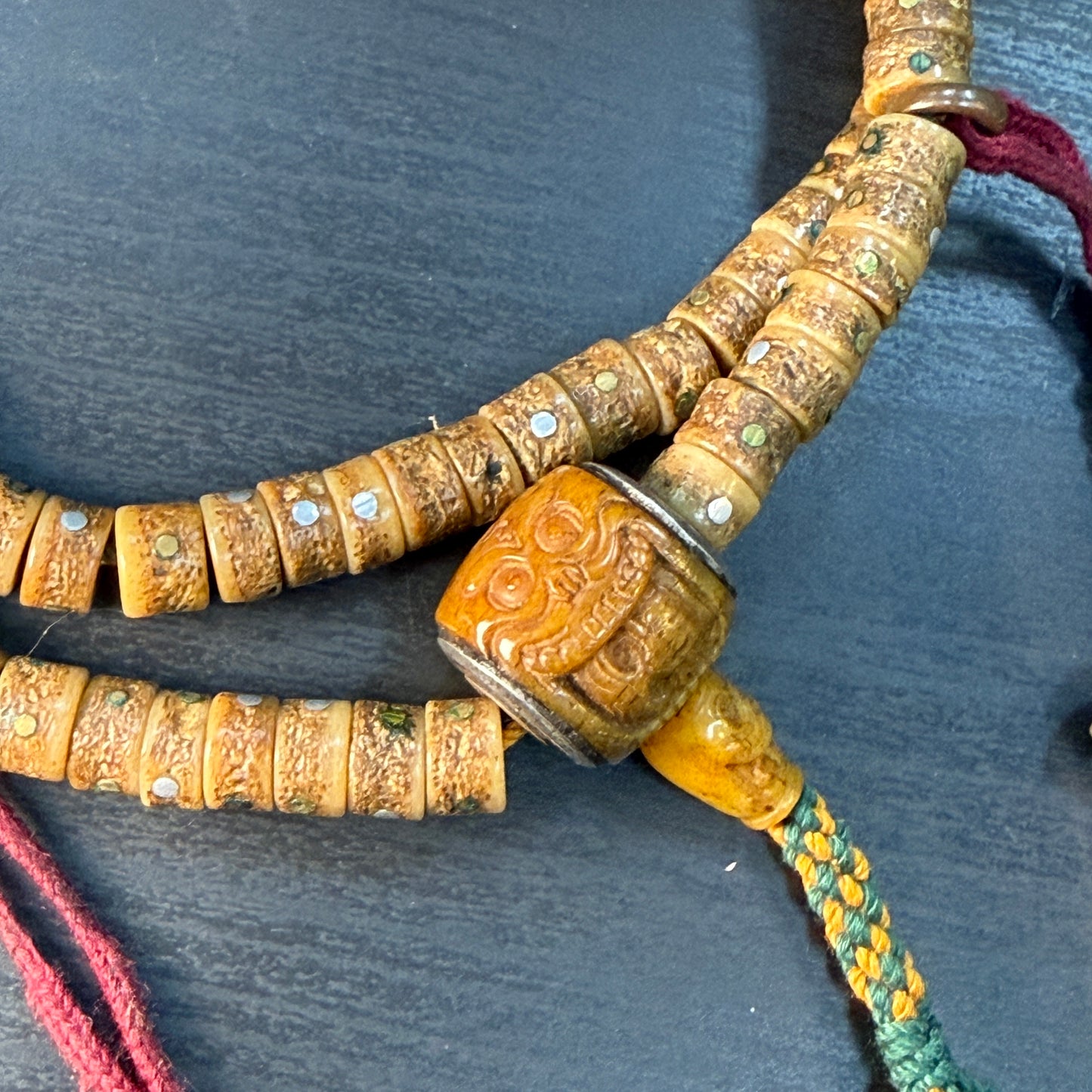
A kapala mala is a tantric rosary used within Vajrayana practice.
It supports mantra recitation while anchoring contemplation on impermanence.
Its symbolism centers on dissolution of ego and transformation of fear into wisdom.
Historically, rare versions were crafted from lama relic material with full consent and ritual consecration.
Most contemporary pieces are carved from yak bone in kapala form for ritual use.
Historical and Ritual Context
In Vajrayana Buddhism, charnel-ground symbolism is integrated into advanced tantric methods. The Sanskrit term kapala refers to a cranial ritual vessel used in tantric rites. Within Tibetan practice, kapala imagery became associated with impermanence meditation and wrathful deity sadhana.
A mala is traditionally 108 beads, used to count mantra recitations. When fashioned in kapala form, the beads visually reinforce the contemplative theme of transience and samsaric dissolution.
This approach reflects Vajrayana’s direct method. Practitioners confront mortality as a means to generate urgency and deepen realization.
Material Origins
Classical accounts describe rare malas made from relic material of highly accomplished lamas who vowed during life that their remains could serve ritual purposes. The preparation involved purification rites, empowerment, and extensive mantra recitation. Each bead was shaped and consecrated within strict liturgical discipline.
Such malas were preserved within lineage circles. Their potency derived from samaya, empowerment, and the spiritual attainment of the lama.
Today, most kapala malas are carved from yak bone or ethically sourced animal bone. The kapala form preserves symbolic continuity while aligning with contemporary ethical and legal frameworks.
Symbolism and Inner Function
The kapala form represents impermanence. All compounded phenomena dissolve. Attachment to form is temporary.
In Vajrayana doctrine, wrathful imagery is not destructive in intention. It is transformative. The practitioner trains to transmute fear, aversion, and ignorance into prajna and bodhicitta.
Handling the mala during mantra recitation stabilizes concentration. The tactile rhythm supports continuity of awareness. The form of the bead becomes a reminder of the ultimate view.
Practical Application
A kapala mala is used as any other mala. It counts mantra, supports retreat practice, and accompanies circumambulation.
Some practitioners reserve bone malas for wrathful deity practice or specific tantric sadhanas. Others integrate them into daily recitation. Proper empowerment and guidance remain central within Vajrayana tradition.
The mala functions as a ritual instrument shaped by lineage transmission.
Its meaning unfolds through disciplined practice.