
OOBThaiAmulets
Por Tan Suk Sabai
Por Tan Suk Sabai
Couldn't load pickup availability
Origins of Suer Yen in Northern Thai Tradition
Within the older strata of Lanna occult practice, the name Suer Yen refers to a very specific category of tiger-related wicha. It does not describe an animal in the ordinary sense, but the end-state of a practitioner who engaged deeply with tiger mantras and transformation rites. In early texts from Chiang Mai and Lampang, Suer Yen appears in connection with wicha seua samin — the advanced discipline of invoking tiger essence for protection, invulnerability, and commanding presence.
Historical accounts describe two pathways:
-
The Practitioner-Transformed
A master of tiger mantras who, through imbalance in practice, age, or unstable spiritual condition, loses control of the power and transitions into a state where his spiritual body begins to mirror the qualities of a tiger. This is not physical shapeshifting, but a metaphysical transformation recognized by villagers through unusual strength, heightened aggression, and aura disturbances. -
The Spirit-Merged Tiger
A tiger that consumed multiple humans and retained the lingering spirits of its victims. Lanna belief holds that such a tiger becomes capable of shifting between human-like and tiger-like manifestations. This duality made the Suer Yen feared but simultaneously respected for its potency.
These teachings circulated quietly through monastic and village lineages but remained largely undocumented in mainstream literature. They survive today mainly through oral records preserved by masters like Por Tan Suk Sabai and Praj Tanakorn.
Temple Memory: The Case of Wat Muen Sarn
Old residents around Ban Wua Lai recall the presence of a tiger statue behind the chedi of Wat Muen Sarn. It was not a decorative guardian; it was installed as a symbolic reminder of the Suer Yen. Elders recount that children often cried when passing it, claiming the statue felt “alive.”
When senior monastics later inspected the area, the statue was removed due to its unsettling influence, leaving only two lions at the entrance today.
Folklore from the same district recounts:
-
A monk who practiced tiger wicha in isolation until spiritual imbalance overwhelmed him, leading to unexplained disappearances around the temple grounds.
-
A traveling merchant who used a kwai thanu (bamboo buffalo effigy) to subdue a violent spirit-tiger that had terrorized the village. When dawn broke, the tiger’s body was found with the bones of its victims nearby.
These stories serve as reminders that tiger wicha is not a symbolic teaching—it is an applied spiritual discipline requiring stability, experience, and grounded practice.
Spiritual Interpretation of Suer Yen
In Northern esoteric frameworks, Suer Yen represents:
-
Mastery of fearlessness
-
Commanding aura and baramee
-
Protection of territory and person
-
Ability to cut through spiritual interference
-
Magnetism rooted in primal confidence
Because its energy is “hot” and forceful, Lanna teachers traditionally advise that only individuals with established inner grounding or strong ancestral support should work with Suer Yen influence.
Por Tan Suk Sabai’s Suer Yen Amulet (2563 Batch)
Master, Materials, and Method
Por Nan Tan Suksabai, aged 94, is one of the senior Northern occult masters who continues to work in the old discipline of secluded consecration. His method involves:
-
Mixing sacred powders, herbs, auspicious woods, and ritual materials
-
Conducting long consecration in the graveyard (where boundary-crossing energies are most receptive)
-
Transferring the work to temple grounds for structured chanting
-
Completing the final blessing within his own home once the spiritual force has stabilized
Por Tan is known to only release pieces when he is satisfied that the energy has settled perfectly.
The 2563 batch features:
-
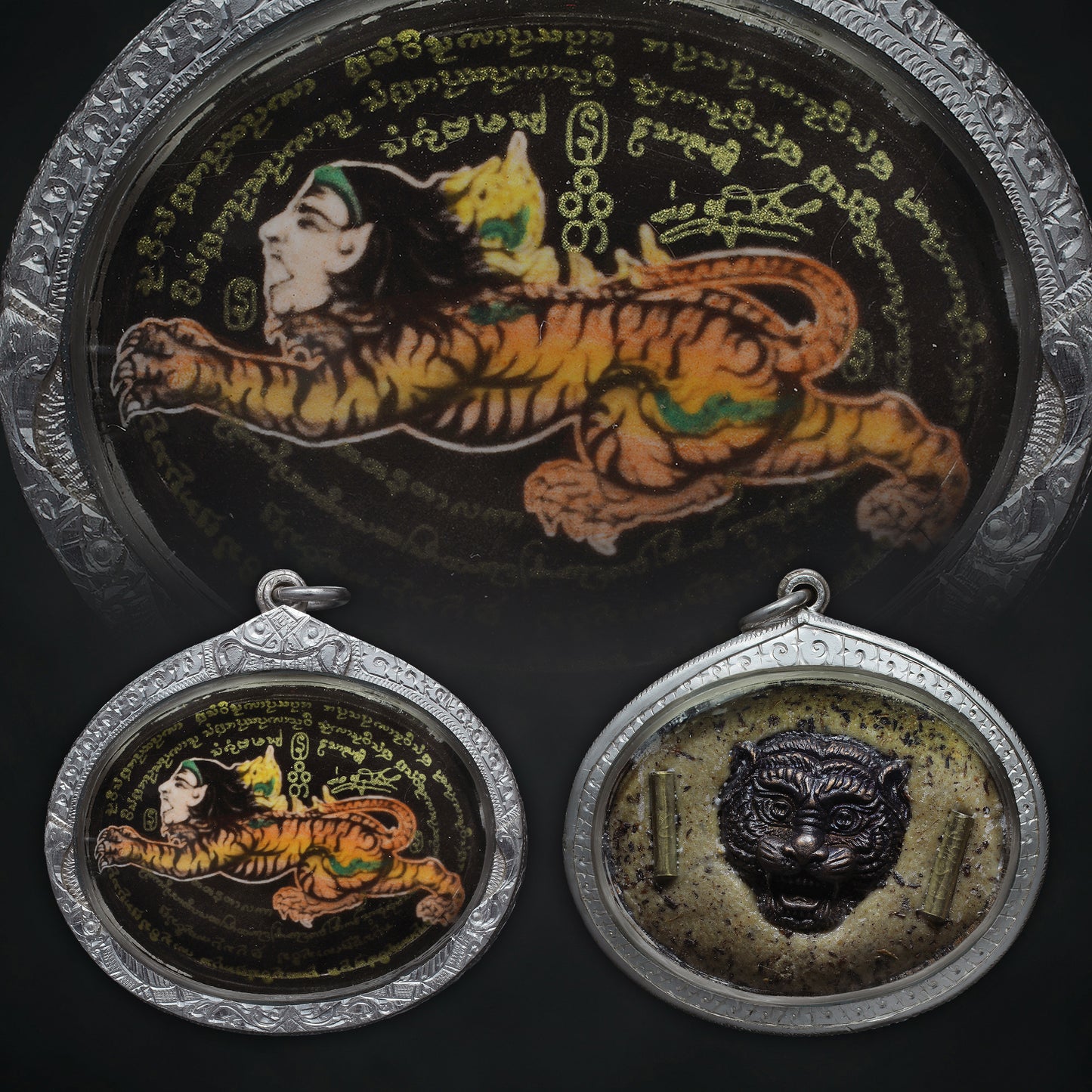
Front: Enamel depiction of the Seua Yen with surrounding yantras
-
Back: Sacred mass embedded with metallic tiger face and twin takrut to anchor protective and commanding force
These components allow the amulet to carry both the mythic symbolism and the functional structure of tiger wicha.
Spiritual Functions of the Amulet
1. Protection and Boundary Control
Suer Yen is traditionally invoked for:
-
Resistance to danger
-
Shielding from conflicts, hidden hostility, and spiritual intrusion
-
Stability in environments where one’s authority is contested
The takrut at the back further reinforces these boundaries.
2. Authority and Presence
Wearing Suer Yen cultivates an aura that is strongly felt by others. The wearer naturally gains:
-
Respect in negotiations and leadership roles
-
A firm, grounded voice
-
Confidence in decision-making
This is the classical maha amnaj quality found in Lanna tiger practices.
3. Wealth by Baramee
Suer Yen energy does not create wealth by chance—it amplifies the wearer’s existing baramee, making opportunities respond more strongly to action. It supports:
-
Professional advancement
-
Business influence
-
Stronger client interactions
This effect is particularly recognized among officials and businesspeople who rely on personal presence.
4. Charisma and Attraction
In older texts, tiger wicha carries maha saney through confidence rather than seduction. The wearer becomes naturally memorable and compelling, both socially and professionally.
Kata and Ritual Notes
The classical invocation associated with tiger wicha is:
“Ta Ta Na Ta La Ka”
Traditionally accompanied by:
-
Two candles (left and right)
-
Five incense sticks in the center
-
Clear intention spoken without hesitation
Some lineages include offerings of raw meat and liquor as a gesture of respect to the overseeing spirits of the discipline. Proper repayment of granted requests maintains balance and gratitude.
-
Free Shipping for Singapore| $15 Worldwide | $60 USA For Items Below $350