
OOBThaiAmulets
Por Sala Tan x AC Lek
Por Sala Tan x AC Lek
Couldn't load pickup availability
PST05
Mae Nak Khun Paen
Por Sala Tan
B.E. 2545 (2002)
Barang Artifact
1.5 inches
Sacred Craftsmanship
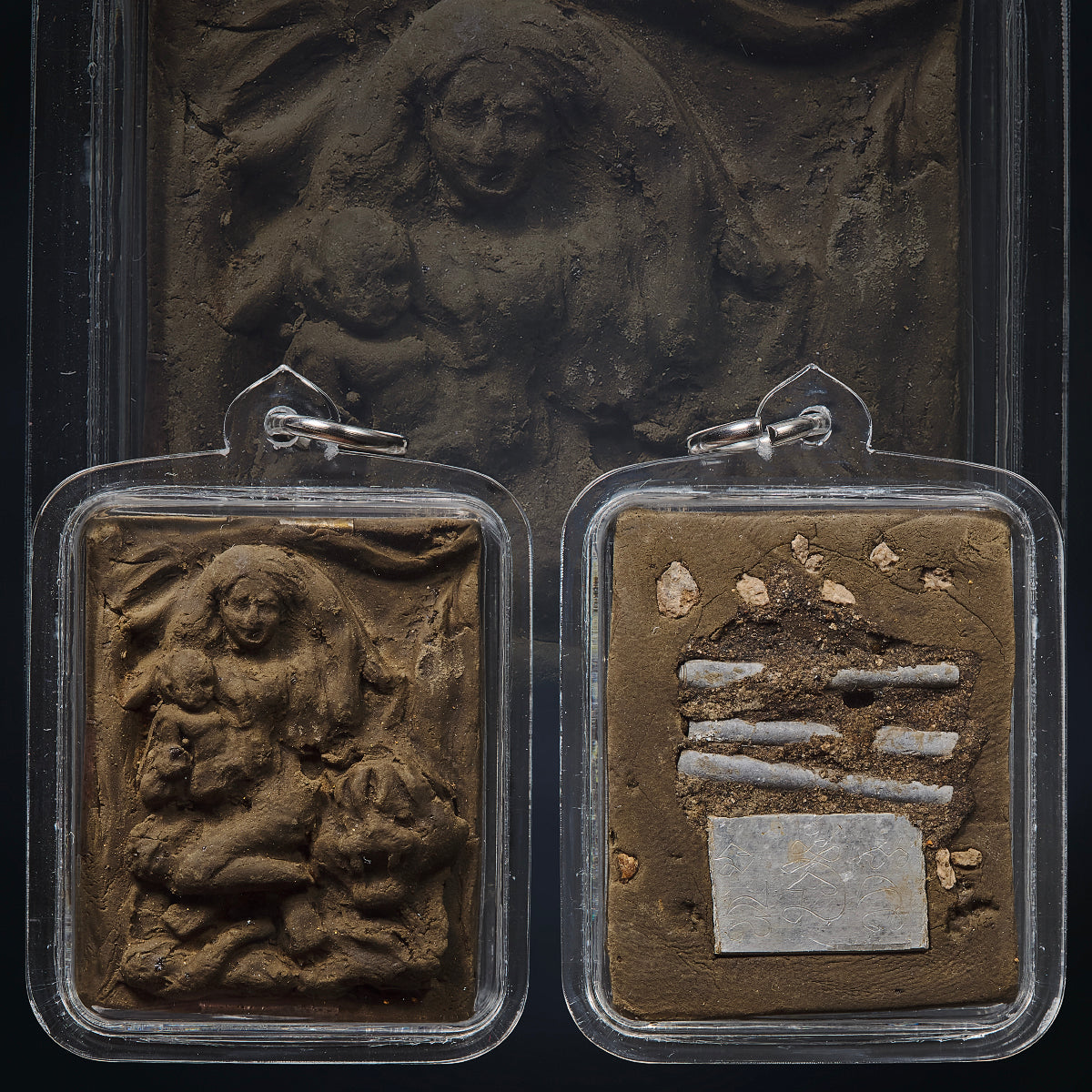
The Mae Nak Khun Paen was individually hand-formed from a specially prepared mixture centred upon cemetery soil and other Barang materials gathered for this particular working. Sacred relic fragments were embedded into the reverse together with multiple takruts and a larger hand-inscribed metal yant plate.
Only 20 pieces were prepared for this batch. As each was individually pressed, assembled and finished by hand, variations in the soil mixture, surface, embedded relics and positioning of the ritual components are natural and make every example unique.
Personal Experiences Shared by Luksits
Among Por Sala Tan's older luksits, this Mae Nak Khun Paen batch developed a particularly strong reputation for Saneh, relationships and wish fulfilment.
Collectors who have encountered the batch often speak of increased attention from others, smoother relationships and circumstances where someone important became unexpectedly more receptive. For those already in relationships, the emphasis was often described less as attracting strangers and more as strengthening affection, attachment and understanding between partners.
Others carried the Mae Nak when making a specific wish concerning love, reconciliation or an important personal matter, regarding the artifact as a spiritual intermediary through which sincere requests could be directed.
This particular example carries an additional provenance. It was personally kept by Ac Lek for many years rather than entering ordinary circulation.
I eventually had the opportunity to collect it directly from Ac Lek. He was aware that devotees from Singapore had been asking about this Mae Nak Khun Paen and waiting for another example to become available, making the release of a piece he had personally retained especially meaningful.
As with other luksit accounts, these experiences belong to the spiritual tradition surrounding the artifact and should not be treated as guaranteed outcomes.
Summary
The Mae Nak Khun Paen B.E. 2545 is one of Por Sala Tan's particularly scarce Barang works, with only 20 examples said to have been prepared.
The batch originated from an unusual cemetery encounter involving the lingering presence of an elderly couple whose attachment to one another was believed to have continued beyond death.
Rather than treating their attachment as something hostile, Por Sala Tan understood it as arising from an exceptionally deep bond. Through ritual, their spiritual condition was addressed and the symbolism of their enduring relationship became the foundation for a specialised working centred upon love, devotion, Saneh, relationships and wish fulfilment.
This example is the Pim Tamada, or Normal Pim, distinguished by its rectangular form rather than the more familiar five-sided Khun Paen silhouette.
Its body was prepared principally from cemetery soil combined with other Barang materials, while the reverse carries visible relic fragments, several takruts and a hand-inscribed yant plate.
Historical Background
Mae Nak occupies a distinctive place within Thai spiritual culture, where she has become one of the country's most enduring representations of love continuing beyond death.
Although numerous versions of the Mae Nak story exist, the central theme is remarkably consistent: an attachment so profound that separation by death itself could not immediately bring it to an end.
For practitioners of certain Barang and Saneh traditions, this makes Mae Nak an especially powerful symbolic form for devotion, attachment, attraction and enduring relationships.
Por Sala Tan's B.E. 2545 creation developed this principle through an encounter of his own.
According to the history preserved around the batch, an old couple had remained spiritually connected to a cemetery because of the depth of their attachment to one another. Por Sala Tan recognised the nature of this bond and performed rites intended to release them from that condition.
Their story subsequently became the spiritual foundation for this very limited Mae Nak Khun Paen batch.
Rather than simply producing an image of Mae Nak, Por Sala Tan used the Mae Nak form to embody a broader principle: love and attachment powerful enough to remain even after physical separation.
Origins of the Materials
Cemetery Soil
Cemetery soil forms an important part of the body.
Within Barang practice, such material is selected according to its ritual provenance rather than merely because it originates from a cemetery. For this batch, it provided the physical foundation appropriate to the Mae Nak working and its connection with the deceased couple.
Bone & Relic Fragments
Relic fragments associated with the working were incorporated into the reverse.
These pieces were not hidden completely within the powder body. Several remain visibly embedded in the surface, allowing the construction of the artifact to be read directly from the reverse.
Within the lineage account, these relics serve as physical anchors connecting the completed amulet with the original ritual.
Fused Relic Material
The batch is also associated with unusual fused relic material described within the lineage as remnants in which bodily material had become joined through age and decomposition.
For Por Sala Tan, the significance lay in the symbolism of inseparability — two lives whose attachment had persisted even after death.
This complemented the intended relationship and devotion aspects of the Mae Nak working.
Barang Materials
Additional Barang substances were blended into the cemetery-soil body.
These supported the specialised intentions of Metta, Maha Saneh, attraction, emotional attachment and wish fulfilment, while also providing the medium into which the individual ritual components could be embedded.
Takruts & Hand-Inscribed Yant
The reverse contains several visible takruts arranged horizontally within the sacred mixture.
Below them sits a comparatively large metal yant plate, individually inscribed with sacred characters.
Together they form the written wicha component of the artifact, supplementing the relic materials with Por Sala Tan's ritual formulas.
Ritual
The preparation of the B.E. 2545 Mae Nak Khun Paen began with Por Sala Tan's work concerning the elderly couple.
The objective was first to address their spiritual condition rather than immediately create an amulet. Once the appropriate rites had been completed, the unusual strength of their attachment became the basis for the subsequent Mae Nak working.
Cemetery soil and the other Barang ingredients were prepared into the principal sacred mixture.
Each piece was then formed individually. Relic fragments were positioned into the reverse, followed by the takruts and inscribed yant plate.
The completed artifacts underwent further chanting and consecration directed towards the principal intentions of the batch: Saneh, Metta, enduring affection, relationships and wish fulfilment.
Ac Lek assisted around this period of Por Sala Tan's work and retained this particular example afterwards.
Blessings and Effects
The defining characteristic of this Mae Nak Khun Paen is Saneh connected with emotional attachment.
Where some attraction artifacts concentrate primarily upon drawing attention, this batch is traditionally understood more broadly through the idea of forming and maintaining meaningful interpersonal bonds.
Its principal traditional applications include:
- Maha Saneh — attraction and personal magnetism;
- Metta Maha Niyom — goodwill and favourable treatment;
- relationship harmony — smoother understanding between partners;
- affection and attachment — strengthening emotional closeness;
- reconciliation — supporting circumstances in which communication can reopen;
- wish fulfilment — particularly wishes involving relationships and personal matters;
- social favour — encouraging warmer responses from those around the keeper;
- guidance and protection within the spiritual tradition of the piece.
The central theme remains devotion — the quality from which the original working is said to have developed.
Modern Application
The Mae Nak Khun Paen translates naturally into modern situations involving relationships and human interaction.
Someone in an established relationship may carry it with the intention of improving affection, communication and mutual understanding. A single person may approach it more generally for Saneh, confidence and greater social receptiveness.
Its Metta and attraction aspects also have relevance in customer-facing professions. Salespeople, business owners and those whose work depends upon relationships may appreciate the traditional emphasis upon being remembered, welcomed and treated warmly.
For wish-making, the better approach is to establish a clear intention and then continue taking practical action towards it. The artifact traditionally represents assistance and favourable circumstances rather than a replacement for personal effort.
Physical Details
This Pim Tamada / Normal Pim is an approximately 1+ inch rectangular Mae Nak Khun Paen, an unusual profile compared with the traditional five-sided Khun Paen form. The front depicts Mae Nak as the dominant central figure accompanied by smaller figures, all pressed from the dark brown cemetery-soil and Barang mixture. The reverse exposes much of the ritual construction: multiple pale relic fragments are embedded across the upper and side areas, several cylindrical takruts are arranged horizontally through the centre, and a large rectangular metal yant plate bearing hand-inscribed sacred characters occupies the lower section. Age-related cracking, uneven texture and variations in the embedded materials are characteristic of its handmade construction. The artifact is preserved within a fitted clear protective casing.
Recommended Pairing
For relationship and attraction purposes, this Mae Nak may be paired with a Khun Paen, Yin Tong or Salika where additional emphasis upon Saneh, speech and interpersonal magnetism is desired.
For business use, a dedicated wealth or Chok Lap artifact can provide the financial aspect while Mae Nak concentrates upon the human relationships through which opportunities develop.
For more balanced everyday wear, a Somdej, Phra Kring or Phra Chaiwat provides a suitable Buddhist foundation alongside the specialised Barang character of Mae Nak.
Because this artifact already contains a concentrated Barang construction, elaborate pairing is unnecessary.
Personal Notes
What makes this particular Mae Nak Khun Paen significant to me is not simply that only 20 pieces were produced.
It is the combination of its history, construction and provenance.
The cemetery soil, relic fragments, fused relic material, takruts and large handwritten yant plate preserve the physical character of an older style of Por Sala Tan's Barang work. Even from the reverse, one can immediately see that this was not simply a moulded amulet with a blessing added afterwards; its individual components were assembled as part of the working itself.
The story behind the batch is equally important. Its foundation was not attraction for attraction's sake, but the extraordinary attachment of an old couple whose bond was believed to have persisted beyond death. Por Sala Tan transformed that story into a Mae Nak working centred upon devotion, Saneh and enduring relationships.
Most importantly, this particular piece did not simply pass through the collector market.
It was kept personally by Ac Lek for many years, and I had the honour of receiving it directly from him. Ac Lek knew that devotees in Singapore had long been asking about this batch and waiting for another example to surface.
For a batch already limited to twenty pieces, an example preserved personally by Ac Lek carries a provenance that makes it particularly meaningful within Por Sala Tan's lineage.
-
Free Shipping for Singapore| $15 Worldwide | $60 USA For Items Below $350