
OOBThaiAmulets
Por Sala Tan
Por Sala Tan
Couldn't load pickup availability
PST07
Suer Roop
Por Sala Tan
3cm
Mainstream Artifact
Individual Craftsmanship
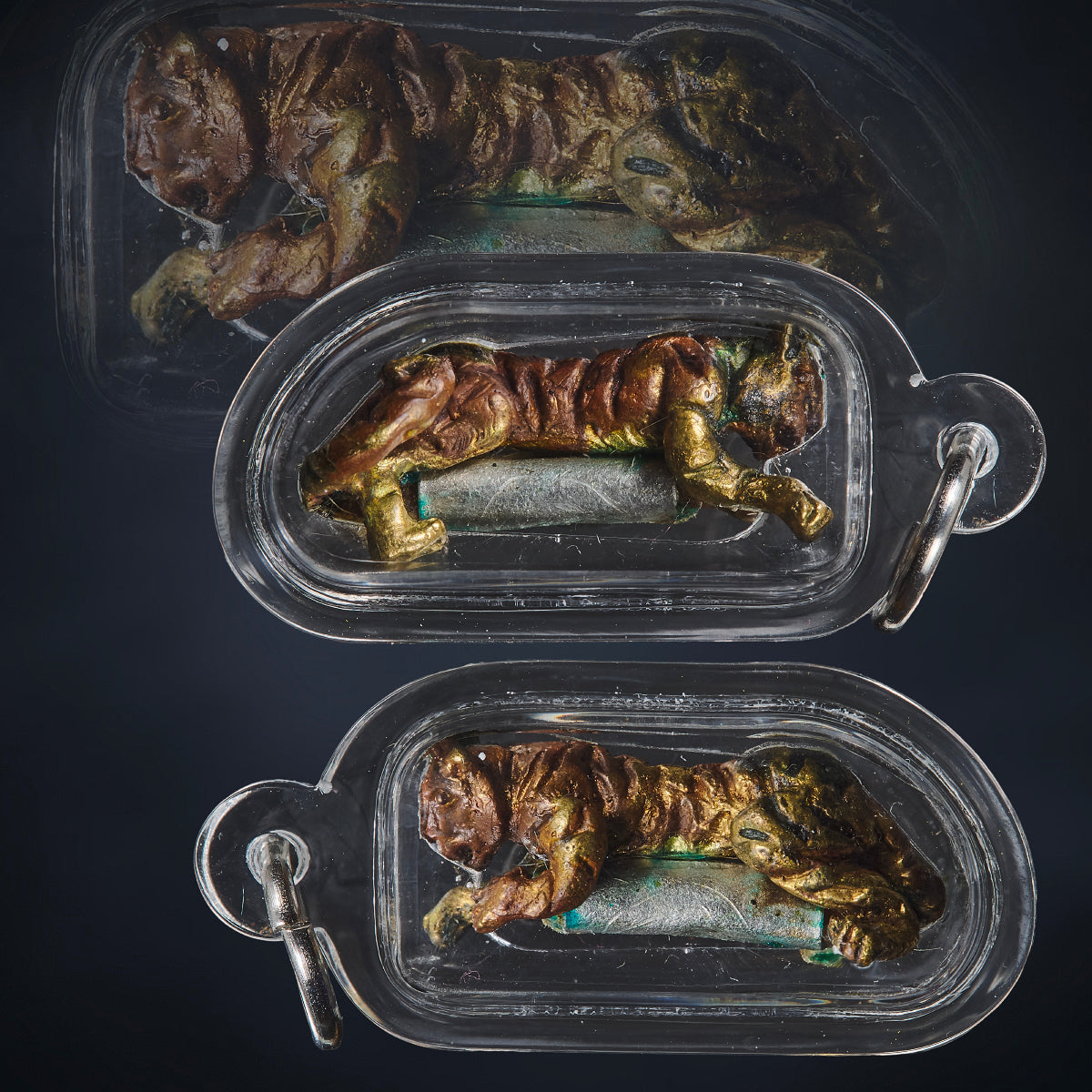
This Suer Roop belongs to a particularly small and interesting batch prepared by Por Sala Tan, combining a cast metal tiger with genuine Suer Kraden tiger relics and additional takrut wicha.
Approximately 100 pieces were originally made.
Rather than treating the metal tiger simply as an image representing strength, Por Sala Tan incorporated actual Suer Kraden materials into the preparation. Within his tradition, these relics formed the deeper spiritual foundation of the artifact, connecting the physical tiger figure with the qualities traditionally associated with tiger wicha.
A specially prepared takrut was also incorporated. Its purpose was particularly important: the naturally fierce character of the tiger was not intended to remain entirely forceful. The takrut introduced Metta Maha Niyom, directing part of that commanding tiger quality towards attraction, goodwill and favourable human relationships.
The result is therefore deliberately balanced — fierce towards hostility, yet favourable towards people whose goodwill matters.
Each piece was individually prepared from sacred materials. Natural differences in the Suer Kraden relics, ritual substances, takruts and finishing mean that individual examples from the batch will vary.
The photographs are representative only. A piece will be selected at random, and the amulet supplied may differ from the exact piece shown in the images.
Personal Experiences Shared by Luksits
This particular batch developed a strong reputation among luksits for dealing with hidden hostility and rivalry.
Owners traditionally carried the Suer Roop when they felt that someone was attempting to undermine them indirectly — what today might be described as backstabbing, workplace politics, sabotage or competitors working behind the scenes.
Rather than encouraging direct confrontation, the tiger was regarded as establishing a stronger protective presence around the owner.
The Metta side of the piece was equally important.
Some luksits described difficult people becoming easier to communicate with, while relationships that had previously been tense became more cooperative. In traditional interpretation, the takrut helps redirect some of the tiger's fierce energy into Metta and attraction, so that influence can sometimes achieve what confrontation cannot.
There are also unusual accounts connected with this batch.
Some owners reported vivid experiences while sleeping, including the impression of hearing a tiger growl or sensing a tiger-like presence nearby. These experiences were interpreted by those devotees as signs of the Suer essence associated with the artifact.
Summary
This Suer Roop was produced in a limited batch of approximately 100 pieces by Por Sala Tan.
The metal tiger was prepared with genuine Suer Kraden tiger relics, giving the artifact a direct material connection with traditional tiger wicha rather than relying upon tiger imagery alone.
Por Sala Tan further incorporated a takrut intended to transform and balance the fierce quality of the tiger with Metta Maha Niyom.
The completed artifact therefore serves two complementary purposes.
Towards hostility, rivalry and harmful intentions, it is traditionally regarded as protective, commanding and difficult to overcome.
Towards customers, colleagues, supporters and useful connections, it emphasises Metta, attraction, influence and smoother relationships.
Its principal traditional qualities are therefore protection, Maha Amnaj, Choke Lap, Metta Maha Niyom, influence and competitive resilience.
Historical Background
Tiger wicha has long occupied a distinctive place within Thai and especially Northern spiritual traditions.
The tiger represents fearlessness, territorial authority, instinct and survival. Unlike gentler forms of Metta wicha, tiger practice traditionally concerns the ability to establish one's position and prevent others from easily dominating or harming the practitioner.
Por Sala Tan's Suer Roop follows this tradition but was prepared with a particularly practical purpose.
Its protective function is comparable in some respects to his Wua Tanu work: guarding against concealed hostility and helping stabilise an environment when harmful intentions are directed towards the owner.
The tiger, however, introduces a different character.
Suer wicha carries Maha Amnaj and commanding presence, while Suer Kraden materials were particularly valued within Por Sala Tan's practice for combining protective force with auspicious qualities.
By adding a Metta takrut, Por Sala Tan created something more adaptable than a purely fierce protective object.
Origins of the Materials
The physical foundation is the metal Suer Roop, formed into a compact representation of the tiger.
Por Sala Tan incorporated genuine Suer Kraden relic materials into the batch. Within the traditional understanding of the artifact, these materials provide the underlying tiger essence upon which the subsequent ritual work was built.
The tiger relic represents the fierce aspect — authority, territorial protection, courage and resistance against opposition.
A specially prepared takrut provides the complementary element.
Rather than strengthening aggression further, this takrut was directed towards Metta Maha Niyom, charm and favourable interpersonal influence.
Together, the relic and takrut form the essential balance of the piece: Suer for strength and protection; Metta for attraction and cooperation.
Ritual
After the metal tigers and Suer Kraden materials had been prepared, the batch underwent an extended process of blessing.
An interesting part of the history concerns what happened during this consecration journey.
According to accounts preserved with the batch, several monks and holy men who encountered the pieces were said to have recognised or sensed the tiger character associated with them before being formally told about the materials.
This attracted considerable interest.
Some monks requested examples for their own use, while other pieces were taken or allocated during the different stages of blessing.
Although approximately 100 Suer Roop were originally prepared, only around 20 eventually returned to Fang with Por Sala Tan after the consecration journey.
This relatively small number returning to Fang became part of the story and reputation surrounding the batch.
Blessings and Effects
The strongest traditional association is protection against concealed hostility.
This includes people believed to be working against the owner indirectly, attempts at sabotage, malicious intentions and other forms of opposition that may not initially be obvious.
Closely connected is Maha Amnaj — personal authority and the ability to command respect without continually having to assert oneself.
The Suer Kraden aspect is also associated with competitive strength, helping the bearer maintain their position when dealing with rivals or demanding environments.
Yet this is not solely a defensive artifact.
The incorporated takrut brings Metta Maha Niyom, traditionally associated with popularity, goodwill, persuasive influence and smoother relationships.
Another important quality is Choke Lap and opportunity. Within the traditional interpretation surrounding this batch, Suer Kraden carries an auspicious side alongside its protective force, supporting livelihood, favourable openings and progress.
The overall intention is therefore not simply to defeat opposition. It is to reduce hostility, strengthen one's position and encourage circumstances and people to become more favourable.
Modern Application
This Suer Roop is particularly suited to the realities of modern professional life.
For an office worker, protection may be interpreted in relation to workplace politics, difficult colleagues, hidden rivalry or someone attempting to damage one's reputation or advancement.
For business owners, the same qualities can be applied to competition, negotiations and situations where others may attempt to interfere with commercial progress.
The Metta takrut becomes especially useful in these environments.
Rather than responding to every rival as an enemy, the traditional intention is that hostile relationships may become less confrontational and potentially more cooperative.
For salespeople, managers and those working directly with clients, the combination of Maha Amnaj and Metta represents authority without losing approachability.
Its compact dimensions also make the Suer Roop convenient for everyday carrying.
Physical Details
A compact metal Suer Roop by Por Sala Tan, belonging to a batch of approximately 100 pieces and prepared with genuine Suer Kraden tiger relic materials. The tiger figure retains areas of gold-toned ritual finishing together with darker aged substances from its preparation. A specially prepared Metta Maha Niyom takrut is incorporated alongside the tiger, with additional natural and ritual materials visible around the figure. This example is preserved within a clear protective casing suitable for daily carrying.
Recommended Pairing
The Suer Roop is already unusually complete because it combines protection, Maha Amnaj, Choke Lap and Metta.
For office workers or those seeking professional advancement, it may traditionally be paired with a Buddha or respected monk amulet associated with Baramee and Metta, placing additional emphasis upon recognition, respect and support from superiors.
For business use, Nang Kwak or Maha Pokasap wicha may complement the tiger by placing greater emphasis upon customers, repeat business and accumulation of wealth.
Personal Notes
One of the most interesting details surrounding this Suer Roop is what happened after the batch was made.
Por Sala Tan originally prepared approximately 100 pieces, incorporating genuine Suer Kraden relics and the specially prepared Metta takrut.
During the subsequent consecration journey, however, the pieces attracted considerable attention. Accounts preserved among luksits state that certain monks and holy men appeared to recognise the tiger quality of the artifacts quickly, and a number requested pieces for themselves.
By the time Por Sala Tan returned to Fang, only around 20 of the original 100 remained.
That history gives the surviving Fang pieces an additional connection with the journey of the batch.
More importantly, the construction illustrates an aspect of Por Sala Tan's work that appears repeatedly across his tiger artifacts: he did not necessarily regard fierceness alone as the most useful form of power.
The Suer Kraden provides the tiger's authority, courage and protective character. The takrut redirects part of that force towards Metta, attraction and influence.
For everyday life, that balance is perhaps the defining character of this Suer Roop — strong enough to discourage those working against you, yet carrying enough Metta to turn difficult relationships towards cooperation whenever possible.
-
Free Shipping for Singapore| $15 Worldwide | $60 USA For Items Below $350