
OOBThaiAmulets
Por Sala Tan
Por Sala Tan
Couldn't load pickup availability
PST06
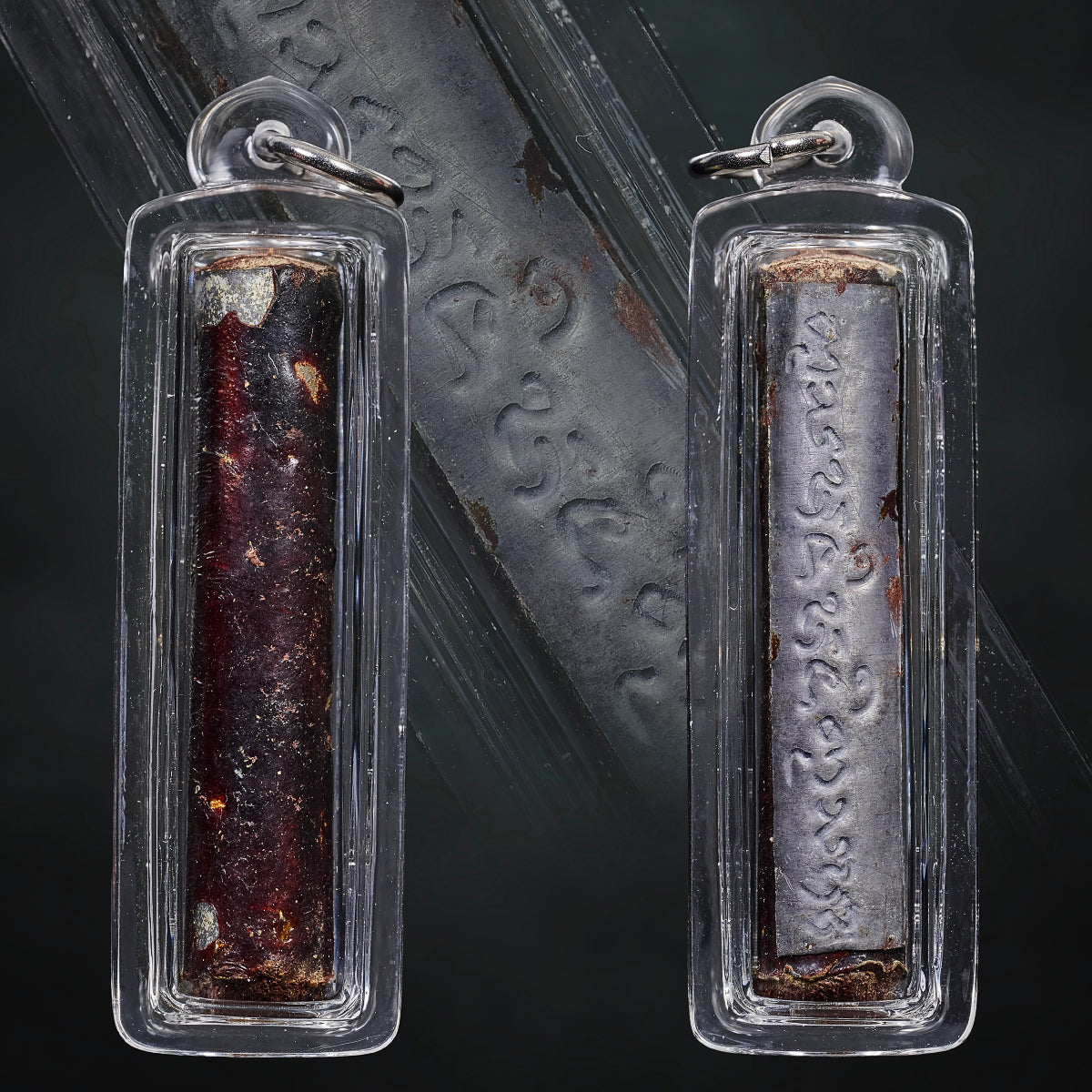
Takrut Saneh Thao Graduk
Takrut of Bone-Ash Attraction
Por Sala Tan
2 Inches
Barang Artifact
Individual Craftsmanship
The photographs are representative only. A piece will be selected at random, and the amulet supplied may differ from the exact piece shown in the images.
Each takrut was individually filled, prepared and sealed by hand. Natural differences in the cremation materials, wax and finishing give every artifact its own individual character.
Personal Experiences Shared by Luksits
Among Por Sala Tan's spirit-oriented artifacts, this type of takrut is particularly associated with Saneh, wish granting, luck and wealth fetching.
Luksits have spoken about people becoming warmer or more receptive towards them, conversations opening more easily and situations that had previously remained stagnant beginning to move.
For those involved in business, experiences are sometimes described through unexpected enquiries, returning customers, improved customer response or opportunities appearing at useful moments.
The Saneh aspect is especially important to the identity of this takrut. It is traditionally sought for personal attraction and presence, but may also be applied more broadly to sales, customer relationships, negotiations and situations where being favourably received matters.
Other luksits approach the takrut with a particular wish, maintaining a respectful connection while asking for assistance with an important personal or financial matter.
These remain personal experiences rather than guaranteed outcomes, but they reflect the traditional purposes for which the takrut was prepared.
Summary
Takrut Saneh Thao Graduk may be understood as the “Takrut of Bone-Ash Attraction.”
This example was prepared by Por Sala Tan following the cremation of a woman who had died in a serious traffic accident.
Por Sala Tan had originally been called to a nearby temple when difficulties arose during the cremation and the spiritual presence associated with the deceased was believed to remain unsettled. He performed the necessary rites to appease the spirit and sought permission to retain selected materials for sacred preparation.
These materials were subsequently combined into Phong Prai Nur Hom, including cremation-associated Nam Man Prai, crushed bone fragments, ashes, hair and teeth.
The mixture was placed inside the takrut before the exterior was coated with Burmese wax mixed with Tid Jai.
Its principal traditional qualities are Saneh, wish granting, Choke Lap and wealth fetching.
Historical Background
Takrut are among the most adaptable forms of sacred objects found within Thai wiccha. Their purpose depends upon the inscriptions, ingredients, lineage and ritual methods of the practitioner who prepares them.
Some takruts are predominantly Buddhist and protective, while others belong to older metta, Saneh, animist or spirit-oriented traditions.
The name Takrut Saneh Thao Graduk directly reflects the character of this piece. Saneh refers to attraction or personal magnetism, while Thao Graduk refers to bone ash or cremated bone material.
Within spirit-oriented Barang practice, Graduk Pii and cremation materials establish a direct connection with the deceased. Such materials are subsequently prepared and consecrated according to the intended wiccha.
What makes this example particularly distinctive is that its principal spirit-associated ingredients came from the same individual.
Origins of the Materials
Por Sala Tan was asked to assist at a nearby temple during the cremation of a woman who had died following a serious traffic accident.
During the ceremony, the monks experienced difficulty with what was regarded as an unsettled spiritual presence. Por Sala Tan was called to assist and performed rites intended to calm and appease the deceased so that the cremation could proceed properly.
According to the history accompanying the takrut, Por Sala Tan then sought permission to retain selected remains and invite the spiritual presence to assist future keepers through the artifacts he would prepare.
After the cremation, he collected suitable materials for this purpose.
These included bone fragments, cremation ashes, hair, teeth and Nam Man Prai associated with the cremation.
Rather than combining unrelated cemetery ingredients, these materials retained a direct association with the same deceased woman.
Ritual
The collected materials were processed into Phong Prai Nur Hom.
Bone fragments were crushed together with the remaining ashes, while hair and teeth were incorporated into the preparation. Nam Man Prai associated with the cremation was then combined with these materials to form the spirit-oriented mixture placed within the takrut.
After filling, the takrut was coated with traditional Burmese wax.
Tid Jai was mixed into this wax, creating another ritual layer around the filled takrut.
Por Sala Tan explained that the importance of the preparation lay not merely in inviting a spiritual presence. The artifact contained multiple physical materials belonging to the same woman, creating what he regarded as a particularly direct connection between the spirit and the takrut.
Blessings and Effects
The defining quality of Takrut Saneh Thao Graduk is Saneh — attraction and personal magnetism.
It is traditionally sought for being noticed, remembered and received more favourably. In business or sales, the same quality may be directed towards customer attraction, smoother conversations and stronger interpersonal response.
The takrut is also strongly associated with wish granting. A keeper may direct a sincere request towards a particular opportunity, obstacle or personal matter.
Choke Lap represents unexpected luck — favourable circumstances, useful introductions or opportunities appearing without being planned.
Its wealth-fetching aspect is directed towards improving the movement of livelihood and resources, making the piece particularly relevant to those involved in business, sales or commission-based work.
Together, these qualities create a concentrated traditional purpose: attract goodwill, open opportunities, encourage luck and assist with personal wishes.
Modern Application
Takrut Saneh Thao Graduk is particularly suited to those whose livelihood depends upon people and opportunity.
Business owners may carry it for customer attraction and improved business movement. Those involved in sales, networking or negotiations may value its Saneh qualities for personal presence and favourable reception.
It may also be carried when pursuing an important personal wish or during a period when circumstances have become stagnant and the keeper is seeking greater movement and opportunity.
Because of its strongly spirit-oriented construction, this piece is best understood within Por Sala Tan's Barang wiccha, rather than as a conventional Buddhist takrut.
Physical Details
Takrut Saneh Thao Graduk is a spirit-oriented takrut prepared by Por Sala Tan and traditionally understood as a “Takrut of Bone-Ash Attraction.”
The interior contains Phong Prai Nur Hom, prepared from Nam Man Prai associated with the cremation together with crushed bone fragments, ashes, hair and teeth from the same deceased woman. The exterior was finished with traditional Burmese wax mixed with Tid Jai.
Its key traditional purposes are Saneh, wish granting, Choke Lap and wealth fetching.
Recommended Pairing
This is already a concentrated artifact for Saneh, luck, wealth fetching and wish granting, and may comfortably be carried on its own.
For business use, it may be paired with an artifact associated with baramee or wealth retention. The Takrut Saneh Thao Graduk supports attraction and incoming opportunities, while the accompanying piece provides authority or stability.
For general daily wear, a Buddha, monk or Lersi artifact associated with protection and baramee provides a balanced complementary pairing.
Personal Notes
What distinguishes this takrut is the completeness of its connection to one individual.
Por Sala Tan explained that he did not regard it simply as a spirit-infused takrut. The preparation incorporated many of the available materials associated with the same woman — bone, ash, hair, teeth and cremation-associated Nam Man Prai — before being sealed with Burmese wax containing Tid Jai.
Equally important is how Por Sala Tan obtained these materials. He had first been called to help during the woman's cremation, where he performed rites to appease the unsettled spiritual presence. The materials were retained only afterwards for the creation of sacred artifacts.
This direct sequence — the cremation, Por Sala Tan's intervention, permission, collection of the materials and their eventual preparation into the takrut — is what gives this Takrut Saneh Thao Graduk its distinctive provenance and character.
-
Free Shipping for Singapore| $15 Worldwide | $60 USA For Items Below $350