
OOBThaiAmulets
Por Sala Tan
Por Sala Tan
Couldn't load pickup availability
PST06
Mae Nak Roop
Por Sala Tan
3cm
Barang Artifact
Individual Craftsmanship
Each artifact was individually carved and assembled by hand. The natural form of the relic and the placement of the ritual materials give the piece an unmistakably individual character.
Personal Experiences Shared by Luksits
Mae Nak artifacts are traditionally approached for matters that are often very personal — relationships, attraction, family, protection and the fulfilment of wishes.
Among luksits, the appeal is not limited to romantic attraction. Mae Nak may also be kept when someone needs greater warmth from others, reconciliation after disagreement, assistance with personal requests or protection of those close to them.
For business and everyday dealings, the metta and Saneh aspects are traditionally sought for being remembered, creating a favourable impression and encouraging others to respond with greater goodwill.
The wish-granting takrut incorporated into this particular piece gives it an additional purpose. Rather than being confined to one area of life, the owner may direct sincere personal wishes towards circumstances that matter to them.
Summary
This is an unusual Mae Nak Roop by Por Sala Tan, with its history beginning during the cremation of a woman who had died in a serious traffic accident.
Por Sala Tan was called to assist when difficulties were experienced during the ceremony and the spiritual presence associated with the deceased was believed to remain unsettled.
After performing rites to appease the spirit, Por Sala Tan sought permission to retain selected remains and materials for the creation of sacred artifacts.
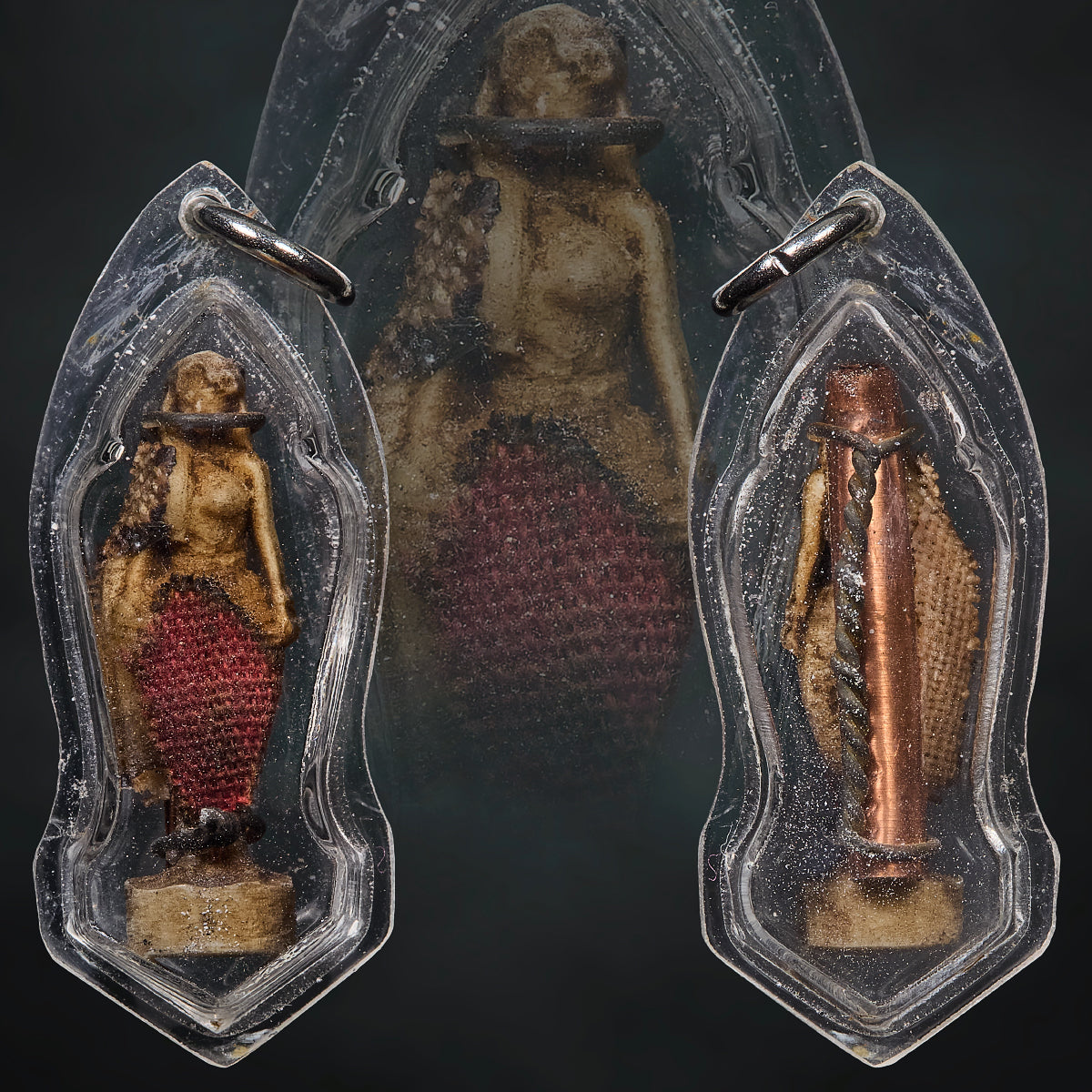
The female figure was subsequently carved directly onto her relic, with unburnt Sai Sin and fragments of clothing from the ceremony incorporated into the piece. A wish-granting takrut was added to the reverse.
Its traditional emphasis is upon metta, Saneh, protection, relationships and assistance with wishes.
Historical Background
Mae Nak is one of the most recognisable female spirit figures within Thai popular culture.
The best-known tradition is Mae Nak Phra Khanong, the legendary woman associated with the Phra Khanong area of Bangkok. In the traditional story, Nak dies while her husband is away yet remains deeply attached to him, continuing to appear as though she were still alive.
Over generations, the story developed into both a ghost story and a story about love, loyalty, motherhood, grief and the difficulty of letting go.
This dual character is important. Mae Nak can be feared for the intensity of her attachment, yet she is also approached as a protective female spirit associated with family, relationships, personal wishes and good fortune.
Within occult artifact traditions, the name and imagery of Mae Nak have consequently developed beyond the historical Phra Khanong legend into a broader female-spirit form.
This Por Sala Tan Mae Nak should therefore not be interpreted as containing or representing the historical Mae Nak Phra Khanong herself. The Mae Nak form provides the spiritual archetype, while the actual provenance of this artifact comes from a different woman whose remains Por Sala Tan encountered during cremation rites.
Origins of the Materials
Por Sala Tan was asked to assist at a nearby temple during the cremation of a woman who had died following a serious traffic accident.
During the ceremony, the monks experienced difficulty settling the spiritual disturbance associated with the deceased. Por Sala Tan was therefore called to assist and performed rites intended to appease the spirit and allow the cremation to continue properly.
According to the history accompanying the artifact, he subsequently sought permission to use selected remains in the creation of sacred objects and to invite the spiritual presence to assist through them.
A portion of the relic was later selected and hand-carved into the standing female form of Mae Nak.
Materials surviving the cremation ceremony were also retained, including unburnt Sai Sin and pieces of the woman's clothing. These were incorporated into the artifact rather than replaced with unrelated ritual materials.
Ritual
The preparation began with rites for the deceased during the cremation itself. Only afterwards were selected materials retained for sacred use.
Por Sala Tan carved the female Mae Nak figure directly onto the relic and incorporated the unburnt Sai Sin and clothing fragments recovered from the ceremony.
A wish-granting takrut was then attached to the reverse as the principal inscribed component.
The spiritual presence associated with the relic was ritually invited to reside with the artifact and assist its eventual keeper, while the takrut provided a defined direction towards personal wishes and favourable outcomes.
Blessings and Effects
Mae Nak is traditionally associated with Maha Saneh and metta, particularly in matters involving human relationships.
Saneh concerns attraction, personal magnetism and being remembered. Metta concerns warmth, goodwill and being favourably received.
The protective aspect reflects Mae Nak's traditional image as a fiercely devoted female guardian — particularly in matters involving the household and those under her care.
The wish-granting takrut broadens the purpose of this particular piece towards personal requests, opportunities and circumstances that the keeper hopes to bring to a favourable conclusion.
Its traditional focus can therefore be understood as attraction supported by devotion, protection and assistance.
Modern Application
Mae Nak Roop may be carried by those seeking support in relationships, social interaction, customer dealings or personal wishes.
For someone in sales or business, its metta and Saneh qualities may be directed towards stronger customer rapport and being remembered favourably.
For personal use, it may be approached for relationship matters, reconciliation, household protection or an important wish.
The deeper symbolism of Mae Nak also carries a useful reminder: devotion can be powerful, but it should be guided by goodwill rather than possession.
Physical Details
A standing Mae Nak Roop hand-carved by Por Sala Tan from the relic of a woman whose cremation rites he assisted with. Unburnt Sai Sin and fragments of her clothing recovered after the ceremony were incorporated into the artifact, together with a wish-granting takrut on the reverse.
Traditional focus: Metta · Maha Saneh · Wish Granting · Relationships · Protection
Category: Barang Artifact
Recommended Pairing
Mae Nak Roop may be carried independently when the main purpose concerns metta, relationships or the fulfilment of a personal wish.
For business use, it may be paired with a wealth artifact, combining Mae Nak's traditional qualities of personal attraction and favourable reception with a stronger emphasis upon financial opportunity.
For general daily wear, a Buddha or monk amulet associated with baramee and protection provides a balanced complementary pairing.
-
Free Shipping for Singapore| $15 Worldwide | $60 USA For Items Below $350