
OOBThaiAmulets
Por Sala Tan
Por Sala Tan
Couldn't load pickup availability
PST05
Wua Tanu
Por Sala Tan
Barang Artifact
Sacred Craftsmanship
This Wua Tanu represents one of the more specialised forms of Por Sala Tan's protective work. Rather than relying upon a single sacred material, its body was prepared from a blended composition of relic ash, sacred earth, spirit-associated material, Bai Lan ash and Chang Gum relics.
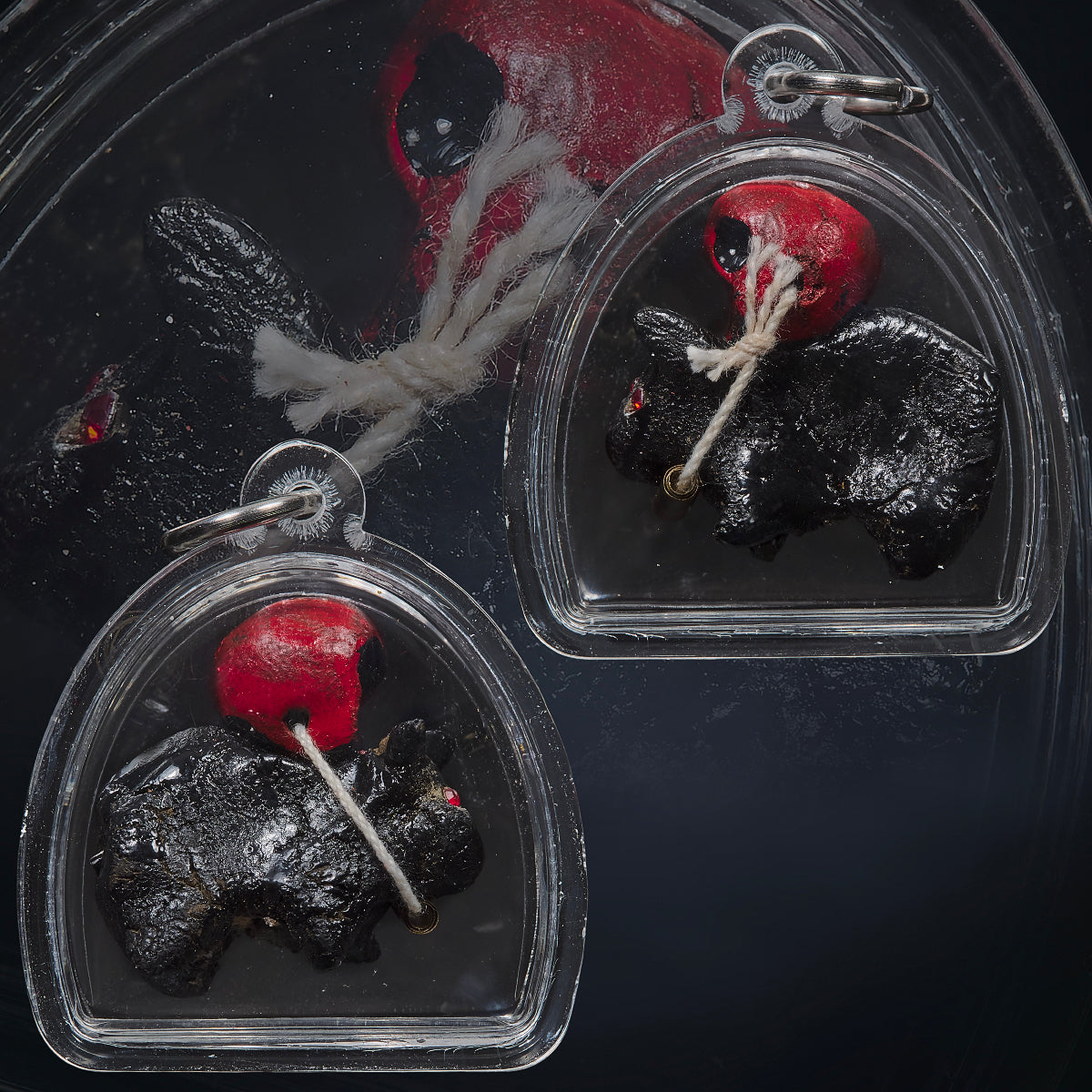
The completed Wua Tanu was then fitted with two distinctive additions: a Jinn Mala skull relic positioned above the body and a takrut connected through a ritual binding associated with bull-neck cord.
Each example was individually prepared and assembled by hand. Natural differences in the blended relic materials, surface texture, bindings, inserts and ritual finishing therefore make every piece unique.
Personal Experiences Shared by Luksits
Among Por Sala Tan's luksits, Wua Tanu pieces are particularly valued during periods involving rivalry, gossip, betrayal or persistent opposition.
Collectors sometimes describe circumstances in which a problem appears to turn away before developing fully. A hostile person may unexpectedly withdraw, damaging gossip may lose momentum, or information concerning someone's true intentions may surface before greater harm can occur.
Others speak of becoming more alert around particular people. They may suddenly feel reluctant to proceed with an agreement, reconsider whom they trust, or discover circumstances that had previously been concealed.
This particular configuration is regarded by collectors as considerably more assertive because of the Jinn Mala skull relic and its specialised binding. Within Por Sala Tan's tradition, its purpose is understood not simply as maintaining a defensive boundary, but as strengthening the reversal aspect of Wua Tanu wicha when harmful intention has already been directed towards the keeper.
Summary
Most protective artifacts are understood primarily through defence: establishing a boundary between the keeper and whatever is approaching them.
This Wua Tanu was prepared with a stronger emphasis on reversal and repercussion.
Its foundation follows Por Sala Tan's blended Wua Tanu formula, incorporating lightning-struck Wua Tanu bone ash, soil from the associated paddy field, fur relics connected with the tree spirit, Bai Lan ashes and Chang Gum relics.
Above the Wua Tanu sits the most visually distinctive component: a skull relic originating from an older Jinn Mala.
A takrut and ritual binding complete the construction.
Within the lineage interpretation, these additional elements transform the character of the artifact from straightforward protection towards a more active form of defensive wicha — traditionally intended to block, trace and reverse hostile influence towards its origin.
Historical Background
Wua Tanu belongs to an established branch of Thai protective wicha associated with guardianship, Klaew Klad, resistance against harmful workings and the control of hostile spiritual influences.
Different masters developed different formulas. Some Wua Tanu were relatively straightforward protective pieces, while others incorporated unusual relics and additional ritual mechanisms for specific purposes.
Por Sala Tan's forest practice produced several such variations.
His more specialised pieces could combine materials carrying contrasting characteristics: forceful relics for reaction, earth materials for grounding, sacred texts for balance, and components associated with Baramee for command.
The artifact shown here belongs to this more complex approach.
Its importance therefore lies not merely in the Wua Tanu form, but in the relationship between the materials assembled around it.
Origins of the Materials
Lightning-Struck Wua Tanu Bone Ash
The principal body incorporates ash associated with a lightning-struck Wua Tanu.
Within Por Sala Tan's wicha, lightning-struck material is valued for its sudden and forceful natural character. Here it forms the reactive foundation of the artifact, traditionally associated with speed, resistance and the rapid breaking of hostile influence.
Paddy-Field Soil
Soil was collected from the paddy-field environment associated with the fallen Wua Tanu material.
Its purpose is grounding.
Where lightning represents sudden movement and force, earth provides stability. Within the construction, the soil symbolically prevents the stronger elements from becoming directionless while connecting the intended workings with practical circumstances.
Fur Relics of the Tree Spirit
Spirit-associated fur relics were incorporated for avoidance and evasive protection.
Their traditional role concerns movement away from danger — allowing the keeper to avoid harmful encounters rather than having to confront every threat directly.
Bai Lan Ashes
Ash from old Bai Lan sacred manuscripts introduces another character entirely.
Bai Lan represents preserved teachings, sacred writing and accumulated ritual knowledge. Its inclusion helps place the stronger Barang components within a disciplined wicha structure rather than relying solely upon aggressive materials.
Chang Gum Relics
Chang Gum relic material was included for Baramee, authority and stability.
The elephant has long carried associations with strength and commanding presence. Within this formula, the material provides weight and steadiness against the faster, more reactive character of the lightning-associated relics.
Jinn Mala Skull Relic
The skull positioned prominently above the Wua Tanu originates from an older Jinn Mala associated with Jinn invocation practice.
This is the component that most clearly distinguishes the artifact from Por Sala Tan's more conventional Wua Tanu preparations.
Within the lineage interpretation, the residual connection of the Jinn Mala is employed for awareness and tracing — identifying the direction from which hostile intention originates so that the Wua Tanu's reversal wicha can act upon it.
It is therefore not merely decorative. It forms part of the specialised ritual structure of the piece.
Takrut & Bull-Neck Binding
A takrut is connected to the construction through a ritual binding associated with cord prepared from the neck ligament of a naturally deceased bull.
The bull represents firmness, endurance and unwillingness to yield under pressure.
The takrut provides the written ritual formula, while the binding establishes and secures its relationship with the principal relic assembly.
Ritual
Por Sala Tan's preparation required the individual materials to be brought into balance before the completed artifact could be worked as a single system.
The lightning-associated material established reaction and force. Earth provided grounding. Spirit-associated relics supported avoidance, while Bai Lan ash contributed the stabilising influence of sacred knowledge. Chang Gum strengthened Baramee and command.
The Jinn Mala skull relic was then incorporated as the specialised upper component.
Rather than leaving these elements to operate independently, the completed construction was brought together through kata, meditation, binding and consecration.
The objective was protective first: hostile influence should not be allowed to settle upon the keeper.
Its secondary principle was reversal.
Within this understanding, "return to sender" does not mean initiating harm against an uninvolved person. It refers to the traditional idea that deliberately directed harmful influence is refused, broken and returned towards its point of origin rather than absorbed by the keeper.
Blessings and Effects
The principal traditional applications centre upon protection, Klaew Klad, reversal and resistance to hostile wicha.
It is particularly associated with situations involving concealed hostility: betrayal, damaging gossip, backstabbing, manipulation, envy or competition occurring behind the keeper's awareness.
The Jinn-related component adds an emphasis on awareness and detection, while the Wua Tanu provides the defensive and reversing foundation.
Traditional applications therefore include:
- protection against hostile spiritual influence;
- Klaew Klad and avoidance of dangerous circumstances;
- breaking persistent negative conditions;
- awareness of concealed hostility or betrayal;
- resistance to gossip, sabotage and malicious intention;
- reversal or return-to-sender wicha;
- stronger personal boundaries;
- Baramee and command in difficult environments;
- balancing strong Prai or Jinn-associated artifacts.
Its character is consequently more assertive than an ordinary everyday protective piece.
Modern Application
In contemporary use, this Wua Tanu is particularly relevant to people operating within highly competitive or politically complicated environments.
A business owner facing hidden rivalry may value its traditional association with detecting and resisting sabotage. A manager or senior professional may relate more strongly to its aspects of authority, boundaries and protection against damaging interpersonal networks.
It may also appeal to practitioners already carrying Prai, Jinn or strong Saneh artifacts, where Wua Tanu provides a firmer protective counterbalance.
The more useful interpretation is not to carry the piece with constant thoughts of enemies. Its traditional role is defensive: maintain one's boundary, remain aware, and prevent the harmful intentions of others from gaining a foothold.
Physical Details
This is a compact, individually prepared Wua Tanu by Por Sala Tan, formed as a dark black animal figure with a heavily textured handmade surface. A vivid red-painted skull relic from an older Jinn Mala is positioned directly above the Wua Tanu, creating the most distinctive feature of the construction. A pale ritual cord runs from the skull assembly towards the body, where a small metal takrut is visibly attached. Small red inserts form the eyes of the Wua Tanu, while incised lines and natural irregularities remain visible across the black surface. The complete assembly is preserved within a fitted clear protective casing.
Recommended Pairing
Because this is already a complex Barang artifact, it does not require another aggressive piece beside it.
For balanced daily use, it pairs naturally with a Somdej, Phra Kring or Phra Chaiwat, allowing the Buddha-form amulet to provide the merit-centred foundation while Wua Tanu retains its specialised defensive role.
It may also accompany a Lersi where the keeper wants greater emphasis upon wisdom, judgment and disciplined practice.
For those already using Khun Paen, Saneh, Prai or Jinn pieces, this Wua Tanu can occupy the protective position within the arrangement — attraction and opportunity on one side, boundaries and reversal on the other.
Personal Notes
What makes this Wua Tanu particularly interesting is not simply the number of unusual materials inside it, but the way Por Sala Tan assigned different functions to them.
Lightning provides reaction. Earth provides grounding. The spirit-associated relic supports avoidance. Bai Lan contributes sacred knowledge. Chang Gum establishes Baramee and authority.
Then there is the Jinn Mala skull relic.
Its addition changes the identity of the piece considerably. Instead of being understood purely as a guardian that absorbs or blocks what approaches, the artifact was prepared around the stronger principle that hostile influence should be recognised, prevented from settling, and reversed away from the keeper.
The external takrut and ritual binding reinforce that intention visibly.
For this reason, I regard this as one of the more specialised forms of Por Sala Tan's Wua Tanu work — not merely a protective artifact, but a carefully constructed reversal piece for situations involving betrayal, hidden opposition and deliberately directed harmful influence.
-
Free Shipping for Singapore| $15 Worldwide | $60 USA For Items Below $350