
OOBThaiAmulets
Por Sala Tan
Por Sala Tan
Couldn't load pickup availability
PST10
Utt Ding
Por Sala Tan
1.5 Inches x 1 Inch
Mainstream Artifact
Encased in silver
━━━━━━━━━━━━━━━━━━━━━━━━━━━━━━━━
Sacred Craftsmanship
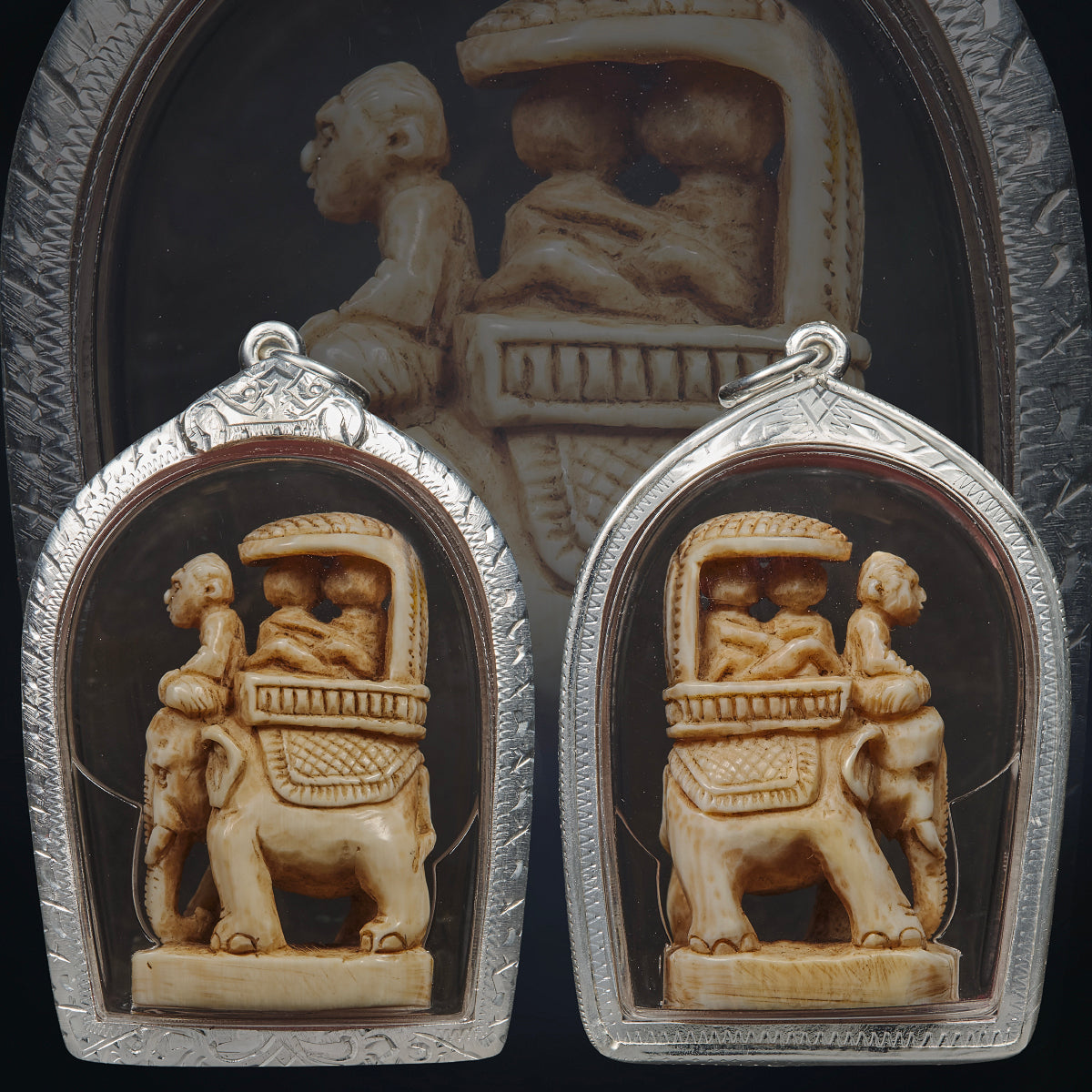
This distinctive Utt Ding is a hand-carved Nga Chang artifact associated with Por Sala Tan, depicting an elephant carrying three figures. A mahout sits at the front guiding the elephant, while a Yin Tong couple is seated together beneath an elaborate howdah at the rear.
Each artifact is individually handmade from carefully prepared sacred materials. Natural variations in texture, colour, carving and form make every piece unique.
Exact piece to be given
━━━━━━━━━━━━━━━━━━━━━━━━━━━━━━━━
Personal Experiences Shared by Luksits
Among collectors familiar with traditional Utt Ding, the elephant-rider forms are particularly appreciated for their associations with goodwill, smoother business dealings and assistance from influential people.
The addition of Yin Tong gives this example a stronger emphasis on attraction and relationships. Devotees commonly associate such imagery with improved communication between partners, greater personal popularity and receiving favourable attention from others.
Collectors involved in business and sales also favour Utt Ding for its traditional association with customer relationships, successful negotiations and opportunities arising through personal connections.
━━━━━━━━━━━━━━━━━━━━━━━━━━━━━━━━
Summary
Utt Ding, also known as U Teng, is a traditional Lanna–Tai Yai talisman associated with Metta Maha Niyom, Maha Saneh, prosperity, protection and personal authority.
This particular example features an unusual three-figure composition, with a mahout guiding the elephant and a Yin Tong couple seated beneath a royal-style howdah.
Unlike simpler Utt Ding forms concerned primarily with travel or commerce, this carving combines the attraction and relationship symbolism of Yin Tong with the prosperity, protection and baramee traditionally associated with Utt Ding.
Its old Nga Chang material, detailed hand carving and reported connection to Por Sala Tan make it a distinctive example of northern talismanic craftsmanship.
━━━━━━━━━━━━━━━━━━━━━━━━━━━━━━━━
Historical Background
Utt Ding belongs to the traditional sacred culture shared between Northern Thailand's Lanna communities and the Tai Yai (Shan) people.
Historical forms include single riders, couples, musicians, sacred figures and passengers travelling upon elephants. Each variation carries different ritual associations.
The Yin Tong form is particularly connected with Maha Saneh, Metta Maha Niyom and harmonious relationships, while the elephant represents strength, safe travel and the ability to overcome obstacles.
The howdah introduces an additional element. Historically used by rulers and nobles, these elevated carriages symbolised rank, prestige and authority.
Traditional Utt Ding legends are also connected with King Uthen Racha, who was said to possess a magical three-stringed instrument capable of winning affection, commanding respect and overcoming opposition without unnecessary conflict.
Another account describes a travelling merchant whose music brought friendship, hospitality and prosperous trade wherever he travelled.
These narratives contributed to Utt Ding's reputation as a talisman of attraction, authority, prosperity and favourable relationships.
Among older Tai Yai families, such artifacts were reportedly treasured as personal possessions, sometimes remaining with their owners even after death.
━━━━━━━━━━━━━━━━━━━━━━━━━━━━━━━━
Origins of the Materials
The principal material is Nga Chang, traditionally valued in Lanna and Tai Yai craftsmanship for its durability, fine carving qualities and symbolic associations with strength, authority and protection.
According to the elderly collector, the original Nga Chang was presented to Por Sala Tan by a villager. Several different sacred forms were subsequently carved from the same material.
This Utt Ding was shaped into an elaborate elephant composition, incorporating a mahout and a Yin Tong couple seated within a covered howdah.
The natural cream colouration and darker deposits within the carved recesses highlight the detailed workmanship, particularly around the elephant's ornamental coverings, the seated figures and the howdah.
The combination of Nga Chang and Yin Tong imagery is especially meaningful within traditional northern Wicha, bringing together material symbolism associated with strength and authority and sacred imagery concerned with attraction and companionship.
━━━━━━━━━━━━━━━━━━━━━━━━━━━━━━━━
Ritual
Within traditional Lanna–Tai Yai practice, Utt Ding is associated with ritual methods intended to encourage Metta, prosperity, protection and favourable relationships.
According to an old Lanna text reportedly translated by the deputy abbot of Wat Lantong, Chiang Mai, Utt Ding is traditionally associated with six principal applications:
-
Metta from humans and devas: Receiving affection, goodwill and spiritual assistance.
-
Smooth undertakings: Reducing obstacles in work, business and personal affairs.
-
Safe travel: Protection and favourable fortune during journeys.
-
Successful commerce: Encouraging customers, sales and commercial opportunities.
-
Support from superiors: Receiving kindness and assistance from influential individuals.
-
Household prosperity: Supporting livelihood, financial stability and family well-being.
The text also describes traditional practices involving water sprinkled over merchandise and preparations containing seven pods of Som Poi before meeting important people.
These methods belong to the wider Utt Ding tradition and are not confirmed as specific instructions from Por Sala Tan for this individual piece. As the carving is made from Nga Chang, soaking it in water is not recommended for conservation reasons.
A traditional Utt Ding katha is:
Om Tin-na Tin-na Hatti Hatti Sattang Jinang Jinang Kab-sa-ya Kab, Om Sawa Hum Hum.
━━━━━━━━━━━━━━━━━━━━━━━━━━━━━━━━
Blessings and Effects
The combination of Utt Ding and Yin Tong is traditionally associated with:
-
Metta Maha Niyom: Popularity, goodwill and favourable treatment from others.
-
Maha Saneh: Romantic attraction, affection and companionship.
-
Yin Tong Harmony: Strengthening relationships, reconciliation and mutual understanding.
-
Baramee and Maha Amnaj: Personal authority, respect and assistance from influential people.
-
Maha Setthi: Prosperity, successful trade and financial opportunities.
-
Klaew Klad: Safe travel and protection against misfortune.
-
Success and Opportunity: Smoother undertakings and overcoming obstacles.
The Yin Tong couple gives this particular Utt Ding a stronger relationship and attraction emphasis than the conventional single-rider form.
━━━━━━━━━━━━━━━━━━━━━━━━━━━━━━━━
Modern Application
This three-rider Utt Ding is particularly suited to individuals whose daily lives involve relationships, negotiation, commerce and leadership.
For business owners and sales professionals, its traditional associations with Metta and prosperity align with customer attraction, smoother communication and favourable commercial dealings.
For individuals seeking harmonious personal relationships, the Yin Tong imagery represents mutual affection, understanding and companionship.
The royal-style howdah adds a further association with baramee, making the artifact meaningful for professionals who regularly interact with senior management, important clients or influential individuals.
Its combined symbolism offers a balance between personal attraction, harmonious relationships, commercial prosperity and protective authority.
━━━━━━━━━━━━━━━━━━━━━━━━━━━━━━━━
Physical Details
This Utt Ding is a finely detailed, three-dimensional Nga Chang carving depicting an elephant carrying three figures. A mahout is seated at the front, while two Yin Tong figures sit closely together beneath an elevated howdah at the rear. The covered carriage features a curved roof, raised railings and ornamental panels, with a patterned saddle covering extending along the elephant's sides. The elephant stands upon a rectangular base, displaying a lowered trunk, prominent ears and carefully defined legs. The material retains a natural aged cream colour with darker brown deposits within the recessed carvings. The artifact is enclosed within an engraved silver casing with transparent panels, allowing both sides of the carving to remain visible.
━━━━━━━━━━━━━━━━━━━━━━━━━━━━━━━━
Recommended Pairing
Phra Khun Pean: Complements the Yin Tong's traditional Maha Saneh and Metta associations, particularly for attraction, popularity and personal relationships.
Nang Kwak or Phra Sivali: Suitable for individuals seeking to emphasise commercial prosperity, customer attraction and financial opportunities.
Phra Kring or Phra Somdej: Provides a traditional Buddhist foundation associated with baramee, protection and spiritual balance.
The Utt Ding may also be carried independently, as its combination of Yin Tong, elephant and howdah symbolism already encompasses attraction, prosperity, authority and protection.
━━━━━━━━━━━━━━━━━━━━━━━━━━━━━━━━
Personal Notes
During my recent visit to Chiang Mai, I had the opportunity to reconnect with several old acquaintances who have collected Por Sala Tan's artifacts for many years.
Through these meetings, I acquired several older Nga Chang carvings, including this unusual three-rider Utt Ding.
According to one elderly collector, the original Nga Chang had been presented to Por Sala Tan by a villager, and several different sacred artifacts were subsequently carved from the material.
What particularly interested me about this piece was the Yin Tong couple seated beneath the howdah. Unlike the more familiar Utt Ding forms depicting a single rider or a couple seated openly upon an elephant, this composition places the couple within a royal-style carriage while a mahout guides the animal.
The arrangement brings together three distinctive elements of northern sacred symbolism: the elephant for strength and protection, the Yin Tong for attraction and companionship, and the howdah for authority and baramee.
An old saying associated with Utt Ding is:
“Go out as one, return as two.”
Although commonly understood in relation to romantic attraction, the expression also carries a broader meaning of returning from one's endeavours with something gained — whether companionship, opportunity, assistance or prosperity.
For me, this piece is particularly interesting for its detailed craftsmanship, uncommon composition and reported connection to Por Sala Tan's older Nga Chang artifacts.
━━━━━━━━━━━━━━━━━━━━━━━━━━━━━━━━
-
SG: Free | Worldwide except USA: $20 Registered | USA: $25 Registered / $100 Courier (SGD)