
OOBThaiAmulets
Por Sala Tan
Por Sala Tan
Couldn't load pickup availability
PST09
Na Hua Chamut
Por Sala Tan
2 Inches
Mainstream Artifact
━━━━━━━━━━━━━━━━━━━━━━━━━━━━━━━━
Sacred Craftsmanship
Among the traditional wealth-oriented Barang creations associated with Por Sala Tan, Na Hua Chamut represents an uncommon form of Northern Thai and Burmese-influenced Wicha, traditionally connected with prosperity, unexpected financial opportunities and the gathering of wealth.
Each artifact was individually handmade from carefully prepared sacred materials. Natural variations in texture, colour, form and arrangement make every piece unique.
Exact piece given
━━━━━━━━━━━━━━━━━━━━━━━━━━━━━━━━
Personal Experiences Shared by Luksits
Among older Northern practitioners, Na Hua Chamut was traditionally appreciated by merchants, plantation owners and individuals seeking additional income beyond their regular livelihoods.
Some Luksits carrying similar wealth-oriented pieces spoke of unexpected business enquiries, introductions to new customers and opportunities arriving through previously unfamiliar contacts.
Others described periods when inactive customers returned, delayed transactions progressed or small supplementary income opportunities appeared alongside their existing businesses.
One recurring observation was that the perceived benefits were not always associated with sudden financial windfalls. Instead, owners frequently described improvements in business movement and the arrival of opportunities through ordinary human interaction.
━━━━━━━━━━━━━━━━━━━━━━━━━━━━━━━━
Summary
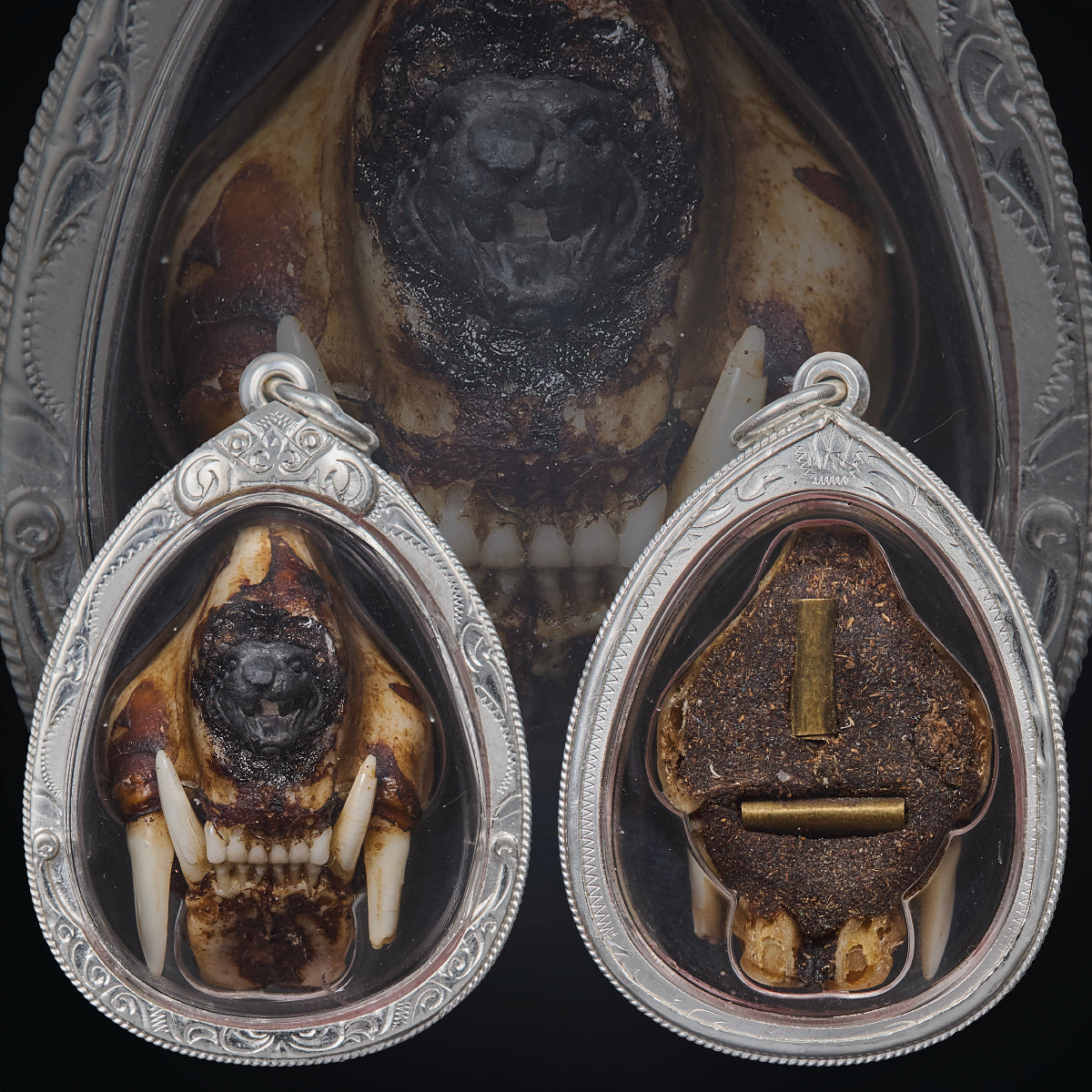
This Na Hua Chamut by Por Sala Tan is a specialised wealth-fetching artifact associated with older Northern Thai and Burmese mountain ritual traditions.
The piece incorporates a preserved civet relic with an embedded tiger-head image upon the forehead, combining the symbolism of resource gathering with authority and protection.
The reverse contains two brass Takruts secured within a sacred compound prepared from fertile harvest-field soil and Por Sala Tan's personal ritual mixture.
Its traditional purpose centres on Maha Larp, unexpected financial opportunities, business prosperity and the attraction of supplementary income.
Consecrated through fire-element practices associated with Lersi Ser Ming Pai, the artifact reflects a traditional approach to wealth Wicha that combines natural relic materials, agricultural symbolism and sacred inscriptions.
━━━━━━━━━━━━━━━━━━━━━━━━━━━━━━━━
Historical Background
Na Hua Chamut belongs to a lesser-known category of wealth-oriented Wicha associated with the mountain communities and trading routes connecting Northern Thailand, Burma, Yunnan and parts of North-East India.
According to oral traditions among older practitioners, similar animal-linked charms were used by village shamans, travelling merchants and ritual specialists whose livelihoods depended upon trade, agriculture and the movement of goods between remote settlements.
During the early to mid-B.E. 2500s, such practices were reportedly familiar within certain Northern border communities.
The civet held particular significance because of its natural ability to locate resources and survive in challenging environments.
Just as the animal could discover food in difficult surroundings, practitioners believed its spiritual qualities could assist an owner in finding financial opportunities that might otherwise remain unnoticed.
Related practices were also associated with older Burmese ritual traditions and certain mountain shamanic communities.
The Hua Chamut form later appeared in the works of several Thai masters, including LP Pinak, whose Palakit Hua Chamut creations became recognised among collectors of unconventional wealth amulets.
Por Sala Tan's interpretation retained a strong connection to older mountain practices, incorporating natural relic materials, sacred compounds, Takruts and fire-element consecration.
━━━━━━━━━━━━━━━━━━━━━━━━━━━━━━━━
Origins of the Materials
The principal component is a preserved civet relic, traditionally associated with the resource-gathering qualities valued in Na Hua Chamut Wicha.
Within Northern mountain communities, such materials were sometimes obtained through farmers and villagers working in remote plantation areas, including coffee-growing regions where civets naturally inhabited the surrounding forests.
Por Sala Tan was known to receive unusual ritual materials from villagers and local practitioners, subsequently preparing them for specific forms of Wicha.
Civet relic
The preserved relic forms the foundation of the artifact.
Its traditional association with instinct, survival and resource gathering made it particularly suitable for wealth-fetching ceremonies.
Tiger-Head Image
A small dark tiger-head image is embedded upon the forehead.
Within traditional tiger Wicha, the tiger represents authority, courage, determination and protection against hostile influences.
Its inclusion complements the wealth-oriented purpose of Na Hua Chamut by introducing a symbolic element of strength and personal authority.
Two Sacred Takruts
The reverse contains two brass Takruts arranged within the prepared ritual compound.
These sacred metal scrolls were incorporated to reinforce the intended Maha Larp and prosperity-related properties of the artifact.
Sacred Ritual Compound
The rear backing consists of soil collected from fertile harvest fields, carefully blended with Por Sala Tan's own sacred mixture.
Within traditional agricultural communities, fertile soil represented abundance, productivity and the ability to generate continuing resources.
Its inclusion was intended to strengthen the symbolism of sustained income, business growth and financial stability.
The compound also serves to secure the Takruts and preserve the original ritual arrangement.
━━━━━━━━━━━━━━━━━━━━━━━━━━━━━━━━
Ritual
The consecration of Na Hua Chamut followed fire-element practices associated with the teachings of Lersi Ser Ming Pai.
Within older Northern mountain Wicha, fire was regarded as an important element for purification, transformation and the activation of ritual materials.
The civet relic was prepared together with the tiger-head image and the wealth-oriented Takruts.
The rear compound, containing fertile harvest-field soil and Por Sala Tan's sacred mixture, was incorporated to connect the artifact symbolically with abundance and the continuous generation of resources.
During consecration, chanting and fire offerings were performed according to traditional wealth-related ritual methods.
Older practitioners believed that certain animal-linked spirits possessed natural tendencies associated with locating, gathering or protecting resources.
The ritual intention was to direct these symbolic qualities towards beneficial outcomes for the owner, particularly business opportunities and livelihood support.
The addition of the tiger-head image further introduced the traditional qualities of courage, authority and protection into the overall composition.
━━━━━━━━━━━━━━━━━━━━━━━━━━━━━━━━
Blessings and Effects
Na Hua Chamut is traditionally associated with Maha Larp and wealth-fetching Wicha, particularly opportunities arising through unexpected channels.
Its principal attributed blessings include:
-
Maha Larp: Attraction of financial fortune and unexpected opportunities.
-
Chok Larp: Support for supplementary income and windfall luck.
-
Business Prosperity: Encouraging customer enquiries, commercial activity and new business opportunities.
-
Opportunity Gathering: Traditionally believed to assist in discovering overlooked sources of income.
-
Wealth Stability: Supporting the symbolism of continued income and financial growth.
-
Maha Amnaj: The tiger-head image adds associations with confidence, authority and protection.
━━━━━━━━━━━━━━━━━━━━━━━━━━━━━━━━
Modern Application
Na Hua Chamut remains relevant to collectors and practitioners who appreciate traditional wealth-oriented Barang Wicha.
Its attributed properties are particularly suited to business owners, traders, sales professionals, property agents and individuals involved in commission-based work.
Those managing several income streams or developing new commercial ventures may also appreciate the symbolism of resource gathering and opportunity discovery.
Some practitioners prefer wearing the artifact during business meetings, negotiations or important commercial activities.
Others keep similar pieces near business counters, office desks or personal altars as part of their devotional practice.
The inclusion of fertile harvest-field soil also makes this particular example meaningful to individuals seeking steady business development rather than relying solely on unexpected financial windfalls.
Beyond its traditional purpose, the piece is of interest to collectors of Northern Thai and Burmese occult artifacts.
The combination of the preserved civet relic, tiger-head image, two Takruts and agricultural ritual materials illustrates a distinctive aspect of Por Sala Tan's traditional craftsmanship.
━━━━━━━━━━━━━━━━━━━━━━━━━━━━━━━━
Physical Details
The artifact measures approximately 2 inches and is housed within a custom engraved silver casing. The front displays a preserved civet relic with its natural teeth and prominent fangs, together with a dark tiger-head image embedded upon the forehead. The reverse contains two brass Takruts secured within a dark sacred compound prepared from fertile harvest-field soil and Por Sala Tan's own ritual mixture. The casing is fitted with a suspension loop for daily wear.
━━━━━━━━━━━━━━━━━━━━━━━━━━━━━━━━
Recommended Pairing
Phra Sivali – Traditionally associated with prosperity, favourable journeys, livelihood support and the continuous arrival of opportunities.
Salika Ling Tong – Complements the wealth-fetching properties through persuasive speech, customer attraction and favourable business relationships.
Phra Khun Pean – Suitable for individuals whose income depends heavily on networking, customer interaction and personal charm.
Phra Somdej or Phra Kring – Provides a traditional Baramee-oriented pairing for those seeking spiritual stability alongside prosperity-related Wicha.
For business owners and sales professionals, combining Na Hua Chamut with a Metta Maha Niyom or Salika amulet is a traditional approach to balancing opportunity gathering with favourable human interaction.
━━━━━━━━━━━━━━━━━━━━━━━━━━━━━━━━
Personal Experience
Over the years, I have found Northern wealth-fetching Barang particularly interesting because the experiences shared by collectors often concern unexpected opportunities rather than immediate financial gains.
During conversations with long-time Luksits, I have heard accounts of business referrals arriving without prior arrangements, customers returning after long periods and introductions that eventually developed into profitable relationships.
These experiences reflect the traditional understanding of Na Hua Chamut as a form of Wicha associated with locating opportunities and maintaining the movement of livelihood.
-
Free Shipping for Singapore| $15 Worldwide | $100 USA All products