
OOBThaiAmulets
Por Sala Tan
Por Sala Tan
Couldn't load pickup availability
PST09
Paya Kao Kam
Por Sala Tan
1.5 Inches
Barang Artifact
━━━━━━━━━━━━━━━━━━━━━━━━━━━━━━━━
Sacred Craftsmanship
Among the specialised Maha Saneh creations of Por Sala Tan, Paya Kao Kam belongs to a lesser-seen category of Yin-based Barang artifacts associated with emotional attraction, personal magnetism and traditional water-element Wicha.
Each piece was individually handmade from carefully prepared sacred materials. Natural variations in texture, colour, form and arrangement make every artifact unique.
Exact piece will be given
━━━━━━━━━━━━━━━━━━━━━━━━━━━━━━━━
Personal Experiences Shared by Luksits
Among older followers of Por Sala Tan, Yin-based Maha Saneh pieces were frequently discussed for their associations with attraction, emotional familiarity and favourable social responses.
Some Luksits who carried similar creations during nightlife activities recalled receiving unexpected attention from people they had only recently met.
Others involved in sales and entertainment described situations where customers became friendlier during conversations, returned for subsequent visits or appeared more comfortable engaging with them.
One recurring observation among these accounts was the element of remembrance. Certain users believed that people they had encountered briefly were more inclined to contact them again or continue conversations after their initial meeting.
Such experiences were not always dramatic. Many described gradual improvements in social interaction rather than immediate or extraordinary changes.
Personal Experience
Over the years, I have encountered only a small number of Por Sala Tan's stronger Yin-based Maha Saneh creations.
Many were retained by close Luksits who had carried them for considerable periods and were reluctant to release them.
During conversations with these owners, I often noticed that their experiences centred on human relationships rather than financial windfalls or authority.
They spoke about unexpected social attention, people becoming more approachable and acquaintances reconnecting after long periods without contact.
━━━━━━━━━━━━━━━━━━━━━━━━━━━━━━━━
Summary
This Paya Kao Kam is an uncommon Maha Saneh artifact associated with Por Sala Tan's water-element and Yin-oriented ritual practices.
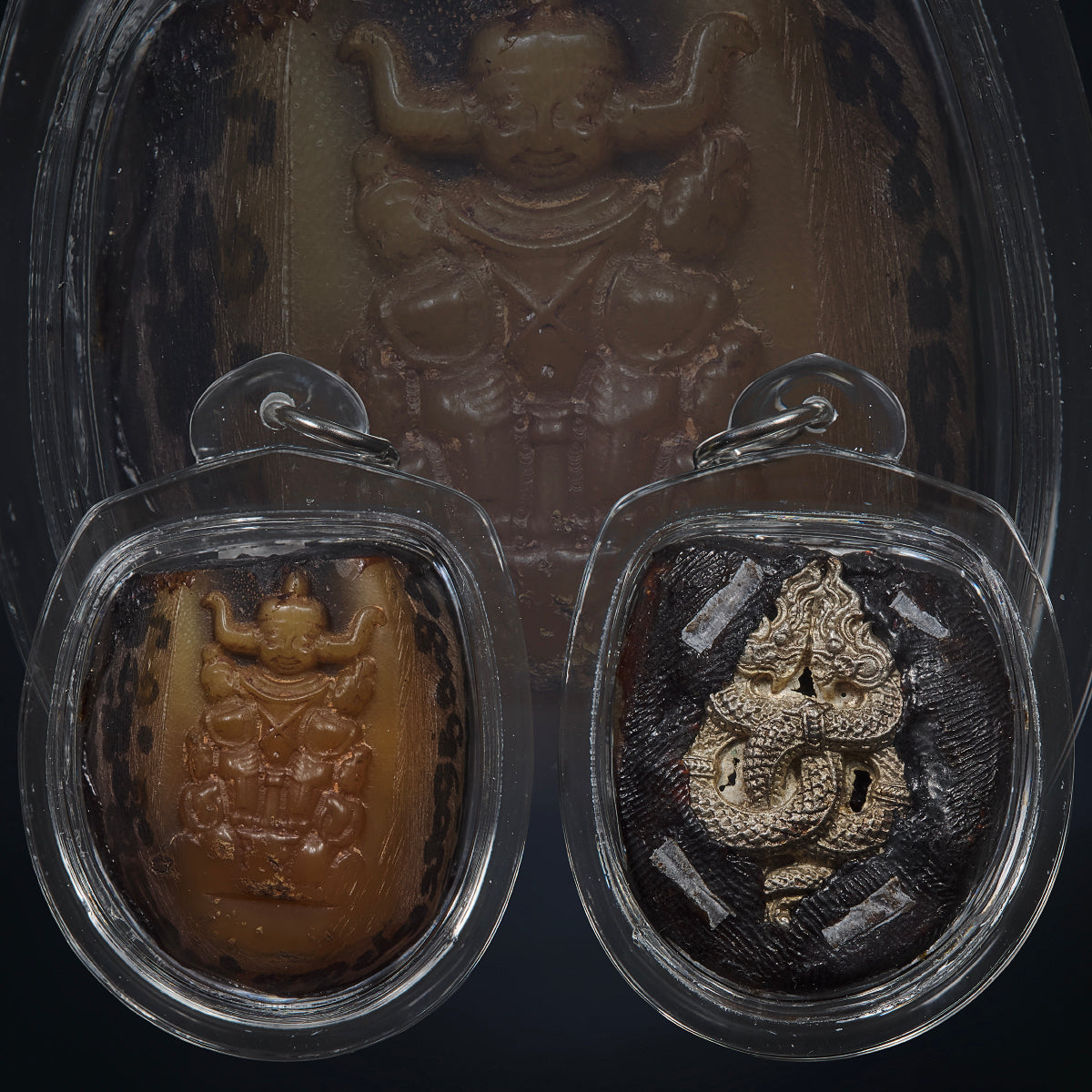
The front depicts a seated Paya Kao Kam, while the reverse contains a sacred serpent emblem, four Takruts, Phra Ngan-related components and layered ritual materials sealed within a black compound.
The piece was created with a concentrated emphasis on attraction, emotional receptiveness, personal magnetism and interpersonal influence.
Unlike general-purpose amulets, its traditional purpose is highly specialised towards Maha Saneh.
Its distinctive construction and limited circulation among close Luksits make it an interesting example of Por Sala Tan's lesser-known Barang craftsmanship.
━━━━━━━━━━━━━━━━━━━━━━━━━━━━━━━━
Historical Background
Within older Northern Thai and neighbouring Southeast Asian occult traditions, Maha Saneh Wicha developed into a specialised branch of ritual practice concerned with attraction, affection and human relationships.
While some forms of Wicha emphasised authority, protection or the removal of obstacles, Saneh practices focused more closely on emotional receptiveness, personal charm and interpersonal connections.
Por Sala Tan maintained several approaches to these traditions.
His protective creations frequently incorporated forest-related materials, Lersi practices and authority-oriented ritual methods. In contrast, certain attraction pieces were prepared through water-element ceremonies associated with Yin energy.
Water was traditionally regarded as a symbolic representation of emotional movement, receptiveness and attachment.
Older practitioners believed that carefully selected Yin-related materials could be combined with sacred inscriptions and ritual imagery to strengthen the intended attraction properties.
Paya Kao Kam belonged to this specialised category.
Rather than being produced for widespread distribution, pieces of this nature were generally prepared in small quantities and entrusted to followers familiar with their intended purpose.
Consequently, examples were not commonly encountered outside established collecting circles.
━━━━━━━━━━━━━━━━━━━━━━━━━━━━━━━━
Origins of the Materials
The ritual composition of this Paya Kao Kam draws upon older Yin-based traditions associated with Pii Tai Hong ceremonial practices.
Within such traditions, materials linked to cemetery-related rituals were believed to retain strong spiritual associations with memory, attachment and emotional influence.
Paya Kao Kam Image
The front depicts Paya Kao Kam in a seated ceremonial posture.
Its form was intended to represent the principal attraction-related qualities of the artifact rather than serve as an elaborate decorative carving.
Sacred Serpent Emblem
The reverse contains a prominent serpent emblem.
Within traditional water-element symbolism, serpent imagery is associated with fluidity, emotional movement and the continuity of spiritual influence.
Its inclusion was intended to complement the Maha Saneh properties of the piece.
Four Sacred Takruts
Four Takruts are positioned around the serpent emblem.
These sacred metal scrolls were incorporated to support the intended ritual workings and harmonise the different components within the amulet.
Yin-Based Relic Compounds
The rear is filled with a dark ritual compound containing layered Yin-oriented materials associated with older cemetery-lineage practices.
Additional Phra Ngan components were incorporated to reinforce the attraction-related purpose.
The materials were assembled into a compact composition, with the rear functioning as the principal chamber for the sacred insertions.
━━━━━━━━━━━━━━━━━━━━━━━━━━━━━━━━
Ritual
This Paya Kao Kam underwent a water-element consecration associated with Por Sala Tan's Maha Saneh practices.
Unlike fire-element ceremonies traditionally connected with authority and forceful protection, water-element rituals were concerned with emotional receptiveness, attraction and the movement of human feelings.
Such ceremonies were sometimes conducted during periods selected according to lunar considerations.
The ritual preparation involved assembling the sacred serpent emblem, Takruts and Yin-related materials within the rear of the amulet.
Traditional chanting and invocations were then performed to direct the intended Maha Saneh qualities.
The Takruts served as ritual anchors, while the serpent emblem and additional Phra Ngan components supported the attraction-related symbolism.
According to traditional interpretations, the purpose was to harmonise the various Yin-associated materials rather than rely upon a single ritual component.
The completed artifact was intended for personal attraction, emotional influence and favourable interpersonal connections.
━━━━━━━━━━━━━━━━━━━━━━━━━━━━━━━━
Blessings and Effects
This Paya Kao Kam is primarily associated with Maha Saneh and Yin-based attraction Wicha.
Its traditionally attributed blessings include:
-
Maha Saneh: Enhancing personal charm and romantic attraction.
-
Emotional Magnetism: Encouraging affection, familiarity and emotional receptiveness.
-
Personal Presence: Increasing social attention and approachability.
-
Emotional Remembrance: Traditionally believed to encourage others to remember and reconnect with the wearer.
-
Social Harmony: Supporting smoother conversations and favourable interpersonal relationships.
-
Customer Attraction: Associated with warmer customer interactions and repeat engagement.
━━━━━━━━━━━━━━━━━━━━━━━━━━━━━━━━
Modern Application
This Paya Kao Kam is particularly suited to devotees and collectors who appreciate specialised Maha Saneh traditions.
Its traditional associations may appeal to individuals involved in nightlife, entertainment, hospitality, sales and other professions requiring frequent social interaction.
Those seeking greater personal charm, romantic opportunities or improved confidence during conversations may also appreciate this category of artifact.
The compact size makes it suitable for wearing around the neck or carrying discreetly in a pocket, pouch or bag.
For experienced collectors, its appeal extends beyond everyday use.
The combination of a seated Paya Kao Kam image, sacred serpent emblem, four Takruts and Yin-related ritual compounds represents a distinctive aspect of Por Sala Tan's traditional Barang Wicha.
━━━━━━━━━━━━━━━━━━━━━━━━━━━━━━━━
Physical Details
The amulet is housed within a clear protective casing fitted with a suspension loop. The front features a seated Paya Kao Kam with distinctive outward-curving features and a brown-toned surface. The reverse displays an ornate metallic serpent emblem positioned centrally within a dark ritual compound, surrounded by four sacred Takruts. The compact construction is suitable for daily wear or discreet carrying.
━━━━━━━━━━━━━━━━━━━━━━━━━━━━━━━━
Recommended Pairing
Por Sala Tan Salika Ling Tong – Complements the attraction properties through its traditional associations with persuasive speech, Metta Maha Niyom and social popularity.
Phra Khun Pean – Particularly suitable for collectors interested in romantic attraction, personal charm and harmonious relationships.
For daily use, combining a specialised Maha Saneh piece with an established Baramee or protective amulet remains a common practice among traditional collectors.
━━━━━━━━━━━━━━━━━━━━━━━━━━━━━━━━
-
Free Shipping for Singapore| $15 Worldwide | $100 USA All products