
OOBThaiAmulets
Por Sala Tan
Por Sala Tan
Couldn't load pickup availability
PST09
Salika Ling Thong
Por Sala Tan
B.E. 2550 (2007)
1.5 Inches x 2 Inches
Barang Artifact
━━━━━━━━━━━━━━━━━━━━━━━━━━━━━━━━
Sacred Craftsmanship
This Salika Ling Thong is an uncommon early creation by Por Sala Tan, belonging to a very small handmade batch produced in B.E. 2550. Only a handful of pieces were completed, with each individually prepared, hand-yanted and consecrated during the ceremony.
Each artifact was individually handmade from carefully prepared sacred materials. Natural variations in texture, colour, inscriptions and arrangement make every piece unique.
Exact piece to be given
━━━━━━━━━━━━━━━━━━━━━━━━━━━━━━━━
Personal Experiences Shared by Luksits
Among older followers of Por Sala Tan, Salika-related creations have long been appreciated for their association with persuasive communication, customer attraction and improved interpersonal relationships.
Some Luksits working in sales and customer-facing professions described receiving warmer responses from customers, particularly during conversations that would normally require considerable persuasion.
Others spoke of unfamiliar individuals becoming more approachable, initiating conversations or showing unexpected interest in their products and services.
Within nightlife and entertainment environments, Salika and Yin Tong combinations were particularly valued for their traditional Maha Saneh qualities.
Owners associated these pieces with increased personal charm, easier social interaction and greater attention from people around them.
Rather than dramatic or immediate changes, many experiences centred on subtle improvements in communication — people listening more attentively, becoming friendlier and showing greater willingness to engage.
For business owners, such experiences were often interpreted as favourable conditions for repeat customers, smoother negotiations and stronger working relationships.
Personal Collection Experience
This particular Salika Ling Thong remained in my own collection for many years.
During my earlier Golden Mile days, it occupied a place near my old Barang altar, where I kept several of Por Sala Tan's more specialised Maha Saneh creations.
That period involved frequent customer visits, business discussions and regular interactions with both new and returning collectors.
Although I cannot attribute those experiences directly to any particular artifact, I always appreciated this Salika for its traditional association with smooth communication and favourable relationships.
It was eventually placed into storage during office renovations and spring cleaning, where it remained for some time.
Rediscovering the piece brought back memories of Por Sala Tan's earlier creations, particularly the small personal batches that were never widely circulated.
━━━━━━━━━━━━━━━━━━━━━━━━━━━━━━━━
Summary
The Salika Ling Thong is a limited handmade creation by Por Sala Tan from B.E. 2550, prepared primarily for Maha Saneh, Metta Maha Niyom and persuasive communication.
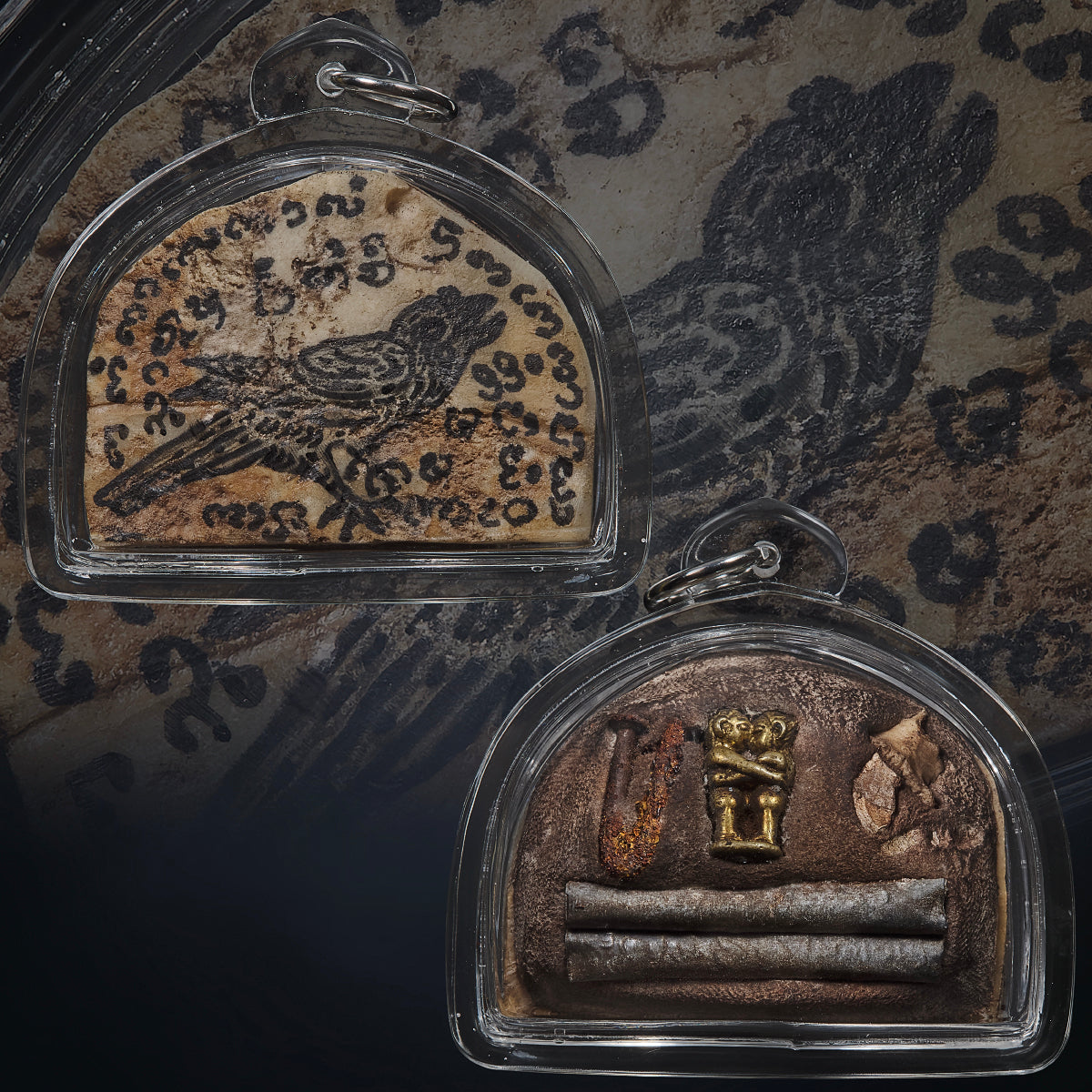
The front features a hand-drawn Salika image with sacred inscriptions upon old Paneang Pii Tai Hong material.
The reverse incorporates seven cemetery soils, a Guman coffin nail, old Paneang Boran, a Takrut and a small Yin Tong image.
Only a handful were produced, with each individually yanted and consecrated rather than prepared through large-scale production.
Its traditional qualities focus on personal attraction, persuasive speech, customer relationships, social popularity and business opportunities.
This particular example carries additional personal significance through its long association with my former Barang altar and private collection.
━━━━━━━━━━━━━━━━━━━━━━━━━━━━━━━━
Historical Background
Within Thai sacred traditions, the Salika is commonly associated with the Golden-Tongued Bird, a symbol of eloquence, persuasion and attractive speech.
The name Salika Ling Thong refers to the Golden-Tongued Salika, whose legendary voice is believed to captivate listeners and encourage favourable responses.
Salika Wicha has traditionally been practised by monks, Ajarns and folk practitioners seeking to cultivate Metta Maha Niyom and Maha Saneh.
Its symbolic qualities extend beyond romantic attraction.
Merchants, travelling traders, performers and individuals whose livelihoods depend upon communication have long valued Salika-related sacred objects for their association with persuasive speech and harmonious relationships.
Within Northern Thai folk traditions, Salika images were sometimes combined with sacred powders, ritual oils, Takruts and other materials intended to strengthen their attraction-related qualities.
Por Sala Tan developed his own interpretations of these traditional methods, often incorporating old Prai materials and specialised ritual substances into compact personal amulets.
During the earlier period of his practice, he produced small batches for close followers who required particular forms of Wicha.
Some sought protection, while others requested sacred objects associated with business attraction, social influence or romantic relationships.
This Salika Ling Thong belongs to that earlier period of specialised handmade creations.
Its production in B.E. 2550 reflects Por Sala Tan's preference for carefully selected materials and individual preparation rather than large commercial releases.
━━━━━━━━━━━━━━━━━━━━━━━━━━━━━━━━
Origins of the Materials
The Salika Ling Thong combines several traditional materials selected for their association with Maha Saneh and Metta Wicha.
Paneang Pii Tai Hong
The main body was prepared from old Paneang Pii Tai Hong, a material associated with deceased-spirit traditions within older Thai folk Wicha.
Such materials were regarded by practitioners as particularly suitable for attraction-related ceremonies because of their traditional connection with Yin spiritual influences.
Seven Cemetery Soils
Soils gathered from seven different cemetery grounds were incorporated into the reverse.
Within traditional Prai Wicha, cemetery soils were used in certain ritual preparations associated with spiritual invocation, attraction and the movement of fortune.
Guman Coffin Nail
A Guman-related coffin nail was included as part of the sacred backing.
In older folk traditions, such objects were associated with spirit-related Wicha and were prepared according to the practitioner's ritual methods.
Old Paneang Boran
Additional old Paneang Boran material was incorporated to complement the principal body and reinforce the traditional Prai-related composition.
Yin Tong Image
A small Yin Tong image was embedded within the reverse.
Yin Tong is traditionally associated with Maha Saneh, mutual attraction, emotional receptiveness and harmonious relationships.
Its inclusion was intended to complement the Salika's qualities of persuasive speech and social popularity.
Sacred Takrut
A Takrut was inserted to harmonise the different ritual materials and strengthen the intended blessings of the piece.
Together, these components reflect Por Sala Tan's approach of combining multiple forms of attraction-related Wicha within a single compact artifact.
━━━━━━━━━━━━━━━━━━━━━━━━━━━━━━━━
Ritual
Each Salika Ling Thong was individually prepared and hand-yanted by Por Sala Tan.
Unlike large consecration ceremonies involving hundreds of amulets, this small batch was assembled one piece at a time.
The Salika image and surrounding inscriptions were prepared before the sacred materials were incorporated into the reverse.
According to the traditional account, the cemetery soils and old relic substances underwent late-night chanting associated with Maha Saneh and Metta Wicha.
The Yin Tong image was included to strengthen attraction and emotional harmony, while the Takrut served as an additional element of ritual empowerment.
Por Sala Tan placed particular importance on balancing the different materials.
Within older Northern folk practice, combinations involving Prai-related substances were traditionally prepared with care to ensure that the various ritual intentions complemented one another.
The completed pieces underwent individual consecration before final sealing.
Only a handful were finished, reflecting the limited availability of suitable materials and the time required for personal preparation.
━━━━━━━━━━━━━━━━━━━━━━━━━━━━━━━━
Blessings and Effects
The Salika Ling Thong is principally associated with Maha Saneh, persuasive speech and attraction through favourable human interaction.
Its traditional attributed blessings include:
-
Maha Saneh: Enhancing personal charm, romantic attraction and social magnetism.
-
Metta Maha Niyom: Encouraging goodwill, popularity and favourable reception from others.
-
Salika Ling Thong: Supporting eloquence, persuasive communication and smoother negotiations.
-
Business and Customer Attraction: Traditionally associated with drawing customers, repeat business and improved sales opportunities.
-
Social and Nightlife Appeal: Encouraging confidence, approachability and positive attention during social gatherings.
-
Relationship Harmony: Softening tense interactions and supporting warmer personal relationships.
The central emphasis is attraction through communication, familiarity and goodwill, particularly in situations involving frequent human interaction.
━━━━━━━━━━━━━━━━━━━━━━━━━━━━━━━━
Modern Application
The Salika Ling Thong is particularly suited to individuals whose daily activities involve communication, relationship-building and regular contact with others.
Business owners, sales professionals and entrepreneurs may appreciate its traditional association with customer attraction, persuasive speech and repeat business.
Those involved in hospitality, entertainment and nightlife may value its Maha Saneh qualities, particularly the symbolism of personal charm and favourable social attention.
It is also relevant to individuals working in marketing, networking, live selling and other professions where communication plays an important role.
Because of its compact size, the piece can be carried discreetly in a pocket, pouch or work bag.
Some devotees prefer to keep Salika-related pieces close during important meetings, business negotiations or social gatherings.
For collectors, this example also represents Por Sala Tan's earlier approach to specialised attraction Wicha, when small handmade batches were prepared according to individual ritual requirements.
━━━━━━━━━━━━━━━━━━━━━━━━━━━━━━━━
Physical Details
A compact, arch-shaped Salika Ling Thong amulet dating to B.E. 2550. The front features a hand-drawn Salika bird surrounded by sacred inscriptions upon old Paneang Pii Tai Hong material. The reverse contains a dark ritual backing with embedded cemetery soils, old Paneang Boran, a Guman coffin nail, a small Yin Tong image and a sacred Takrut. The artifact is enclosed within a transparent protective casing with a suspension loop, suitable for discreet daily carry.
━━━━━━━━━━━━━━━━━━━━━━━━━━━━━━━━
Recommended Pairing
Por Sala Tan Nang Kwak is a natural pairing for business owners and retailers seeking traditional blessings associated with customer attraction, sales and prosperity.
Maha Amnaj or Suer Amulets may be paired by individuals in leadership or competitive environments, combining the commanding symbolism of authority with the softer qualities of Metta and persuasive communication.
━━━━━━━━━━━━━━━━━━━━━━━━━━━━━━━━
Personal Notes
This Salika Ling Thong has been with me for many years and was part of my personal collection during my earlier Golden Mile days.
It was kept near my old Barang altar alongside other specialised creations by Por Sala Tan.
What I appreciate about this piece is the amount of preparation involved despite its relatively small size.
The front carries an individually drawn Salika image, while the reverse incorporates a combination of materials associated with different aspects of Maha Saneh and Metta Wicha.
The seven cemetery soils, old Paneang materials, Guman coffin nail, Yin Tong and Takrut were carefully brought together according to Por Sala Tan's ritual approach.
Only a handful were completed in B.E. 2550.
Unlike more commonly encountered Salika amulets, this example represents an earlier period when Por Sala Tan prepared small batches personally, using materials he considered suitable for a particular spiritual purpose.
During office renovations and spring cleaning, I eventually packed the piece away with several other items from my old collection.
It remained in storage until I came across it again.
For me, its significance lies not only in the traditional attraction blessings but also in its connection with a particular period of my collecting journey.
The combination of early handmade craftsmanship, old Prai-related materials, Salika Ling Thong Wicha and a limited B.E. 2550 production makes this an interesting example of Por Sala Tan's specialised Maha Saneh creations.
━━━━━━━━━━━━━━━━━━━━━━━━━━━━━━━━
-
Free Shipping for Singapore| $15 Worldwide | $100 USA All products