
OOBThaiAmulets
Por Sala Tan
Por Sala Tan
Couldn't load pickup availability
PST09
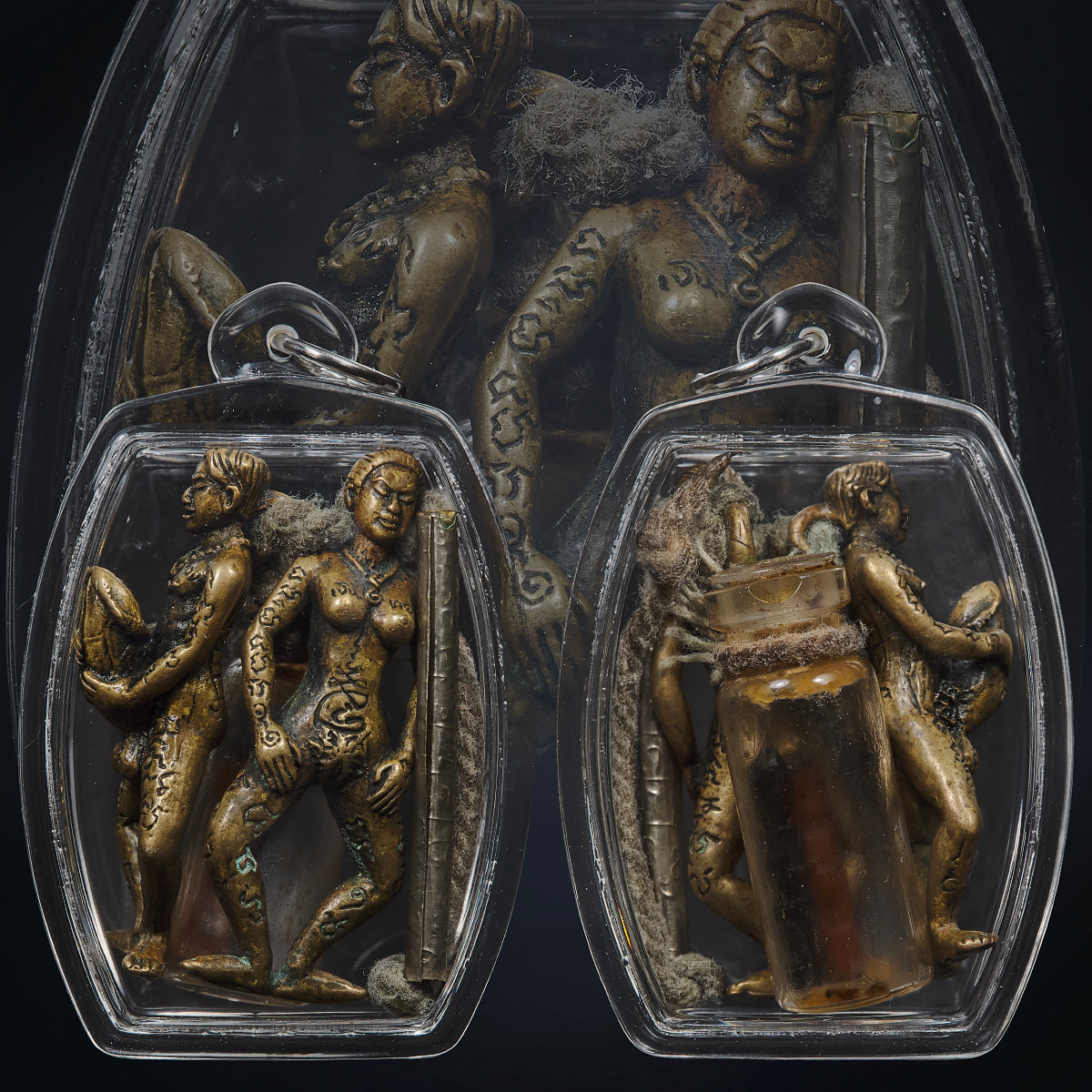
Per Khu Maha Saneh
Por Sala Tan
2 Inches
Mainstream Artifact
━━━━━━━━━━━━━━━━━━━━━━━━━━━━━━━━
Sacred Craftsmanship
This Per Khu Maha Saneh is an uncommon and particularly intense Saneh creation associated with Por Sala Tan, combining the traditional attraction Wicha of an elderly Khmer practitioner with Por Sala Tan's own Metta Maha Niyom practices.
Each artifact was individually assembled from carefully prepared sacred components. Natural variations in casting, colour, surface texture, ritual binding and the arrangement of materials make every piece distinctive.
Exact piece to be given
━━━━━━━━━━━━━━━━━━━━━━━━━━━━━━━━
Personal Experiences Shared by Luksits
The history of this particular Per Khu Maha Saneh is closely connected with an encounter I had with a gentleman who operated several nightlife entertainment establishments in Chiang Mai.
During our conversation, I noticed that he possessed several sacred artifacts associated with Por Sala Tan.
This naturally led to a longer discussion about his experiences with the master's creations, particularly those connected with Metta, Saneh and interpersonal attraction.
He spoke positively of several pieces he had collected over the years and encouraged me to obtain similar artifacts if the opportunity arose.
Among the pieces he recommended was this particular Per Khu Maha Saneh.
He explained that during his younger days, when he frequently enjoyed Chiang Mai's nightlife, this was one of the few artifacts he would deliberately carry whenever he went out.
According to his recollection, the piece had accompanied him through a particularly active period of his social life. He associated it with the attention he received, the people he met and the opportunities that developed through those encounters.
He later became acquainted with a wealthy lady, and that relationship marked an important turning point in his life.
Over time, he moved away from his earlier lifestyle and became involved in operating several nightlife entertainment establishments, eventually becoming the owner of multiple venues.
When recounting these experiences, he spoke of the Per Khu as one of the sacred objects he had particularly valued during his younger years.
However, he also explained that his priorities had changed.
Having established his businesses and entered a different stage of life, he no longer felt the same need to carry such an intense Saneh artifact.
After our discussions and his encouragement to collect Por Sala Tan's older pieces, he eventually agreed to let me have this Per Khu Maha Saneh.
For me, its significance lies not only in the unusual construction and Khmer lineage, but also in the personal history shared by its previous owner.
━━━━━━━━━━━━━━━━━━━━━━━━━━━━━━━━
Summary
This Per Khu Maha Saneh is a specialised attraction artifact combining Ai Per and Mae Per Roop Lor from an elderly Khmer Saneh practitioner with additional Metta Wicha and sacred materials prepared by Por Sala Tan.
The original Khmer practitioner was known for concentrating almost entirely on attraction-related Wicha. According to accounts within his circle, some of his creations were considered so intense that owners eventually returned them after finding the attention they attracted overwhelming.
Por Sala Tan subsequently enhanced the original pair by incorporating a Mai Rak Lup Yong, sacred cord previously used during his Metta Si Peng ceremonies and an additional Takrut.
The resulting artifact brings together the complementary symbolism of male and female attraction, the affectionate qualities traditionally associated with Mai Rak wood and the interpersonal goodwill of Metta Maha Niyom.
It is principally associated with Maha Saneh, romantic attraction, personal magnetism, favourable relationships and opportunities arising through social connections.
Its provenance is further distinguished by its previous ownership by a Chiang Mai nightlife businessman, who personally associated the piece with an important period of his younger life.
━━━━━━━━━━━━━━━━━━━━━━━━━━━━━━━━
Historical Background
Por Sala Tan was a Northern Thai white-robed master whose practices incorporated traditional Lanna folk Wicha, animist beliefs, sacred inscriptions and ritual knowledge received from practitioners across Thailand and neighbouring regions.
His work was not limited to a single tradition. Over the years, he maintained connections with practitioners familiar with Burmese, Khmer and Northern Thai sacred practices, occasionally exchanging knowledge and receiving unusual ritual materials.
This Per Khu Maha Saneh reflects one such connection.
The original Ai Per and Mae Per figures came from an elderly Khmer practitioner whose principal area of expertise was Saneh Wicha.
Within traditional Khmer folk practices, attraction rituals may involve sacred figures, inscriptions, oils, waxes and specially prepared materials intended to strengthen personal magnetism and romantic appeal.
Ai Per represents the male aspect of this tradition, commonly associated with desire, masculine attraction, confidence and romantic pursuit.
Mae Per represents the female aspect, traditionally connected with feminine attraction, affection, sensuality and the ability to draw favourable attention.
When combined as Per Khu, or a paired male-and-female arrangement, the figures symbolise the interaction of complementary attraction forces.
The elderly Khmer practitioner's creations were reputed to possess unusually strong Saneh properties.
Stories circulated among his followers of owners experiencing unexpectedly active romantic lives or receiving more attention than they were comfortable managing.
Some reportedly returned their pieces, describing themselves as being too occupied with the relationships and social situations that followed.
These accounts contributed to the practitioner's reputation within his particular circle of Saneh devotees.
After receiving the pair, Por Sala Tan incorporated elements of his own Metta Wicha, creating a combined artifact that reflected both Khmer attraction practices and Northern Thai ritual traditions.
━━━━━━━━━━━━━━━━━━━━━━━━━━━━━━━━
Origins of the Materials
The principal components of this Per Khu Maha Saneh are the original Ai Per and Mae Per Roop Lor figures received from the elderly Khmer practitioner.
Their cast-metal construction reflects traditional figurative Saneh craftsmanship, with the male and female forms represented individually but brought together as a single ritual composition.
The figures retain visible sacred inscriptions across their bodies, consistent with the symbolic importance of Yant and Kata within traditional Khmer ritual practices.
Mai Rak Lup Yong
An important addition made by Por Sala Tan was the inclusion of a Lup Yong carved from Mai Rak wood.
Mai Rak has longstanding associations with affection and attachment within Thai folk belief, partly through the symbolic significance of the word Rak, meaning love.
Lup Yong traditionally refers to a paired set of small wooden figures, commonly associated with companionship, attraction, goodwill and the drawing together of favourable circumstances.
Within this artifact, the Mai Rak Lup Yong introduces a further element of relational harmony and attraction alongside the stronger Saneh symbolism of Ai Per and Mae Per.
Metta Si Peng Ritual Cord
The binding cord had previously been used during Por Sala Tan's Metta Si Peng blessing ceremonies.
Within traditional ritual practice, Sai Sin or other consecrated cords used during chanting may be preserved and incorporated into later sacred objects.
The cord therefore provides a direct connection to Por Sala Tan's own ceremonial work.
Takrut
A Takrut was added as another ritual component.
Takrut traditionally contain sacred inscriptions and are empowered through Kata recitation. Their purpose depends upon the particular Wicha and inscriptions used.
In this creation, the Takrut forms part of the combined Metta and Saneh construction.
━━━━━━━━━━━━━━━━━━━━━━━━━━━━━━━━
Ritual
The original Ai Per and Mae Per figures were prepared according to the Saneh Wicha of the elderly Khmer practitioner.
His lineage was particularly associated with attraction-based rituals, focusing upon personal magnetism, romantic attention and the interaction between male and female energies.
The original pair was subsequently given to Por Sala Tan, who incorporated his own Metta Wicha and sacred materials.
Rather than treating the figures as a completed standalone object, Por Sala Tan developed them into a combined ritual assembly.
The Mai Rak Lup Yong was incorporated to introduce the symbolic qualities of affection and relational attraction.
The cord previously used during Metta Si Peng ceremonies was then employed to bind the components together, connecting the original Khmer figures with Por Sala Tan's Northern Thai ritual practice.
A Takrut was added as part of the completed construction.
The combination reflects two complementary approaches to attraction Wicha.
The Khmer foundation emphasises the stronger, more direct qualities of Maha Saneh, while Por Sala Tan's Metta Maha Niyom practices are associated with goodwill, favourable reception and interpersonal harmony.
Within traditional belief, combining these approaches was intended to strengthen attraction while supporting more favourable interactions with others.
━━━━━━━━━━━━━━━━━━━━━━━━━━━━━━━━
Blessings and Effects
This Per Khu is traditionally regarded as an intense Maha Saneh artifact, combining Khmer attraction Wicha with Por Sala Tan's Metta practices.
Its principal attributed blessings include:
-
Maha Saneh and Romantic Attraction: Traditionally associated with strengthening personal magnetism, romantic appeal and attention from potential partners.
-
Metta Maha Niyom: Encouraging goodwill, favourable impressions, affection and warmer responses from others.
-
Opposite-Sex Attraction: The Ai Per and Mae Per pairing symbolises complementary male and female energies associated with romantic interest and desire.
-
Social Confidence and Popularity: Supporting personal charm, confidence and favourable interactions in social environments.
-
Business and Customer Attraction: Traditionally valued by individuals in entertainment, hospitality, sales and customer-facing professions.
-
Opportunities Through Relationships: Associated with meeting helpful individuals, forming beneficial connections and receiving assistance through social networks.
━━━━━━━━━━━━━━━━━━━━━━━━━━━━━━━━
Modern Application
This Per Khu Maha Saneh is particularly associated with individuals whose personal or professional lives involve frequent social interaction.
Within traditional Saneh circles, such pieces were often favoured by those involved in nightlife, entertainment, hospitality and other environments where personal presentation, confidence and attraction played an important role.
The previous owner's experience in Chiang Mai provides a direct example of this association.
During his younger years, he carried the artifact when enjoying nightlife and social gatherings. Later, after his circumstances changed and he became involved in operating several entertainment establishments, he no longer felt the same need for such a specialised attraction piece.
For individuals working in modern customer-facing professions, the Metta aspects of the artifact may also carry symbolic relevance.
Business owners, sales professionals and those involved in networking may appreciate its traditional association with favourable impressions, interpersonal warmth and opportunities arising through relationships.
However, the Per Khu's principal character remains strongly connected with Maha Saneh and romantic attraction.
For collectors of Por Sala Tan, the piece is also significant as an example of his collaboration with an elderly Khmer practitioner and his practice of combining different regional Wicha traditions.
━━━━━━━━━━━━━━━━━━━━━━━━━━━━━━━━
Physical Details
A paired Ai Per and Mae Per Roop Lor artifact of aged cast metal, displaying male and female figures with traditional Khmer-style features and sacred inscriptions across their bodies. The figures are bound together with consecrated cord previously used in Por Sala Tan's Metta Si Peng ceremonies, alongside a Mai Rak Lup Yong and an additional Takrut. A small sealed vessel containing a dark ritual preparation is attached to the reverse. The figures display naturally aged bronze-gold tones, darker surface deposits and individual casting characteristics. The complete assembly is preserved within a transparent protective casing with a metal suspension loop.
━━━━━━━━━━━━━━━━━━━━━━━━━━━━━━━━
Recommended Pairing
Por Sala Tan Salika Amulets are suitable companions for those wishing to complement the stronger attraction character of Per Khu with persuasive speech, harmonious communication and favourable social interactions.
Por Sala Tan Nang Kwak may be considered by individuals involved in business, hospitality, entertainment and customer-facing professions, adding a traditional emphasis on customer attraction and commercial opportunities.
Metta Si Peng Creations from Por Sala Tan provide a complementary focus on goodwill, affection, interpersonal harmony and favourable reception from others.
Together, these pieces represent different aspects of attraction, goodwill, communication and favourable opportunities, with Per Khu Maha Saneh remaining the principal Saneh artifact.
━━━━━━━━━━━━━━━━━━━━━━━━━━━━━━━━
Personal Notes
This Per Khu Maha Saneh is particularly memorable because of the circumstances through which I came to acquire it.
I first encountered the previous owner while speaking with him about his businesses in Chiang Mai. During our conversation, I noticed that he possessed several artifacts associated with Por Sala Tan.
What began as a discussion about sacred objects gradually developed into an exchange of personal experiences.
He spoke openly about the pieces he had carried during his younger years and encouraged me to collect certain Por Sala Tan artifacts whenever the opportunity arose.
This Per Khu was among those he recommended.
He explained that he used to carry it specifically when going out to enjoy Chiang Mai's nightlife. At that stage of his life, he regarded it as one of his preferred Saneh pieces.
His circumstances subsequently changed after he met a wealthy lady, and he eventually became the owner of several nightlife entertainment establishments.
By the time we met, he had moved beyond the lifestyle for which he originally carried the artifact.
After discussing its history and his experiences, he eventually agreed to let me have it, explaining that he no longer required such an intense Saneh piece.
Beyond this personal history, the construction itself is unusual.
The original Ai Per and Mae Per figures came from an elderly Khmer practitioner who specialised almost exclusively in Saneh Wicha. His creations were reputed to be so intense that some owners returned them after finding their romantic and social lives excessively demanding.
Por Sala Tan then added his own Metta Wicha, Mai Rak Lup Yong, ritual cord from his Metta Si Peng ceremonies and Takrut.
For collectors familiar with traditional Barang and Saneh practices, the significance of this artifact lies in the combination of an established Khmer Saneh lineage, Por Sala Tan's additional ritual work and the personal history of its former owner.
It represents a specialised Per Khu creation whose character is firmly rooted in Maha Saneh, romantic attraction and the older traditions of Khmer and Northern Thai folk Wicha.
━━━━━━━━━━━━━━━━━━━━━━━━━━━━━━━━
-
Free Shipping for Singapore| $15 Worldwide | $100 USA All products