
OOBThaiAmulets
Por Sala Tan
Por Sala Tan
Couldn't load pickup availability
PST09
Phra Kring
Por Sala Tan
2 Inches
Mainstream Artifact
━━━━━━━━━━━━━━━━━━━━━━━━━━━━━━━━
Sacred Craftsmanship
This Phra Kring is a particularly meaningful sacred object from the personal collection of Por Sala Tan, a Northern Thai white-robed master recognised for his knowledge of traditional Lanna Wicha, spiritual guardianship and the preparation of ritual materials.
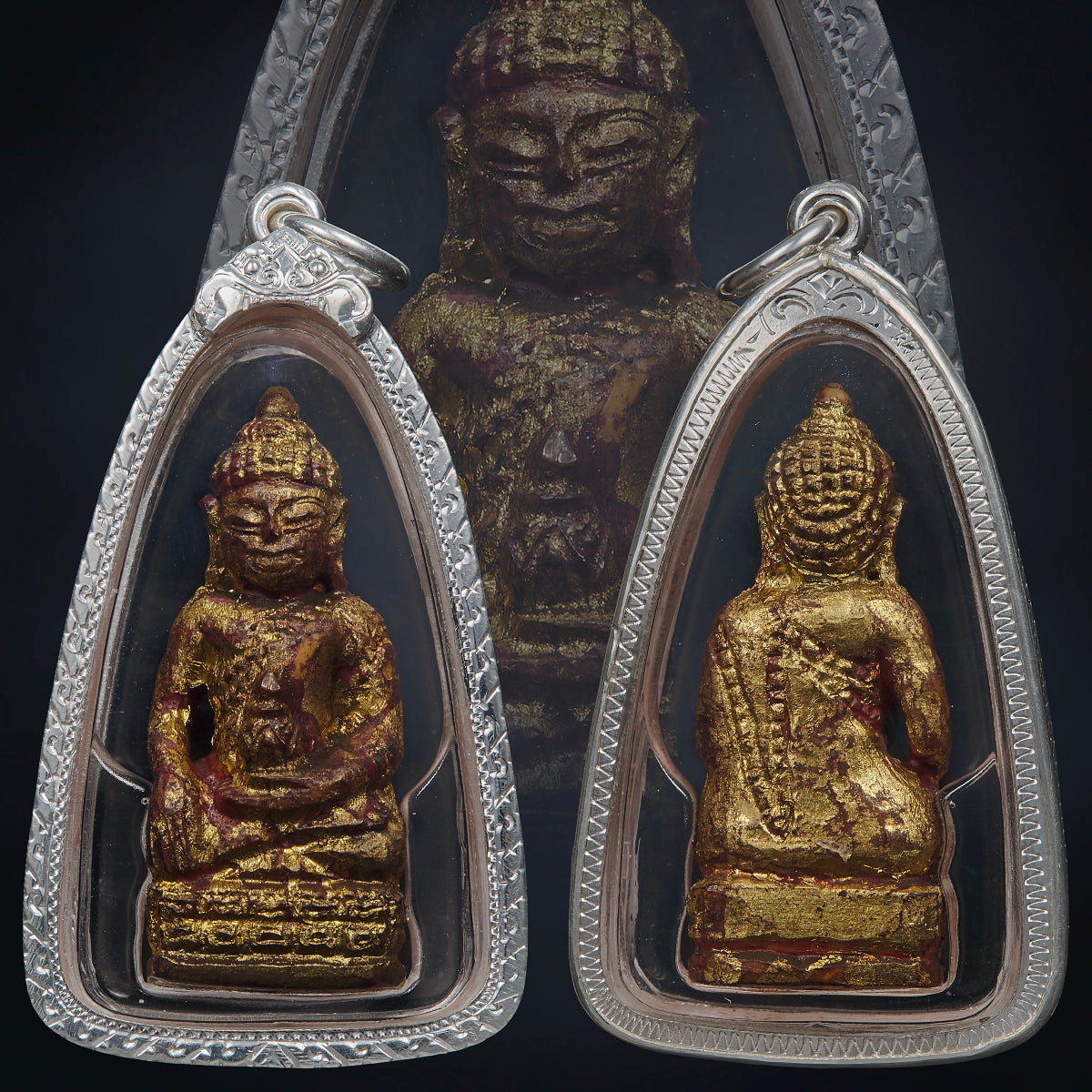
Each piece from the original batch was individually prepared from carefully selected sacred materials. Natural variations in carving, surface texture, colour, gold-leaf accumulation and ritual residue distinguish one example from another.
Exact piece will be given
━━━━━━━━━━━━━━━━━━━━━━━━━━━━━━━━
Personal Experiences Shared by Luksits
Among followers familiar with Por Sala Tan's ritual practices, sacred objects received directly from his teachers were regarded with particular respect.
Unlike pieces created for devotees, these objects often remained within the master's personal collection and were used as spiritual supports during ceremonies requiring concentration, protection and connection to the teacher lineage.
According to accounts preserved within Por Sala Tan's circle, this Phra Kring belonged to a small group of carvings received from his Isaan master.
One example from the batch was worn by Por Sala Tan himself, while the remaining pieces were preserved for ceremonial purposes.
During important blessing ceremonies, particularly those involving highly Yin ritual materials and Nang Mai Phrai traditions, Por Sala Tan would draw upon the Baramee associated with this Phra Kring lineage before commencing his work.
For those familiar with his practices, the importance of the piece was not simply its age or unusual material, but its role as a spiritual anchor connecting him to the teachings and blessings of his master.
Within traditional Wicha circles, such personal ritual objects are often regarded as especially meaningful because they were retained and used by the practitioner rather than produced for general circulation.
The accumulated gold leaf, traces of red ritual substances and naturally aged surface provide a visible record of the object's preparation and preservation.
━━━━━━━━━━━━━━━━━━━━━━━━━━━━━━━━
Summary
This Phra Kring is a personal ritual amulet preserved by Por Sala Tan, originating from a small batch received directly from his Isaan master.
Hand-carved from Nga Chang Gradeng, the figure underwent an extended preparation process involving immersion in red ceremonial wax, followed by approximately three years of preservation within red vermilion powder.
The amulet was subsequently consecrated and retained within Por Sala Tan's personal collection, where it became associated with important blessing ceremonies and traditional Yin-oriented ritual practices.
Its principal significance lies in its direct teacher-lineage connection, accumulated Baramee and role as a spiritual support during ceremonial work.
Unlike conventional Phra Kring collected primarily for general blessings, this example is particularly associated with spiritual authority, protection, ritual balance and the preservation of sacred lineage knowledge.
For collectors of Por Sala Tan's creations, it represents an uncommon personal-use object with a meaningful history extending beyond ordinary amulet production.
━━━━━━━━━━━━━━━━━━━━━━━━━━━━━━━━
Historical Background
Por Sala Tan was a Northern Thai white-robed master whose practices drew upon traditional Lanna folk Wicha, animist beliefs, sacred inscriptions and ritual knowledge transmitted through earlier generations of teachers.
His spiritual education involved connections with different practitioners and traditions, including teachings received from masters outside Northern Thailand.
Among these connections was an Isaan master who bestowed upon him a small batch of Phra Kring carvings.
Within traditional Thai sacred-object culture, receiving an amulet directly from one's teacher carries particular significance. Such objects may represent more than a blessing; they can also symbolise the continuation of knowledge, spiritual responsibility and the relationship between master and disciple.
Phra Kring itself belongs to a longstanding tradition of sacred Buddha images, commonly associated with protection, healing, wellbeing and spiritual blessings.
In conventional Thai Buddhist practice, Phra Kring is frequently connected with Phra Bhaisajyaguru, the Medicine Buddha, and the aspiration to overcome suffering and illness.
However, within certain folk Wicha lineages, individual Phra Kring figures may also serve as ritual supports, particularly when received from respected teachers and incorporated into personal ceremonial practice.
Por Sala Tan's example reflects this latter tradition.
Rather than treating the piece solely as an amulet for everyday carrying, he preserved it as part of his personal ritual collection.
Over the years, it became associated with ceremonies involving sacred materials, spiritual invocations and the management of intense Yin-oriented ritual influences.
Its continued preservation within his collection reflects the importance he placed upon maintaining a connection with the Baramee and teachings of his Isaan master.
━━━━━━━━━━━━━━━━━━━━━━━━━━━━━━━━
Origins of the Materials
The principal material used in this Phra Kring is Nga Chang Gradeng, an old ritual material associated with traditional Southeast Asian sacred-object craftsmanship.
Within certain folk Wicha traditions, such materials were valued for their physical characteristics, rarity and perceived suitability for ritual empowerment.
According to the lineage account, the original carving was prepared through an unusually prolonged process involving two principal ceremonial substances.
Red Ceremonial Wax
The Phra Kring was first immersed in red ceremonial wax for an extended period.
Within traditional folk practices, ritual waxes may be prepared using sacred ingredients and empowered through Kata recitation. They are commonly associated with the preservation of blessings, ritual activation and the preparation of sacred objects.
Red Vermilion Powder
Following its immersion in ceremonial wax, the carving was buried and stored within red vermilion powder for approximately three years.
In traditional ritual contexts, red vermilion is associated with ceremonial marking, spiritual authority and the preparation of certain sacred objects.
The prolonged storage formed part of the preparation process preserved in the account of this particular batch.
Gold Leaf
The surface also displays accumulated gold leaf, reflecting the traditional practice of applying gold to sacred Buddha images as an expression of respect and devotion.
The surviving layers of gold and red coloration contribute to the distinctive aged appearance of the figure.
Together, these materials reflect a prolonged process of ritual preparation rather than conventional decorative finishing.
━━━━━━━━━━━━━━━━━━━━━━━━━━━━━━━━
Ritual
The Phra Kring originated from a small batch consecrated and bestowed upon Por Sala Tan by his Isaan master.
Following receipt of the batch, Por Sala Tan continued to maintain and empower the pieces through his own ritual practices.
One example was worn personally, while this particular Phra Kring remained among the sacred objects used during important ceremonies.
Its principal role was associated with Baramee, spiritual stability and the connection between teacher and disciple.
Before conducting certain ceremonies, particularly those involving highly Yin ritual objects and Nang Mai Phrai traditions, Por Sala Tan would invoke the accumulated blessings associated with this Phra Kring lineage.
Within traditional Wicha, such practices reflect the importance of establishing spiritual authority and maintaining ritual balance before working with materials regarded as spiritually intense.
The Phra Kring therefore served as a symbolic foundation, connecting Por Sala Tan's ceremonial work with the blessings and teachings received from his master.
Its prolonged preparation in red ceremonial wax and vermilion powder further distinguished it from ordinary devotional amulets.
━━━━━━━━━━━━━━━━━━━━━━━━━━━━━━━━
Blessings and Effects
Within Por Sala Tan's lineage, this Phra Kring is primarily associated with spiritual stability, accumulated Baramee and protection during ritual practice.
Its traditional blessings include:
-
Baramee and Spiritual Authority: Strengthening spiritual confidence, personal presence and the blessings associated with the teacher lineage.
-
Protection and Spiritual Stability: Traditionally believed to provide support against harmful influences and disturbances during ritual work.
-
Balancing Yin Influences: Associated with maintaining spiritual composure when working with intense Yin-oriented sacred materials.
-
Concentration and Ritual Focus: Supporting mindfulness, mental clarity and disciplined ceremonial practice.
-
Teacher-Lineage Connection: Preserving the symbolic link between master and disciple and the transmission of sacred Wicha.
-
General Wellbeing: Reflecting the broader Phra Kring tradition of blessings for protection, health and peaceful living.
━━━━━━━━━━━━━━━━━━━━━━━━━━━━━━━━
Modern Application
Today, personal ritual objects associated with respected masters are particularly appreciated by collectors who value provenance, lineage history and traditional ceremonial practices.
Unlike commercially distributed amulets, pieces retained within a master's private collection often carry a different form of historical significance.
They provide insight into the sacred objects a practitioner personally trusted, preserved and incorporated into important ceremonies.
For collectors of Por Sala Tan, this Phra Kring represents a direct connection to his Isaan master and the spiritual teachings that influenced his ritual practice.
The piece may be kept respectfully on a personal altar, displayed alongside other teacher-lineage objects or preserved as part of a collection dedicated to traditional Northern Thai and Isaan Wicha.
Its aged gold leaf and remaining ritual substances should be preserved carefully. Cleaning, polishing or removing surface deposits may damage the original finish and erase evidence of its ceremonial history.
For students of traditional sacred-object culture, the Phra Kring also illustrates how a Buddha image may serve both as an object of devotion and as a personal ritual support within a practitioner's lineage.
━━━━━━━━━━━━━━━━━━━━━━━━━━━━━━━━
Physical Details
A compact seated Phra Kring carved from old Nga Chang Gradeng, displaying a traditional Buddha form with detailed facial features, textured hair and a raised pedestal. The surface retains extensive aged gold leaf, deep red ceremonial wax coloration and traces of vermilion powder from its prolonged ritual preparation. Natural wear and irregularities are visible throughout the carving. The piece is housed within an engraved silver-coloured protective casing with a suspension loop, allowing both the front and reverse of the original figure to remain visible. Its provenance is associated with Por Sala Tan's personal ritual collection and a small batch received from his Isaan master.
━━━━━━━━━━━━━━━━━━━━━━━━━━━━━━━━
Recommended Pairing
Por Sala Tan's Teacher-Lineage Amulets are natural companions for this Phra Kring, particularly sacred objects received from his masters or retained for personal ritual use. Together, they reflect the transmission of Wicha and Baramee across generations.
Lersi Amulets may complement the Phra Kring for devotees interested in spiritual discipline, meditation, protection and traditional teacher-lineage practices.
Phra Pidta provides a complementary emphasis on personal protection, peaceful living and the avoidance of harmful influences.
Traditional Buddhist Amulets associated with meditation and spiritual development may also be kept alongside this piece, creating a collection centred on devotion, stability and the preservation of sacred teachings.
The Phra Kring remains the principal lineage object, with its significance rooted in its history of personal ceremonial use.
━━━━━━━━━━━━━━━━━━━━━━━━━━━━━━━━
Personal Notes
What distinguishes this Phra Kring is not simply the age of the carving or the unusual preparation of its material, but its direct association with Por Sala Tan's personal ritual practice.
The piece originated from his Isaan master and remained among the sacred objects he preserved throughout his years of ceremonial work.
Its preparation was particularly unusual. The extended immersion in red ceremonial wax, followed by approximately three years of storage within vermilion powder, reflects a level of ritual attention seldom encountered in ordinary amulet production.
The accumulated gold leaf and remaining red coloration are important aspects of its character, preserving visible traces of its preparation and subsequent history.
More significantly, Por Sala Tan reportedly relied upon the Baramee associated with this Phra Kring lineage before conducting certain ceremonies involving intense Yin-oriented materials and Nang Mai Phrai practices.
This suggests that the object held a particular place within his personal spiritual foundation.
For collectors familiar with Por Sala Tan's work, sacred objects that he personally retained and incorporated into his rituals offer a different perspective from those created for general distribution.
They provide a closer connection to the master's own practices, the teachers who influenced him and the sacred objects he considered important enough to preserve.
This Phra Kring therefore represents a personal lineage connection, an object of accumulated Baramee and a surviving example of Por Sala Tan's private ritual collection.
━━━━━━━━━━━━━━━━━━━━━━━━━━━━━━━━
-
Free Shipping for Singapore| $15 Worldwide | $100 USA All products