
OOBThaiAmulets
Por Sala Tan
Por Sala Tan
Couldn't load pickup availability
PST09
Meed Mor
Por Sala Tan
Early B.E. 2500
6 Inches
Mainstream Artifact
━━━━━━━━━━━━━━━━━━━━━━━━━━━━
Sacred Craftsmanship
The Meed Mor of Por Sala Tan is a traditional ritual blade created for the removal of obstacles, the correction of persistent misfortune and the restoration of prosperity within households and businesses.
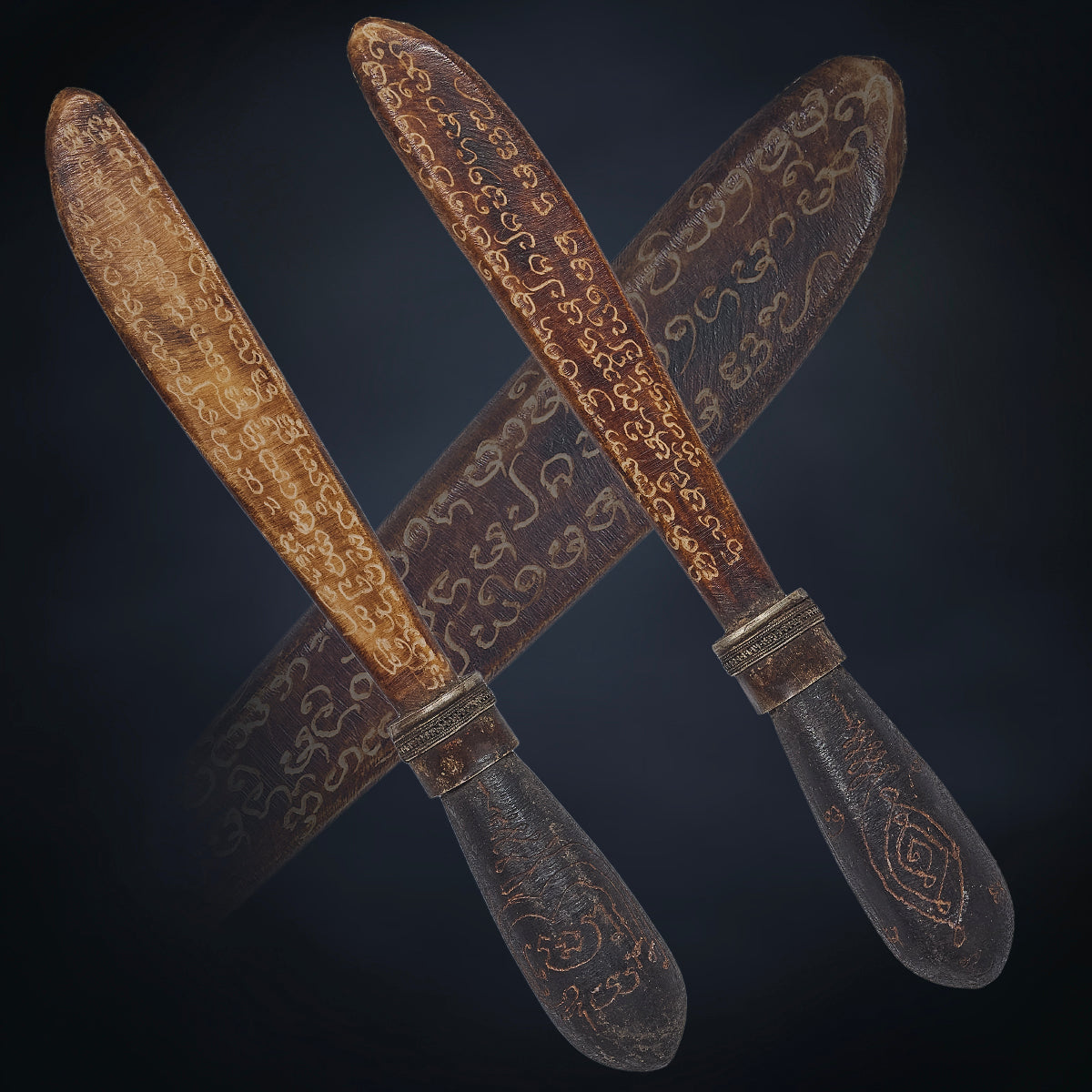
Each Meed Mor was individually crafted from carefully selected sacred materials. Natural variations in colour, texture, grain, inscriptions and surface patina contribute to the unique character of every piece.
Exact Piece will be given
━━━━━━━━━━━━━━━━━━━━━━━━━━━━
Personal Experiences Shared by Luksits
Within Por Sala Tan's lineage, Meed Mor prepared for obstacle removal were traditionally sought by individuals experiencing repeated setbacks in business, employment or family matters.
Some followers described periods when opportunities appeared promising but failed to materialise, negotiations remained unresolved or unexpected difficulties repeatedly disrupted their plans.
Such circumstances were sometimes interpreted as stagnant fortune or the accumulation of unfavourable influences.
Ritual blades of this nature were employed with the intention of removing these obstructions and restoring favourable conditions.
Business owners particularly valued this category of Meed Mor for its association with smoother negotiations, renewed customer activity and the ability to move forward after prolonged difficulties.
The emphasis was not upon obtaining prosperity without effort, but upon removing circumstances believed to prevent one's existing efforts from producing results.
━━━━━━━━━━━━━━━━━━━━━━━━━━━━
Summary
The Meed Mor – Graduk Chang Kraden Boran is a specialised ritual blade associated with Por Sala Tan's traditional Wicha for obstacle removal, correction of misfortune and sustainable prosperity.
Its principal materials are ancient elephant relic material and Mai Payoom wood, with sacred inscriptions prepared by Por Sala Tan and an Isan Lersi.
The principal traditional qualities include:
-
Removal of Obstacles: Clearing persistent difficulties and unfavourable circumstances.
-
Correction of Misfortune: Addressing recurring setbacks and stagnant fortune.
-
Chok Larp: Encouraging favourable opportunities and renewed financial movement.
-
Maha Pokasap: Supporting wealth stability and the preservation of resources.
-
Business Prosperity: Encouraging smoother negotiations, transactions and commercial activity.
-
Household Stability: Supporting a more settled and favourable domestic environment.
The Meed Mor represents a traditional combination of corrective Wicha and prosperity-oriented ritual practice.
━━━━━━━━━━━━━━━━━━━━━━━━━━━━
Historical Background
The Early B.E. 2500 Era
The historical account associated with this Meed Mor places its origins within the early B.E. 2500 period, when many communities in northern Thailand and neighbouring regions experienced economic uncertainty.
During such periods, sacred objects associated with livelihood, prosperity and the removal of misfortune held particular importance among merchants, farmers and households.
Some traditional practitioners concentrated upon Wicha intended to improve the circumstances of entire families rather than providing protection to individuals alone.
The Tradition of Clearing Obstacles
Within Thai-Burmese ritual practice, the Meed Mor is more than a ceremonial blade.
Depending upon its materials and inscriptions, it may be associated with protection, spiritual cleansing, the severing of harmful influences or the removal of persistent obstacles.
This particular example belongs to the corrective tradition, where the symbolic act of cutting represents the removal of conditions obstructing prosperity and progress.
━━━━━━━━━━━━━━━━━━━━━━━━━━━━
Origins of the Materials
Graduk Chang Kraden Boran
The blade was fashioned from Graduk Chang Kraden Boran, an old-generation elephant relic material passed through several custodians before reaching Por Sala Tan.
Within traditional Wicha, elephant relic materials are associated with endurance, strength and the ability to overcome difficult circumstances.
For this Meed Mor, the material was selected specifically for its association with removing persistent misfortune and stagnant conditions.
Mai Payoom
The handle was crafted from Mai Payoom, a wood traditionally connected with prosperity, wealth continuity and the preservation of resources.
Its inclusion complements the corrective function of the blade.
While the Graduk Chang Kraden Boran was intended to remove obstacles, the Mai Payoom was associated with establishing stability and encouraging lasting prosperity.
The combination reflects the traditional principle that removing misfortune should be accompanied by the cultivation of favourable conditions.
━━━━━━━━━━━━━━━━━━━━━━━━━━━━
Ritual
The Meed Mor incorporates two distinct sources of sacred inscription.
Por Sala Tan's Blade Inscriptions
Por Sala Tan personally inscribed the blade with Yant and sacred characters associated with removing misfortune, overcoming obstacles and restoring forward movement.
These inscriptions were intended to direct the ritual purpose towards the correction of persistent difficulties affecting livelihood and household stability.
Isan Lersi's Khmer Inscriptions
The Mai Payoom handle bears additional sacred inscriptions prepared by a Lersi from the Isan region.
Written in classical Khmer script, these markings complement Por Sala Tan's work through a separate traditional Wicha lineage.
The dual-inscription arrangement is one of the defining characteristics of this piece.
Consecration and Ritual Purpose
The Meed Mor was prepared for repeated ritual application rather than being limited to a single ceremonial occasion.
Its principal intention was to remove unfavourable influences while encouraging the restoration of prosperity and stability.
The blade therefore combines corrective Wicha with traditional wealth-supporting practices.
━━━━━━━━━━━━━━━━━━━━━━━━━━━━
Blessings and Effects
1. Removal of Obstacles
Traditionally associated with clearing persistent setbacks, repeated delays and difficulties preventing progress.
2. Correction of Misfortune
Intended to address stagnant fortune, unfavourable circumstances and recurring disruptions.
3. Chok Larp – Opportunities and Fortune
Encourages favourable developments, renewed opportunities and improved financial movement.
4. Maha Pokasap – Wealth Stability
Associated with preserving accumulated resources and supporting sustainable prosperity.
5. Business and Career Progress
Traditionally sought for smoother negotiations, successful transactions and the resolution of stalled business matters.
6. Household Protection and Stability
Supports the traditional intention of maintaining a settled household and reducing recurring disturbances.
━━━━━━━━━━━━━━━━━━━━━━━━━━━━
Modern Application
The Meed Mor may be preserved upon a home altar, business altar or within a dedicated workspace.
Its traditional qualities are particularly relevant to individuals experiencing repeated business setbacks, prolonged negotiations or uncertainty concerning livelihood.
Business owners may keep it near other prosperity-related sacred objects, while collectors may preserve it as an example of older corrective Wicha.
Some practitioners traditionally carry compact Meed Mor during important meetings or journeys, although careful storage is recommended to protect its aged materials and inscriptions.
The intention is corrective rather than aggressive, focusing upon removing obstacles so that existing effort and opportunities may develop more favourably.
━━━━━━━━━━━━━━━━━━━━━━━━━━━━
Physical Details
The Meed Mor measures approximately 6 inches in total length. Its elongated, gently curved blade is fashioned from aged Graduk Chang Kraden Boran and bears extensive sacred inscriptions personally prepared by Por Sala Tan. The darker Mai Payoom handle features additional classical Khmer inscriptions by an Isan Lersi, including distinctive Yant markings. A metal collar joins the blade and handle. The contrasting brown tones, visible grain, engraved characters and aged patina reflect traditional handmade construction and prolonged preservation.
━━━━━━━━━━━━━━━━━━━━━━━━━━━━
Recommended Pairing
Tao Wessuwan – Traditionally associated with protection, authority and the safeguarding of wealth.
Maha Pokasap Takrut – Reinforces the traditional intention of wealth preservation and sustainable prosperity.
The Meed Mor may also be kept independently, as its materials and inscriptions were prepared to address both obstacle removal and the restoration of favourable conditions.
━━━━━━━━━━━━━━━━━━━━━━━━━━━━
Personal Notes
What makes this Meed Mor of Por Sala Tan particularly interesting is its combination of two traditional sacred materials and two separate sources of ritual inscription.
The blade was prepared from Graduk Chang Kraden Boran, an inherited elephant relic material traditionally associated with strength, endurance and the removal of persistent obstacles.
Its handle, fashioned from Mai Payoom, represents the complementary intention of establishing prosperity and preserving wealth.
This distinction is important.
Within traditional corrective Wicha, removing an obstacle is only one part of the intended process. The subsequent restoration of stability and favourable conditions is equally significant.
The inscriptions further distinguish this piece.
Por Sala Tan personally prepared the sacred markings upon the blade, while an Isan Lersi contributed additional classical Khmer inscriptions upon the handle.
The result is a ritual implement reflecting the combined knowledge of two practitioners and two complementary approaches to Wicha.
Its association with the early B.E. 2500 era also provides historical context for the importance of sacred objects intended to support livelihood, commerce and household stability during difficult economic periods.
For collectors of Por Sala Tan's older ritual implements, this Meed Mor represents a specialised example of corrective Wicha rather than a conventional protective blade.
The Meed Mor – Graduk Chang Kraden Boran embodies the traditional principles of removing obstacles, correcting misfortune and restoring the conditions necessary for lasting prosperity.
-
Free Shipping for Singapore| $15 Worldwide | $100 USA All products